Hanfu E-Commerce Guide: From Silk Markets to Online Studios
The Historical Roots of Chinese Garment Commerce
The trade of traditional Chinese garments and textiles is a practice as ancient as the civilization itself, rooted deeply in the legendary Silk Road networks and the bustling bazaars of imperial capitals. During the Tang Dynasty (618–907 CE), the West Market of Chang'an (modern-day Xi'an) served as a monumental hub for international commerce, where merchants from Persia, Sogdia, and beyond traded exotic wares for Chinese silk, hemp, and intricately woven brocades. Textiles were not merely clothing; they were a form of currency, a marker of social hierarchy, and a primary export that connected the East to the West. As highlighted by the Metropolitan Museum of Art's comprehensive overview of Silk Road trade, the exchange of sericulture techniques and woven garments fundamentally shaped early global economics and cross-cultural fashion exchanges.
For centuries, acquiring traditional garments required visiting specialized local guilds, imperial weaving bureaus, or physical market stalls where buyers would select raw fabrics, negotiate prices based on the weight and quality of the silk, and commission tailors for custom fittings. The process was inherently localized, tactile, and time-consuming, relying heavily on the reputation of regional artisans and the physical inspection of textile weaves like damask, gauze, and kesi (silk tapestry).
The Digital Renaissance: Hanfu on E-Commerce
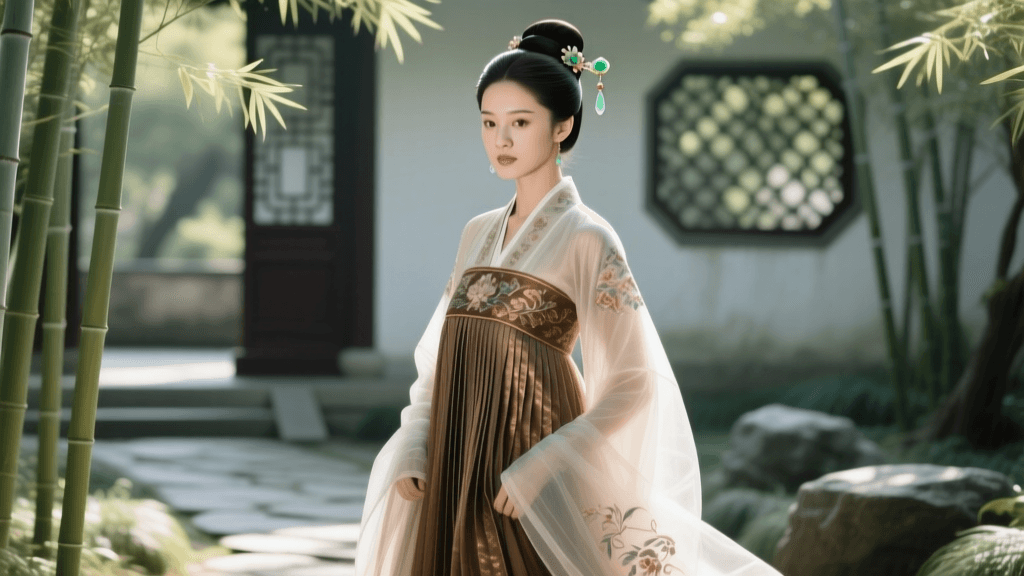
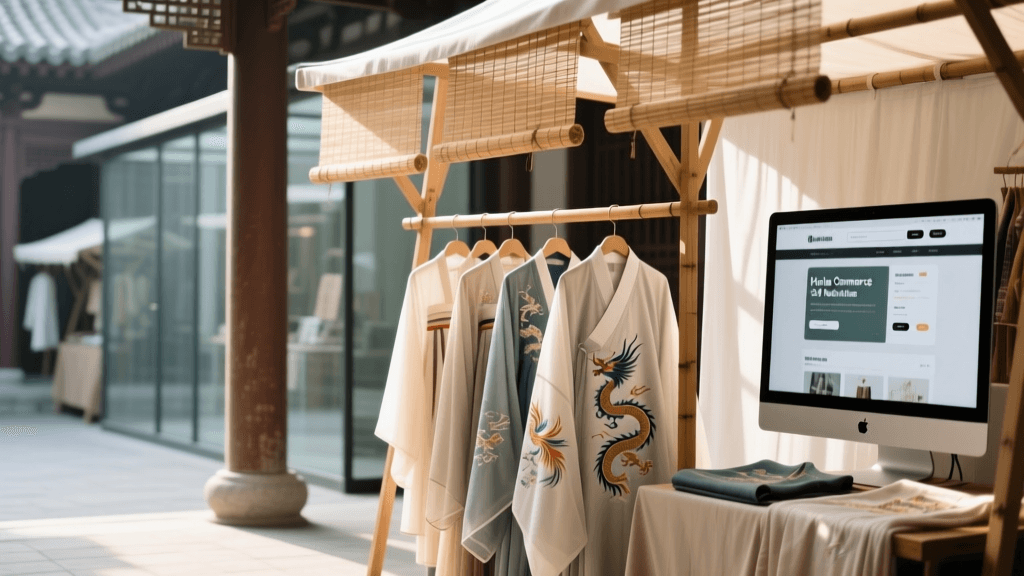
Fast forward to the 21st century, and the landscape of traditional Chinese garment commerce has undergone a radical digital transformation. The modern 'Hanfu Movement' (Hanfu Yundong), which gained significant momentum in the early 2010s, seeks to revive the traditional clothing of the Han Chinese. This cultural renaissance has been almost entirely fueled by e-commerce platforms. Today, the bustling physical markets of antiquity have been replaced by the digital storefronts of Taobao, Tmall, and independent WeChat mini-programs, where hundreds of specialized 'Hanfu studios' operate.
This shift from brick-and-mortar markets to digital e-commerce has democratized access to traditional garments. A buyer in New York, London, or Singapore can now purchase a meticulously researched Ming Dynasty-style Mamianqun (horse-face skirt) directly from a boutique studio in Hangzhou or Chengdu. However, navigating this vast digital marketplace requires a new set of skills, an understanding of modern sizing paradigms, and the ability to distinguish between historical reproductions and mass-produced fast fashion.
Practical Guide: Buying Hanfu in the Digital Age
Purchasing traditional Chinese garments online is vastly different from buying modern Western fashion. The structural nature of Hanfu, which relies on flat-pattern cutting, cross-collars, and extensive layering, demands a precise approach to sizing, timing, and budget allocation.
Understanding Hanfu Measurements and Sizing
Western buyers frequently encounter sizing discrepancies when shopping on Chinese e-commerce platforms. Hanfu does not typically use standard S/M/L sizing based on body-hugging silhouettes. Instead, it relies on specific flat-garment measurements. When browsing a Taobao studio's product page, you will encounter the following critical metrics:
- Xiong (Chest/Bust): Because the most iconic Hanfu style, the Jiaoling Youren (cross-collar right lapel), requires the fabric to wrap securely across the chest, you must add at least 5 to 10 centimeters to your actual body bust measurement to prevent the collar from gaping open.
- Yao (Waist): Measured flat across the skirt or trouser waistband. Skirts often feature side pleats that allow for a 2-3 cm margin of error.
- Yixiu (Sleeve Length): This is arguably the most crucial measurement for historical accuracy. Measured from the center back of the neck to the cuff, traditional sleeves (like the Pipa or Guangxiu wide sleeves) often extend past the fingertips. A standard historical sleeve length can range from 65cm to over 100cm depending on the dynasty and formality.
- Tongxiu (Cuff Width): The circumference of the sleeve opening. Formal Ming Dynasty garments feature massive cuffs that can exceed 60cm in circumference, while practical Song Dynasty daily wear features much narrower cuffs.
Actionable Advice: Always keep a soft measuring tape on hand. Measure a well-fitting, loose piece of clothing you already own (laid flat) and compare those flat dimensions to the studio's size chart, rather than relying solely on your raw body measurements.
Timing Your Purchase: Festivals and Sales
The Hanfu e-commerce calendar is heavily influenced by both modern retail mega-events and traditional lunar festivals. Timing your purchases can result in significant savings and access to limited-edition runs.
- Singles Day (11.11): The largest e-commerce shopping festival in the world. Major Hanfu studios offer steep discounts, bundle deals, and free international shipping vouchers. Pre-sales for heavy winter garments (like wool-lined Aoqun) usually open in October for 11.11 fulfillment.
- Huazhao Festival (3rd day of the 3rd Lunar Month): Widely celebrated as the modern 'Hanfu Festival.' Studios release their spring collections featuring lightweight chiffons, sheer gauzes (Luosha), and floral embroideries during this period.
- Taobao Maker Festival (Usually July/August): The best time to discover independent, avant-garde, or highly specialized historical reproduction studios that cater to niche dynastic aesthetics.
Cost Breakdown and Textile Tiers
The price of Hanfu varies wildly based on fabric composition, historical accuracy, and the complexity of the embroidery. The preservation of traditional weaving techniques plays a massive role in the pricing of high-end garments. As noted by UNESCO's recognition of Chinese sericulture and silk craftsmanship, the intricate processes behind heritage fabrics like Yunjin (cloud brocade) and Songjin require immense artisanal skill, which is reflected in the retail cost.
- Entry-Level (150 - 300 RMB / $20 - $45 USD): Typically made from polyester blends, basic cotton, or machine-embroidered chiffon. Ideal for beginners, photography props, or casual summer wear.
- Mid-Tier (400 - 800 RMB / $60 - $120 USD): Features high-quality jacquard weaves, viscose, and dense machine embroidery. This tier offers the best balance of historical silhouette accuracy and modern durability.
- High-End & Restoration (1,000 - 3,500+ RMB / $150 - $500+ USD): Crafted from genuine mulberry silk, real gold-thread weaving, and hand-finished details. These pieces are often produced in limited batches by studios dedicated to strict museum-grade historical restoration.
Platform Comparison: Where to Buy Traditional Garments
Choosing the right platform depends on your budget, location, and tolerance for logistics. Below is a structured comparison of the primary avenues for acquiring Hanfu today.
| Platform Type | Examples | Best Suited For | Price Range (USD) | Authenticity & Logistics |
|---|---|---|---|---|
| Domestic C2C / B2C | Taobao, Tmall | Enthusiasts seeking the widest variety, latest drops, and lowest prices. | $20 - $500+ | Highest authenticity; requires a shopping agent (e.g., Superbuy, Wegobuy) for international shipping. |
| Global E-Commerce | AliExpress, Shopee | International beginners wanting direct shipping and buyer protection. | $30 - $150 | Mixed authenticity; higher risk of 'Shan' (counterfeits); shipping is direct but slower. |
| Independent Studios | WeChat Mini-Programs, Brand Sites | Collectors seeking museum-grade restorations and bespoke tailoring. | $150 - $1,000+ | Guaranteed original designs; often requires direct bank transfer or WeChat Pay; long pre-sale wait times. |
| Physical Markets | Caoqiao (Beijing), Hanzheng Street (Wuhan) | Buyers wanting tactile fabric inspection and immediate, custom tailoring. | $50 - $300 | Requires local presence; high risk of tourist markups; excellent for custom fittings. |
Identifying Authentic Studios vs. Fast Fashion
A unique challenge in the modern Hanfu e-commerce market is the prevalence of 'Shan' (counterfeits or stolen designs) versus 'Zheng' (authentic, original studio designs). Because developing a historically accurate pattern and digitizing embroidery files takes months of research and capital, independent studios are frequently copied by fast-fashion factories.
To ensure you are supporting genuine artisans and receiving quality garments, look for the following indicators on platforms like Taobao:
- Store Credentials: Authentic studios often display badges indicating membership in recognized Hanfu cultural alliances or 'Original Design' protections.
- Pre-Sale Models: Genuine, high-quality studios frequently use a pre-sale model (often lasting 30 to 45 days) to fund the weaving of custom jacquard fabrics and dense embroidery runs. If a store has thousands of units of a complex Ming Dynasty Ao ready for immediate shipping at a suspiciously low price, it is likely a counterfeit.
- Historical Sourcing: Reputable studios will cite their historical references in the product description, linking their designs to specific unearthed artifacts or museum pieces. The Victoria and Albert Museum's extensive Chinese textile research serves as a prime example of the type of archival data that serious restoration studios use to inform their digital patterns and weave structures.
Conclusion
The journey of the traditional Chinese garment from the dusty, vibrant stalls of the ancient Silk Road to the algorithmic storefronts of modern e-commerce is a testament to the enduring power of cultural heritage. While the medium of exchange has shifted from silver taels and bartered silk to digital wallets and global logistics networks, the core desire to wear, preserve, and celebrate these intricate textiles remains unchanged. By understanding the nuances of digital sizing, respecting the traditional weaving calendar, and learning to navigate the modern e-commerce landscape, today's global enthusiasts can actively participate in the living history of Asian sartorial traditions.