The Complete Hanfu Ensemble: Styling Jade Hair Accessories
The Anatomy of a Complete Hanfu Ensemble
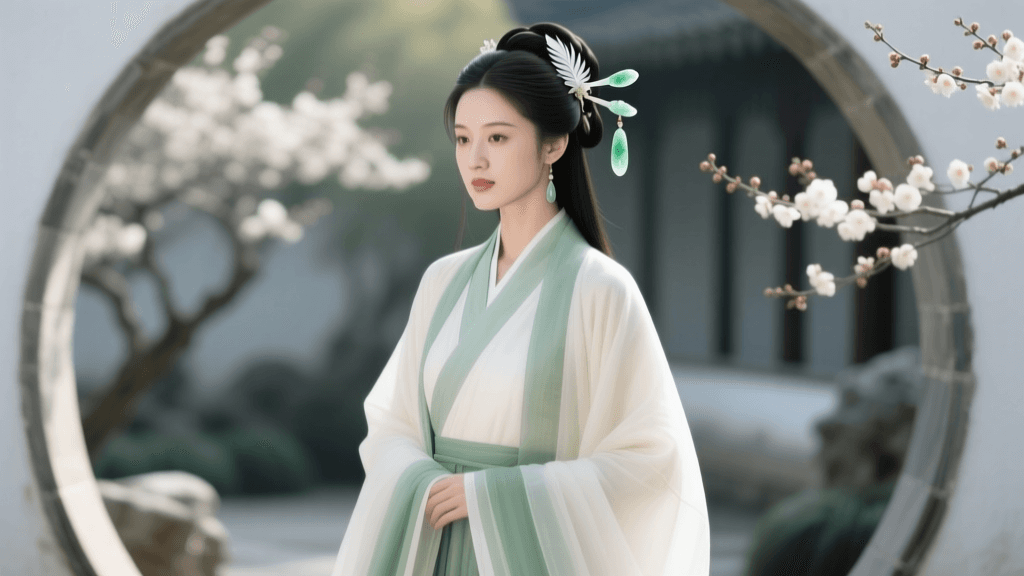
The global resurgence of Hanfu (traditional Han Chinese clothing) has evolved from a niche historical interest into a vibrant, living fashion movement. However, wearing a Hanfu is not merely about slipping on a beautiful silk robe; it is about curating a holistic aesthetic that honors historical accuracy and cultural depth. A truly complete Hanfu ensemble requires a meticulous layering of garments, starting with the inner wear (zhongyi), moving to the upper garments (ru or ao), the lower skirts or trousers (qun or ku), and finishing with outerwear like the pibo (stole) or banbi (half-sleeve jacket).
Yet, even the most exquisitely embroidered Ming Dynasty Mamianqun (horse-face skirt) or Song Dynasty Beizi (slip dress) will look unfinished if the hair is left unstyled. In traditional Chinese aesthetics, the crowning glory of the ensemble is the hairstyle and its accompanying ornaments. Among the myriad of materials used for hair accessories—ranging from gold and silver to pearls and enamel—jade holds the most prestigious and culturally significant position. Integrating jade hair accessories into your Hanfu styling elevates the outfit from a simple costume to a profound expression of heritage.
The Cultural Significance of Jade in Chinese Ornaments
To understand why jade is the ultimate choice for Hanfu hair accessories, one must look at its historical and philosophical weight. According to the Metropolitan Museum of Art, jade has been revered in China for millennia, often valued above gold and silver. Confucius famously compared the qualities of jade to the virtues of a gentleman: its luster represents benevolence, its hardness represents wisdom, and its smooth edges represent justice.
When you place a jade hairpin in your hair, you are not just accessorizing; you are invoking these ancient virtues. Jade was believed to offer spiritual protection, ward off negative energy, and attract harmony. In the context of a Hanfu ensemble, jade accessories provide a grounding, earthy elegance that perfectly balances the vibrant silks and intricate embroidery of the garments.
Essential Jade Hair Accessories for Hanfu Styling
Building a collection of jade hair accessories requires an understanding of the different structural forms these ornaments take. Here are the three essential categories you need to complete your ensemble.
1. Zanzi (Single-Prong Hairpins)
The Zanzi is the foundational hairpin, featuring a single prong used to secure buns and anchor heavier ornaments. Jade Zanzi are typically carved from a single piece of nephrite or jadeite. Styling Advice: For a secure hold in thick hair, select a jade Zanzi that is at least 15 to 18 centimeters in length. The prong should taper to a smooth, rounded point to prevent snagging. Because jade is heavy, opt for pins with a slightly thicker shaft (around 4-5mm in diameter) to prevent snapping under the tension of a tight bun.
2. Buyao (Dangling Hairpins)
Translating to "step-shake," the Buyao features a base pin with dangling ornaments that sway with the wearer's movements. While historically crafted from metal with jade inlays, modern artisans often carve entire Buyao structures from jade or use jade beads suspended on delicate gold or silver chains. Styling Advice: The key to wearing a jade Buyao is balance. Insert the main pin deeply into the thickest part of the hair bun, angling it slightly upward. If the dangling jade elements are heavy, use a secondary, invisible U-pin to anchor the decorative headpiece to the hair, ensuring it does not droop or pull uncomfortably on your scalp.
3. Shubi (Hair Combs)
The Shubi is a decorative comb, often crescent or moon-shaped, placed prominently at the front or top of the hair. Jade combs are masterpieces of carving, featuring intricate motifs like lotus flowers, dragons, or phoenixes along the spine. Styling Advice: Jade combs are best utilized in Tang or Song Dynasty hairstyles, where the hair is swept up into high, structured buns. Push the teeth of the comb downward into the hair, ensuring the decorative spine sits flush against the scalp for a seamless, elegant profile.
Authenticating Jade: Nephrite vs. Jadeite
When investing in jade hair accessories for your Hanfu collection, it is crucial to understand what you are buying. The Gemological Institute of America (GIA) classifies "jade" into two distinct minerals: Nephrite and Jadeite. Furthermore, the market is flooded with treated stones and imitations. Knowing the difference ensures you purchase authentic, high-quality pieces that will last a lifetime.
| Jade Type | Origin | Hardness (Mohs) | Visual Characteristics | Price Range (USD) |
|---|---|---|---|---|
| Hetian Nephrite | China (Xinjiang) | 6.0 - 6.5 | Oily luster, creamy white (mutton fat), deep spinach green. Opaque to translucent. | $150 - $5,000+ |
| Burmese Jadeite | Myanmar | 6.5 - 7.0 | Glassy luster, vibrant emerald green (Imperial), lavender, icy white. Highly translucent. | $300 - $10,000+ |
| Xiuyan Jade | China (Liaoning) | 4.5 - 5.5 | Waxy luster, yellowish-green to dark green. Often features dark inclusions. More translucent. | $20 - $150 |
Authentication Tip: Always ask for a certificate of authenticity from a reputable gemological lab. Beware of "Type B" (acid-bleached and polymer-impregnated) and "Type C" (dyed) jadeite. For traditional Hanfu styling, untreated "Type A" Hetian Nephrite is the most historically accurate choice, as jadeite only became widely popular in China during the late Qing Dynasty.
Dynasty-Specific Styling Guidelines
To achieve a truly authentic look, your jade accessories must match the dynasty of your Hanfu. The aesthetic philosophies varied wildly across China's historical periods.
Ming Dynasty: Opulence and Structure
Ming Dynasty Hanfu is characterized by its structured silhouettes, high collars, and rich, heavy fabrics. The hair accessories of this era were equally opulent. The Look: Opt for Jinqian Yucui (gold-inlaid jade) accessories. A Ming-style Di Guan (phoenix crown) or elaborate gold Buyao featuring cabochon-cut Hetian jade inlays is ideal. The hair is usually styled into a structured topknot, heavily adorned with multiple jade-tipped pins fanning out like a halo. Because Ming accessories are heavy, ensure your hair is reinforced with modern hair extensions or a structured hairpiece base.
Song Dynasty: Minimalism and Elegance
In stark contrast, the Song Dynasty favored intellectual minimalism, slender silhouettes, and muted, earthy color palettes. The Look: Restraint is key. Choose a single, exquisitely carved piece of pale celadon or mutton-fat nephrite. A simple, unadorned jade Zanzi holding a low, elegant chignon at the nape of the neck, perhaps accompanied by a small jade lotus hair comb, perfectly captures the refined, scholarly aesthetic of the Song era. Avoid dangling elements and excessive gold.
Tang Dynasty: Boldness and Flourish
The Tang Dynasty was a cosmopolitan golden age marked by bold makeup, voluminous hairstyles, and vibrant textiles. The Look: High, elaborate buns (like the Gaoji) were the norm. Use large, crescent-shaped jade combs (Shubi) placed prominently at the front of the hair. Pair these with floral-motif jade hairpins and strands of jade beads woven directly into the hair structure. The jade should be vibrant, contrasting beautifully with the rich reds and golds of Tang-style Ruqun.
Practical Buying Guide, Budgeting, and Care
Building a complete set of jade Hanfu accessories is an investment. For beginners, a high-quality Xiuyan jade set (comb and two pins) can be acquired for $50 to $100, offering a beautiful, historically evocative look without breaking the bank. Intermediate collectors should budget between $300 and $800 for genuine, untreated Hetian Nephrite pieces from specialized artisans on platforms like Taobao or dedicated Hanfu boutiques. Serious collectors investing in imperial-grade Jadeite or antique Ming dynasty gold-and-jade pieces should expect to spend well over $2,000, requiring purchases from certified auction houses or master jewelers.
Maintenance and Care
Jade is a durable stone, but it requires proper care to maintain its luster and structural integrity, especially when used in hair accessories that are subjected to tension and natural hair oils.
- Cleaning: After wearing, gently wipe your jade accessories with a soft, lint-free microfiber cloth to remove hair oils and styling products. For a deeper clean, use lukewarm water and a soft-bristled brush. Never use ultrasonic cleaners or harsh chemical solvents, as these can damage the stone's natural polish or degrade the adhesive used in inlaid pieces.
- Storage: Jade can scratch softer materials, and conversely, harder gemstones (like diamonds or sapphires) can scratch jade. Store each hairpin and comb individually in a soft silk or velvet pouch. Keep them in a cool, dry place away from direct, prolonged sunlight, which can dehydrate the stone and cause micro-fractures over time.
- Handling: Always handle jade Buyao and combs by their metal stems or thickest carved sections. Avoid pulling on delicate jade chains or thin carved petals, as jade's cleavage planes can make intricate carvings surprisingly brittle under direct pressure.
By thoughtfully selecting and styling jade hair accessories, you do more than just complete your Hanfu ensemble; you participate in a continuous cultural dialogue that spans thousands of years. The cool touch of nephrite against the skin and the gentle sway of a jade Buyao with every step transform the act of dressing into a moving meditation on history, art, and identity.