Miao Traditional Garments: Silver Jewelry and Embroidery
The Wearable History of the Miao People
The Miao people, also known globally as the Hmong, represent one of China's largest and most culturally vibrant ethnic minorities. Concentrated primarily in the mountainous provinces of Guizhou, Hunan, and Yunnan, the Miao have cultivated a profound sartorial heritage that serves as a visual language. Historically lacking a formal written script, the Miao encoded their mythology, migration history, and clan identities directly into their garments. Today, Miao traditional clothing remains a breathtaking testament to indigenous artistry, characterized by two defining elements: gravity-defying silver jewelry and hyper-intricate embroidery.
For textile enthusiasts, cultural historians, and conscious consumers, understanding Miao clothing requires looking beyond the vibrant colors to appreciate the staggering amount of labor and cultural weight each piece carries. According to Britannica's ethnographic records on the Hmong and Miao peoples, the creation of a single, fully embroidered festival jacket can take a skilled artisan anywhere from one to three years to complete. This guide delves into the craftsmanship, sourcing, and practical application of Miao garments in the modern world.
Miao Silver Jewelry: Weight, Craftsmanship, and Authenticity
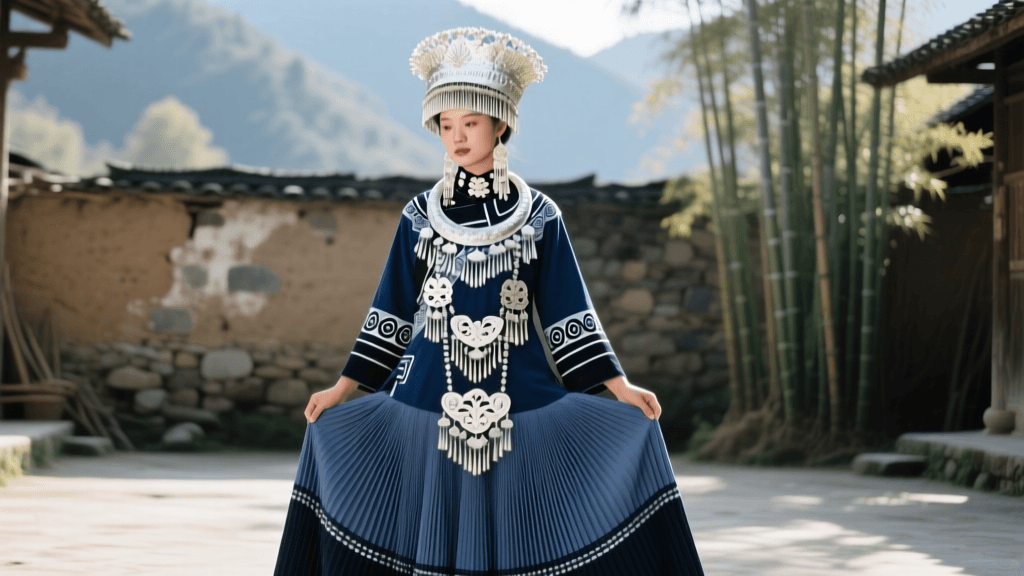
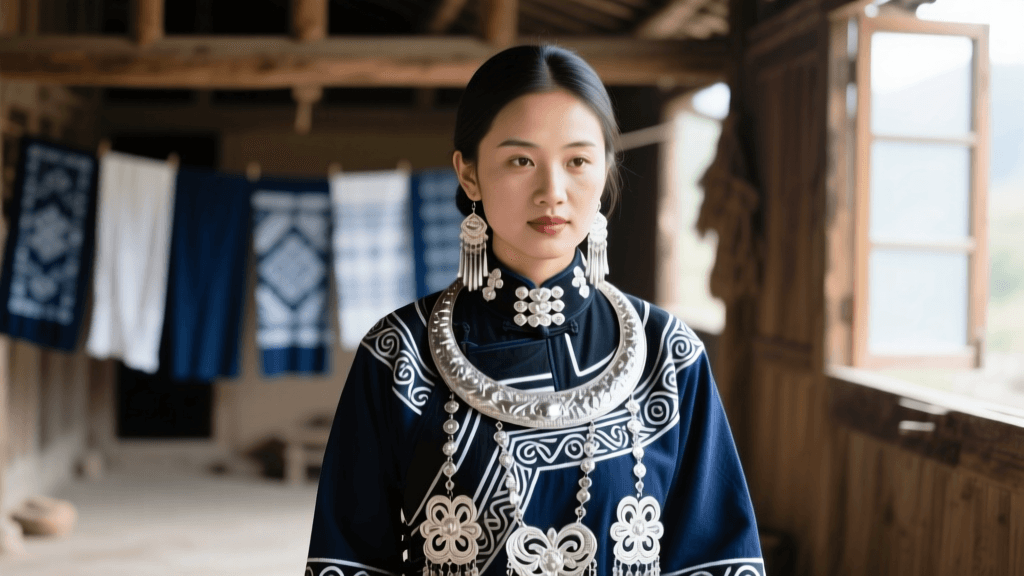
In Miao culture, silver is not merely decorative; it is a spiritual shield and a tangible bank account. Silver is believed to ward off evil spirits, bring good fortune, and signify a family's wealth and social standing. During major festivals, a Miao woman may wear up to 5 kilograms (11 pounds) of solid silver, including elaborate horned headdresses, heavy multi-layered neck rings, chest plaques, and bangles.
The Forging Process
Authentic Miao silverwork is forged by master silversmiths using techniques passed down through generations. The process involves smelting, hammering, wire-drawing, and intricate filigree work. A single headdress may incorporate dozens of individual silver flowers, birds, and butterflies, all attached to a delicate silver frame that chimes melodically with the wearer's movements.
Actionable Advice: Buying Authentic Miao Silver
If you are looking to purchase authentic Miao silver jewelry, either as an investment or a collector's item, you must navigate a market flooded with mass-produced imitations. Here is how to ensure you are buying the real thing:
- Understand the Pricing Structure: Authentic Miao silver is typically made from 999 pure silver. The cost is calculated based on the daily market price of silver per gram (usually between 15 to 25 RMB per gram), plus a craftsmanship fee. The craftsmanship fee often equals 50% to 150% of the raw silver value, depending on the complexity of the filigree.
- Beware of 'Miao Silver' or 'Tibetan Silver': In tourist markets across China, vendors often sell darkened, heavy metal alloys labeled as 'Miao Silver' or 'Tibetan Silver' for very low prices (e.g., 50 RMB for a large bangle). These are almost always copper, zinc, and nickel alloys. They hold no intrinsic silver value and can cause severe skin allergies due to nickel content.
- The Magnet and Sound Tests: Pure silver is non-magnetic. Furthermore, when tapped gently, 999 pure silver produces a dull, soft thud rather than a high-pitched, ringing 'ping' associated with harder alloy metals.
- Request a Certificate: Reputable silversmiths in Guizhou's Kaili city or Xijiang Miao Village will provide a certificate of authenticity and a receipt detailing the exact weight in grams and the purity (999 or 990).
Decoding Miao Embroidery Techniques
Miao embroidery is widely considered one of the most complex textile arts in Asia. The motifs are deeply symbolic, frequently featuring the 'Butterfly Mother' (Mai Bang), the mythical progenitor of the Miao people, alongside water buffalo, dragons, and ancestral spirits. For historical context on these textile motifs and their preservation, The Metropolitan Museum of Art's Miao textile collection provides excellent visual archives of how these garments function as historical documents.
Key Embroidery Styles
There are over a dozen distinct embroidery techniques utilized by Miao artisans, varying by region and subgroup:
- Wrinkled Embroidery (Zhou Xiu): A highly specialized 3D technique where silk threads are tightly braided and then stitched onto the fabric to create raised, textured patterns resembling relief sculptures.
- Double-Thread Embroidery (Ping Xiu): A flat, satin-stitch method that creates smooth, vibrant surfaces, often used for the main body of the garment.
- Seed Stitching (Da Zi Xiu): Tiny, dense knots that resemble seeds or beads, used to outline motifs and add a granular texture to the fabric.
Sourcing and Caring for Embroidered Garments
When sourcing a vintage or newly handmade Miao jacket, inspect the reverse side of the fabric. Authentic hand-embroidery will look nearly as neat on the back as it does on the front, with no chaotic thread jumps or synthetic backing papers. A high-quality handmade jacket will cost anywhere from $800 to over $3,000 USD, reflecting the hundreds of hours of labor. Machine-embroidered replicas, commonly sold in tourist shops, cost between $30 and $80 USD and feature a stiff, synthetic backing.
Care Instructions: Authentic Miao jackets are often constructed from indigo-dyed cotton or raw silk, heavily layered with metallic threads and delicate silk floss. Never machine wash or submerge these garments in water, as the indigo will bleed and the metallic threads will tarnish. Always seek a specialist dry cleaner experienced with antique textiles. Store the garment flat in a cool, dark place, layered with acid-free tissue paper to prevent the heavy embroidery from stretching the base fabric.
Subgroup Variations: A Comparative Guide
The Miao are not a monolith; they are divided into numerous subgroups, often categorized by outsiders based on their distinctive clothing styles or the color of their garments. Below is a comparison of four prominent Miao subgroups and their sartorial hallmarks.
| Subgroup | Primary Region | Distinctive Garment Feature | Silver Usage | Best Festival to Visit |
|---|---|---|---|---|
| Long-Horn Miao | Liupanshui, Guizhou | Massive wooden horn headdress wrapped with yards of white linen and ancestral hair. | Minimal silver; focus is on the linen/hair horn. | Jumping Flower Festival (Spring) |
| Short-Skirt Miao | Leishan, Guizhou | Ultra-short, stiff pleated indigo skirts (often under 15 cm long) worn with heavy leggings. | Moderate; silver hairpins and chest locks. | Lusheng Festival (Autumn) |
| Black Miao | Kaili, Guizhou | Dark, indigo-dyed cotton jackets with subtle, dark-on-dark embroidery and wide trousers. | Heavy; large silver neck rings and combs. | Sisters' Meal Festival (April) |
| White Miao | Bijie, Guizhou | Bright white pleated skirts and cross-stitched capes featuring vibrant red and green geometric motifs. | Light; small silver floral hairpins. | New Year (Lunar Calendar) |
Practical Guide: Renting, Wearing, and Experiencing Miao Attire
For travelers and photographers wishing to experience Miao clothing without making a massive financial investment, renting is the most practical option. Travel and cultural preservation resources like China Highlights' guide to Xijiang Miao Village note that the village has become a major hub for cultural tourism, offering extensive rental services.
Renting vs. Buying
In major cultural hubs like Xijiang Qianhu Miao Village or Shidong Town, you will find hundreds of rental shops. A full rental package—which includes a heavily embroidered jacket, a pleated skirt, a full silver headdress, and matching accessories—typically costs between 50 and 150 RMB ($7 to $21 USD) per hour, or around 300 RMB ($42 USD) for a full day. This is an excellent way to capture high-quality photography and physically understand the weight and mechanics of the garments.
When renting, always inspect the silver headdress before putting it on. Ensure the pins are secure and ask the shop assistant to help you tie the ribbons, as the weight distribution requires specific knotting techniques to prevent neck strain.
Styling Miao Pieces for Modern Wardrobes
You do not need to wear a full festival regalia to appreciate Miao craftsmanship in daily life. Modern fashion enthusiasts can integrate Miao elements into contemporary wardrobes thoughtfully:
- The Embroidered Collar: Many modern Miao artisans in Guizhou sell detachable, heavily embroidered collar pieces. These can be pinned over a simple, solid-colored linen dress or a plain white t-shirt, instantly elevating the outfit with a pop of heritage art.
- Silver Filigree Bangles: Instead of the massive, heavy festival neck rings, opt for a single, hand-forged 999 silver filigree bangle. These are lightweight, adjustable, and pair beautifully with minimalist, modern aesthetics.
- Pleated Skirts: The traditional indigo-dyed pleated skirt can be styled with a modern knit sweater and leather boots for an autumn look. Ensure you purchase a skirt with a cotton lining, as raw indigo dye can transfer to lighter clothing and skin during the first few wears.
Conclusion
Miao traditional clothing is far more than a visual spectacle; it is a living, breathing archive of a resilient people. Whether you are investing in a hand-embroidered jacket, carefully sourcing pure silver filigree, or simply renting a headdress to walk the wooden bridges of Xijiang, engaging with Miao garments requires an understanding of their profound cultural weight. By prioritizing authentic craftsmanship and respecting the artisans who keep these ancient techniques alive, we ensure that the wearable history of the Miao people continues to thrive for generations to come.