Miao Traditional Dress: Guizhou Silver & Pleated Skirts Guide
Introduction to Miao Provincial Dress
The Miao people, one of China's largest and most culturally diverse ethnic minorities, are primarily concentrated in the mountainous regions of Guizhou, Hunan, and Yunnan provinces. Among the myriad expressions of their cultural heritage, Miao traditional dress stands out as a masterclass in regional folk artistry. For the Miao, clothing is not merely functional or decorative; it is a wearable history book. Historically lacking a widely adopted written language, the Miao encoded their migration stories, mythological beliefs, and clan identities into the intricate embroidery, silverwork, and textile structures of their provincial garments.
According to Smithsonian Magazine, the sartorial traditions of the Miao serve as a vital link to their ancestral past, with motifs depicting the Yellow River, the Yangtze, and the epic journeys of their forebears. This article delves into the specific anatomy of Guizhou's Miao provincial dress, focusing on the legendary indigo pleated skirts, the heavy ceremonial silverwork, and practical advice for collectors and cultural enthusiasts looking to source authentic pieces.
The Anatomy of the Hundred-Pleat Skirt (Bai Zhe Qun)
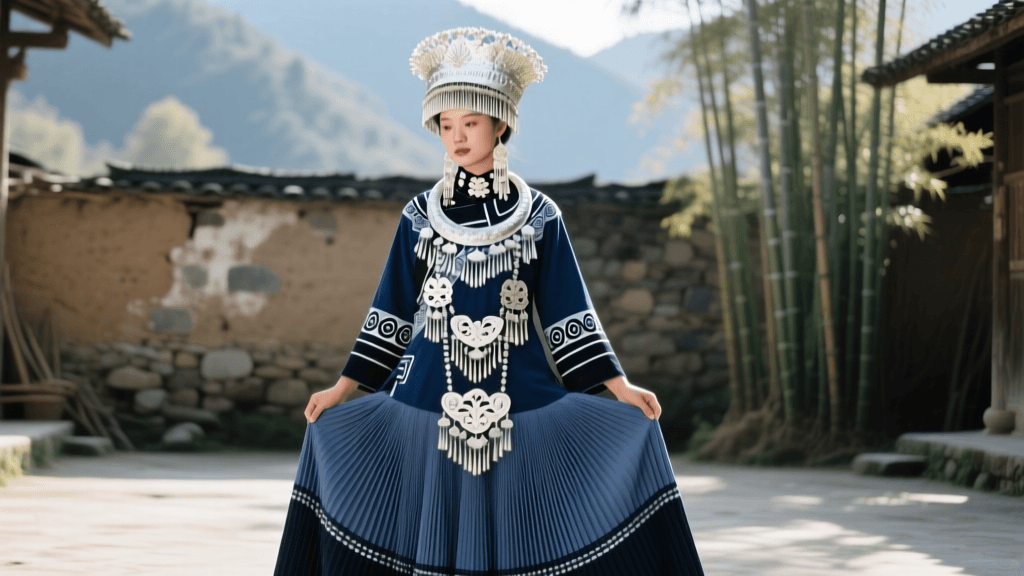
The most iconic garment of the Guizhou Miao is the Bai Zhe Qun, or 'Hundred-Pleat Skirt.' Despite the name, a high-quality ceremonial skirt often contains between 500 and 1,000 individual, razor-sharp pleats. The creation of this garment is a monumental task that requires immense physical labor, precise timing, and deep knowledge of natural chemistry.
Indigo Dyeing and Fabric Preparation
The foundation of the skirt is hand-woven cotton, which undergoes a rigorous indigo dyeing process. Artisans cultivate the indigo plant (Polygonum tinctorium), fermenting its leaves in wooden vats with ash water and rice wine to create the dye bath. The cotton must be dipped, oxidized, and re-dipped up to 30 times over the course of two months to achieve the deep, lustrous navy-black hue characteristic of Guizhou Miao textiles. After dyeing, the fabric is often treated with ox blood or egg white and beaten with wooden mallets for days to create a stiff, glossy finish that holds pleats permanently.
Measurements and Pleating Technique
A single full-sized Bai Zhe Qun requires an astonishing 15 to 20 meters of narrow, hand-woven indigo cotton. The pleating process is a communal activity. Women sit in a line, folding the fabric accordion-style using their fingernails as guides. Once folded, the skirt is tightly bound with cotton thread and steamed over a large wok to set the pleats. This binding and steaming phase alone can take one to two weeks of continuous work. The skirt is then left bound in a cool, dry room for several months to ensure the pleats never drop, even when worn during vigorous festival dances.
Guizhou Silverwork: The Weight of Heritage
No Miao festival ensemble is complete without its spectacular silver adornments. In Miao culture, silver represents light, purity, and the warding off of evil spirits. It is also a crucial store of familial wealth, passed down from mother to daughter across generations. As noted in Wikipedia's comprehensive guide on Miao demographics and culture, the accumulation and display of silver are central to courtship and marriage rituals in Guizhou.
Key Components and Measurements
- The Silver Horn (Yin Jiao): The centerpiece of the headdress, shaped like the horns of a water buffalo (a sacred animal in Miao agrarian society). These can span up to 1 meter in width and feature intricate repoussé work depicting dragons, phoenixes, and butterflies.
- Necklaces and Torques: A full ceremonial set includes multiple layered necklaces, some featuring heavy, solid silver locks and bells. The total weight of a bride's silver ensemble can range from 5 to 10 kilograms (11 to 22 lbs), requiring significant physical endurance to wear during day-long festivities.
- Garment Appliqués: Hundreds of small silver bells, butterflies, and flowers are sewn directly onto the lapels, sleeves, and hems of the indigo jackets, creating a melodic chiming sound with every movement.
Regional Variations: A Comparison Chart
While the term 'Miao' is an umbrella classification, the province of Guizhou hosts numerous sub-groups, each with distinct sartorial dialects. The following table compares three prominent regional styles:
| Region / Sub-group | Skirt Style | Silverwork Profile | Distinguishing Features |
|---|---|---|---|
| Xijiang (Long Skirt Miao) | Maxi-length, 500+ pleats, reaching the ankles. | Massive, heavy. Features the large silver horn and multi-layered chest pieces. | Worn with heavily embroidered aprons and leg wrappings. High ceremonial prestige. |
| Shidong (Short Skirt Miao) | Mini-length, stiff pleated skirt (15-20 cm long). | Minimalist, lighter. Focuses on silver hairpins and smaller neck torques. | Worn over embroidered leggings. Highly mobile, designed for mountainous terrain and rapid dancing. |
| Basha (Gunmen Tribe) | Indigo wrap-around tunics, no pleated skirts for men. | Very minimal. Silver is reserved mostly for women's hair combs and small necklaces. | Men carry traditional flintlock rifles and wear topknots; clothing is heavily utilitarian and deeply dyed. |
Sourcing and Collecting: A Practical Guide
For textile collectors, fashion historians, and cultural enthusiasts, sourcing authentic Miao provincial dress requires navigating a market flooded with mass-produced tourist replicas. Here is actionable advice for acquiring genuine folk garments.
Where to Buy
Avoid the main commercial arteries of heavily touristed areas like Xijiang Thousand Households Miao Village, where shops primarily sell machine-embroidered, synthetic-blend costumes. Instead, visit the Kaili Weekend Market or the Panyu Antique Market in nearby villages. Here, local women and specialized brokers sell genuine, hand-stitched vintage pieces. For silver, seek out registered family silversmiths in Shidong or Huangping, where traditional casting and hammering techniques are still practiced.
Costs and Valuation
- Vintage Indigo Skirts (1950s-1980s): $300 to $1,500 USD, depending on the tightness of the pleats, the depth of the indigo dye, and the presence of original embroidery panels.
- New Ceremonial Silver (Solid): Priced by weight plus craftsmanship. Expect to pay $1,000 to $5,000+ USD for a full solid-silver headdress and necklace set.
- Tourist-Grade Alloy Silver: $50 to $150 USD. Made of copper-aluminum alloys or brass with a silver wash. Suitable for theatrical costuming but holds no cultural or intrinsic value.
- Embroidered Jackets (Bai Niao Yi - Hundred Bird Jacket): $400 to $2,000 USD for authentic, hand-stitched silk-on-cotton pieces featuring the raised braid stitch.
Verification Tips
To verify authentic indigo, rub a damp white cloth against the fabric. Genuine natural indigo will transfer a slight blue tint (crocking) but will not bleed heavily like synthetic chemical dyes. Furthermore, authentic hand-woven cotton will have slight irregularities in the warp and weft, whereas machine-milled fabric will be perfectly uniform. For silver, bring a strong neodymium magnet; traditional Miao silver is non-magnetic, while many cheap tourist replicas contain iron cores.
Embroidery Motifs and Techniques
The embroidery of the Guizhou Miao is globally recognized for its complexity. According to The British Museum's Ethnographic Collection, Miao textiles are highly prized for their structural diversity. Unlike the flat satin stitches of Han Chinese embroidery, Miao artisans utilize the zhou xiu (braid stitch), where silk threads are first braided into tiny cords and then couched onto the fabric to create a 3D, textured relief. Motifs are deeply symbolic: the butterfly mother (Mamai) represents the creator of humanity, while the two-headed dragon symbolizes the duality of nature and the protection of the village.
Care and Preservation of Provincial Textiles
Preserving vintage Miao garments requires specific environmental controls. The stiffening agents used in the pleated skirts (egg white, ox blood, or plant resins) are highly susceptible to humidity and insect damage. Store skirts flat in acid-free tissue paper in a climate-controlled environment (ideally 45-55% relative humidity). Never attempt to wash a vintage pleated skirt with water, as it will dissolve the stiffening agents and ruin the pleats permanently. For silver, avoid commercial chemical dips, which can strip the antique patina. Instead, polish gently with a microfiber cloth and a mild paste of baking soda and water, taking care to avoid the fabric backing.