Kimono Wardrobe Organization and Seasonal Rotation Guide
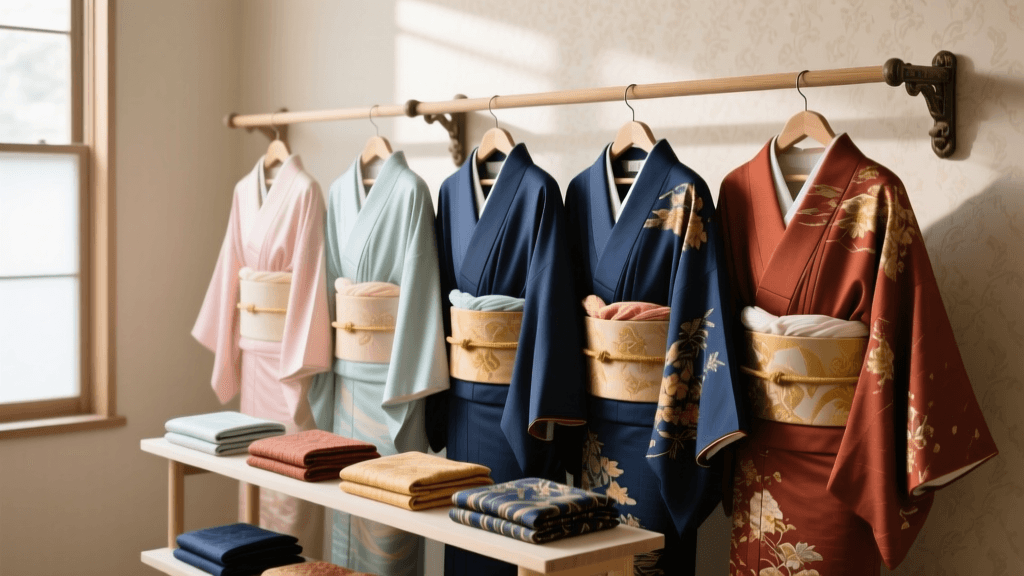
The Art of Kimono Wardrobe Organization
Owning a traditional Japanese kimono is not merely a fashion statement; it is an investment in wearable art. Crafted from luxurious materials like silk, crepe, and brocade, and often adorned with intricate yuzen dyeing or gold leaf embroidery, these garments require meticulous care. Unlike Western clothing that can be hung on standard hangers or tossed into drawers, a kimono demands a specialized approach to wardrobe organization. The flat, rectangular construction of the garment means it must be folded precisely and stored in controlled environments to prevent permanent creasing, dye transfer, and fiber degradation. According to the Metropolitan Museum of Art's Heilbrunn Timeline of Art History, the evolution of Japanese dress is deeply intertwined with seasonal awareness and meticulous craftsmanship, meaning the preservation of these textiles is just as much a cultural practice as wearing them.
The Tradition of Koromogae: Seasonal Rotation
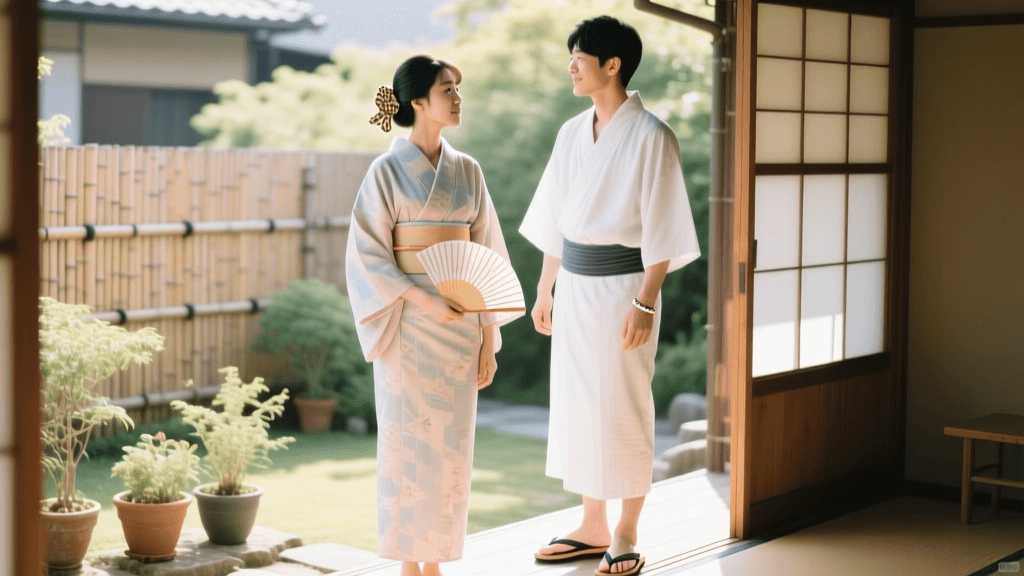
In Japan, the transition of seasons is deeply embedded in the culture, dictulating everything from culinary ingredients to wardrobe choices. The practice of changing one's wardrobe to match the season is known as koromogae. Traditionally, this occurs twice a year: on June 1st, when winter and spring garments are packed away and summer clothing is brought out, and on October 1st, when the transition back to warmer, lined garments takes place. For kimono collectors and enthusiasts, koromogae is not just a cultural formality; it is a vital maintenance routine that ensures garments are inspected, aired out, and properly rotated to maintain their structural integrity.
Understanding the Seasonal Wardrobe
Kimono are strictly categorized by their lining and fabric weight, which dictates the exact months they should be worn. Rotating your wardrobe according to these rules ensures the longevity of the silk and aligns with traditional Japanese aesthetics.
| Kimono Type | Season | Traditional Months | Key Characteristics |
|---|---|---|---|
| Awase | Cool/Cold | October to May | Fully lined silk kimono. Provides warmth and structure. The standard for most formal occasions. |
| Hitoe | Mild/Transitional | June and September | Unlined kimono. Made from a single layer of silk, offering breathability during transitional weather. |
| Ro / Sha | Hot/Summer | July and August | Woven with open gaps (leno weave) for maximum airflow. Often sheer and lightweight. |
| Wataboshi | Deep Winter | December to February | Heavy, padded, or exceptionally thick silk garments designed for extreme cold. |
Essential Storage Materials and Measurements
Proper kimono storage requires specific materials designed to buffer against environmental fluctuations. The gold standard for kimono storage is the Kiri tansu, a traditional chest made from Paulownia wood. Paulownia is naturally lightweight, resistant to pests, and possesses unique hygroscopic properties—it swells to seal out moisture during humid summers and contracts to allow airflow during dry winters. A standard Kiri tansu drawer measures approximately 90cm in width, 60cm in depth, and 15cm in height, perfectly accommodating folded kimonos without cramming.
If a Kiri tansu is outside your budget (typically ranging from $500 to over $2,000 for antique or new models), acid-free storage boxes are a viable alternative. Inside the drawers or boxes, each kimono must be wrapped in tatoushi (traditional kimono wrapping paper). Standard tatoushi measures about 80cm by 100cm. This paper prevents dye transfer between garments, absorbs excess moisture, and shields the silk from dust and light. Never use plastic bags or standard cardboard, as plastic traps moisture leading to mold, while unlined cardboard is highly acidic and will cause silk to yellow and become brittle over time.
The Hon-Datami Folding Method
Unlike Western garments that are folded arbitrarily, kimonos are constructed from straight bolts of fabric (tanmono) and are meant to be folded along their original seam lines. The standard folding technique is called hon-datami. This method ensures that the finished edges of the garment bear the weight of the folds, protecting the delicate dyed and embroidered centers from friction and permanent creasing. When folding, always work on a clean, dry surface, and avoid pressing down hard on the folds. As noted by textile conservation experts at the Victoria and Albert Museum, minimizing sharp creases in historic and delicate textiles is paramount to preventing fiber breakage over time. Place a small roll of acid-free tissue paper inside the major folds of the hon-datami to further soften the crease lines.
Mushiboshi: The Vital Airing-Out Process
Even with perfect storage, kimonos must be removed from their drawers and aired out at least twice a year in a process called mushiboshi (literally 'bug airing'). The ideal times for mushiboshi are late autumn (October/November) and late winter (January/February), when the air is crisp, dry, and cool. Choose a dry, cloudy, and breezy day; direct sunlight will cause the vibrant silk dyes to fade rapidly. Open the tatoushi, unfold the kimonos, and hang them on specialized wide kimono hangers (emono) in a well-ventilated room for a few hours. This process allows trapped moisture to escape, dissipates any stale odors, and gives you the opportunity to inspect the garments for early signs of mold, staining, or pest damage.
Pest Control and Humidity Management
Silk is a protein fiber, making it highly attractive to textile pests such as carpet beetles and clothes moths. To protect your collection, chemical deterrents are often necessary, but they must be chosen with extreme care. The traditional Japanese choice is shounou (natural camphor), which is safe for silk and gold leaf. However, modern synthetic alternatives like pyrethroid-based moth papers are also widely used.
Critical Warning: Never mix different types of pest control chemicals (e.g., camphor, naphthalene, and paradichlorobenzene) in the same storage drawer. When the gases from different chemicals interact, they can undergo a chemical reaction that lowers their melting point, resulting in a liquid residue that will permanently stain and melt the delicate silk fibers of your kimono.
Humidity is equally dangerous. The Canadian Conservation Institute recommends maintaining a relative humidity (RH) of around 50% for textile storage. High humidity leads to mold and dye bleeding, while extremely low humidity makes silk brittle. Include silica gel desiccant packets in your storage drawers, but ensure they do not directly touch the silk. Monitor the humidity with a small digital hygrometer placed inside the Kiri tansu or storage box.
Professional Care and Maintenance Costs
While routine organization and airing can be done at home, deep cleaning requires professional intervention. Traditional kimonos are rarely washed in water; instead, they are spot-cleaned or subjected to maruarai, a specialized dry-cleaning process that uses solvents safe for silk and metallic threads. If you notice a stain, do not attempt to rub it out with water, as this can cause the dye to run or leave a permanent water ring. The cost for professional maruarai cleaning typically ranges from 8,000 to 15,000 JPY (approximately $55 to $100 USD), depending on the garment's condition and the extent of the staining. Additionally, if a kimono has deep, stubborn creases from improper storage, a professional shinshi (fabric stretching and pressing) service may be required, which can cost upwards of $150 USD. By adhering to a strict seasonal rotation and utilizing the correct storage materials, you can drastically reduce the need for these expensive restorative services and ensure your kimono collection remains pristine for generations.