Wu Zetian's Iconic Tang Hanfu: A Modern Recreation Guide
The Wardrobe of China's Only Female Emperor
When discussing the most influential figures in Asian history, Empress Wu Zetian (624–705 CE) stands alone as China’s only female emperor. Her reign during the Zhou dynasty, which temporarily interrupted the Tang dynasty, was marked by unprecedented political maneuvering, cultural expansion, and a distinct visual language of power. According to Encyclopedia Britannica, Wu Zetian’s ability to project absolute authority was deeply intertwined with her control over court rituals and imperial iconography, including her wardrobe. For modern Hanfu enthusiasts, historical costume designers, and cultural preservationists, recreating the iconic Tang Dynasty court dress worn by Wu Zetian offers a fascinating intersection of historical research and sartorial engineering.
The Tang Dynasty (618–907 CE) is widely regarded as the golden age of Chinese arts, culture, and fashion. As noted by the Asia Society, the era was characterized by its cosmopolitanism, heavily influenced by Silk Road trade. This resulted in textiles that were vibrant, heavily patterned, and structurally distinct from previous eras. Wu Zetian’s court attire was not merely decorative; it was a calculated display of imperial majesty, utilizing rare silks, complex weaving techniques, and bold silhouettes that commanded respect. Today, the revival of Hanfu allows modern wearers to step into this rich history, provided they understand the structural nuances of Tang court dress.
Deconstructing the Imperial Silhouette
To accurately recreate Wu Zetian’s iconic look, one must understand the foundational layers of Tang Dynasty women's formal wear. Unlike the restrictive garments of later dynasties, Tang fashion celebrated volume, fluidity, and a high-waisted silhouette.
The Shan (Upper Garment) and Qixiong Ruqun (Chest-High Skirt)
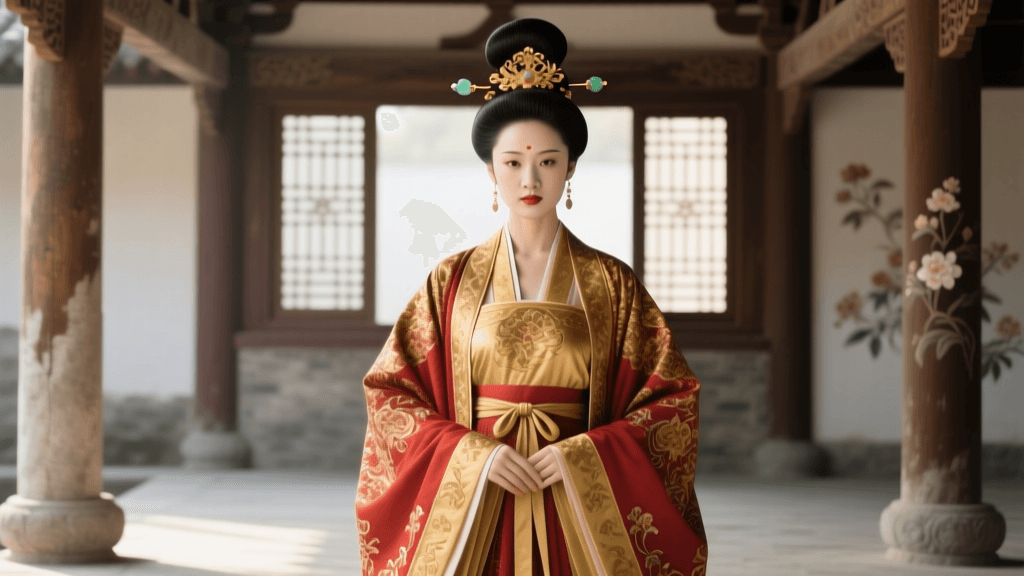
The core of the Tang female wardrobe was the Qixiong Ruqun, a chest-high skirt tied securely above the bust, paired with a Shan (a lightweight, wide-sleeved upper garment). For an empress, the Shan would feature exceptionally wide sleeves, sometimes trailing near the floor, woven with gold and silver threads. The skirt was heavily pleated and made from several yards of fabric to create a voluminous, bell-like shape that grounded the wearer and projected a sense of immovable stability.
The Banbi (Half-Sleeve Jacket) and Pibo (Silk Ribbon)
Layered over the Shan was the Banbi, a short-sleeved or half-sleeved jacket that added structural contrast and allowed for complex color-blocking. The outfit was finalized with the Pibo, a long, sheer silk ribbon draped over the shoulders and cascading down the arms. The Pibo created a dynamic, ethereal movement as the wearer walked, a hallmark of Tang court aesthetics that mimicked the flowing garments of Buddhist deities depicted in contemporary cave murals.
Actionable Guide: Sourcing and Fabric Selection
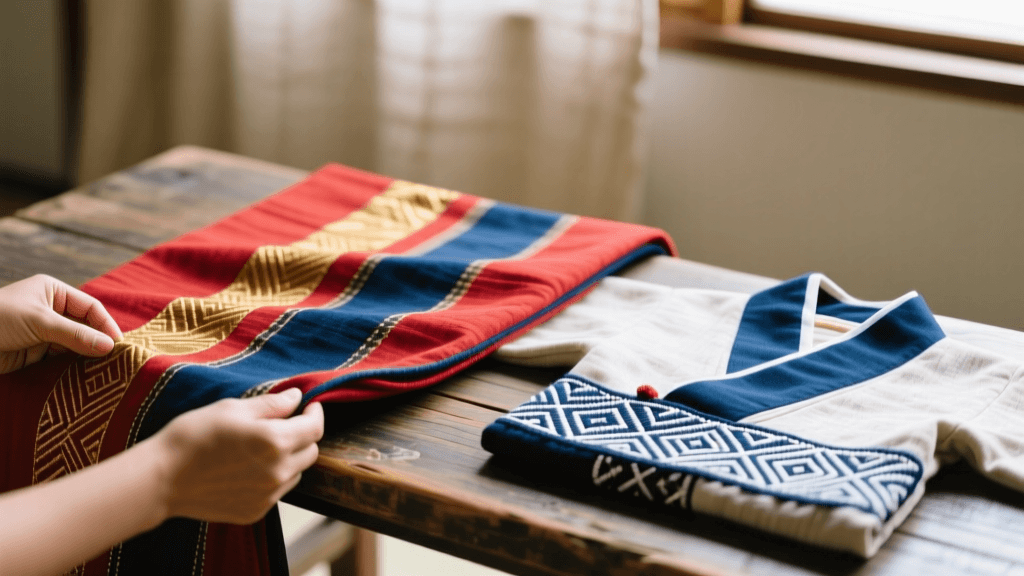
Recreating imperial Tang Hanfu requires careful fabric selection. The creation of authentic Tang silks relies on techniques recognized globally. The traditional sericulture and silk craftsmanship of China, officially inscribed on the UNESCO Representative List of the Intangible Cultural Heritage of Humanity, encompasses the meticulous processes of reeling, dyeing, and weaving that made Wu Zetian’s imperial brocades possible. When commissioning a custom piece or buying off-the-rack, use the following comparison chart to select the right materials.
| Fabric Type | Historical Accuracy | Cost (per yard) | Drape & Structure | Best Use Case |
|---|---|---|---|---|
| Silk Brocade (Zhi Jin) | High | $40 - $120+ | Stiff, structured, heavy | Formal court events, winter Banbi |
| Silk Charmeuse | Medium | $20 - $45 | Fluid, glossy, soft | Skirts (Qun), flowing Shan sleeves |
| Silk Organza | Medium-High | $15 - $30 | Crisp, sheer, lightweight | Pibo (ribbons), summer layering |
| Polyester Jacquard | Low | $8 - $15 | Stiff, breathable, durable | Budget cosplay, daily practice |
Pro Tip: If you are on a budget but want a historically accurate look, use polyester jacquard for the structured Banbi and outer layers, but invest in real silk charmeuse for the Qixiong Ruqun skirt, as the drape of the skirt is crucial to the Tang silhouette.
Tailoring and Measurements for the Qixiong Ruqun
The most common mistake modern Hanfu wearers make with Tang Dynasty clothing is improper fitting of the chest-high skirt. Because the skirt sits above the bust rather than on the natural waist, it requires precise measurements to prevent slipping or gaping.
- Upper Bust Measurement: Measure around the chest just above the bust line, where the top edge of the skirt will sit. Add 2 inches (5 cm) for seam allowance and comfort.
- Skirt Length: Measure from the upper bust line down to the floor. For a historically accurate court look, add 3 to 5 inches (7-12 cm) so the fabric pools slightly on the ground. For modern, practical wear at festivals, subtract 2 inches (5 cm) to keep the hem above the ankles.
- Strap Placement: Ensure the shoulder straps are sewn at a slight inward angle. Tang Dynasty skirts often featured wide, flat straps that crossed in the back or tied at the shoulders, distributing the heavy weight of the pleated silk.
- Pleat Density: A royal Tang skirt should have a minimum of 20 to 30 knife pleats. If commissioning a tailor, specify "high-density knife pleats" to achieve the signature voluminous bell shape.
Accessorizing the Empress: Hair, Makeup, and Jewelry
Wu Zetian’s iconic status is equally tied to her beauty and grooming regimens. Tang Dynasty court makeup was bold, featuring heavily powdered white faces, vivid crimson lip rouge, and elaborate Huadian (forehead appliqués). To recreate this, use cosmetic-grade mica powder for the forehead appliqué, shaping it into a plum blossom or phoenix motif. For the lips, opt for a deep oxblood or cherry-red lip tint, applied only to the inner center of the lips and blended outward to create a smaller, poutier illusion, which was the beauty standard of the era.
Hair was styled in towering updos, often augmented with wooden or wire hairpieces to achieve the necessary height. The hairstyle was anchored with Buyao (dangling hairpins) crafted from gold, jade, and kingfisher feathers (or modern enamel and resin replicas). When sourcing Buyao, look for artisans on platforms like Etsy or specialized Hanfu accessory makers who use traditional velvet flower (Ronghua) techniques or cast brass, avoiding cheap plastic alloys that break easily and lack historical weight.
Garment Care and Maintenance
Maintaining Tang-style Hanfu, particularly those made from authentic silk brocade and charmeuse, requires diligent care. Never machine-wash silk brocade, as the agitation will destroy the metallic threads and warp the stiff structure. Instead, spot clean with a damp cloth and mild silk detergent. For the Qixiong Ruqun skirt, hang it immediately after wearing to allow the pleats to fall naturally. If the pleats begin to loosen over time, use a low-heat steamer to gently press them back into place, using your fingers to pinch the folds while the fabric is warm and damp. Store the garments flat or loosely rolled in acid-free tissue paper to prevent permanent creasing and protect the delicate silk fibers from moisture and light damage.
Conclusion
Recreating the wardrobe of Empress Wu Zetian is more than a fashion statement; it is an act of cultural preservation and historical appreciation. By understanding the structural engineering of the Qixiong Ruqun, investing in heritage silk textiles, and mastering the nuanced art of Tang Dynasty styling, modern enthusiasts can authentically channel the power, elegance, and cosmopolitan spirit of China's golden age. Whether attending a traditional cultural festival, participating in a historical reenactment, or simply honoring Asian traditions in daily life, the imperial Hanfu of the Tang Dynasty remains a timeless testament to the artistry of ancient Chinese artisans.