Dressing the Divine: Chinese Mythology Inspired Hanfu
The Intersection of Myth and Textile
Chinese mythology is a vast, intricate tapestry of gods, goddesses, celestial beasts, and cosmic forces. For centuries, these legends have not only shaped literature and spiritual practices but have also profoundly influenced the aesthetics of traditional Chinese clothing. The garments worn by deities in classical paintings, operas, and folklore are characterized by flowing silhouettes, ethereal fabrics, and deeply symbolic motifs. Today, the modern Hanfu revival movement draws heavily from these mythological roots, allowing wearers to embody the grace of celestial beings and the power of ancient dragons. As documented by the World History Encyclopedia, Chinese mythology is deeply intertwined with the natural world and the cosmos, a relationship that is vividly translated into the textiles and embroidery of myth-inspired garments.
When we speak of 'mythology-inspired' Hanfu, we are generally referring to garments that prioritize ethereal movement, celestial color palettes, and motifs drawn from classical texts like the Shanhaijing (Classic of Mountains and Seas). Unlike strictly historical Hanfu, which attempts to replicate exact archaeological silhouettes from the Tang or Ming dynasties, mythic Hanfu often blends historical cuts with theatrical fantasy. The evolution of these divine garments mirrors real-world historical Chinese dress, which the Encyclopedia Britannica notes was strictly codified by sumptuary laws and cosmological beliefs, where colors and motifs denoted one's place in the earthly and heavenly hierarchy.
Signature Garments of the Divine Pantheon
To successfully style a mythology-inspired wardrobe, one must first understand the visual language of the Chinese pantheon. Each deity or mythological archetype possesses distinct sartorial markers that communicate their domain and power.
Chang'e and the Moon Palace
Chang'e, the Goddess of the Moon, is the ultimate symbol of celestial elegance. Her garments are traditionally depicted in cool, luminescent tones: moonwhite, pale celadon, and icy blue. The defining feature of her wardrobe is the Pibo (a long, flowing silk ribbon draped over the arms) and the Qixiong Ruqun (a chest-high pleated skirt). To capture the 'moonlight' effect, modern Hanfu makers utilize silk organza and pearlescent brocades that catch the light during movement.
The Dragon King and Aquatic Power
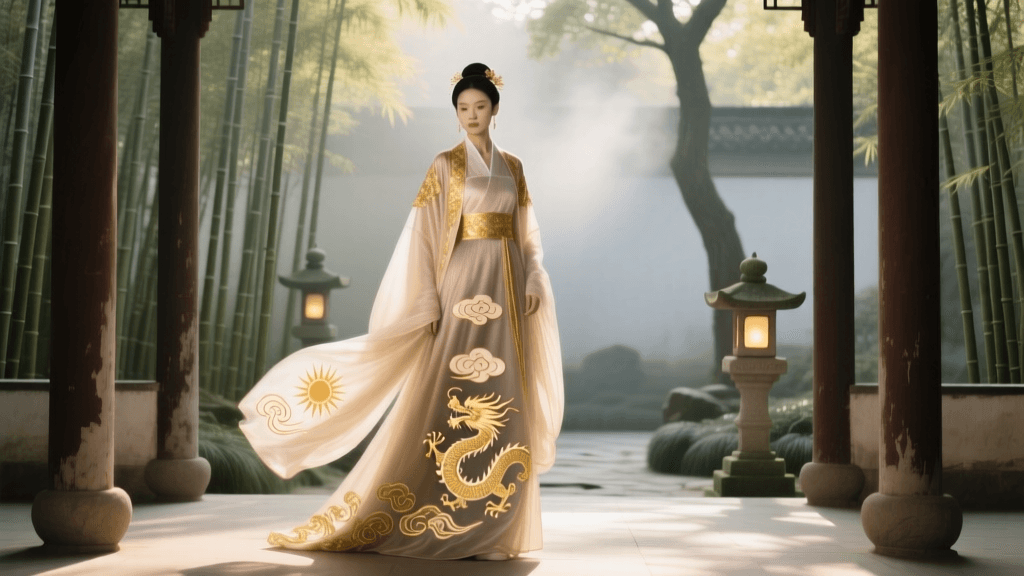
Representing the rulers of the seas and weather, the Dragon King's attire is a masterclass in opulent authority. Mythological depictions favor deep oceanic blues, jade greens, and imperial golds. The garments often feature Mang (four-clawed dragon) or true dragon embroidery, scaled armor elements integrated into fabric, and structured Dahu (capes) that mimic the protective shells of aquatic beasts. For modern wearers, this translates to heavy, structured brocade jackets with metallic threadwork.
Guanyin and the Ethereal Compassion
Guanyin, the Bodhisattva of Compassion, bridges Buddhist and indigenous Chinese mythology. Her clothing is characterized by modesty, fluidity, and purity. Flowing white and cream Beizi (long open-front coats) layered over simple, unadorned inner garments represent her spiritual clarity. The styling relies less on heavy embroidery and more on the pristine quality of the fabric and the gentle drape of lotus-motif veils.
Deity Wardrobe Breakdown & Modern Equivalents
When shopping for or commissioning myth-inspired Hanfu, use this guide to align your choices with specific mythological archetypes. To see the physical remnants of these mythological motifs and historical textiles, one can explore the extensive archives at the Victoria and Albert Museum's Asian Collections, which showcase the meticulous craftsmanship required for such divine representations.
| Deity / Archetype | Signature Element | Color Palette | Modern Hanfu Equivalent | Estimated Cost (USD) |
|---|---|---|---|---|
| Chang'e (Moon) | Pibo (silk ribbon), wide sleeves | Moonwhite, Icy Blue, Silver | Tang-style Qixiong Ruqun in organza | $80 - $180 |
| Dragon King (Sea) | Scale motifs, structured collars | Abyssal Blue, Jade, Gold | Ming-style Aoqun with metallic brocade | $150 - $350 |
| Nuwa (Creation) | Snake-scale hems, earthy drapes | Terracotta, Ochre, Moss Green | Weijin-style Ruqun with layered wraps | $90 - $200 |
| Guanyin (Mercy) | Lotus embroidery, sheer veils | Pearl White, Cream, Soft Pink | Song-style Beizi over pleated skirts | $70 - $160 |
| Nine-Tailed Fox | Fur trims, illusion layering | Crimson, Black, Copper | Tang-style round-collar robe with faux fur | $120 - $250 |
Actionable Guide: Sourcing and Styling Myth-Inspired Hanfu
Transitioning from admiration to actionable styling requires an understanding of fabrics, measurements, and sourcing strategies. Here is how to build a mythology-inspired wardrobe that is both visually stunning and practical to wear.
Fabric Selection and Measurements
The 'immortal' or xianqi (fairy-like) aesthetic relies entirely on how the fabric interacts with air and light. Avoid heavy, stiff cottons or matte polyesters. Instead, seek out the following materials:
- Silk Organza (Ou Gansha): Essential for outer layers and Pibo. It holds its shape while remaining translucent. Look for a width of at least 140cm to ensure voluminous sleeves.
- Xiangyunsha (Gambiered Canton Gauze): A premium, heritage fabric dyed with yam juice and river mud. It has a subtle, leathery sheen and rustles softly, making it perfect for earth-deity or dragon-inspired garments. Expect to pay $30-$50 per meter.
- Jacquard Brocade: Ideal for structured Ming dynasty-style jackets. Ensure the brocade has a metallic thread count of at least 15% to catch the light like dragon scales.
Crucial Measurement: For the ethereal 'goddess' twirl effect seen in Tang dynasty mythology depictions, the hem circumference of your Qixiong Ruqun skirt must be a minimum of 6 meters (approx. 19.6 feet). Standard everyday skirts are usually 3 to 4 meters. Always check the hem measurement before purchasing a 'mythic' set.
Color Theory and Dyeing Techniques
Mythological colors are rarely flat. They possess depth and iridescence. When sourcing garments, look for 'gradient dye' (jianbian) techniques. A skirt that transitions from deep indigo at the waist to seafoam green at the hem perfectly mimics the depths of the Dragon King's ocean. For celestial beings, 'starlight' fabrics woven with microscopic holographic threads provide a subtle shimmer without looking like a costume.
Timing and Sourcing Strategy
High-quality, embroidery-heavy mythic Hanfu is often produced by independent studios on platforms like Taobao or via specialized indie brands. Because these sets feature complex machine or hand-embroidery (such as the intricate cloud-and-dragon motifs on a Dahu cape), they are rarely kept in stock. Actionable Tip: Place pre-orders during the 'Spring Collection' drops in February or the 'Singles Day' sales in November. Allow 4 to 8 weeks for production and international shipping. Custom hand-embroidered sets can take up to 6 months and cost upwards of $800 USD.
Accessories: Crowning the Divine
A mythological garment is incomplete without the appropriate hair ornaments and jewelry. The hair is considered the crown of the spirit in Chinese tradition.
- Chang'e / Celestial: Opt for Buyao (step-shake) hairpins featuring dangling pearls and crescent moon motifs. Jade hair combs carved with rabbit or cloud motifs anchor the updo. Budget: $25-$60 for brass and freshwater pearl sets.
- Dragon King / Warrior: Utilize Guan (crowns) or structured leather and metalwork hair binders. Hairpins shaped like tridents or featuring lapis lazuli inlays convey aquatic authority. Budget: $40-$120.
- Nuwa / Earth Goddess: Incorporate natural elements like unpolished jade, raw copper wire wrapping, and floral crowns made of preserved lotus or peony flowers.
Incorporating Mythic Elements into Everyday Wear
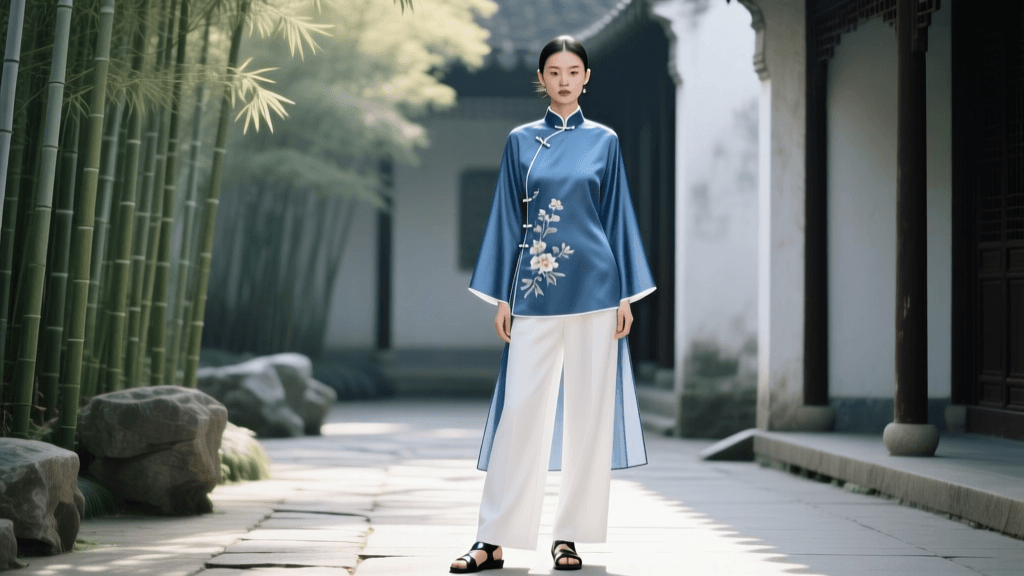
While a full 6-meter organza skirt is perfect for conventions, photoshoots, or cultural festivals, you can integrate mythological elements into daily life through 'Hanfu elements' (Han Yuansu) fashion. Pair a heavily embroidered dragon-motif brocade vest with modern wide-leg trousers. Use a sheer, gradient-dyed Pibo as a lightweight summer scarf over a modern linen dress. Substitute standard jewelry with a single, high-quality jade and silver hair stick to evoke the quiet grace of Guanyin in a professional setting.
Conclusion
Dressing in the style of Chinese mythology is more than a fashion statement; it is an act of cultural storytelling. By understanding the symbolic weight of colors, the historical context of silhouettes, and the specific material requirements of ethereal garments, you can curate a wardrobe that honors the divine archetypes of ancient legends. Whether you are channeling the lunar grace of Chang'e or the oceanic power of the Dragon King, the right fabric, cut, and motif will allow you to wear the myth itself.