Xin Zhongshi Runway Trends at Paris Fashion Week 2026
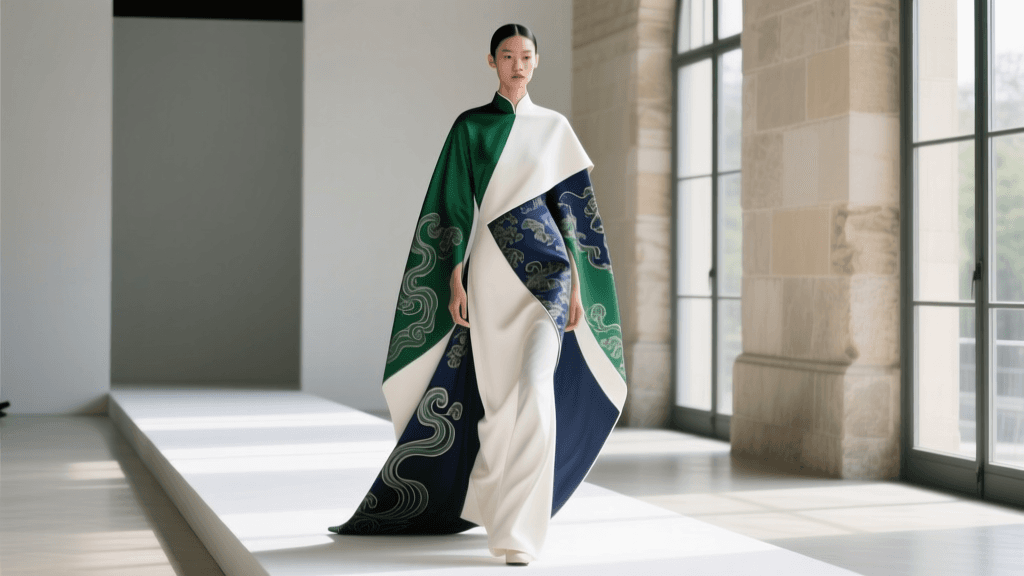
The global fashion landscape in 2026 has been unequivocally reshaped by the Xin Zhongshi (New Chinese Style) movement. No longer confined to regional markets or overt, stereotypical motifs, traditional Chinese garments and ancient weaving techniques have taken center stage at Paris Fashion Week and international design exhibitions. This year, the integration of heritage textiles like Xiangyunsha (mud-dyed silk) and Song brocade into avant-garde, contemporary silhouettes represents a sophisticated dialogue between ancient Asian traditions and modern haute couture. For collectors, curators, and fashion historians, understanding the nuances of these 2026 runway presentations is essential for appreciating the evolution of Asian sartorial heritage on the world stage.
The Global Ascent of Xin Zhongshi in 2026
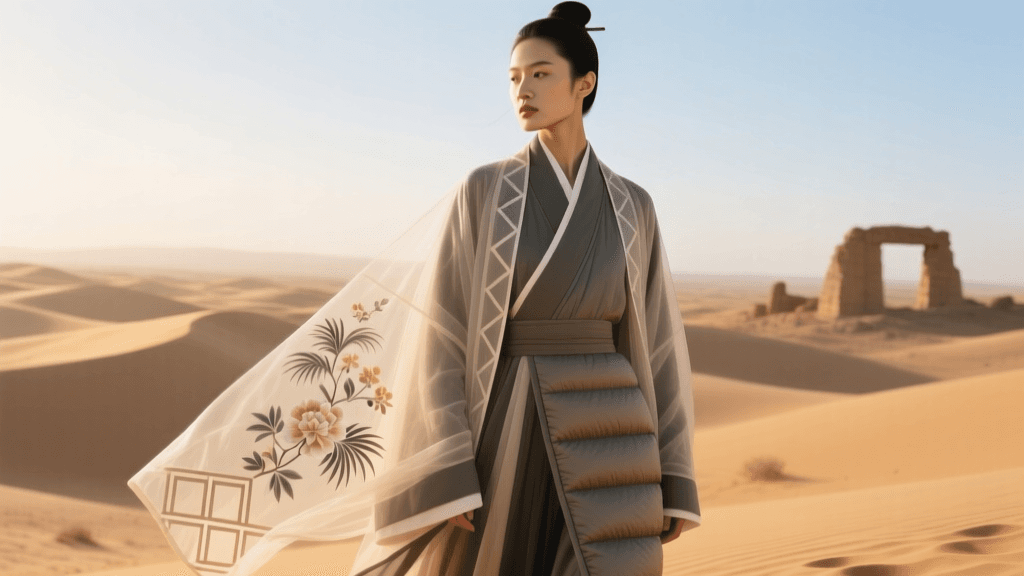
In 2026, the Xin Zhongshi aesthetic has matured far beyond the simple addition of a Mandarin collar or frog buttons to Western tailoring. Today’s leading designers are deconstructing the foundational geometry of the Hanfu and the Qipao, utilizing zero-waste cutting techniques derived from ancient Chinese tailoring, such as the Shenyi (deep robe) one-piece construction. At Paris Fashion Week FW26, audiences witnessed collections that prioritized structural fluidity, philosophical minimalism, and an intense reverence for material provenance. The focus has shifted toward the tactile experience of the garment, emphasizing how traditional Asian textiles interact with the human form in motion.
Heritage Textiles Take Center Stage
The true stars of the 2026 international design weeks are not just the designers, but the ancient textiles they have resurrected and recontextualized. Two specific fabrics have dominated the runways and accompanying museum exhibitions this year.
Xiangyunsha (Gambiered Canton Gauze)
Originating from the Guangdong province, Xiangyunsha is a luxurious silk dyed with the juice of the gambier plant and coated with iron-rich river mud. In 2026, designers have embraced Xiangyunsha for its unique wellness practices and skin-friendly properties. The mud-dyeing process creates a naturally antimicrobial, UV-resistant fabric that regulates body temperature. On the runway, its distinctive crackled texture and dual-toned appearance (matte black on one side, rich ochre on the other) have been utilized in reversible, modular outerwear that speaks to the modern consumer's demand for sustainability and functional wellness.
Song Brocade (Song Jin)
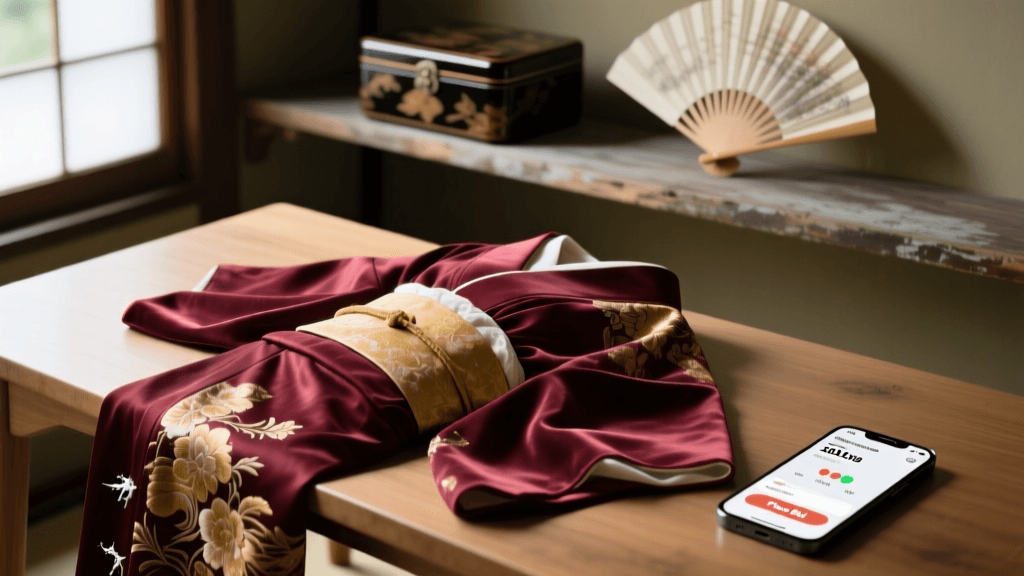
Historically reserved for imperial garments and mounting priceless scroll paintings, Song brocade is characterized by its complex, multi-layered weave and subtle, elegant luster. Unlike the heavier, more ornate Shu or Yun brocades, Song brocade offers a refined drape that 2026 couture houses have masterfully adapted for evening wear. By blending traditional silk warp threads with modern, ultra-fine metallic wefts, designers have created garments that possess the structural integrity of historical armor but the fluidity of liquid metal.
Fabric Drape Analysis: Ancient Weaves Meet Modern Geometry
A critical component of the 2026 runway reviews is fabric drape analysis. Traditional Chinese weaving techniques were originally designed for flat, geometric cutting, which naturally results in a stiffer, more sculptural drape compared to the bias-cut silk charmeuse popularized in 20th-century Western fashion. This season, designers have solved the historical rigidity of Song brocade through innovative laser-cutting and micro-pleating techniques. By introducing microscopic articulation points into the weave, the fabric achieves a kinetic drape, allowing the heavy brocade to cascade over the body's contours without losing its architectural heritage. This technical breakthrough has been a major talking point in academic research circles and textile symposiums accompanying the fashion weeks.
2026 Paris Runway & Exhibition Comparison Chart
The following table highlights how three distinct design philosophies within the Xin Zhongshi movement approached traditional garments and textiles during the 2026 international design weeks.
| Design Approach | Core Heritage Textile | 2026 Silhouette Focus | Museum Exhibition Crossover |
|---|---|---|---|
| Architectural Couture | Song Brocade (Song Jin) | Structured, voluminous outerwear with exaggerated, stiffened shoulders inspired by Ming Dynasty official robes. | Palais Galliera (Paris) |
| Fluid Minimalism | Xiangyunsha (Mud-Dyed Silk) | Bias-cut, reversible slip dresses and modular trench coats emphasizing zero-waste pattern making. | V&A Museum (London) |
| Deconstructed Heritage | Xiangyunsha & Raw Hemp | Asymmetrical, multi-layered wraps referencing the ancient Shenyi robe, featuring raw, unfinished hems. | The Met (New York) |
Museum Exhibitions: Beyond the Runway
The impact of Chinese fashion in 2026 extends far beyond the temporary tents of Paris and Milan. Major cultural institutions are actively contextualizing these runway pieces within the broader scope of Asian traditions and Silk Road exchanges. The Victoria and Albert Museum's Asian Collections have been instrumental in providing historical backing to modern designers, offering access to archival Qing Dynasty textiles that inform contemporary zero-waste cutting patterns. Similarly, the Metropolitan Museum of Art's Asian Art Department has hosted symposia in 2026 exploring how ancient weaving techniques are being preserved through high-fashion commercialization. These exhibitions are vital for academic research, bridging the gap between historical preservation and the future of global fashion.
Collector’s Guide: Sourcing, Storage, and Maintenance
For private collectors, archivists, and boutique owners purchasing Xin Zhongshi pieces from the 2026 design weeks, proper storage maintenance is critical. Heritage textiles require highly specific environmental controls to prevent degradation.
Climate-Controlled Storage for Heritage Silks
Xiangyunsha and Song brocade are protein-based fibers (silk) combined with organic dyes and mineral muds. They must be stored in a dark, climate-controlled environment. The ideal temperature is strictly between 18°C and 20°C (64°F - 68°F), with a relative humidity (RH) of 45% to 55%. Fluctuations in humidity can cause the mud-dye coating on Xiangyunsha to crack or flake, while high humidity can lead to mold growth in the dense wefts of Song brocade. Never store these garments on wire hangers; instead, use padded, acid-free hangers for structured pieces, or roll them around acid-free cardboard tubes lined with unbleached muslin to prevent permanent creasing.
Travel Packing for Fashion Week and Exhibitions
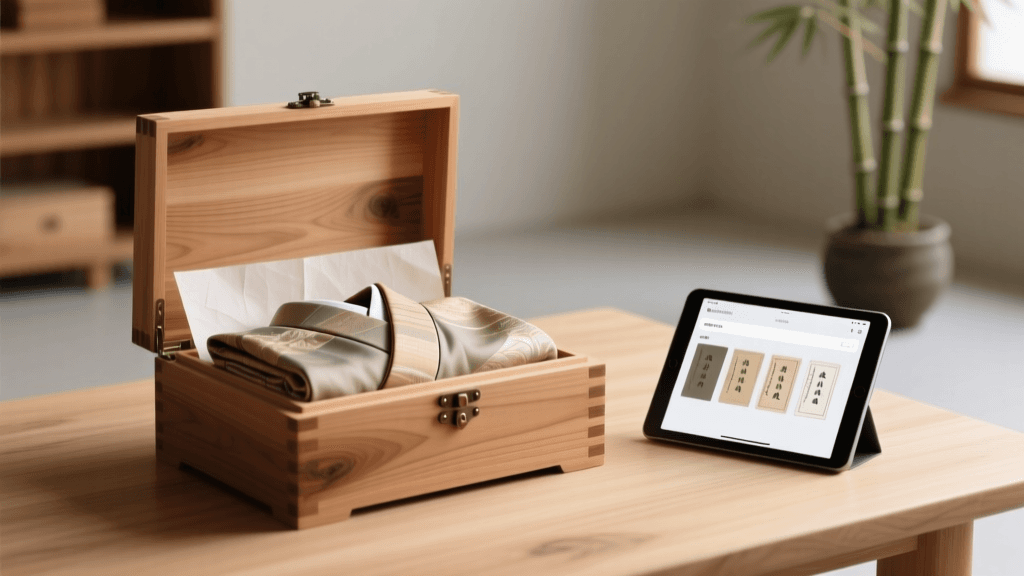
Transporting these delicate garments to international exhibitions or private viewings requires meticulous travel packing protocols. For the 2026 season, collectors are utilizing rigid, custom-fitted flight cases lined with Tyvek and ethafoam. Garments should be lightly stuffed with acid-free tissue paper to maintain their three-dimensional shape and prevent the friction that can cause the metallic threads in Song brocade to fray. When traveling across different climate zones, allow the garment case to acclimate to the room temperature for at least 12 hours before opening to prevent condensation from forming directly on the silk fibers.
The Future of Asian Traditions in Global Fashion
The 2026 international design weeks have proven that Xin Zhongshi is not a fleeting trend, but a permanent evolution in global fashion. By treating ancient weaving techniques, historical silhouettes, and traditional wellness practices with rigorous academic and technical respect, designers are ensuring that Asian traditions remain a vital, living component of the global sartorial lexicon. As we look toward future seasons, the integration of these heritage textiles will undoubtedly continue to challenge and inspire the boundaries of modern couture.