Kimono Storage & Preservation Guide 2026: Archival Care
The Intersection of Heritage and Modern Archival Science
Preserving a collection of traditional Japanese garments requires a delicate balance between centuries-old wisdom and contemporary conservation science. As we navigate the climate and technological landscape of 2026, kimono storage preservation has evolved. Silk, a natural protein fiber, is inherently vulnerable to fluctuating humidity, ultraviolet light, biological pests, and mechanical stress from improper folding. Whether you are managing a private collection of Taisho-era vintage kimono or maintaining a contemporary archive of formal uchikake, implementing a rigorous collection management strategy is essential.
Today's collectors and archivists recognize that the survival of these textile masterpieces depends on proactive environmental control. According to the American Institute for Conservation's Textile Wiki, protein fibers like silk require strict environmental controls to prevent hydrolysis and mechanical degradation over time. This comprehensive guide outlines the most effective, museum-grade storage materials, climate control technologies, and digital inventory practices available in 2026 to ensure your collection endures for generations.
Essential Materials for Kimono Preservation
Kiri (Paulownia) Wood Chests: The Gold Standard
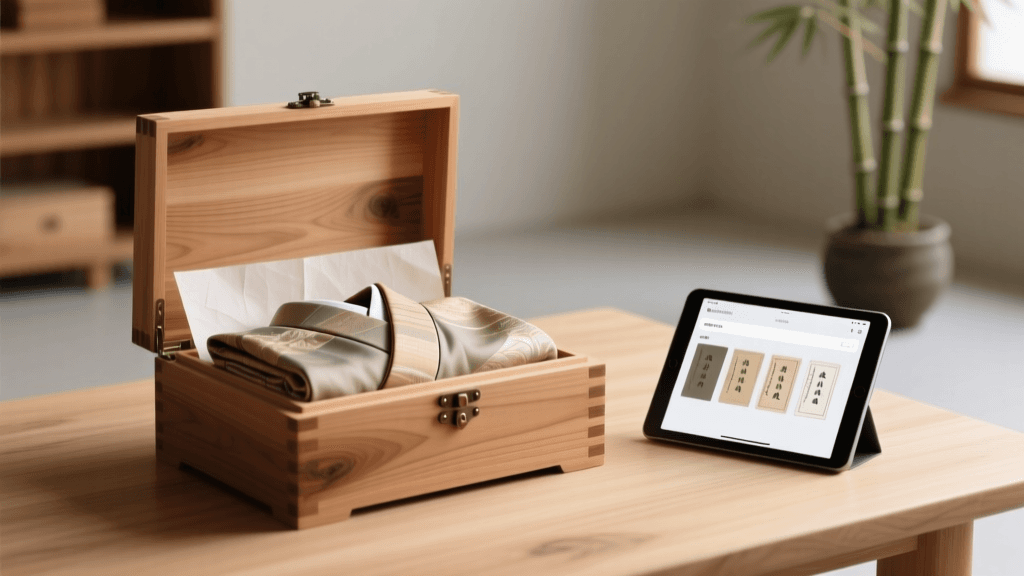
For centuries, the *tansu* (chest of drawers) crafted from *kiri* (Paulownia tomentosa) wood has been the premier storage vessel for Japanese textiles. Kiri wood possesses unique cellular properties that allow it to act as a natural hygroscopic buffer. When ambient humidity rises, the wood swells, sealing the drawers and preventing moisture from reaching the garments inside. Conversely, in dry conditions, the wood contracts slightly, allowing the interior to breathe.
Furthermore, kiri wood naturally contains paulownin, a chemical compound that deters insects and resists fungal growth. In 2026, sustainably harvested, kiln-dried kiri chests remain a significant investment, with high-quality, multi-drawer *kiri tansu* ranging from $1,200 to $3,500 on the international market. When purchasing, ensure the interior is unfinished, as varnishes or chemical sealants can off-gas volatile organic compounds (VOCs) that degrade silk dyes and metallic threads.
Tatoushi: Archival Wrapping Paper
Never store a silk kimono directly against wood, even kiri, without a protective barrier. *Tatoushi* (or *tatou-gami*) is the traditional Japanese wrapping paper used to enclose folded garments. Modern archival-grade tatoushi is manufactured from long-fiber kozo (mulberry) pulp and is chemically buffered to maintain a neutral pH, preventing acid migration that causes yellowing and fiber embrittlement.
Standard tatoushi sheets measure approximately 100cm by 70cm, providing ample coverage for a fully folded kimono. When wrapping, the paper should completely envelop the garment, with the flaps tucked securely to block out dust and light. Replace your tatoushi every three to five years, or immediately if you notice any discoloration or stiffness in the paper.
Climate Control: Managing Humidity and Pests in 2026
The ideal micro-climate for silk preservation is a stable temperature of 65°F to 68°F (18°C to 20°C) with a relative humidity (RH) strictly maintained between 50% and 55%. Fluctuations in RH cause the silk fibers to expand and contract, leading to structural fatigue and the eventual shattering of the fabric.
In 2026, private collectors utilize Bluetooth-enabled micro-climate data loggers placed directly inside the kiri drawers. These sensors transmit real-time temperature and RH data to smartphone applications, alerting you to dangerous environmental shifts. For active humidity control, electronic closet dehumidifiers with silica gel cassettes are preferred over chemical desiccants, which can over-dry the air and cause silk to become brittle.
Pest Management Without Chemical Damage
The webbing clothes moth and the carpet beetle are the primary biological threats to protein-based textiles. Historically, collectors relied on naphthalene or paradichlorobenzene mothballs. However, modern conservation science strictly forbids these chemicals; their off-gassing reacts with moisture to form acidic compounds that corrode metallic *surihaku* (gold and silver leaf) threads and permanently alter silk dyes.
Instead, utilize natural Japanese camphor (*shounou*) blocks placed in the corners of the drawers, ensuring they never directly touch the tatoushi-wrapped garments. Additionally, deploy non-toxic pheromone traps in the storage room to monitor and intercept adult male moths before they can mate and lay eggs.
Storage Material Comparison Chart
Selecting the right storage enclosure is critical. Below is a comparison of common storage materials evaluated for silk kimono preservation in 2026.
| Storage Material | Pros | Cons | 2026 Estimated Cost |
|---|---|---|---|
| Kiri (Paulownia) Wood Chest | Natural humidity buffering; pest resistant; traditional aesthetic. | Heavy; expensive; requires careful sourcing to avoid chemical finishes. | $1,200 - $3,500 |
| Archival Polypropylene Box | Inert plastic; excellent dust/water barrier; stackable; affordable. | No moisture buffering; requires strict external climate control. | $40 - $85 per box |
| Acid-Free Corrugated Cardboard | Lightweight; breathable; inexpensive; museum-standard for flat storage. | Susceptible to water damage; requires replacement every 5-10 years. | $60 - $120 per box |
| Standard Western Cedar Chest | Readily available; pleasant scent; deters some pests. | Cedar oil stains silk; wood acidity damages fibers; poor moisture sealing. | $300 - $800 |
Step-by-Step Folding and Wrapping Protocol
The Victoria and Albert Museum's guidelines on textile care emphasize that improper folding can lead to permanent crease damage and fiber breakage over time. The traditional Japanese folding method, known as *tato-jikami*, is specifically designed to align the garment's seams and distribute stress evenly.
- Step 1: Preparation. Lay the kimono face down on a clean, smooth surface. Ensure your hands are clean and free of lotions, or wear unbleached cotton archivist gloves.
- Step 2: Sleeve Alignment. Fold the left sleeve back over the body of the kimono, aligning the edge with the center back seam. Repeat with the right sleeve.
- Step 3: Body Folds. Fold the left side of the body toward the center back seam. Then, fold the right side over the left, ensuring the front panels overlap neatly.
- Step 4: Length Folds. Fold the bottom hem up toward the collar, leaving a two-inch gap to prevent a sharp, damaging crease on the delicate collar silk. Fold the top collar section down over the body.
- Step 5: Padding the Creases. Insert small rolls of acid-free, unbuffered tissue paper into the major folds to soften the crease lines and prevent long-term fiber memory.
- Step 6: Wrapping. Place the folded kimono in the center of the tatoushi paper. Fold the bottom flap up, the top flap down, and secure the side flaps by tucking them into the folded pockets.
Digital Collection Management for Private Archivists
As collections grow, relying on memory or physical index cards becomes a liability. In 2026, comprehensive digital collection management is a cornerstone of responsible preservation. Utilizing cloud-based database software allows collectors to track not only the location of each garment but also its provenance, condition, and insurance valuation.
When cataloging a kimono, ensure your database includes the following metadata fields:
- Object ID: A unique alphanumeric identifier (e.g., KM-2026-042).
- Era/Period: e.g., Meiji, Taisho, Early Showa.
- Material & Weave: e.g., Chirimen (crepe) silk, Rinzu (damask), Tsumugi (pongee).
- Dyeing Technique: e.g., Yuzen, Shibori, Katazome, Kaga-yuzen.
- Condition Report: Detailed notes on dye migration, loose threads, or fabric weakness, accompanied by high-resolution macro photography.
- Storage Location: Exact chest, drawer, and position within the drawer.
Many private collectors in 2026 utilize adapted museum CMS (Collection Management System) platforms or specialized archival inventory apps that support offline access and high-resolution image caching, allowing for instant condition checks without needing to physically unbox the fragile garments.
Seasonal Airing (Mushiboshi) Best Practices
Even in perfectly controlled environments, kimono require periodic airing, a traditional practice known as *mushiboshi*. This is typically performed during late autumn or early winter when the air is cool, dry, and crisp.
Remove the garments from their chests, unwrap the tatoushi, and open the folds slightly to allow trapped moisture and stale air to escape. Hang the kimono on wide, padded, archival-quality hangers for no more than two to three hours in a shaded, well-ventilated room. Never expose silk to direct sunlight during this process, as UV radiation will rapidly fade organic dyes and degrade the protein structure of the fiber. After airing, refold the garment using the protocol above, shifting the fold lines slightly from their previous positions to prevent permanent stress on any single area of the fabric.
Conclusion
The preservation of traditional Japanese garments is an act of cultural stewardship. By combining the natural efficacy of kiri wood and tatoushi paper with 2026's advanced micro-climate monitoring and digital cataloging tools, collectors can safeguard these intricate textiles against the ravages of time. Proper kimono storage preservation ensures that the artistry of the weavers, dyers, and embroiderers remains vibrant and intact for future generations to study and admire.