Vintage Kimono Auction Appraisal 2026: Value & Bidding Guide
The State of the Vintage Kimono Market in 2026
The global appetite for sustainable, heritage-rich fashion has propelled the vintage kimono market into a highly sophisticated asset class by 2026. No longer confined to domestic Japanese thrift stores or niche collector circles, archival Japanese garments are now fiercely contested on international auction blocks and specialized digital platforms. As contemporary designers continue to draw inspiration from traditional silhouettes, and as the principles of circular fashion dominate the 2026 sartorial landscape, understanding the precise valuation and appraisal of secondhand kimonos is essential for both seasoned collectors and new enthusiasts.
Navigating this market requires more than an appreciation for beautiful textiles; it demands a rigorous understanding of historical weaving techniques, regional dyeing methods, and the nuanced condition reports unique to Japanese garments. According to the Ministry of Economy, Trade and Industry (METI), the preservation and global promotion of traditional Japanese crafts have seen a significant digital pivot, making authenticated vintage pieces more accessible but also more competitive to acquire. This guide will equip you with the expert appraisal metrics and actionable bidding strategies required to succeed in the 2026 kimono auction ecosystem.
Core Appraisal Metrics: How to Value a Kimono
Appraising a vintage kimono involves a meticulous evaluation of three primary pillars: textile composition, structural condition, and artisan provenance. Unlike Western vintage fashion, where brand labels dictate the majority of the value, traditional Japanese garments are valued primarily on the complexity of their craftsmanship and the integrity of their materials.
Textile and Weave Identification
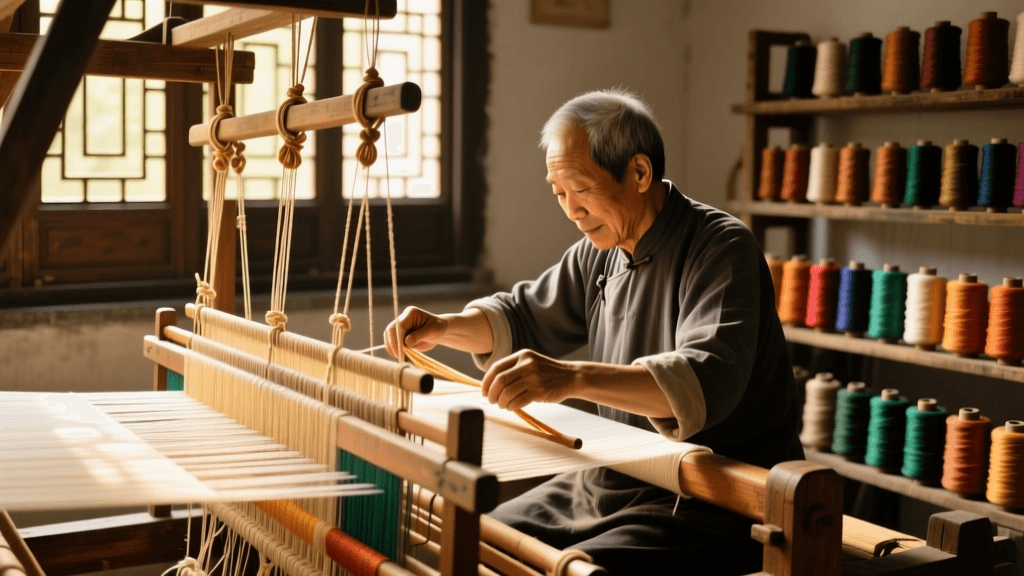
The foundation of any kimono appraisal is the fabric. As detailed by the Metropolitan Museum of Art, the evolution of Japanese textile arts represents centuries of regional specialization. In the 2026 auction market, pure silk (kinu) remains the gold standard, but specific regional weaves command massive premiums. Oshima Tsumugi (a mud-dyed, resist-woven silk from Amami Oshima) and Yuki Tsumugi (a lightweight, hand-spun silk pongee) are highly sought after for their durability and intricate kasuri (ikat) patterns. Conversely, mass-produced synthetic blends from the mid-Showa era (1950s-1970s) hold minimal auction value unless they feature exceptional, avant-garde graphic designs.
Collectors must also differentiate between chirimen (silk crepe), which drapes beautifully but is prone to shrinkage if exposed to moisture, and rinzu (silk damask), which features woven patterns and a lustrous sheen. Identifying these weaves from high-resolution auction photos is a critical skill for remote appraisers.
Condition and Flaw Assessment
Japanese auction listings utilize a specific lexicon to describe condition, and misunderstanding these terms can lead to costly mistakes. A garment listed in mint condition is rare; most vintage pieces will have some degree of wear. Appraisers look for the following specific flaws:
- Shimi (Stains): Age spots or discoloration, often found along the hem or collar. Small, localized shimi can sometimes be treated by specialist cleaners, but widespread yellowing (yake) permanently devalues the silk.
- Kise (Creasing): Permanent fold lines resulting from decades of storage in traditional tatou paper wrappers. While steaming can reduce kise, deep-set creases in metallic threads (kinran) may cause the foil to flake.
- Sode-zure (Sleeve Fraying): Wear on the inner cuffs of the sleeves, a common friction point. Minor fraying is acceptable for pre-WWII garments, but severe unraveling impacts the structural integrity.
- Hakkake (Lining) Condition: The lower lining of a kimono often suffers from sweat stains or fabric degradation. Replacing a hakkake in 2026 costs upwards of $250 USD, a factor that must be deducted from your maximum bid.
Provenance and Artisan Signatures
While many kimonos are unsigned, high-end formal garments (houmongi or furisode) may feature a rakkan (artisan signature) embroidered or woven into the inner lining or near the hem. Pieces bearing the seal of Living National Treasures or renowned dyeing houses like Chiso or Takashi Shimomura carry authenticated certificates that exponentially increase their auction ceiling.
2026 Kimono Valuation Tier Chart
The following table provides a baseline for auction estimates in the current 2026 market. Prices reflect finalized hammer prices on major Japanese and international proxy platforms, excluding buyer premiums and shipping.
| Kimono Type | Era / Style | Material & Technique | 2026 Auction Estimate (USD) | Key Appraisal Factor |
|---|---|---|---|---|
| Oshima Tsumugi | Mid-Showa (1960s) | 100% Silk, Mud-dyed Kasuri | $800 - $2,500 | Thread count density and authenticity of mud-dye scent. |
| Meisen | Taisho to Early Showa | Silk, Ikat-woven Graphic | $300 - $1,200 | Boldness of Art Deco/modernist motifs; absence of shimi. |
| Yuzen Houmongi | Heisei (1990s-2000s) | Silk Crepe, Hand-painted | $400 - $1,800 | Complexity of gold leaf (kinpaku) application and signature. |
| Haori (Jacket) | Various | Silk, Embroidered / Woven | $80 - $450 | Condition of the inner lining (uraji) and sleeve basting. |
| Vintage Uchikake | Meiji / Taisho | Heavy Silk, Couched Gold | $1,500 - $5,000+ | Museum-quality preservation; structural weight of embroidery. |
Navigating Japanese Online Auctions in 2026
The epicenter of the secondhand kimono trade remains Yahoo! Auctions Japan (Y!Auctions), supplemented by specialized platforms like Rakuten's vintage sections and dedicated kimono recycling storefronts. For international buyers, accessing these domestic markets requires the use of proxy bidding services.
Decoding Y!Auctions Listings
Sellers on Y!Auctions typically grade their items using a standardized scale. Understanding this scale is vital for accurate appraisal:
- Rank N (New/Deadstock): Never worn, often with original paper wrappers and basting threads (shitsuke) intact. Highly coveted.
- Rank A (Excellent): Worn once or twice, no visible flaws to the naked eye. May have faint storage creases.
- Rank B (Good): Minor flaws present, such as small shimi or slight collar soiling, clearly documented in photos.
- Rank C (Fair/Poor): Significant damage, large stains, or tears. Usually sold as 'junk' for upcycling or textile harvesting.
Always scrutinize the photo gallery for images of the collar edge (eri), the hem (suso), and the underarm gussets (machi), as these are the highest-stress areas.
Utilizing Proxy Services and 2026 Fee Structures
International collectors rely on proxy services like Buyee, ZenMarket, and Neokyo to bid on domestic Japanese auctions. In 2026, these platforms have refined their consolidation and insurance offerings. When calculating your maximum bid, you must factor in the proxy fee (typically a flat rate of $3 to $5 per item or a percentage of the hammer price), domestic Japanese shipping to the proxy warehouse, and international EMS or DHL freight. Furthermore, because silk is highly sensitive to humidity, opting for premium climate-controlled shipping or expedited air freight during the humid summer months is strongly recommended to prevent transit mold.
Expert Bidding Strategies for Collectors
Winning a vintage kimono auction at a fair market price requires tactical discipline. The most common mistake novice collectors make is engaging in early bidding wars, which artificially inflates the algorithmic visibility of the listing and attracts more competitors.
- Sniping Tactics: Place your maximum bid within the final three minutes of the auction. Many Japanese auction snipers use automated tools; ensure your proxy service supports delayed or last-minute bid placement to avoid counter-bidding increments.
- Monitor the 'Watch' List: Listings with over 50 'watches' (bookmarks) but no bids are often overpriced. If the item goes unsold, the seller will typically relist it with a 10% to 20% discount or offer a 'Buy It Now' option.
- Bundle for Consolidation: Target sellers who are liquidating entire estates. Bidding on multiple lower-tier garments (like haori or obi) from a single seller allows you to utilize proxy warehouse consolidation, significantly reducing your per-item international shipping costs.
- Verify the Basting Threads: If a listing claims a kimono is 'unworn,' zoom in on the photos to look for shitsuke (loose white basting threads) along the hem and sleeves. Their presence is the ultimate proof of a garment that has never been professionally cleaned or worn after its initial tailoring.
Conclusion: Preserving Textile Heritage
Participating in the 2026 vintage kimono auction market is an exercise in cultural stewardship. As the Victoria and Albert Museum highlights in its extensive research on Japanese dress, the kimono is not merely a garment, but a canvas that reflects the socio-economic shifts, artistic movements, and technological advancements of its era. By learning to accurately appraise weaves, identify structural vulnerabilities, and navigate the complexities of Japanese digital auctions, collectors ensure that these masterpieces of textile engineering are preserved, valued, and respected for generations to come. Whether you are hunting for a rare Taisho-era Meisen or a pristine Heisei Yuzen, meticulous research and strategic bidding remain your most valuable tools.