Mastering Nanjing Yunjin Drawloom Weaving: 2026 Revival Guide
The Renaissance of Nanjing Yunjin in 2026 Bespoke Fashion
Nanjing Yunjin, translating to 'cloud brocade,' represents the absolute zenith of Chinese silk weaving and textile artistry. Historically reserved for imperial dragon robes and elite court garments, this intricate craft is experiencing a massive renaissance in 2026. Driven by the global explosion of the Xin Zhongshi (new Chinese style) movement, contemporary designers and heritage ateliers are moving beyond mass-produced digital prints, returning instead to the authentic, painstakingly manual Da Hua Lou (drawloom) technique. Today, owning a bespoke Yunjin-woven garment is not just a fashion statement; it is an investment in living history and unparalleled textile engineering.
Recognized by UNESCO as an Intangible Cultural Heritage of Humanity, the Yunjin technique has survived centuries of industrialization precisely because its most complex patterns cannot be fully replicated by modern computerized jacquard looms. The integration of exotic materials—such as peacock feather yarn and genuine gold leaf—requires a tactile sensitivity that only human hands can provide. In 2026, the intersection of ancient loom mechanics and modern bespoke tailoring has created a highly specialized market for designers, collectors, and cultural preservationists.
Anatomy of the Da Hua Lou (Traditional Drawloom)
To understand the value of Yunjin brocade, one must understand the monumental machinery required to create it. The traditional Da Hua Lou is a massive, multi-tiered wooden drawloom that operates on a binary logic system predating modern computing. As detailed in the Metropolitan Museum of Art's Heilbrunn Timeline of Art History, the Chinese drawloom represents one of the most significant technological leaps in early textile manufacturing.
2026 Loom Specifications and Sourcing
Authentic replica looms built by master carpenters in Nanjing and Suzhou are highly sought after in 2026. A standard operational drawloom features the following dimensions and requirements:
- Length: 5.2 meters (17 feet)
- Width: 1.5 meters (4.9 feet)
- Height: 4.0 meters (13.1 feet)
- Weight: Approximately 850 kg (1,870 lbs) of treated elm or nanmu wood
- Footprint: Requires a dedicated studio space of at least 20 square meters with high ceilings and strict humidity control (55-65% RH).
In 2026, commissioning a custom-built, museum-grade Da Hua Lou from heritage woodworking guilds in Jiangsu province costs between $18,500 and $24,000 USD, excluding international shipping and installation.
The Two-Person Operation: Weaver and Drawboy
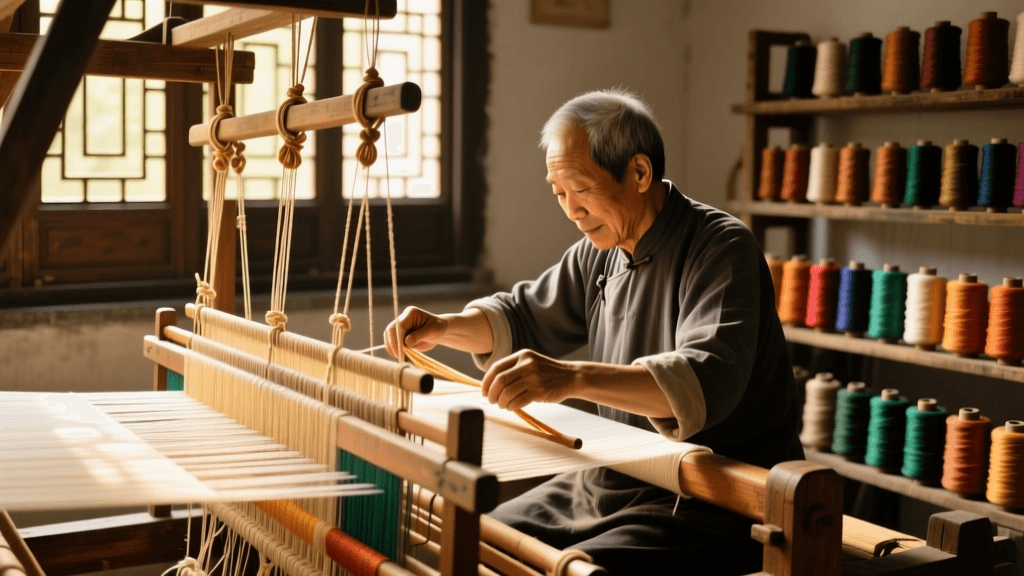
The magic of the Yunjin drawloom lies in its mandatory two-person operation. The weaver sits at the lower level, managing the shuttle, the reed, and the treadles, while the 'drawboy' (or pattern puller) sits on the upper deck, known as the hua lou. The upper deck houses the complex harness of knotted cords that dictate the pattern.
When the weaver needs to create a shed for the patterned weft, the puller raises specific warp threads according to the programmed knot sequence. This communication requires a rhythmic, almost musical synchronization. In 2026, while the physical pulling is still done by hand to maintain the exact tension required for metallic threads, ateliers have introduced ergonomic seating and climate-controlled enclosures for the pullers, reducing fatigue and increasing daily output from a mere 5 centimeters to roughly 8 centimeters of finished brocade per day.
2026 Material Market: Sourcing Silk, Gold, and Peacock Yarn
The phrase 'one inch of Yunjin, one ounce of gold' is no longer just a metaphor; it reflects the staggering cost of raw materials in the current market. The 2026 luxury textile market has seen a surge in demand for ethically sourced, ultra-premium fibers.
Grade 6A Mulberry Silk
The foundation of Yunjin is high-grade mulberry silk. In 2026, certified Grade 6A raw silk, prized for its long filaments and brilliant luster, trades at approximately $145 USD per kilogram. For a single bespoke mamianqun (horse-face skirt) requiring 4 meters of heavy brocade, the warp and weft silk alone can cost upwards of $400 USD before dyeing.
Gold and Peacock Feather Threads
What truly separates Yunjin from other brocades like Sichuan Shu or Song brocade is the use of exotic supplementary wefts. Artisans in 2026 utilize 'peacock feather yarn'—a meticulous process where the iridescent barbs of peacock feathers are spun around a silk core. This material costs roughly $600 USD per 100-meter spool. Furthermore, traditional gold thread is created by applying genuine 24k gold leaf to specialized paper, cutting it into micro-strips, and wrapping it around a silk core. Modern 2026 iterations often use UV-resistant metallic alloys for garments intended for frequent wear, but purist collectors still demand genuine gold leaf, which adds approximately $1,200 USD per square meter to the final textile cost.
The Weaving Process: From Algorithm to Fabric
The creation of Yunjin brocade follows a strict, three-phase methodology that blends ancient programming with physical labor.
1. Yi Hua (Pattern Design and AI Integration)
Historically, pattern masters painted designs on graph paper, calculating the exact warp and weft intersections. In 2026, the Yi Hua phase has been revolutionized by specialized AI textile software. Designers input traditional auspicious motifs—such as the mang (python) or cloud collars—and the AI calculates the precise structural weave matrix, optimizing the float lengths to ensure the metallic threads catch the light without snagging. However, the AI only provides the blueprint; the physical execution remains entirely manual.
2. Tiao Hua (Pattern Drafting and Knotting)
This is the 'coding' phase. Master artisans translate the design matrix into a physical harness using thousands of knotted cords. Each knot represents a binary instruction (lift or do not lift). A complex dragon motif can require over 100,000 individual knots. This phase alone can take two master drafters up to three months to complete for a single, non-repeating garment panel.
3. Zhi Hua (The Weaving)
The actual weaving involves the 'digging' or wa hua technique. Unlike standard brocades where the weft runs from edge to edge, Yunjin weavers use small, boat-shaped shuttles to weave specific colored blocks only where needed. This allows for dozens of colors in a single row without adding bulk to the reverse side of the fabric, a hallmark of authentic Yunjin.
2026 Sourcing and Cost Comparison Table
For bespoke designers and heritage enthusiasts looking to source materials or commission loom setups in 2026, the following table outlines current market specifications and estimated costs.
| Component / Material | 2026 Specification | Estimated Cost (USD) | Primary Sourcing Region |
|---|---|---|---|
| Custom Da Hua Lou Loom | 5.2m x 1.5m, Nanmu Wood | $18,500 - $24,000 | Nanjing, Jiangsu |
| Grade 6A Mulberry Silk | Raw, unspun filament (per kg) | $145 / kg | Huzhou, Zhejiang |
| Peacock Feather Yarn | Silk-core wrapped (100m spool) | $600 / spool | Kunming, Yunnan |
| Traditional Gold Thread | 24k Gold leaf on paper core | $85 / meter | Suzhou, Jiangsu |
| Natural Indigo Dye | Fermented polygonum tinctorium | $45 / liter | Guizhou Province |
Integrating Yunjin into Modern Xin Zhongshi Garments
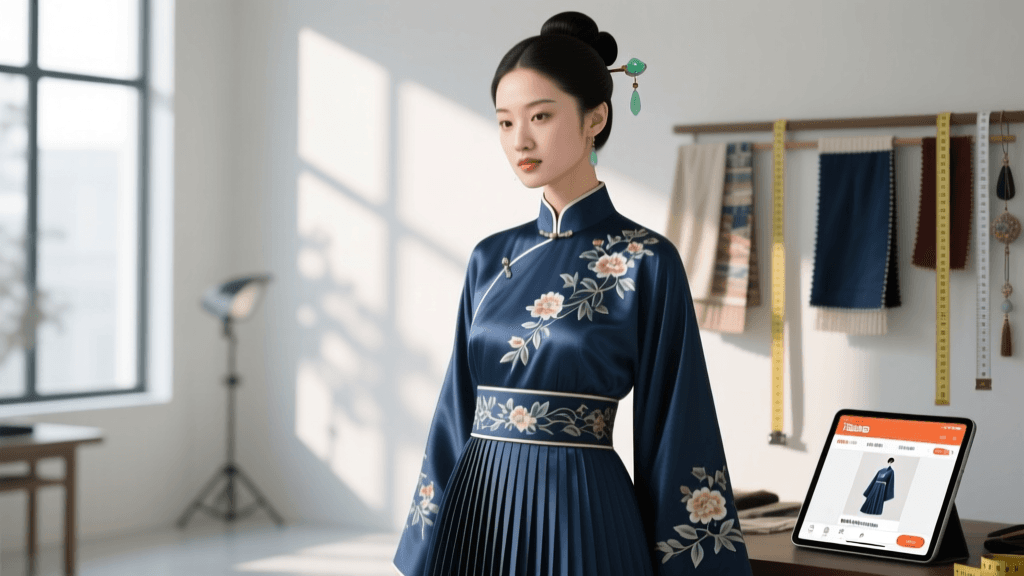
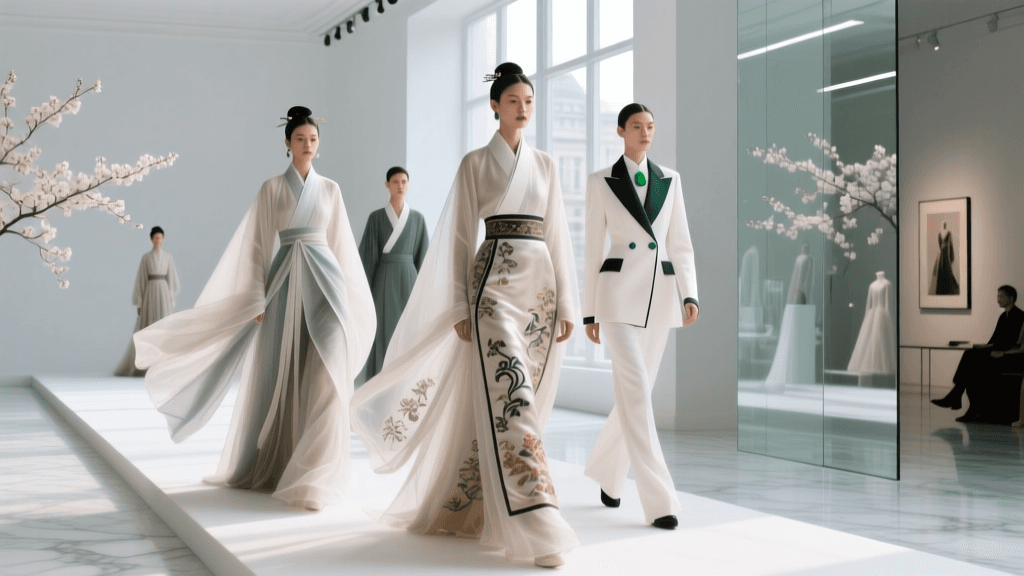
In 2026, the most successful Xin Zhongshi designers are not using Yunjin for entire garments, which would result in unwearable weight and astronomical costs. Instead, the trend is strategic placement. Yunjin panels are being integrated into the lapels of modern Mao-collar jackets, the cuffs of structured blazers, and the central lan (panels) of contemporary mamianqun skirts.
'The beauty of Yunjin lies in its restraint. By framing a 20-centimeter panel of cloud brocade against matte, heavyweight wool or raw silk crepe, you allow the gold and peacock threads to act as wearable jewelry rather than overwhelming the wearer.' — Master Weaver Lin, Nanjing Heritage Guild, 2026.
When designing for the drawloom, modern tailors must account for the fabric's lack of drape. Yunjin is highly structured and stiff, behaving more like a flexible armor or heavy tapestry than fluid silk. Patterns must be cut on the grain, and seams must be reinforced with silk organza interlining to support the weight of the metallic wefts.
Preservation, Care, and the Future of the Craft
Maintaining Yunjin brocade requires specialized knowledge. According to textile conservation principles outlined by institutions like Britannica's comprehensive guides on silk artistry, protein-based fibers like silk are highly susceptible to light degradation and acidic environments. In 2026, collectors store bespoke Yunjin garments flat in acid-free, unbleached cotton enclosures, layered with activated charcoal sheets to absorb ambient pollutants.
Garments must never be dry-cleaned using standard perc solvents, which can strip the natural sericin from the silk core and dull the gold leaf. Instead, specialized heritage textile conservators use localized, micro-vapor cleaning techniques to address surface soils without agitating the complex wa hua weft floats.
As we move through 2026, the survival of the Nanjing Yunjin drawloom technique relies heavily on the bespoke fashion sector. By commissioning these textiles, modern designers are not merely buying fabric; they are funding the apprenticeships of the next generation of drawboys and weavers. The Da Hua Lou remains a testament to human ingenuity—a wooden computer that continues to weave the clouds of antiquity into the wardrobes of the future.