Xin Zhongshi Style 2026: Essential New Chinese Wardrobe Guide
The Renaissance of Xin Zhongshi in 2026
Xin Zhongshi (新中式), or 'New Chinese Style,' has firmly transitioned from a niche cultural subculture into a dominant force in global and everyday fashion by 2026. No longer reserved exclusively for Lunar New Year celebrations or traditional tea ceremonies, this sartorial movement represents a sophisticated synthesis of historical Chinese garment architecture and contemporary tailoring. The modern wearer demands versatility, and the 2026 iteration of Xin Zhongshi delivers exactly that, blending the elegance of the Ming and Qing dynasties with the practical requirements of modern urban life.
As reported by the South China Morning Post's fashion desk, the retail sector for Xin Zhongshi has matured significantly, moving beyond simple motif-printing into structural garment innovation. Designers are now focusing on silhouette adaptation, fabric technology, and subtle heritage cues that allow these pieces to integrate seamlessly into corporate environments, international travel wardrobes, and casual weekend wear.
Core Silhouettes: Adapting History for the Modern Body
To build a functional Xin Zhongshi wardrobe, one must understand the foundational garments that define the movement and how they have been re-engineered for 2026.
The Office-Ready Mamian (Horse-Face) Skirt
Originating in the Song Dynasty and popularized during the Ming and Qing eras, the Mamian skirt is characterized by its flat front and back panels flanked by intricate side pleats. Historically, these skirts were heavy, floor-sweeping, and required complex wrapping techniques. According to the Metropolitan Museum of Art's Heilbrunn Timeline of Art History, traditional Chinese dress heavily relied on flat-pattern cutting and wrap structures rather than darts and seams.
In 2026, the Mamian skirt has been radically optimized for the office. Modern iterations feature hidden elasticized waistbands, secure snap closures, and laser-set pleats that maintain their razor-sharp structure without the need for daily steaming. The hemlines have been elevated to a modest midi-length (typically falling just below the calf), and the fabrics have shifted from high-sheen ceremonial silks to matte crepes and lightweight wool blends, making them entirely appropriate for boardroom settings.
Deconstructed Tang Jackets and Stand-Collar Blouses
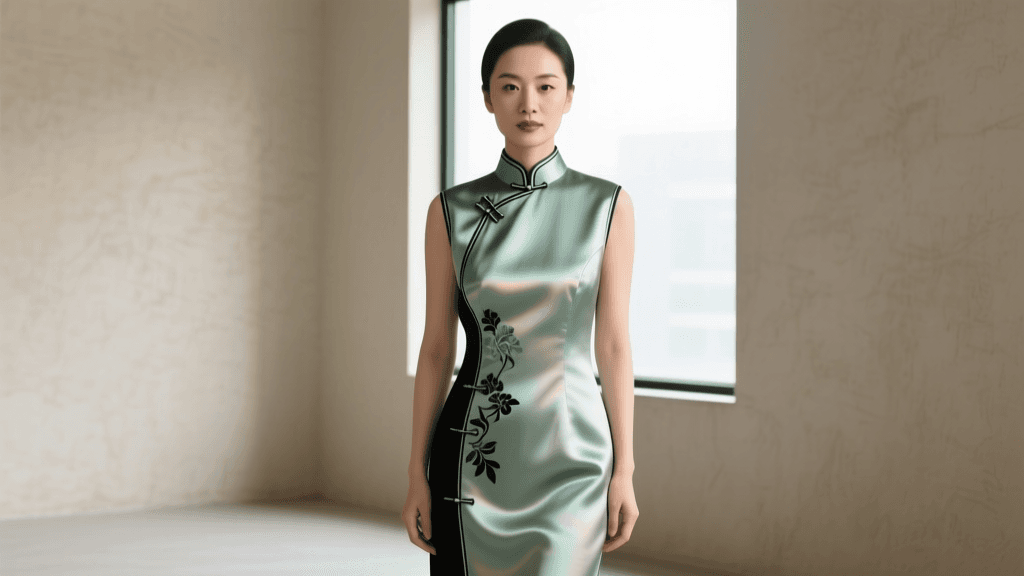
The liangling (stand collar) and pankou (knotted buttons) are the most recognizable hallmarks of Xin Zhongshi. While traditional Tang jackets were boxy and heavily padded for winter, the 2026 deconstructed versions feature dropped shoulders, asymmetric hems, and cropped silhouettes. The pankou knots, once painstakingly hand-wrapped, are now frequently crafted using 3D-printed silk-resin cores wrapped in traditional textiles, offering the exact historical aesthetic with vastly improved durability and shape retention.
2026 Fabric Innovations: Where Heritage Meets Tech
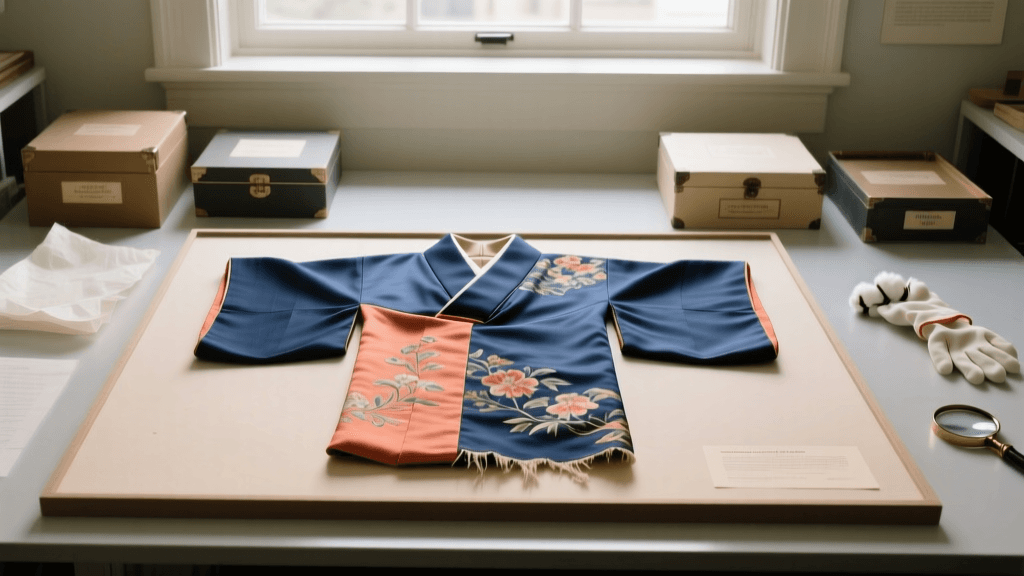
The most significant leap in the Xin Zhongshi movement over the last few years lies in textile engineering. Traditional Chinese fabrics, while breathtaking, were notoriously difficult to maintain. The Victoria and Albert Museum's Asian textile archives highlight the immense care historically required to preserve delicate silks and natural dyes. Today, heritage techniques are being augmented with modern nanotechnology.
| Fabric Type | Historical Application | 2026 Xin Zhongshi Innovation | Maintenance & Care |
|---|---|---|---|
| Song Brocade (Songjin) | Ceremonial robes, luxury bindings | Wrinkle-resistant poly-silk jacquard weave with matte finishing | Machine washable (cold, delicate cycle); hang dry |
| Xiangyunsha (Gambiered Canton Gauze) | Elite summer garments | Hydrophobic nano-coating applied to traditional mud-dyed silk | Wipe clean for minor spills; gentle hand wash in pH-neutral detergent |
| Zhangzhou Velvet | Winter outerwear, aristocratic trim | Thermal-regulating crushed velvet with stretch-weft integration | Professional dry clean only; store on padded hangers |
| Modernized Ramie (Xiabu) | Commoner summer wear, mourning | Enzyme-washed for extreme softness; blended with Tencel for drape | Machine wash warm; iron on high with steam for crisp finish |
These innovations mean that a consumer in 2026 can purchase a Xiangyunsha blouse, wear it to a humid outdoor garden party, and simply wipe away a spilled drink without ruining the centuries-old dyeing technique that gives the fabric its signature crackled, earthen sheen.
The 80/20 Styling Formula for Everyday Wear
The golden rule of styling Xin Zhongshi for daily life is the 80/20 formula: 80% modern contemporary basics, and 20% traditional Chinese elements. Overloading an outfit with historical pieces can push it into the realm of costume or cosplay. Here is how to execute this balance flawlessly:
- The Outerwear Anchor: Pair a traditional stand-collar silk blouse with a sharply tailored, oversized Western blazer or a classic beige trench coat. The contrast between the structured Western lapels and the delicate pankou knots creates a striking, intellectual aesthetic.
- Footwear Pairings: Abandon traditional cloth shoes for daily wear. Instead, ground a flowing Mamian skirt with chunky leather loafers, minimalist white leather sneakers, or pointed-toe ankle boots. The heavy footwear grounds the ethereal drape of the skirt, making it look intentional and modern.
- Minimalist Accessories: Avoid ornate, heavy gold hairpins or jade bangles for the office. Opt instead for geometric jade pendants set in brushed silver or titanium, or subtle enamel earrings that mimic the colors of Kingfisher feather art (Tian-Tsui) without the ethical and practical drawbacks of the historical craft.
- Color Story Restraint: While traditional ceremonial wear relies on high-contrast reds, golds, and imperial yellows, the 2026 everyday palette favors 'Song Dynasty minimalism.' Think celadon greens, ink-wash grays, porcelain whites, and deep oxblood. These muted tones integrate effortlessly into a modern capsule wardrobe.
Curating Your 2026 Xin Zhongshi Capsule Wardrobe
For those looking to invest in this movement, building a capsule collection ensures maximum versatility. Here are the five essential items to acquire this year, along with their expected market pricing for authentic, quality-constructed pieces:
- The Tech-Silk Stand-Collar Blouse ($120 - $180): A white or pale celadon blouse made from washable silk-blend. Look for hidden plackets and subtle tonal embroidery at the cuffs.
- The Midi Mamian Skirt in Matte Crepe ($150 - $250): Choose a solid ink-gray or navy. Ensure the waistband has a discreet side-zipper and hook-and-eye closure for a smooth silhouette under tucked-in blouses.
- The Deconstructed Tang Jacket ($220 - $350): A cropped, open-front jacket in a modernized Song brocade. This serves as the ultimate statement piece for evening dinners or creative industry meetings.
- Wide-Leg Linen Trousers with Subtle Embroidery ($90 - $140): Trousers featuring a high waist and a single, delicate motif (like a bamboo leaf or plum blossom) embroidered near the left pocket.
- Geometric Jade Pendant Necklace ($80 - $150): A small, high-quality Hetian jade slice set in a modern, asymmetrical silver cage, worn on a fine chain.
Maintenance and Storage of Tech-Infused Silks
Despite the advancements in textile technology, Xin Zhongshi garments still require mindful storage to preserve their structural integrity and dye vibrancy. The nano-coatings on modern Xiangyunsha can be degraded by prolonged exposure to direct UV light, meaning these garments should never be stored on open clothing racks near sunlit windows.
For structured Tang jackets and brocade blazers, always use wide, padded wooden hangers to support the shoulders and prevent the pankou knots from pulling against the fabric grain. When packing for travel, roll Mamian skirts rather than folding them; the laser-set pleats of 2026 are designed to spring back into shape when unrolled and hung in a steamy bathroom for ten minutes. Finally, store off-season silks in breathable cotton garment bags with natural cedar blocks to deter pests without introducing the harsh chemicals found in synthetic mothballs, which can react poorly with natural heritage dyes.
Conclusion
The Xin Zhongshi movement of 2026 is a testament to the living, breathing nature of cultural heritage. By respecting the architectural genius of traditional Chinese garments while fearlessly embracing modern textile science and contemporary styling, this fashion category has secured its place in the global wardrobe. Whether you are navigating a corporate office in Shanghai, attending a gallery opening in London, or simply enjoying a weekend in the city, the New Chinese Style offers a profound, elegant, and highly functional way to wear history on your sleeve.