The Practitioner's Guide to Hakama: Martial Arts and Tea Ceremony
The Shared Heritage of the Hakama
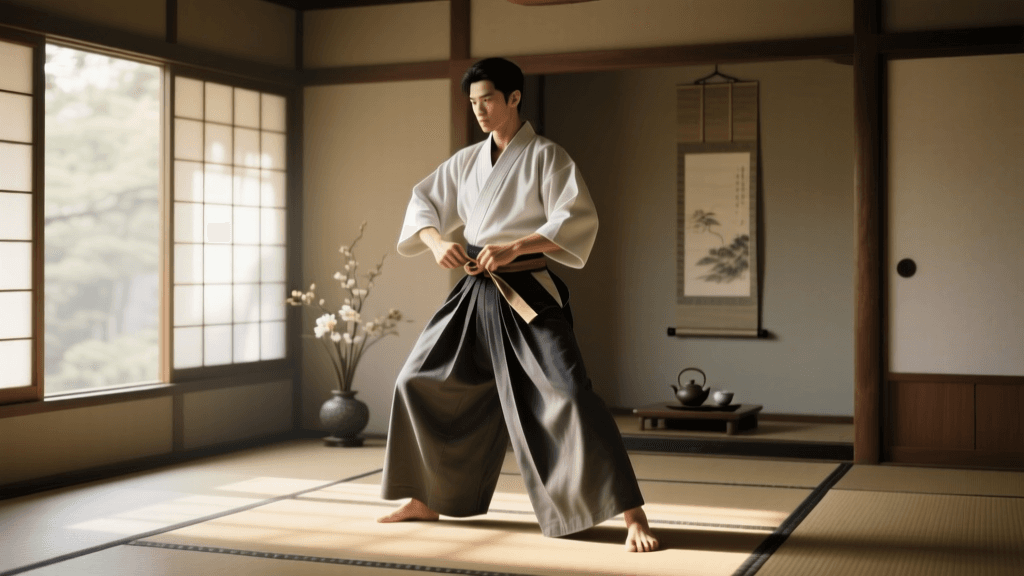
The hakama is one of the most recognizable and deeply symbolic garments in traditional Japanese culture. Originally worn by court nobles during the Heian period (794–1185) and later adopted by the samurai class as protective riding trousers, the hakama has evolved into a versatile uniform that bridges the dynamic, disciplined world of Budo (martial arts) and the tranquil, meditative space of Chado (the tea ceremony). According to the Metropolitan Museum of Art's Heilbrunn Timeline of Art History, the evolution of traditional Japanese dress reflects profound shifts in social structure, with garments like the hakama transitioning from elite status symbols to standardized uniforms for spiritual and physical disciplines.
For modern practitioners, whether stepping onto the tatami mats of an Aikido dojo or entering the humble doorway of a chashitsu (tea room), the hakama demands respect, precise fitting, and an understanding of its philosophical weight. This guide explores the nuances of selecting, measuring, and maintaining hakama for both martial arts and tea ceremony, providing actionable advice for dedicated practitioners.
Martial Arts vs. Tea Ceremony: A Garment Comparison
While the fundamental structure of the hakama remains consistent—featuring a divided skirt design (umanori) or an undivided skirt (andon) with deep pleats—the specific requirements for martial arts and tea ceremonies diverge significantly in fabric, color, and construction.
| Feature | Martial Arts (Aikido / Kendo) | Tea Ceremony (Chado / Senchado) |
|---|---|---|
| Primary Fabric | Heavy cotton, Tetron (polyester/rayon), or indigo-dyed canvas. | Silk, wool blends, tsumugi (slubbed silk), or high-quality matte cotton. |
| Standard Colors | Black, navy blue, or deep indigo. | Charcoal, olive green, plum, muted browns, and subtle patterns. |
| Koshiita (Backplate) | Rigid plastic or heavy cardboard insert for posture support. | Soft, flexible, or entirely absent (especially in women's tea ceremony hakama). |
| Pleat Structure | Strict 5 front / 2 back pleats, heavily starched for sharp lines. | Softer pleats, allowing for quiet, fluid movement and kneeling (seiza). |
| Footwear Pairing | Barefoot (Aikido) or split-toe jika-tabi (Kendo/Outdoor). | White tabi socks with zori sandals (removed before entering the tea room). |
The Dojo Standard: Aikido and Kendo
In martial arts, the hakama is designed for rigorous physical exertion, rapid pivots, and repetitive falling (ukemi). As noted by Encyclopedia Britannica, the Kendo uniform (kendogi and hakama) is specifically engineered to protect the practitioner while allowing a full range of motion for striking. Aikido and Kendo hakama typically feature a rigid koshiita (backplate) that rests against the small of the back, enforcing an upright posture and protecting the spine during throws. The fabric must withstand intense friction against tatami mats, making heavy-weight Tetron or reinforced cotton the industry standard. The himo (ties) are long and wide, designed to be pulled tightly to secure the garment during explosive movements.
The Tea Room Aesthetic: Chado and Senchado
In contrast, the tea ceremony prioritizes harmony (wa), respect (kei), purity (sei), and tranquility (jaku)—principles championed by the Urasenke Tea Ceremony School and other major lineages. The hakama worn in the chashitsu is an exercise in subtlety and quiet elegance. For male practitioners and advanced female practitioners serving in formal capacities, the fabric is often a muted silk or wool blend that absorbs light rather than reflecting it. The garment must not rustle loudly when the practitioner transitions from standing to seiza (kneeling). The koshiita is often soft or omitted entirely to ensure comfort during long periods of kneeling, and the colors are chosen to complement the seasonal aesthetics of the tea gathering, avoiding the stark, aggressive black of the dojo.
How to Measure and Fit Your Hakama
An ill-fitting hakama restricts movement in the dojo and disrupts the visual harmony of the tea room. Unlike Western trousers, hakama are not sized by waist and inseam, but rather by the overall length from the waist to the ankle. Follow these precise steps to determine your correct size:
- Locate the Waistline: The hakama sits higher than modern trousers. For men, it rests just below the navel; for women, it sits at the natural waist.
- Measure the Drop: Using a soft measuring tape, measure from your waistline down the side of your leg to the prominent bone on the outside of your ankle (the lateral malleolus).
- Account for Shrinkage: If purchasing 100% cotton or indigo-dyed martial arts hakama, add 2 to 3 centimeters to your measurement, as these fabrics will shrink during the first cold wash.
- Consult the Size Chart: Japanese manufacturers typically use a numbering system (e.g., Size 24, 25, 26) which corresponds to the traditional shaku/sun measurement system, or standard S/M/L for export brands. A measurement of 90-95cm usually corresponds to a Size 25 or Medium.
- The Ankle Test: When tied correctly, the hem should graze the top of the ankle bone. If it drags on the floor, it is a tripping hazard in the dojo and a breach of etiquette in the tea room. If it exposes the calf, it is too short.
Fabric Choices, Care, and Costs
Selecting the right fabric impacts not only your budget but also the longevity and maintenance requirements of the garment.
Tetron (Polyester/Rayon Blend)
Best for: Beginner to intermediate martial artists.
Cost: $60 – $120 USD.
Care: Machine washable in cold water; dries quickly; requires minimal ironing. Tetron holds pleats exceptionally well but lacks the breathable comfort of natural fibers.
Heavy Cotton and Indigo-Dyed Canvas
Best for: Advanced Aikido and Kendo practitioners.
Cost: $150 – $350 USD.
Care: Must be washed separately in cold water to prevent severe indigo bleeding. Requires hanging to dry and heavy starching with a steam iron to maintain crisp pleats. Over time, the indigo fades beautifully, creating a personalized patina.
Silk, Wool, and Tsumugi Blends
Best for: Tea ceremony practitioners and formal occasions.
Cost: $300 – $800+ USD.
Care: Dry clean only. Never machine wash. Store folded with acid-free tissue paper inside the pleats to maintain structure, and keep in a dark, climate-controlled environment to prevent silk degradation.
The Philosophy of the Seven Pleats
Regardless of whether you are wielding a bamboo shinai or a bamboo tea whisk (chasen), the standard umanori hakama features seven pleats: five in the front and two in the back. In Budo philosophy, these pleats represent the seven virtues of the samurai (Bushido): Jin (benevolence), Gi (justice), Rei (etiquette), Chi (wisdom), Shin (sincerity), Chu (loyalty), and Ko (filial piety). In the context of the tea ceremony, these pleats serve as a physical reminder of the discipline and respect required to master the art of hospitality. Taking the time to meticulously fold these pleats after every practice is considered a meditative act in itself, bridging the physical and spiritual aspects of the practitioner's journey.
Tying the Hakama: Dojo vs. Tea Room Knots
The method of tying the himo (ties) varies by discipline. In Aikido and Kendo, the front knot is tied flat and tight against the abdomen to protect the core and prevent the garment from loosening during combat. The back ties are crossed, brought to the front, and tucked securely under the front belt, creating a streamlined silhouette that offers no handholds for an opponent.
In the tea ceremony, the knot is tied with equal security but often with a slightly more decorative, rounded aesthetic, particularly for women wearing the andon-bakama (undivided skirt style). The focus is on neatness and symmetry, ensuring the ties lay perfectly flat against the kimono or samue underneath, reflecting the meticulous attention to detail required in preparing a bowl of matcha.
Conclusion
The hakama is far more than a traditional uniform; it is a wearable philosophy that connects modern practitioners to centuries of Japanese martial and spiritual history. Whether you are investing in a heavy indigo canvas hakama for the rigorous demands of the dojo, or a subtle, matte-silk hakama for the quiet reverence of the chashitsu, understanding the nuances of fit, fabric, and folding will deepen your practice. By treating the garment with the same respect you afford your art, you honor the enduring legacy of Asian traditions.