Silk Road Threads: Persian Influence on Tang Garments
The Crossroads of Chang'an: Sogdian and Persian Trade Routes
During the Tang Dynasty (618–907 CE), the capital city of Chang'an (modern-day Xi'an) was the undisputed cosmopolitan center of the world. As the eastern terminus of the Silk Road, Chang'an was a melting pot of cultures, languages, and religions, hosting over a million residents including thousands of foreign merchants, diplomats, and artisans. Among the most influential foreign presences were the Sogdians, an Eastern Iranian people who served as the primary merchant class of the Silk Road, and Persian artisans who fled eastward to the Tarim Basin and central China following the fall of the Sasanian Empire in 651 CE.
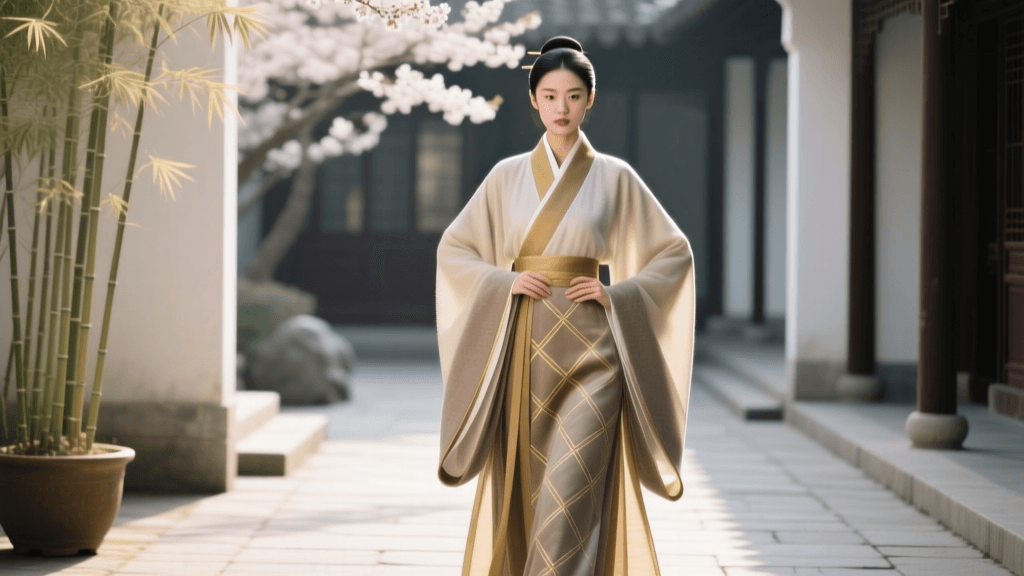
These historical trade routes did not merely facilitate the exchange of physical goods like spices and precious metals; they fundamentally rewired the aesthetic and structural DNA of traditional Chinese clothing. The integration of Central Asian and Persian styles into the Tang wardrobe represents one of the most fascinating periods of cross-cultural fashion synthesis in Asian history. From weaving techniques to garment silhouettes, the Silk Road left an indelible mark on what we now recognize as traditional Tang Dynasty Hanfu.
The Pearl Roundel and Samite: A Weaving Revolution
Prior to the Tang Dynasty, indigenous Han Chinese silk production was heavily dominated by warp-faced weaves. While beautiful and intricate, warp-faced weaves limited the scale, color complexity, and structural density of the patterns that could be produced on a loom. The influx of Central Asian and Persian weavers introduced a revolutionary technique to Chinese artisans: weft-faced compound twill, known in the West as samite. As documented by UNESCO's Silk Roads Programme, this technique allowed for the creation of large, vibrant, and highly detailed medallion patterns that were previously impossible to achieve on traditional Chinese draw-looms.
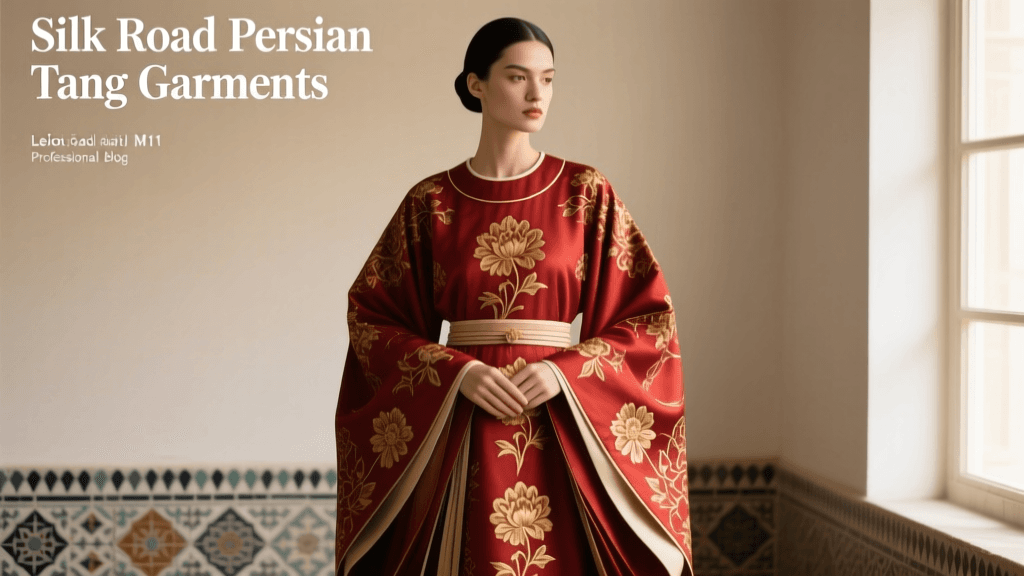
The most iconic of these Silk Road motifs was the zhulian wen, or "pearl roundel." This circular border of pearls enclosed powerful Sasanian and Sogdian symbols, such as the Senmurv (a mythical Persian bird-dog), boar heads, confronting rams, and winged horses. Chinese weavers rapidly adopted these motifs, eventually blending them with native auspicious symbols like dragons, phoenixes, and lotus flowers. The pearl roundel became a status symbol, heavily utilized in official court robes and high-end diplomatic gifts sent to neighboring kingdoms like Japan and Silla.
The Yuanlingpao and the "Hufu" Craze
The cross-cultural exchange extended far beyond textiles into the very silhouettes of daily wear. The Yuanlingpao, or round-collar robe, became a staple of the Tang wardrobe for both men and women. Originally derived from the riding coats of nomadic steppe tribes, the Yuanlingpao featured a round neckline, side slits for horseback riding, and narrower sleeves than the flowing, wide-sleeved garments of the preceding Han and Wei dynasties. It was typically fastened with a leather belt and worn with riding boots, reflecting its equestrian origins.
Furthermore, the Tang era witnessed the Hufu (foreign clothing) craze. It became highly fashionable for aristocratic women to don Central Asian riding boots, narrow-sleeved tunics, and striped trousers. Historical analyses from the Smithsonian note that this era represented a unique period of gender-fluid fashion in Chinese history, with women frequently adopting male Sogdian riding attire to participate in polo and hunting. This radical departure from strict Confucian dress codes highlights the profound social liberalism and cultural openness fostered by the Silk Road trade network.
Data Table: Evolution of Silk Road Textile Influences
| Feature | Pre-Tang Indigenous Han | Tang Dynasty (Silk Road Influence) |
|---|---|---|
| Weave Structure | Warp-faced plain and twill weaves | Weft-faced compound twill (Samite) |
| Primary Motifs | Cloud scrolls, geometric patterns, small repeating dragons | Pearl roundels, Senmurv, winged horses, large floral medallions |
| Color Palette | Earth tones, indigo, vermilion, limited multi-color wefts | Vibrant polychrome, gold thread, deep Sasanian purples and blues |
| Garment Silhouette | Cross-collar (right over left), wide sleeves, floor-sweeping | Round-collar (Yuanlingpao), narrow sleeves, side-slits, riding boots |
Sourcing Authentic Silk Road Replica Textiles Today
For historical reenactors, Hanfu enthusiasts, and bespoke fashion designers, sourcing accurate Tang Dynasty textiles requires navigating modern manufacturing with a historical lens. While true antique samite is confined to museum archives, modern Jacquard looms can replicate the density and visual weight of Sogdian-inspired brocades. When shopping on platforms like Taobao, Etsy, or through specialized historical tailors, use search terms such as "Tang Dynasty Samite Brocade," "Yuanlingpao fabric," and "Sogdian pearl roundel jacquard."
Fabric Specifications, Costs, and Timing
- Material: Seek 100% Mulberry Silk or a high-quality Silk-Cotton blend (for breathable, daily-wear reenactment garments). Avoid polyester brocades, as they lack the historical drape and luster.
- Weave: Heavy Jacquard brocade mimicking weft-faced compound twill. The reverse side should show a distinct weft float structure.
- Weight: 19 to 25 momme. Historical samite was incredibly dense and heavy; a lightweight 12-momme silk will not replicate the structured, regal drape of a Tang court robe.
- Width: Modern looms produce 140 cm (55 inches) widths, which is highly efficient for cutting a Yuanlingpao. Traditional looms were closer to 60-70 cm, requiring more seams.
- Cost: Expect to pay between $45 to $90 USD per yard for high-quality, reproduction silk jacquard brocade featuring accurate pearl roundel motifs.
- Timing: If ordering custom-woven historical replicas from specialized ateliers in Hangzhou or Suzhou, anticipate a production lead time of 30 to 45 days, plus 15 days for international shipping.
Tailoring the Yuanlingpao: Measurements and Fit
Tailoring a historically accurate Yuanlingpao requires specific measurements that differ significantly from modern Western tailoring or standard Ming/Qing dynasty Hanfu patterns. The garment must allow for mobility while maintaining a structured, imposing silhouette.
- Chest & Ease: Measure the fullest part of the chest and add 10-12 cm of ease. The robe should not pull across the back when the arms are crossed.
- Sleeve Length: Measure from the C7 vertebra (base of the neck) down over the shoulder to the wrist, then add 5 cm. Tang sleeves often covered the back of the hand slightly when resting.
- Hem Length: Measure from the prominent vertebra at the base of the neck down to the ankle bone, subtracting 5 cm to ensure the hem clears the ground when wearing flat-soled historical boots.
- Collar Construction: The round collar should have a circumference of 45-50 cm. Crucially, while Han tradition dictates wrapping the right side over the left, the Hufu (nomadic) influence sometimes saw garments wrapped left over right. For standard Tang Hanfu representation, maintain the traditional right-over-left (Yuren) wrap, secured with a hidden inner tie and an outer fabric button or knot at the right shoulder.
- Side Slits: Ensure the side slits begin exactly at the natural waistline to allow for a full stride or sitting cross-legged, reflecting the garment's equestrian heritage.
Conclusion
The garments of the Tang Dynasty are a testament to an era when China's borders were porous to ideas, art, and innovation. The Silk Road was not merely a conduit for trade, but a vibrant artery of cultural exchange that permanently enriched Asian textile traditions. By understanding the Sogdian and Persian roots of the Yuanlingpao and samite brocades, modern enthusiasts can appreciate and accurately recreate a golden age of cosmopolitan fashion.