Vintage Silk Kimono Preservation 2026: Archival Storage & Care
The Evolution of Kimono Preservation in 2026
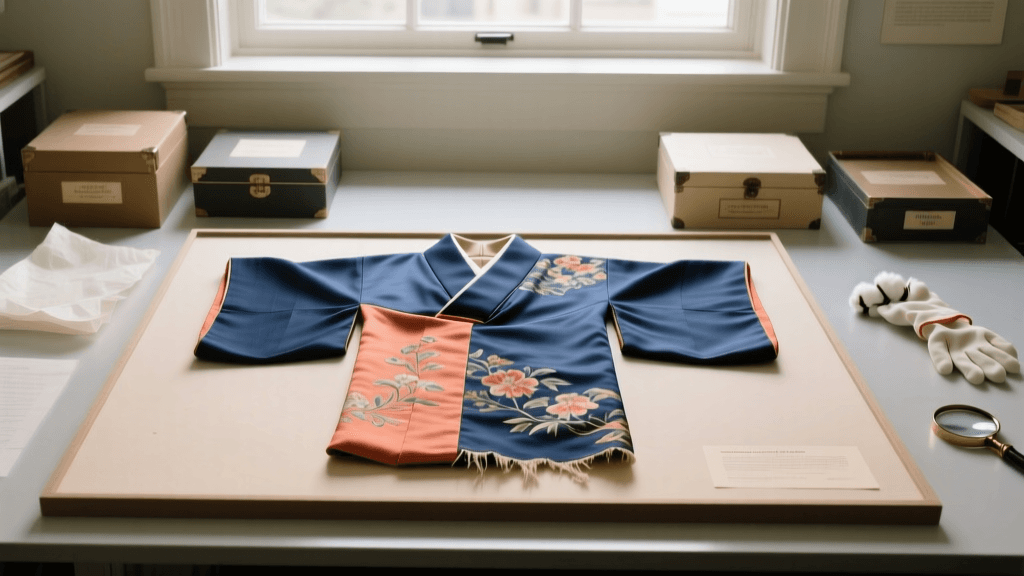
As the global appreciation for vintage Asian garments continues to grow, the methods for preserving these delicate textiles have evolved significantly. In 2026, collectors and curators alike are moving away from outdated, home-remedy storage solutions and embracing museum-grade, non-destructive preservation techniques. The kimono, particularly those crafted from delicate silk crepe (chirimen) and heavy brocade (nishiki) from the Taisho and early Showa eras, requires a highly specific microenvironment to prevent fiber degradation, dye migration, and structural shattering. Understanding the intersection of traditional Japanese garment care and modern conservation science is essential for anyone looking to protect their investment and preserve cultural heritage for future generations.
Choosing the Right Archival Storage Materials
The foundation of any textile preservation strategy is the use of chemically stable, archival-quality materials. A critical distinction that many novice collectors miss is the difference between buffered and unbuffered tissue paper. Silk is a protein-based fiber. According to the Victoria and Albert Museum's textile guidelines, protein fibers like silk and wool should only be stored with unbuffered, acid-free tissue paper. Buffered tissue contains calcium carbonate, an alkaline reserve that protects cellulose fibers (like cotton and linen) from acidic degradation, but this same alkalinity can actively damage and weaken protein fibers over time.
In 2026, the market offers highly specialized archival products tailored for Asian garments. For wrapping the garment, Lineco Unbuffered Acid-Free Tissue remains the gold standard, offering a pH-neutral barrier that will not off-gas harmful chemicals. For the outer enclosure, collectors are increasingly utilizing University Products Archival Corrugated Boxes, which are manufactured without harmful sizing agents or UV-brightening optical dyes. These boxes provide a rigid, crush-proof environment that protects the heavy embroidery and metallic threads often found on formal obi sashes from being flattened or crushed under their own weight.
| Archival Material | pH Level | Best Use Case | 2026 Average Cost |
|---|---|---|---|
| Unbuffered Acid-Free Tissue | 7.0 (Neutral) | Direct wrapping for silk kimono and obi | $18 - $25 per 100 sheets |
| Buffered Acid-Free Tissue | 8.5 (Alkaline) | Wrapping cotton yukata or hemp garments | $15 - $22 per 100 sheets |
| Archival Corrugated Board Boxes | 8.0 - 8.5 | Primary outer storage enclosure | $45 - $85 per box |
| Ethafoam Polyethylene Planks | Neutral | Padding for heavy metallic obi folds | $12 - $18 per plank |
The Art of the Tato: Proper Folding Techniques
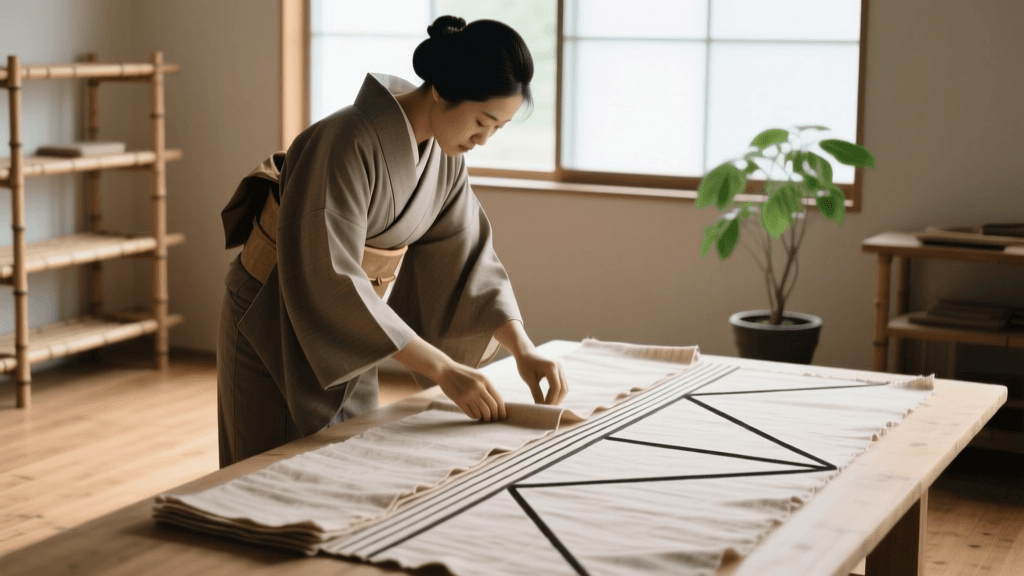
Traditionally, kimono were folded into a specific rectangular shape known as a 'tato' and wrapped in specialized paper. While the geometric folding pattern remains the same to respect the garment's structural seams, modern preservation dictates that we must mitigate the damage caused by hard creases. Repeated folding along the exact same lines causes mechanical stress, leading to micro-tears in the silk fibers and eventual splitting of the fabric.
To adapt the traditional tato method for 2026 archival standards, conservators recommend a technique called 'padding the folds.' Before executing the final folds, roll up sheets of unbuffered tissue paper into soft cylinders and place them inside the crease lines of the sleeves, the bodice, and the hem. This creates a gentle curve rather than a sharp, damaging crease. Furthermore, it is vital to refold the garment slightly differently every six months. By shifting the fold lines by just an inch or two, you distribute the mechanical stress across a wider area of the fabric, drastically extending the lifespan of the silk.
Stain Triage: Modern Conservation vs. Traditional Arai-Hari
Historically, the Japanese method for cleaning a kimono was 'arai-hari'—the process of completely unpicking the garment's seams, washing the individual fabric bolts in water, stretching them on wooden frames to dry, and then re-sewing them. While highly effective for sturdy, everyday garments, a full arai-hari is often far too aggressive for fragile, vintage silk from the early 20th century. The water immersion can cause unstable synthetic dyes (which became prevalent in the 1920s and 1930s) to bleed catastrophically, and the tension of the stretching frames can shatter degraded silk.
Today, stain triage focuses on localized, non-destructive spot cleaning and stabilization. If you discover a stain on a vintage kimono, the first step is identification. Protein-based stains (sweat, makeup, food) require different treatments than tannin-based stains (tea, wine). For minor surface soiling, conservators in 2026 utilize specialized vulcanized rubber sponges (soot sponges) to gently lift particulate dirt without introducing moisture. For localized water-soluble stains, micro-swabs dampened with deionized water are used to gently wick the stain out of the fibers, always working from the outside of the stain inward to prevent ring formation. As noted by the Canadian Conservation Institute, spot testing in an inconspicuous area is mandatory before applying any moisture or solvent to ensure the dye will not run.
Climate Control and Pest Management
Silk is highly hygroscopic, meaning it readily absorbs and releases moisture from the surrounding air. Fluctuations in relative humidity (RH) cause the fibers to swell and contract, leading to structural fatigue. The ideal environment for storing vintage silk kimono in 2026 is a stable temperature of 65°F to 68°F (18°C to 20°C) with a relative humidity strictly maintained between 45% and 55%. To achieve this, collectors are integrating smart home technology into their archival storage spaces. WiFi-enabled hygrometers, such as the Govee WiFi Thermometer Hygrometer H5179, allow collectors to monitor the microclimate inside archival boxes remotely, receiving instant smartphone alerts if the humidity spikes or drops outside the safe parameters.
Pest management is equally critical. Webbing clothes moths and silverfish are notorious for devouring protein fibers and the starch-based pastes used in traditional kimono tailoring. The use of chemical mothballs (naphthalene or paradichlorobenzene) is strictly forbidden in modern preservation; these chemicals off-gas toxic fumes that not only pose severe health risks to humans but also cause irreversible chemical damage and yellowing to silk fibers. Instead, 2026 best practices rely on integrated pest management (IPM). This includes sealing the storage room, using pheromone traps to monitor for moth activity, and placing natural, untreated cedar blocks inside the outer archival boxes. The cedar must be lightly sanded every few months to maintain its natural aromatic oils, which act as a mild, non-toxic deterrent.
When to Call a Professional Conservator
While collectors can manage routine storage, folding, and minor surface dusting, certain conditions require the intervention of a certified textile conservator. If your kimono exhibits signs of 'shattering' (where the silk cracks and crumbles when gently manipulated), widespread metallic thread tarnishing, or active mold growth, do not attempt home remediation. Mold, in particular, can spread rapidly through a collection if not properly isolated and treated in a controlled laboratory environment. In 2026, professional conservators utilize advanced techniques such as localized anoxic treatments (oxygen deprivation) to eradicate pests and specialized humidification chambers to safely relax severe, decades-old creases without applying direct heat or water pressure. Always consult a certified professional affiliated with recognized heritage organizations before attempting any invasive restoration on a historically significant Asian garment.