Mastering Zero-Waste Kimono Construction: Tanmono Cutting 2026
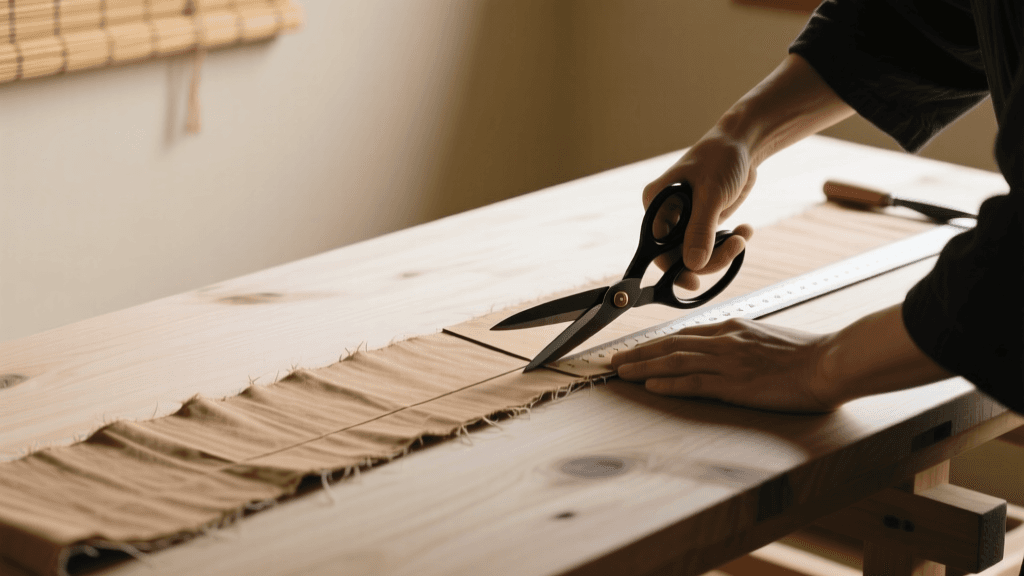
The Philosophy of Tanmono: Zero-Waste Before It Was a Trend
In 2026, the global fashion industry is aggressively pivoting toward sustainable, zero-waste design paradigms to combat the millions of tons of textile waste generated annually. Yet, long before modern sustainability became a buzzword, traditional Japanese garment construction had already perfected the art of zero-waste tailoring. At the heart of this system is the Tanmono, a standardized bolt of fabric, and the Shitate (straight-line cutting and sewing) technique used to construct the iconic kimono. Unlike Western tailoring, which relies on curved pattern pieces that inevitably leave behind 15% to 25% of fabric as scrap waste, the kimono is constructed entirely from straight, rectangular panels. Every single thread of the Tanmono bolt is utilized in the final garment, making it a masterclass in sustainable engineering.
According to the Victoria and Albert Museum, the structural genius of the kimono lies not just in its aesthetic drape, but in its modular, reversible construction. Because the garment is made of straight panels sewn with uniform seam allowances, it can be entirely disassembled, cleaned, re-dyed, and resewn multiple times over its lifecycle. This modularity ensures that the textile is never discarded, aligning perfectly with the circular fashion mandates that dominate the 2026 apparel industry.
Anatomy of the Tanmono Bolt
To understand kimono construction, one must first understand the medium. A standard Tanmono bolt is woven to specific dimensions dictated by the traditional loom and the proportions of the human body. The width of the bolt is designed to cover the hip and accommodate the sleeve drop, while the length provides exactly enough yardage for a single adult's kimono.
| Feature | Traditional Tanmono Bolt | Standard Western Fabric Bolt |
|---|---|---|
| Width | 36 cm (14.1 inches) | 114 cm - 150 cm (45 - 60 inches) |
| Length | 11.5 m - 12 m (12.5 - 13.1 yards) | 9 m - 14 m (10 - 15 yards) |
| Waste Generated | 0% (Entire bolt utilized) | 15% - 25% (Curved cutting scraps) |
| Seam Allowance | Generous, hidden inside folds | Minimal, often serged/overlocked |
| Disassembly | Fully reversible for cleaning | Destructive to unmake |
The Metropolitan Museum of Art notes that the linear nature of the Tanmono bolt reflects a deep cultural reverence for the textile itself. In traditional Asian dress traditions, the fabric is considered the primary art form, and the tailoring is merely a temporary vessel to display the weaver's or dyer's work. Cutting curves into the fabric would destroy the continuity of the woven or dyed patterns, which is why the straight-line method was both an aesthetic and structural necessity.
Essential Tools for Traditional Shitate (Construction)
Constructing a kimono requires a specialized toolkit that prioritizes precision, temporary basting, and fabric preservation. In 2026, while modern sewists have access to advanced digital cutting tables and automated steamers, traditional artisans and dedicated hobbyists still rely on time-tested hand tools.
- Mekobori (Bamboo Spatula): Used to crease fabric and fold seam allowances. Unlike a Western bone folder, the Mekobori is gently rounded to prevent damaging delicate silk fibers.
- Shitate-ite (Basting Thread): A loosely spun, thick silk or cotton thread used for temporary basting. It is designed to break easily and be removed without disturbing the final, finer stitches.
- Kote (Traditional Iron): Historically a cast-iron pan filled with hot coals, modern 2026 practitioners use specialized adjustable steam irons with Teflon shoes and precise temperature controls to press seams without scorching natural dyes.
- Shitate-hari (Sewing Needles): Long, fine needles with small eyes, specifically designed to pass through multiple layers of folded silk without leaving visible puncture marks.
Step-by-Step Straight-Line Construction
The process of transforming a Tanmono bolt into a wearable kimono is a meticulous exercise in geometry and patience. The construction relies heavily on the Kise technique, which hides all raw edges without the use of modern overlocking or serging.
1. Wari (Splitting the Bolt)
The 12-meter bolt is carefully measured and cut into specific rectangular panels: two main body panels (Okumi and Migoro), two sleeve panels (Sode), the collar (Eri), and the front overlaps. Because the fabric is only 36 cm wide, the sleeves and body panels are simply cut to the required lengths. There is no shaping at the armhole or the waist; the fit is achieved entirely through the wrapping and tying of the Obi sash.
2. Shitsuke (Basting)
Before any permanent stitching occurs, the panels are basted together using the Shitate-ite. This allows the maker to check the alignment of patterns across the seams. In high-end 2026 bespoke kimono making, pattern matching across the back center seam and the side panels is a strict requirement, and basting allows for micro-adjustments of a single millimeter.
3. Nui (The Running Stitch)
The permanent seams are sewn using a specialized running stitch called Guishi. The stitch length is typically 3 to 4 millimeters. The tension must be perfectly balanced; too tight, and the silk will pucker; too loose, and the seam will gap. Sewists use their thumb and forefinger to gather several stitches onto the needle before pulling the thread through, ensuring a fluid, even line.
4. Kise (Folding the Seam Allowance)
This is the defining technique of zero-waste kimono construction. Instead of trimming the seam allowance and finishing the raw edge, the allowance is folded under itself using the Mekobori spatula. The folded edge is then slip-stitched to the main fabric. This encases the raw edge completely, providing a clean finish inside the garment while retaining the full width of the fabric for future alterations or resizing.
2026 Fabric Sourcing and Market Pricing
For modern sewists and designers looking to adopt the Tanmono method in 2026, sourcing authentic materials has become more accessible thanks to direct-to-consumer digital platforms connecting global buyers with regional Japanese mills. According to recent market data from the Textile Exchange, the demand for narrow-loom, zero-waste textiles has surged, prompting several heritage weavers to offer international shipping.
- Vintage Silk Tanmono (Deadstock): Available through specialized online auction houses and Kyoto-based vintage exporters. Prices range from $40 to $150 USD per bolt, depending on the complexity of the Yuzen dyeing or Shibori tie-dye techniques.
- Modern Organic Hemp and Cotton Blends: Woven in domestic mills focusing on sustainable agriculture. These bolts are highly sought after for casual, everyday Yukata or modern wrap garments. Expect to pay between $80 and $120 USD.
- Contemporary Nishijin-ori (Brocade): For formal, heavy-weight construction, authentic Nishijin brocade bolts remain a luxury investment, starting at $350 USD and reaching well over $1,000 USD for metallic-threaded weaves.
Adapting Tanmono Techniques for Modern Western Garments
You do not need to sew a traditional kimono to benefit from the Tanmono philosophy. In 2026, many sustainable fashion designers are adapting the 36cm straight-line cutting method to create modern, zero-waste Western silhouettes. By restricting your pattern drafting to the width of a standard Tanmono bolt (or cutting standard 114cm fabric into longitudinal 36cm strips), you can construct modular wrap tops, wide-leg trousers, and geometric jackets.
The key takeaway from Asian dress traditions is the shift in mindset: instead of forcing the fabric to conform to a curved, body-hugging pattern, the designer allows the straight grain and the natural drape of the textile to dictate the silhouette. By utilizing generous, hidden seam allowances and avoiding destructive finishing techniques like serging, you create garments that are not only zero-waste in their creation but are also designed for longevity, repair, and eventual disassembly. Embracing the Tanmono method is not merely a historical exercise; it is a vital, forward-looking strategy for the future of ethical garment construction.