Xin Zhongshi Runway Trends At Paris Fashion Week 2026
The Global Ascent of Xin Zhongshi in 2026
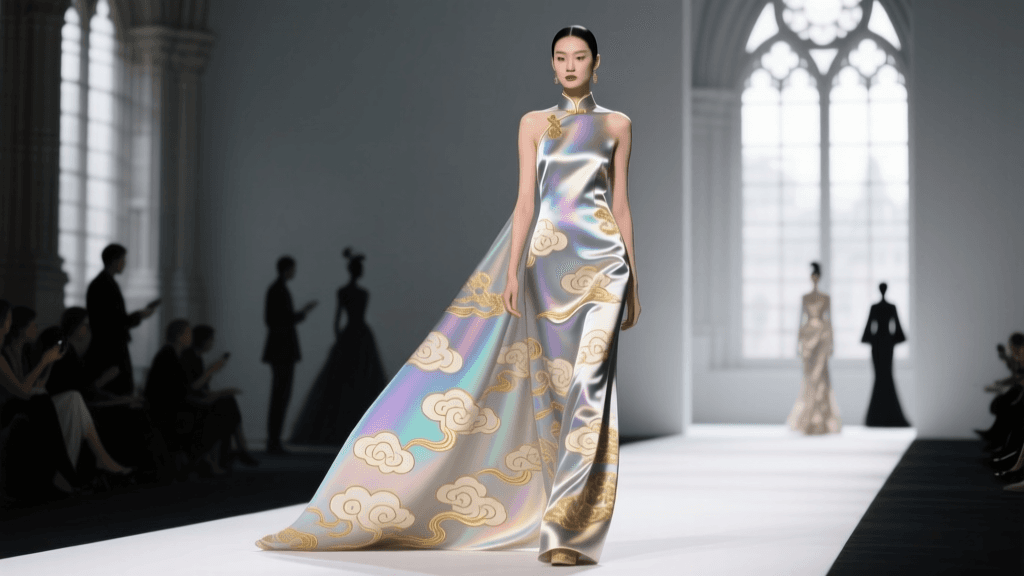
The global fashion landscape has witnessed a seismic shift in 2026, with the Xin Zhongshi (新中式), or 'New Chinese Style,' movement transcending regional borders to dominate international design weeks. No longer confined to domestic markets or relegated to festive wear, Xin Zhongshi has become a cornerstone of avant-garde and luxury haute couture. At Paris Fashion Week (PFW) and Milan Design Week this year, contemporary Chinese designers showcased a masterful synthesis of ancient textile craftsmanship and modern structural tailoring. According to industry analyses from the Business of Fashion Global Markets, Asian heritage brands accounted for a record 22% of the emerging luxury showcase slots in 2026, signaling a permanent integration of Eastern sartorial philosophy into the Western fashion canon.
This evolution marks a departure from the superficial 'Guochao' (national trend) movement of the early 2020s, which often relied on overt dragon motifs and bold red palettes. The 2026 Xin Zhongshi runway aesthetic is defined by subtlety, focusing on the intrinsic properties of heritage fabrics, complex fabric drape analysis, and the philosophical concept of 'liu bai' (leaving blank space) in garment construction. Designers are prioritizing the tactile and auditory experiences of traditional textiles, bringing millennia-old weaving techniques to the forefront of global exhibitions.
Xiangyunsha Silk: From Guangdong Mud to Parisian Runways
Among the most celebrated textiles at the 2026 international exhibitions was Xiangyunsha, also known as Gambiered Canton Gauze. Originating from the Shunde district in Guangdong province, this unique silk is dyed using the juice of the Dioscorea cirrhosa tuber and subsequently coated in the iron-rich mud of the Pearl River Delta. The chemical reaction between the tannins and the iron creates a luxurious, dual-toned fabric that is waterproof, naturally cooling, and possesses a distinctive, papery rustle when in motion.
At PFW 2026, several prominent ateliers utilized 30-momme and 40-momme heavyweight Xiangyunsha to create structured, architectural outerwear. Unlike traditional fluid qipaos, these runway pieces featured exaggerated shoulders, corsetry, and asymmetrical hemlines. The natural stiffness of the mud-coated silk allowed designers to eliminate synthetic interfacing, relying entirely on the textile's organic memory to hold dramatic silhouettes. The deep, obsidian-black hue of the mud-treated side contrasted beautifully with the warm, caramel-toned reverse side, creating dynamic visual depth as models moved down the runway.
Song Brocade and Structural Drape Analysis
While Xiangyunsha provided structural volume, Song Brocade (Songjin) was the star of fluid drape analysis and intricate layering. Recognized for its mathematical precision and complex jacquard-like weaving techniques dating back to the Song Dynasty, this textile was reimagined for 2026's eveningwear collections. Designers integrated metallic threads and modern sustainable cellulose fibers into the traditional mulberry silk warp and weft, enhancing the fabric's tensile strength without sacrificing its legendary luster.
Academic research presented alongside the Milan Design Week exhibitions highlighted the biomechanical advantages of Song Brocade. Studies in fabric drape analysis demonstrated that the tight, interlocking weave of Songjin distributes kinetic energy evenly across the garment, preventing the localized stress and tearing common in delicate Western silks. This structural integrity allowed designers to create sweeping, floor-length trains and bias-cut gowns that maintained their geometric patterns without distorting at the seams.
2026 Runway Textile Comparison Chart
For collectors, buyers, and fashion historians, understanding the specific applications of these heritage textiles is crucial. Below is a comparative analysis of the primary traditional fabrics featured in the 2026 international design week exhibitions.
| Textile Name | Origin & Technique | Weight & Drape | 2026 Runway Application | Avg. Cost (Per Meter) |
|---|---|---|---|---|
| Xiangyunsha (Gambiered Gauze) | Guangdong; Yam dye & river mud coating | Heavy (30-40 momme); Crisp, structured | Architectural outerwear, corsetry, wide-leg trousers | $450 - $680 USD |
| Song Brocade (Songjin) | Suzhou; Complex multi-shuttle weaving | Medium (19-25 momme); Fluid, resilient | Bias-cut evening gowns, layered skirts, lapel detailing | $320 - $500 USD |
| Xiang Embroidery Silk | Hunan; Double-sided satin stitch | Light to Medium; Delicate, ornamental | Sheer overlays panels, exhibition-grade statement jackets | $900 - $1,500 USD |
| Zhuang Brocade | Guangxi; Cotton and silk blend, back-strap loom | Heavy; Textured, robust | Streetwear crossovers, structured accessories, footwear | $180 - $250 USD |
Curatorial Perspectives and Archival Value
The integration of these textiles into high fashion has not gone unnoticed by the academic and curatorial communities. Institutions are increasingly viewing 2026 runway pieces as vital archival artifacts that document the modernization of intangible cultural heritage. Curators at the Metropolitan Museum of Art's Asian Art Department have noted a surge in the acquisition of contemporary Xin Zhongshi garments, recognizing them as the logical continuation of historical textile traditions. Furthermore, the foundational techniques utilized by these modern designers are deeply rooted in practices protected by UNESCO's Intangible Cultural Heritage lists, ensuring that the global spotlight on Paris and Milan runways directly funds and sustains rural artisan communities in China.
Travel Packing and Maintenance for Exhibition Pieces
For international buyers and collectors who acquire these exhibition pieces, proper storage maintenance and travel packing are paramount to preserving the integrity of the natural dyes and weaves. Xiangyunsha, despite its durability, is susceptible to severe creasing if packed improperly. When traveling with a 2026 Xiangyunsha runway coat, collectors should utilize the 'roll-and-tissue' method: lay the garment flat on acid-free archival tissue paper, roll it loosely around a padded cylindrical core, and place it in a breathable cotton garment bag. Never use plastic dry-cleaning bags, as the trapped moisture can reactivate the mud coating and cause mildew.
Song Brocade requires a different approach. Because of its complex interlocking threads, hanging heavy Songjin gowns for extended periods can cause the warp threads to stretch and the geometric patterns to distort. For long-term storage, these garments should be folded with padded inserts at the crease lines to prevent permanent fiber memory, and stored in cedar-lined, climate-controlled environments maintained at exactly 50% relative humidity and 18°C (64°F).
How to Source and Authenticate 2026 Pieces
Acquiring authentic Xin Zhongshi pieces directly from the source requires navigating a complex network of master weavers and design houses. For those looking to commission bespoke garments or purchase raw exhibition-grade textiles, consider the following actionable steps:
- Direct Atelier Engagement: For authentic Xiangyunsha, bypass commercial middlemen and contact the heritage dyeing workshops directly in Shunde, Guangdong. Authentic 2026 production runs require a minimum 14-week lead time, as the mud-coating and sun-drying process can only be executed during specific dry-season weather windows.
- Certification of Origin: Genuine Song Brocade will come with a digital NFC thread woven into the selvedge, introduced in 2025 to combat synthetic imitations. Scanning this thread with a smartphone will reveal the exact loom number, the master weaver's name, and the specific mulberry silk batch origin in Suzhou.
- Pricing Realities: Be wary of 'New Chinese Style' garments priced under $150 USD. True heritage textiles involve intensive manual labor. A genuine Xiang Embroidery panel alone requires over 300 hours of hand-stitching, justifying the premium pricing seen at international design weeks.
Conclusion
The 2026 international design weeks have conclusively proven that Xin Zhongshi is not a fleeting trend, but a profound sartorial renaissance. By elevating Xiangyunsha, Song Brocade, and other heritage textiles onto the global stage, designers are ensuring the survival of ancient weaving techniques while pushing the boundaries of modern fashion. For collectors, academics, and fashion enthusiasts, understanding the deep material culture behind these garments transforms them from mere clothing into wearable, living history.