Top Hanfu Education Workshops & Certifications In 2026
The Rise of Formal Hanfu Education in 2026
The global fascination with traditional Chinese clothing has evolved from a niche internet subculture into a booming, multi-billion-dollar heritage industry. As of 2026, the demand for authentic, historically accurate Hanfu has created a massive need for trained professionals. Enthusiasts are no longer satisfied with mass-produced, inaccurate costumes; they seek garments rooted in deep historical research, precise pattern drafting, and traditional textile manipulation. This shift has given rise to formalized Hanfu education workshops and certification programs worldwide.
Whether you are an aspiring historical costume designer, a boutique owner looking to authenticate your inventory, or a cultural educator aiming to teach the nuances of dynastic dress, obtaining a recognized certification in 2026 is the ultimate way to validate your expertise. According to the broader Hanfu movement, the push for sartorial accuracy has transformed how traditional garments are studied, moving from casual hobbyist forums into rigorous academic and vocational environments.
Why Pursue a Hanfu Certification?
Earning a Hanfu certification in 2026 offers several distinct advantages. First, it provides you with a standardized understanding of complex garment structures, such as the intricate pleating of the Ming Dynasty Mamianqun (horse-face skirt) or the precise collar alignments of the Tang Dynasty Yuanlingpao (round-collar robe). Second, certified professionals are increasingly sought after by film and television production companies, museums, and high-end cultural tourism boards. Finally, certification grants you access to exclusive wholesale networks for heritage textiles, including authentic jacquard silks and hand-loomed linens that are unavailable to the general public.
Top Hanfu Certification Programs for 2026
The landscape of Hanfu education has matured significantly. Below is a comparison of the most prestigious and comprehensive certification programs available this year.
| Program Name | Format | Cost (2026) | Duration | Best For |
|---|---|---|---|---|
| Beijing Historical Garment Institute (BHGI) | In-Person Intensive | $5,200 USD | 6 Months | Master Tailors & Museum Consultants |
| Global Hanfu Heritage Online Academy | Virtual / Hybrid | $1,450 USD | 4 Months | International Stylists & Educators |
| Shanghai Silk & Structure Workshop | Weekend Masterclasses | $2,800 USD | 3 Months | Boutique Owners & Indie Designers |
Curriculum Breakdown: What You Will Learn
A premier 2026 Hanfu certification curriculum goes far beyond basic sewing. Programs are heavily weighted toward historical literacy and material science. Core modules typically include:
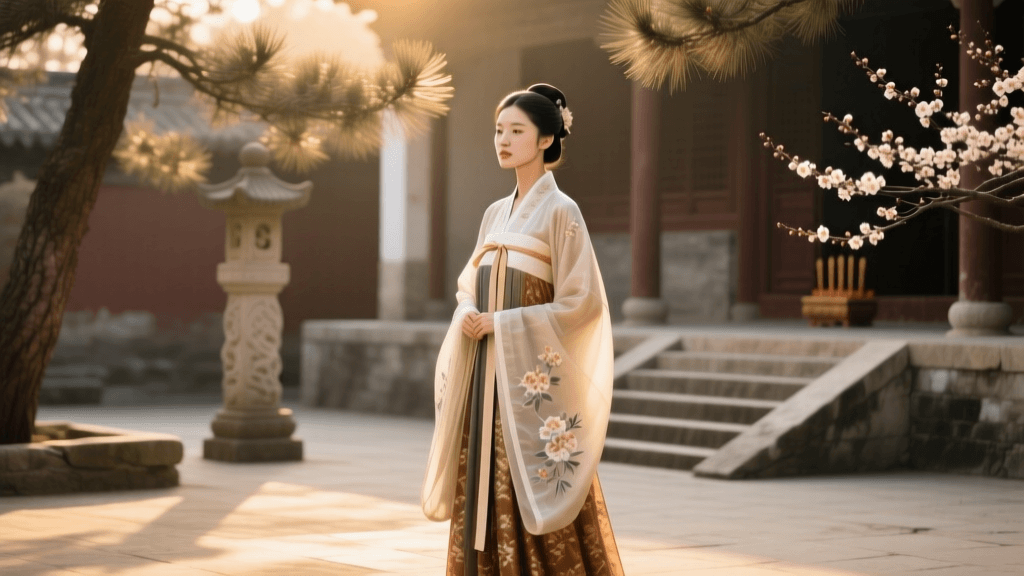
- Dynastic Silhouette Analysis: Differentiating between the voluminous, high-waisted aesthetics of the Tang Dynasty, the slender, minimalist lines of the Song Dynasty, and the structured, layered opulence of the Ming Dynasty.
- Traditional Pattern Drafting: Mastering the Pingmian Caizhi (flat-plane cutting) technique, which utilizes geometric fabric manipulation rather than Western darts and seams to create three-dimensional volume.
- Textile Identification & Sourcing: Learning to identify authentic heritage weaves, including Zhuanghua (brocade) and Luo (gauze), and understanding the sustainable sericulture practices recognized by UNESCO's Intangible Cultural Heritage lists.
- Historical Accessory Pairing: Studying the metallurgy and jade carving styles appropriate for specific dynastic hairpins, belts, and jade pendants to ensure a complete, historically accurate ensemble.
Essential Tools for the Modern Hanfu Artisan
To succeed in these workshops, students in 2026 are required to assemble a specialized toolkit that bridges ancient techniques with modern precision. While traditional bamboo measuring tapes and carbon steel fabric shears remain mandatory, modern artisans also utilize digital fabric weight scales and laser-guided cutting mats to ensure the mathematical precision required for symmetrical pleating. For the iconic Ming Dynasty horse-face skirt, a single millimeter of error in the pleat calculation can ruin the garment's drape. Therefore, investing in high-quality, specialized drafting tools—often provided as part of the BHGI and Shanghai workshop tuition—is non-negotiable for serious students.
Costs, Prerequisites, and Time Commitment
The financial and temporal investment for Hanfu certification varies based on your career goals. In-person intensives, like the Beijing Historical Garment Institute program, require a full-time commitment of 40 hours per week and cost upwards of $5,200 USD, excluding housing and materials. These programs usually require a portfolio review and foundational sewing skills as prerequisites.
Conversely, the Global Hanfu Heritage Online Academy offers a more accessible route at $1,450 USD. This program requires roughly 10 hours of study per week, making it ideal for working professionals. The online academy ships a physical "textile swatch and drafting kit" to your door, allowing you to feel the difference between various silk weaves while participating in live-streamed draping sessions. For 2026, financial aid and cultural heritage grants are increasingly available for students who can demonstrate a commitment to preserving endangered textile techniques.
Career Opportunities After Certification
The professional avenues for certified Hanfu experts have expanded dramatically in 2026. Graduates are finding lucrative opportunities in several sectors:
- Period Drama Consulting: Streaming platforms producing historical epics hire certified experts to audit costume departments, ensuring collars, closures, and colors align with the specific reign of the depicted emperor.
- Cultural Tourism & Hospitality: Luxury hotels and heritage sites in cities like Xi'an, Hangzhou, and Luoyang employ certified stylists to manage high-end Hanfu rental experiences, ensuring tourists are dressed and styled with historical dignity.
- Independent Atelier Ownership: Many graduates launch bespoke Hanfu studios, catering to weddings, coming-of-age ceremonies (Guanli and Jili), and international cultural festivals.
- Fashion Journalism & Curation: Certified experts are highly sought after by fashion publications and museums to write authoritative critiques and curate exhibitions focusing on East Asian sartorial history.
"The 2026 market no longer rewards mere imitation. Consumers and institutions demand a profound understanding of the philosophy, engineering, and history woven into every yard of silk. Certification is the bridge between enthusiasm and authority."
How to Choose the Right Workshop
Selecting the right program depends on your current skill level and professional aspirations. If your goal is to open a bespoke tailoring house, the rigorous, hands-on draping and sewing focus of the Shanghai Silk & Structure Workshop is unparalleled. If you intend to work in academia, museum curation, or digital media, the Global Hanfu Heritage Online Academy provides the necessary theoretical depth, historical citations, and visual analysis skills without requiring international relocation.
Before enrolling, always verify the credentials of the lead instructors. The most reputable 2026 programs are taught by individuals who hold advanced degrees in textile history or who have spent decades apprenticing under master tailors in Suzhou or Hangzhou. Additionally, review the program's alumni network; a strong, active alumni association is a reliable indicator of a program's industry respect and its ability to help graduates secure post-certification employment.
Final Thoughts on Hanfu Education
As we navigate 2026, the preservation and elevation of traditional Chinese clothing rely heavily on the dedication of educated artisans. By pursuing a formal Hanfu certification, you are not merely learning to sew; you are becoming a custodian of a living heritage. Whether you are meticulously calculating the pleats of a Ming skirt or sourcing ethically produced Song-style gauze, your education ensures that the profound beauty and technical brilliance of Hanfu will continue to inspire generations to come.