Xin Zhongshi Couture at Paris Fashion Week 2026 Guide
The Global Ascent of Xin Zhongshi in 2026
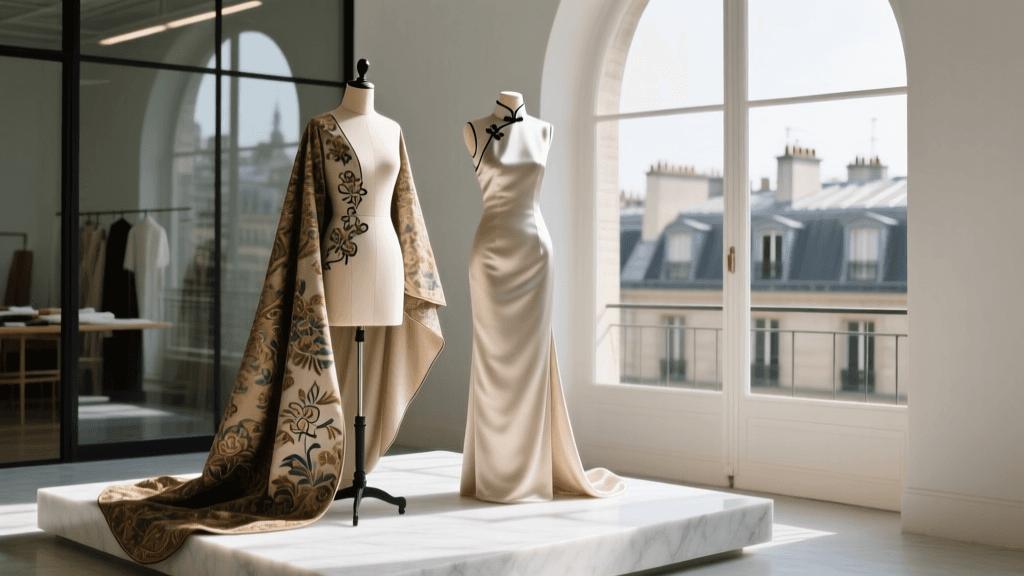
The international fashion landscape has witnessed a monumental shift during the 2026 exhibition season, with the Xin Zhongshi (新中式) movement firmly establishing itself as a dominant force at Paris and Milan Fashion Weeks. No longer confined to regional markets or treated as mere costume replication, modern Chinese style has evolved into a sophisticated sartorial language that merges ancient weaving techniques with avant-garde structural tailoring. For global buyers, stylists, and fashion researchers attending the 2026 design weeks, understanding the nuances of this movement is no longer optional—it is essential for forecasting luxury trends and sourcing authentic heritage textiles.
Unlike previous years where designers relied heavily on superficial motifs like embroidered dragons or printed phoenixes, the 2026 runway collections prioritize material integrity and fabric drape analysis. Designers are now showcasing the intrinsic beauty of heritage textiles, allowing the complex weaving structures and natural dyeing processes to dictate the silhouette. According to market analysts tracking the Asian luxury sector via Jing Daily's fashion coverage, the demand for authentic, traceable Xin Zhongshi garments in European and North American boutique markets has surged by over 40% this year, driven by a consumer desire for sustainable, culturally rich, and artisanal slow fashion.
Core Heritage Textiles Dominating the 2026 Runways
To navigate the B2B showrooms and exhibition spaces in Paris and Milan, buyers must be able to identify and evaluate the core textiles defining the Xin Zhongshi movement this year. The focus has shifted toward three primary heritage fabrics, each offering unique structural and aesthetic properties.
Xiangyunsha (Gambiered Canton Gauze)
Xiangyunsha, often referred to as 'soft gold' in the textile industry, is a highly prized silk fabric dyed using the juice of the Dioscorea cirrhosa tuber and coated with iron-rich river mud. The 2026 collections have featured Xiangyunsha in deconstructed trench coats and fluid evening wear. The chemical reaction between the tannins in the plant juice and the iron in the mud creates a distinctive dual-toned fabric: a rich, earthy brown on one side and a glossy, almost leather-like black on the other. The historical significance of such complex silk dyeing techniques is deeply rooted in Chinese antiquity, a legacy extensively documented by the Metropolitan Museum of Art's Heilbrunn Timeline of Art History on Chinese Silk. In 2026, top-tier export-grade Xiangyunsha is commanding premium prices, reflecting the labor-intensive 30-step dyeing process that requires specific humidity and sunlight conditions.
Song Brocade (Song Jin)
Historically reserved for imperial garments and prestigious scroll mountings, Song Brocade has been reimagined for 2026 as a structural element in modern tailoring. Unlike softer silks, Song Brocade features a complex weft-faced compound weave that provides exceptional tensile strength and a subtle, matte geometric luster. Designers are utilizing this ancient weaving technique to create structured corsetry, sharp-shouldered blazers, and architectural skirts that hold their shape without the need for synthetic interfacing. The intricate patterns, often featuring interlocking geometric lattices and subtle floral motifs, are woven directly into the fabric structure rather than embroidered on top, offering a refined, understated luxury that appeals to the modern minimalist aesthetic.
Xia (Summer Ramie Cloth)
Sustainability is a core pillar of the 2026 international design weeks, and Xia—a lightweight, breathable fabric woven from ramie fibers—has emerged as a favorite for resort and spring collections. Hand-loomed in southern China, Xia possesses a natural stiffness and a translucent quality that designers are exploiting through layering techniques. Its natural resistance to bacteria and moisture makes it highly practical, bridging the gap between ancient agrarian textiles and modern functional fashion.
Fabric Drape Analysis: Heritage vs. Modern Silk
For buyers and academic researchers conducting fabric drape analysis at the 2026 exhibitions, understanding the mechanical properties of Xin Zhongshi textiles is crucial. The drape of a fabric—how it folds and falls under its own weight—dictates its suitability for specific garment types. Using the standard Cusick Drape Test metrics, we can compare heritage textiles with modern counterparts.
Xiangyunsha exhibits a significantly higher flexural rigidity compared to standard mulberry silk crepe de chine. The mud-coating process stiffens the silk fibers, resulting in a lower drape coefficient (meaning the fabric holds wider, more sculptural folds rather than clinging to the body). This makes it ideal for voluminous, architectural sleeves and structured outerwear. Conversely, modern Song Brocade, while stiff in its warp, offers a surprising pliability in the weft, allowing it to be tailored closely to the body while resisting wrinkling. Ramie-based Xia cloth possesses a high bending length, creating crisp, papery folds that designers are using to create dramatic, origami-like pleats on the runway.
2026 Buyer’s Sourcing & Pricing Matrix
When sourcing these materials directly from brand showrooms or affiliated textile mills during Fashion Week, buyers must be aware of the current 2026 market rates and technical specifications. The following table outlines the essential metrics for procurement.
| Textile Type | Weight (g/m²) | Drape Coefficient (%) | 2026 Wholesale Price (EUR/m) | Best Application |
|---|---|---|---|---|
| Xiangyunsha (Heavyweight) | 85 - 95 | 45% - 55% | €160 - €210 | Outerwear, Structured Gowns |
| Xiangyunsha (Lightweight) | 40 - 50 | 60% - 70% | €110 - €140 | Blouses, Fluid Trousers |
| Song Brocade (Modern Blend) | 120 - 140 | 35% - 45% | €90 - €130 | Tailored Blazers, Corsetry |
| Xia (Handwoven Ramie) | 60 - 75 | 50% - 60% | €70 - €95 | Resort Wear, Layered Skirts |
Travel Packing and Maintenance for Exhibition Samples
Acquiring rare Xin Zhongshi runway samples at international design weeks is only the first challenge; transporting these delicate, naturally dyed textiles back to global headquarters or editorial offices requires meticulous travel packing strategies. The natural dyes used in Xiangyunsha and the structural integrity of Song Brocade are highly susceptible to environmental stress, friction, and off-gassing from modern plastics.
Buyers and stylists must adhere to strict archival packing protocols when transporting these 2026 exhibition pieces:
- Avoid PVC and Standard Plastics: Never pack Xiangyunsha or naturally dyed silks in standard polyethylene or PVC garment bags. These plastics off-gas volatile organic compounds (VOCs) that can alter the pH of the fabric and cause the natural tannins to discolor or degrade. Use breathable, unbleached cotton canvas bags or Tyvek sleeves.
- The Rolling Method for Brocade: Folding Song Brocade along the same lines repeatedly can cause permanent micro-fractures in the metallic or tightly twisted silk threads. Garments should be padded with unbuffered, acid-free tissue paper and rolled around acid-free archival tubes (minimum 15 cm diameter) rather than folded into standard sample suitcases.
- Climate Control Considerations: Ramie (Xia) and Xiangyunsha are sensitive to extreme humidity fluctuations. When checking samples as air freight or cargo, include silica gel desiccant packets (wrapped in breathable Tyvek to prevent direct contact with the fabric) inside the transport trunks to maintain a stable microclimate of around 45-50% relative humidity.
- Steaming vs. Ironing: Upon arrival, never use a direct-contact iron on the mud-coated side of Xiangyunsha, as the heat can cause the coating to crack or peel. Use a professional-grade vertical steamer at a distance of at least 10 cm, allowing the steam to relax the fibers without compromising the natural resinous finish.
Navigating the B2B Showrooms in Paris and Milan
The 2026 exhibition season has seen Xin Zhongshi brands move beyond traditional runway presentations into immersive, appointment-only B2B showrooms. In Paris, many avant-garde Chinese labels are hosting their textile archives and sourcing meetings at spaces like the Palais de Tokyo, where the focus is on tactile engagement with the raw materials. In Milan, the integration of heritage textiles into the broader luxury supply chain is being showcased near the Fondazione Prada, where workshops on ancient weaving techniques are held for international design students and buyers.
To maximize these showroom visits, buyers should request 'fabric hanger' kits rather than just finished garment lookbooks. Evaluating the raw textile hangers under natural daylight (or using a portable high-CRI light meter) is essential, as the complex, multi-tonal nature of mud-dyed silks and brocades can look drastically different under the warm, artificial lighting of a standard showroom. Furthermore, understanding the historical context of these materials elevates the buying process from a simple transaction to a cultural exchange. Institutions like the Victoria and Albert Museum's Chinese Collections provide invaluable digital and physical archives that buyers can reference to verify the authenticity of traditional motifs and weaving structures being pitched by modern manufacturers.
Ultimately, the triumph of Xin Zhongshi at the 2026 international design weeks represents a maturation of global fashion. It is a movement that demands respect for the artisan, a deep understanding of material science, and a commitment to preserving ancient techniques through modern, wearable innovation. For the informed buyer, these textiles offer not just a seasonal trend, but a permanent addition to the lexicon of global luxury.