Silk Road Kimono Textiles: 2026 Nishijin Trade Revival Guide
The Cosmopolitan Canvas: Beyond Isolated Aesthetics
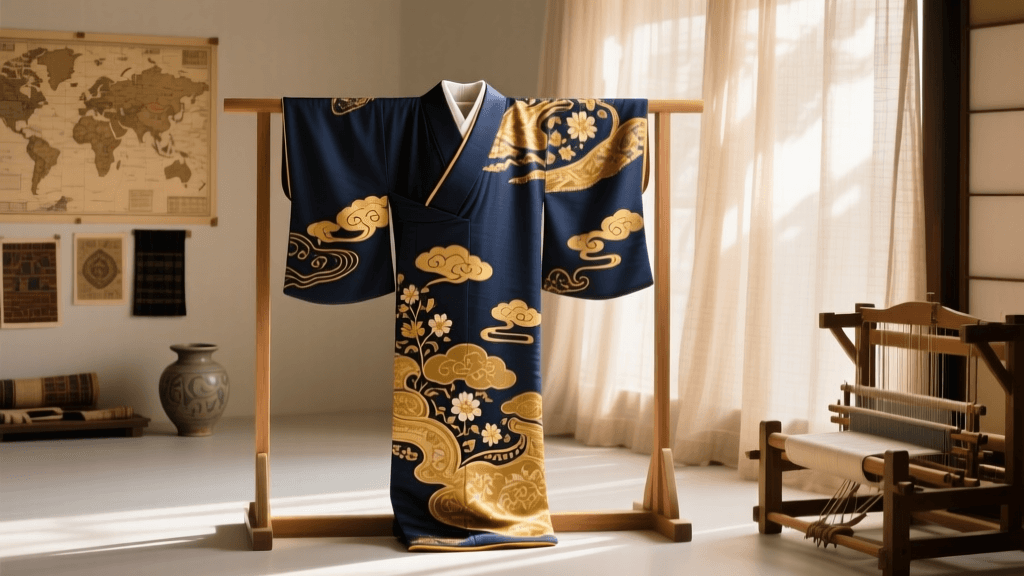
When collectors, fashion historians, and textile enthusiasts examine the traditional Japanese kimono, there is a prevailing tendency to view it as the ultimate symbol of isolated, indigenous aesthetic refinement. However, as we navigate the global textile landscape in 2026, a deeper appreciation for the garment’s cosmopolitan origins is reshaping the collector’s market. The kimono is not merely a product of island isolation; it is a vibrant canvas of historical imports, global trade routes, and cross-cultural exchanges. Today, the most sought-after garments in Kyoto’s artisanal districts are those that pay homage to these historical trade routes, blending Japanese craftsmanship with the rich material legacy of the Silk Road and maritime spice routes.
In 2026, the Nishijin district of Kyoto—the historic heart of Japanese textile weaving—is experiencing a massive renaissance focused on 'trade-route revival' textiles. Artisans are meticulously recreating the complex weaves, imported dyes, and foreign motifs that first arrived in Japan centuries ago. For serious collectors and cultural enthusiasts, understanding these historical imports is no longer just an academic exercise; it is essential for sourcing, valuing, and preserving the most prestigious kimono textiles available on the market today.
The Shosoin Repository and the Silk Road Legacy
To understand the 2026 revival movement, one must look back to the Nara period (710–794), when Japan was deeply connected to the Asian mainland via the Silk Road. The Shosoin Repository in Nara houses thousands of artifacts from this era, including textiles that reveal a staggering array of foreign influences. Persian roundels featuring hunting motifs, Central Asian warp-faced compound twills, and Chinese Tang dynasty floral medallions were all imported and subsequently adapted by early Japanese weavers.
Modern Nishijin weavers in 2026 are utilizing advanced digital archiving and historical thread analysis to recreate these exact Silk Road patterns. The technique known as kara-ori (Chinese-style weaving) has seen a massive surge in demand this year. Originally developed to mimic the heavy, opulent brocades of the Ming and Qing dynasties, contemporary kara-ori obi sashes now incorporate authentic metallic threads imported from Italy and specialized silk yarns sourced directly from Zhejiang, China, ensuring the tactile weight and luminous sheen perfectly match historical imports. A master-woven kara-ori obi featuring authentic Silk Road medallion motifs currently commands a starting price of 850,000 JPY (approximately $5,800 USD) in the 2026 Kyoto market, reflecting the immense labor and imported material costs.
Maritime Trade and the Nanban Influence
While the Silk Road brought overland luxury, the maritime trade routes of the 16th and 17th centuries introduced an entirely new sensory palette to Japanese textiles. The arrival of Portuguese and Spanish traders—referred to as Nanban (Southern Barbarians)—brought wool, velvet, and new dyeing techniques to Japan's shores. Furthermore, the subsequent Dutch and Chinese maritime trade via Nagasaki introduced exotic Indian chintz and Southeast Asian batik patterns.
In 2026, the Nishijin Textile Center has spotlighted a new generation of weavers who are integrating nanban-ori (Southern barbarian weave) techniques into modern kimono and haori jackets. These textiles are characterized by their bold, geometric interpretations of European tapestries and the incorporation of imported velvet accents. The 2026 spring collections from heritage Nishijin houses have featured stunning haori jackets that blend traditional Japanese silk crepe (chirimen) with imported Indian block-printed cotton linings and subtle velvet collar accents, creating a fusion garment that is highly prized by international collectors seeking a tangible piece of maritime trade history.
2026 Buyer’s Guide: Sourcing Trade-Route Inspired Textiles
For collectors visiting Kyoto or purchasing through international auction houses in 2026, identifying and valuing trade-route inspired textiles requires a nuanced understanding of weave structures and material origins. Below is a comparative guide to the three primary categories of historical-import textiles dominating the 2026 market.
| Textile Category | Historical Origin / Trade Route | 2026 Weave Characteristics | Primary Garment Use | Estimated 2026 Market Cost (USD) |
|---|---|---|---|---|
| Kara-ori (Chinese Brocade) | Silk Road / Tang & Ming Dynasties | Heavy warp-faced brocade, extensive use of imported gold/silver metallic threads, dense floral/medallion motifs. | Fukuro Obi, Maru Obi | $4,500 - $8,500 |
| Nanban-ori (Maritime Fusion) | Portuguese/Spanish Maritime Routes | Mixed media weaves, incorporation of velvet or wool accents, geometric and European tapestry-inspired motifs. | Haori, Hanten, Obi | $1,200 - $3,500 |
| Shosoin Revival (Persian/Central Asian) | Overland Silk Road via Nara Period | Warp-faced compound twills, pearl roundels, hunting motifs, natural plant-based dyes imported from Central Asia. | Display Pieces, Formal Kimono | $6,000 - $12,000+ |
The 2026 Dye Sourcing Revolution
A critical component of the 2026 trade-route revival is the authentic sourcing of historical dyes. Synthetic dyes, which dominated the 20th-century kimono market, are being entirely rejected by top-tier Nishijin artisans in favor of historically accurate, route-specific natural dyes. In 2026, it is common for elite dye houses in Kyoto to import raw madder root directly from Turkey to achieve the deep, rust-reds seen in ancient Persian textiles. Similarly, authentic Indian indigo and Southeast Asian lac dyes are being imported in their raw, unprocessed forms to recreate the exact colorfastness and subtle variations found in Edo-period maritime imports.
This commitment to historical dye sourcing not only elevates the aesthetic authenticity of the garments but also aligns with the 2026 global shift toward sustainable, traceable luxury fashion. Collectors can now request a 'material passport' with their high-end kimono purchases, which details the exact geographic origin of every dye and silk thread used in the garment, tracing its lineage back to the historical trade routes it emulates.
Preserving the Legacy: Exhibitions and Archival Access
To truly appreciate the textiles you are collecting, engaging with the historical archives is paramount. In 2026, the Kyoto National Museum is hosting a landmark exhibition titled 'Threads of the World: The Global Origins of Nishijin.' This exhibition places 18th-century Japanese brocades side-by-side with their Chinese, Persian, and European counterparts, offering an unprecedented visual education on how foreign imports were localized into Japanese aesthetic sensibilities.
For serious researchers and high-level collectors, securing viewing appointments at the Shosoin Repository's annual autumn exhibition in Nara remains a critical pilgrimage. While the original 8th-century textiles are too fragile for commercial sale, studying their structural integrity and dye degradation provides invaluable insights that inform the authentication and preservation of later Edo and Meiji-period trade-inspired garments currently circulating in the 2026 auction market.
Actionable Care and Preservation Tips for 2026 Collectors
Textiles that utilize historical trade techniques—particularly those incorporating imported metallic threads, velvet accents, or dense compound twills—require specialized care that differs from standard silk crepe kimono. To protect your investments in 2026, adhere to the following preservation protocols:
- Climate Control for Metallic Threads: Kara-ori and Nanban-ori textiles often feature metallic threads that are highly susceptible to oxidation. In 2026, conservationists recommend storing these garments in custom-fitted, acid-free paulownia wood boxes (kiri-bako) equipped with micro-climate silica gel packets to maintain a strict relative humidity of 45-50%.
- Avoid Traditional Folding for Velvet Accents: If your Nanban-inspired haori features imported velvet collars or cuffs, never fold the garment along the velvet seams. The pile will crush permanently over time. Instead, use padded, wide-shouldered hangers and store the garment in a breathable, unbleached cotton garment bag in a dark, climate-controlled wardrobe.
- Specialized Cleaning Protocols: Do not subject trade-route revival textiles to standard kimono dry cleaning (arai-hari), as the harsh solvents can strip the natural oils from imported plant dyes like Turkish madder or Indian indigo. Seek out specialized Kyoto conservation studios that utilize 2026's advanced aqueous micro-foam cleaning technologies, which lift dirt without agitating the complex weave structures or compromising historical dye integrity.
Conclusion: Wearing the World
The kimono has never been a static artifact; it is a living, breathing archive of global connection. The 2026 Nishijin trade-route revival movement reminds us that Japanese traditional fashion is deeply intertwined with the broader tapestry of human commerce and cultural exchange. By understanding the historical imports that shaped these textiles—from Persian roundels to Portuguese velvets—collectors and enthusiasts can make informed, passionate acquisitions. Whether you are investing in a master-woven Kara-ori obi or studying the ancient swatches at the Kyoto National Museum, you are participating in the ongoing preservation of a truly global heritage, ensuring that the cosmopolitan soul of the kimono continues to thrive in the modern era.