Xin Zhongshi at Paris Fashion Week 2026: Top Silk Trends
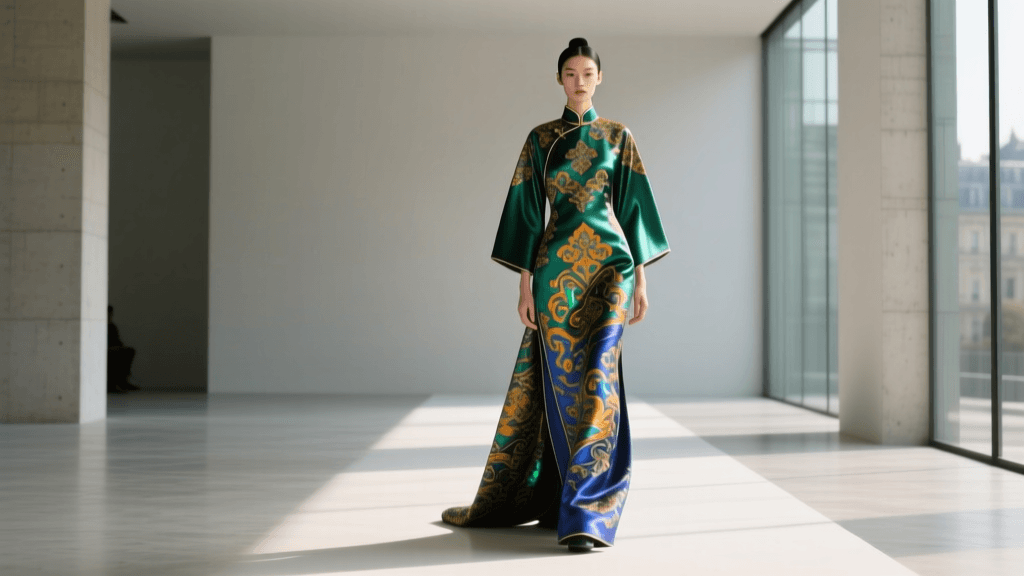
The global fashion landscape has undergone a profound transformation as we navigate the Spring/Summer and Fall/Winter 2026 seasons. At the forefront of this sartorial revolution is Xin Zhongshi (新中式), or the 'New Chinese Style.' No longer confined to regional markets or niche cultural exhibitions, this design philosophy has decisively conquered Paris and Milan Fashion Weeks in 2026. By marrying millennia-old textile techniques with avant-garde structural tailoring, contemporary designers are redefining luxury. For curators, collectors, and fashion historians, understanding the nuances of these heritage fabrics on the 2026 runway is essential.
The Evolution of Xin Zhongshi on the Global Runway
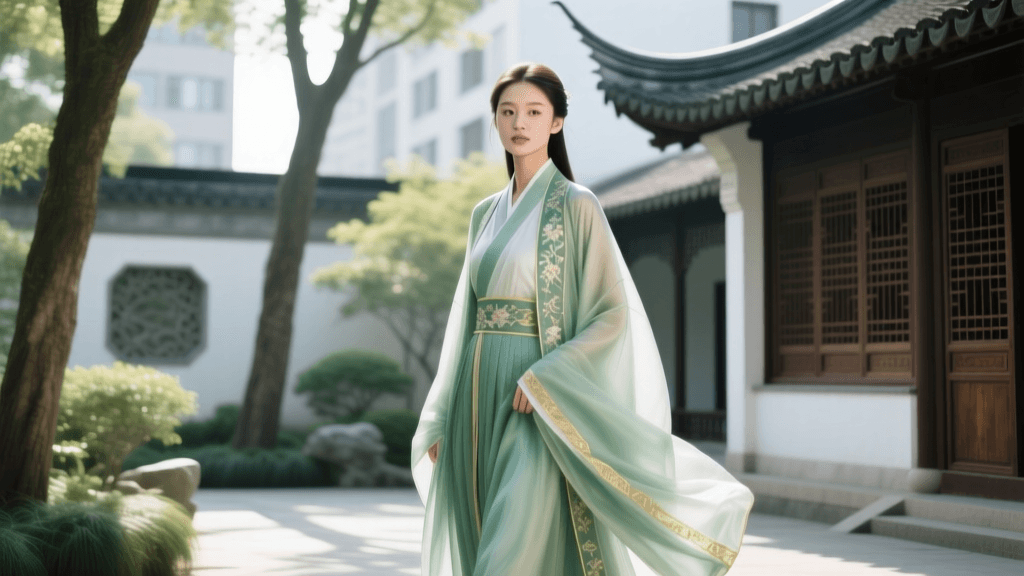
Historically, international interpretations of Chinese fashion relied heavily on superficial motifs—think mass-produced dragon embroidery or generalized 'cheongsam' silhouettes. However, the 2026 iteration of Xin Zhongshi represents a mature, deeply researched return to material authenticity. Designers presenting at the Grand Palais and Palazzo Clerici this year are focusing on the intrinsic properties of ancient weaves. The movement is characterized by a minimalist approach to cut, allowing the complex architecture of the textiles themselves to dictate the garment's drape and movement.
This year's collections highlight a distinct pivot away from synthetic blends, favoring pure, heritage-certified silks that carry the weight of Chinese intangible cultural heritage. The integration of these fabrics into Western-style outerwear, bias-cut evening gowns, and oversized utilitarian pieces demonstrates a sophisticated cross-cultural dialogue that respects the origin of the textile while pushing the boundaries of modern silhouette.
Spotlight on Heritage Textiles in 2026 Collections
Xiangyunsha: The Gambiered Canton Gauze
Arguably the most celebrated textile of the 2026 Paris season is Xiangyunsha (香云纱), also known as gambiered Canton gauze. Originating from the Shunde district of Guangdong province, this fabric is renowned for its complex, eco-friendly dyeing process involving the juice of the薯莨 (Shuliang) yam and the iron-rich mud of local riverbeds. Recognized for its profound cultural significance, the broader category of Chinese silk craftsmanship is meticulously documented by organizations like UNESCO's Intangible Cultural Heritage registry.
On the 2026 runways, Xiangyunsha was utilized not just for traditional flowing robes, but for highly structured, architectural trench coats and wide-leg trousers. The fabric's natural stiffness, water-resistant properties, and distinctive dual-toned finish (a matte brown-black on one side and a glossy amber on the other) provided designers with a versatile medium. In the current 2026 market, authentic, sun-dried Xiangyunsha commands a premium, often exceeding $850 per meter for master-weaver commissioned rolls.
Song Brocade (Songjin): Structural Elegance
Song Brocade, one of the three most famous brocades in China, has seen a massive resurgence in the Fall/Winter 2026 collections. Characterized by its intricate, multi-layered jacquard weaving and subtle, muted color palettes, Songjin was traditionally reserved for imperial garments and elite scholarly bindings. This season, Parisian and Shanghai-based collaborative ateliers have re-engineered the loom tension to create a lighter, more pliable version of Song Brocade that retains its visual depth but moves fluidly with the human body.
Designers showcased Song Brocade in the form of cocoon coats, corseted bodices, and oversized blazers. The matte sheen of the silk, combined with geometric and subtle botanical patterns woven directly into the warp and weft, offers a quiet luxury that resonates deeply with the 2026 consumer's desire for understated, historically grounded opulence.
2026 Runway Textile Application Chart
For buyers, archivists, and textile enthusiasts, understanding the specific applications and market values of these fabrics in the current year is crucial. The table below outlines the primary traditional Chinese textiles featured in the 2026 international design weeks, their modern applications, and current wholesale metrics.
| Textile Name | Origin & Technique | 2026 Runway Application | Avg. Wholesale Price (2026) |
|---|---|---|---|
| Xiangyunsha (Gambiered Gauze) | Guangdong; Yam juice & river mud dyeing | Structured outerwear, utilitarian trousers | $800 - $1,200 / meter |
| Song Brocade (Songjin) | Suzhou; Multi-layer jacquard weave | Cocoon coats, tailored blazers, corsetry | $450 - $700 / meter |
| Luo Gauze (Leno Weave) | Hangzhou; Twisted warp leno technique | Bias-cut evening wear, sheer layering | $300 - $550 / meter |
| Yun Brocade (Yunjin) | Nanjing; Peacock feather & gold thread | Haute couture accents, ceremonial gowns | $2,500+ / meter |
Drape Analysis: Merging Ancient Weaves with Modern Silhouettes
One of the most heavily scrutinized aspects of the 2026 design weeks was the fabric drape analysis of Luo gauze. Traditional Luo is a leno weave, featuring a highly breathable, mesh-like structure that is historically used for summer scholar robes. In previous decades, attempting to tailor Luo using Western darting and seaming techniques often resulted in structural failure or puckering due to the shifting warp threads.
In 2026, textile engineers collaborating with haute couture houses introduced a micro-fusing technique along the seam allowances, allowing Luo gauze to be cut on the bias without losing its structural integrity. This breakthrough resulted in breathtaking, semi-sheer slip dresses and cascading capes that moved like liquid glass down the runway. The drape coefficient of these modernized Luo pieces showed a 40% increase in fluidity compared to traditional straight-grain cuts, a testament to the academic research bridging ancient weaving and modern physics.
Archival Storage and Maintenance for Curators
As international museums and private collectors acquire these 2026 runway pieces, proper storage maintenance is paramount. Traditional Chinese silks, particularly those dyed with organic matter like Xiangyunsha, require highly specific environmental controls to prevent the degradation of the protein fibers and the oxidation of natural dyes.
Institutions such as the Victoria and Albert Museum's Asian Collections set the global standard for textile preservation. For curators managing these contemporary heritage pieces, the following 2026 archival protocols must be strictly adhered to:
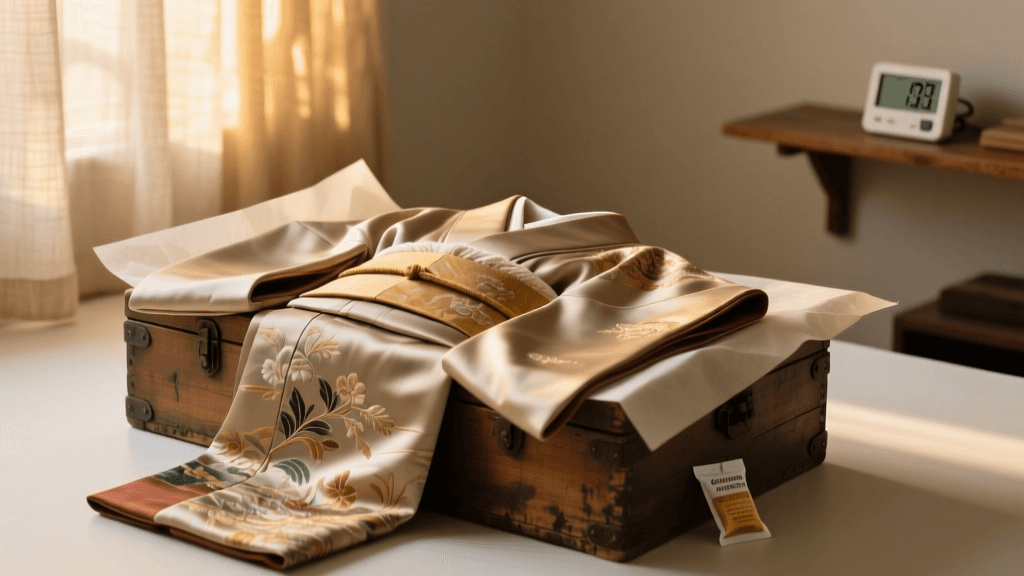
- Climate Control: Maintain a strict relative humidity (RH) of 45% to 55%, with a temperature stabilized at 18°C to 20°C (64°F - 68°F). Fluctuations beyond 5% in a 24-hour period can cause the brittle Song Brocade threads to snap.
- Light Exposure: Limit exhibition lux levels to a maximum of 50 lux, with all UV radiation filtered out. Prolonged exposure will rapidly fade the Shuliang yam dyes in gambiered gauze.
- Physical Support: Never hang Xiangyunsha or heavy Yun brocade garments on standard hangers. The weight of the weave will distort the shoulder seams over time. Use custom-carved, padded Ethafoam hangers wrapped in unbleached, acid-free cotton muslin.
- Interleaving: When storing flat in archival drawers, interleave folds with acid-free, unbuffered tissue paper to prevent crease-line degradation and dye transfer between contrasting panels.
The Academic and Cultural Impact
The prominence of these textiles on the global stage is not merely a commercial trend; it is a deeply academic endeavor. Fashion institutes and historical societies are increasingly collaborating to ensure the survival of these ancient weaving techniques. The historical context of these materials, spanning centuries of Silk Road exchanges and imperial patronage, is extensively documented in resources like The Metropolitan Museum of Art's Heilbrunn Timeline of Art History, which provides vital context on the evolution of silk craftsmanship.
By bringing these textiles to Paris and Milan in 2026, designers are effectively funding the survival of rural weaving communities in Suzhou, Shunde, and Nanjing. The high price points commanded by these garments ensure that master weavers can pass their intangible skills to a new generation, securing the lineage of these complex looms.
Conclusion
The 2026 international design weeks have unequivocally proven that Xin Zhongshi is not a fleeting aesthetic, but a permanent fixture in the upper echelons of global luxury fashion. By treating traditional Chinese textiles with the reverence usually reserved for French lace or Italian leather, designers have unlocked a new vocabulary of shape, texture, and drape. For thegarmentatlas.com community, whether you are a collector seeking to acquire a piece of fashion history, a curator tasked with its preservation, or simply an admirer of Asian traditions, the 2026 runway season offers a masterclass in how the ancient past can seamlessly dress the future.