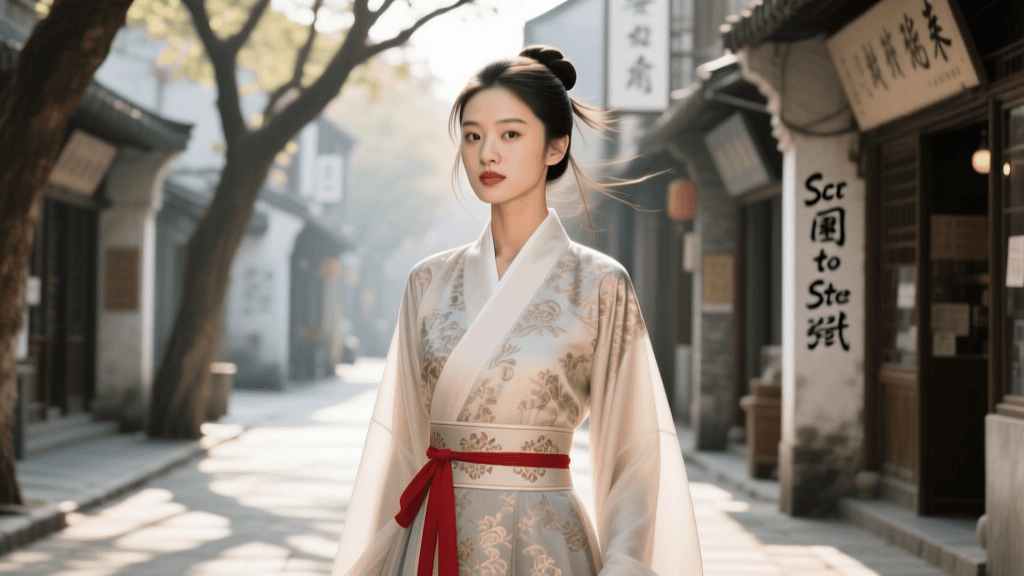
Hanfu E-Commerce Boom: Buying Traditional Chinese Garments Online

The Evolution of the Hanfu Market: From Silk Alleys to Digital Storefronts
For centuries, acquiring traditional Chinese garments was an intimate, localized process. In historical hubs like Suzhou and Hangzhou, buyers navigated bustling physical markets, negotiating directly with weavers and tailors for bespoke silk robes, pleated skirts, and intricate undergarments. Today, the landscape of traditional Chinese clothing has undergone a radical transformation. The modern 'Hanfu Movement' (Hanfu Yundong) has catapulted these ancient garments from niche historical reenactment circles into mainstream fashion, driven almost entirely by the explosive growth of e-commerce platforms.
Understanding this shift from traditional markets to digital marketplaces is crucial for anyone looking to invest in authentic Asian traditional garments. Whether you are a cultural enthusiast, a collector, or someone preparing for a traditional rite of passage, navigating the digital hanfu market requires a blend of historical knowledge and modern e-commerce savvy.
The Historical Baseline: Craftsmanship in Physical Markets
Before the digital revolution, the acquisition of traditional garments was bound by geography and the limitations of physical supply chains. The Victoria and Albert Museum notes that historical Chinese textiles were deeply regional, with specific areas renowned for distinct weaving techniques, such as the elaborate brocades of Sichuan or the delicate silks of the Jiangnan region. Buyers in physical markets relied on tactile inspection—feeling the weight of the silk, examining the tension of the embroidery, and commissioning pieces that required months of hand-loom weaving.
Furthermore, the trade and dissemination of these luxury fabrics were heavily reliant on physical trade routes. As detailed by The Metropolitan Museum of Art, the historical silk trade was a complex network of physical exchanges that dictated not only fashion but global economics. In the late 20th and early 21st centuries, physical hanfu shops were rare, often confined to small, specialized boutiques in cities like Xi'an or Beijing, or rented temporarily during cultural festivals in water towns like Xitang. The barrier to entry was high, and access to historically accurate garments was limited to those with deep pockets and specialized connections.
The Digital Shift: How E-Commerce Democratized Hanfu
The advent of Taobao, Tmall, and social commerce platforms like Xiaohongshu (Little Red Book) and Douyin completely disrupted the traditional garment market. E-commerce allowed small, independent workshops in rural weaving villages to bypass physical retail middlemen and sell directly to a global audience. According to industry analyses recognized by UNESCO's Intangible Cultural Heritage frameworks, the digital marketplace has played a vital role in preserving and revitalizing traditional craftsmanship by providing artisans with a sustainable economic model.
Today, the hanfu e-commerce market is a multi-billion-dollar industry. Consumers no longer need to travel to specialized physical markets in Caoqiao or Suzhou to find high-quality Mamianqun (horse-face skirts) or Ruqun (blouse and skirt ensembles). Instead, they can compare historical accuracy, fabric composition, and artisan reviews from their smartphones. However, this digital abundance comes with its own set of challenges, particularly regarding sizing, shipping timelines, and authenticity.
Practical Guide: Buying Hanfu Online Today
Transitioning from a physical market mindset to an e-commerce strategy requires understanding the unique quirks of Chinese digital retail. Here is your actionable guide to purchasing traditional garments online.
1. Navigating Platforms and Search Terms
When shopping on major platforms like Taobao or Tmall, the terminology you use dictates the quality and historical accuracy of your purchase:
- Hanfu (汉服): Use this term for garments that strive for historical accuracy, based on unearthed artifacts and historical texts.
- Hanfu Elements (汉元素 / Hanyuansu): These are modern fusion garments. They incorporate traditional motifs (like cloud collars or cross-collars) but use modern zippers, elastic waistbands, and shorter hemlines. Ideal for daily wear, but not for strict traditional ceremonies.
- Replica / Fangu (复刻): This indicates a brand has meticulously replicated a specific historical artifact or museum piece. These are often the most expensive and accurate.
2. Sizing and Measurements
Unlike Western fast fashion, traditional Chinese garments often rely on flat-pattern cutting and specific layering. E-commerce listings rarely use standard S/M/L sizing without detailed measurement charts. Always measure yourself with a soft tape measure and consult the brand's specific chart.
| Measurement | Traditional Garment Note | E-Commerce Buying Tip |
|---|---|---|
| Bust (Xiongwei) | Cross-collared tops (Jiaoling) require precise wrapping. | Add 3-5 cm to your actual bust measurement to allow for inner layers and comfortable wrapping. |
| Waist (Yaowei) | Mamianqun skirts rely on side pleats and ties, not elastic. | Measure at your natural waistline. If between sizes, size up; skirts can be folded at the waistband for a tighter fit. |
| Height (Shengao) | Determines the drape of the skirt (Qunchang). | Skirts usually come in 95cm, 105cm, and 115cm lengths. For a traditional floor-grazing look, choose a length that ends 2cm above the floor while wearing your intended shoes. |
| Arm Span (Tongxiu) | Historical sleeves (like Pipa or Guangxiu) are measured by total wingspan. | Check the sleeve length listing. If you plan to wear modern jackets over your hanfu, ensure the sleeve width accommodates the bulk. |
3. Understanding Price Tiers and Costs
The e-commerce market is highly stratified. Knowing what to expect in terms of cost will help you avoid overpriced 'Hanfu elements' or suspiciously cheap synthetic knock-offs.
- Entry-Level (100 - 300 RMB / $15 - $45 USD): Typically made from polyester or cotton blends. Often features machine embroidery and fused interlinings. Great for beginners, photography props, or casual summer wear.
- Mid-Tier (300 - 800 RMB / $45 - $120 USD): The sweet spot for most enthusiasts. Features high-quality viscose, rayon, or basic silk blends. Embroidery is denser, and patterns are often woven into the fabric (jacquard) rather than just printed.
- High-End / Bespoke (1,000 - 5,000+ RMB / $150 - $700+ USD): Authentic silk brocades, real gold-thread weaving (Zhuanghua), and hand-embroidery. These are often produced by heritage workshops and are considered wearable investments.
4. The Pre-Sale Culture (Yushou)
Perhaps the most critical difference between physical markets and hanfu e-commerce is the pre-sale model, known as 'Yushou'. Because high-quality traditional garments are made in small batches to minimize inventory risk, brands frequently operate on a pre-order system. You may pay a deposit (usually 20% to 30% of the total cost) to secure your size, and the brand will manufacture the garment over the next 30 to 45 days. Always check the product description for 'Yushou' and note the estimated shipping date. If you need a garment for a specific festival or rite of passage, you must plan your e-commerce purchases at least two months in advance.
Navigating Authenticity and Artisan Support
While e-commerce has made hanfu accessible, it has also flooded the market with mass-produced, historically inaccurate garments. To support the true preservation of Asian traditions, look for brands that collaborate with recognized Intangible Cultural Heritage artisans. Many top-tier e-commerce storefronts now include video documentation of their weaving and dyeing processes, proving the authenticity of their craftsmanship. Reading community reviews on platforms like Xiaohongshu can also help you verify if a brand's 'historical replication' holds up to the scrutiny of the hanfu community.
Conclusion
The journey of traditional Chinese garments from the bustling, tactile silk markets of antiquity to the algorithm-driven storefronts of modern e-commerce is a testament to the enduring appeal of these cultural artifacts. While the medium of exchange has changed, the desire to connect with history through clothing remains the same. By understanding the nuances of digital sizing, the economics of pre-sales, and the terminology of historical accuracy, modern consumers can navigate the e-commerce boom with confidence, ensuring that the legacy of traditional Asian garments continues to thrive in the digital age.