Guide to Children's Kimono and Coming-of-Age Traditions
The Journey Through Japanese Kimono Traditions
In Japan, the kimono is far more than a beautiful garment; it is a profound visual marker of lifecycle events, societal integration, and personal growth. From the tender years of early childhood to the threshold of adulthood, traditional Japanese clothing serves as a canvas for family hopes, cultural continuity, and artistic expression. For parents navigating these milestones, and for young adults stepping into society, understanding the nuances of children's kimono and coming-of-age attire is essential. This guide explores the deeply rooted traditions of Shichi-Go-San and Seijin no Hi, offering actionable advice on garment selection, measurements, rental costs, and etiquette.
Shichi-Go-San: Celebrating Childhood Milestones
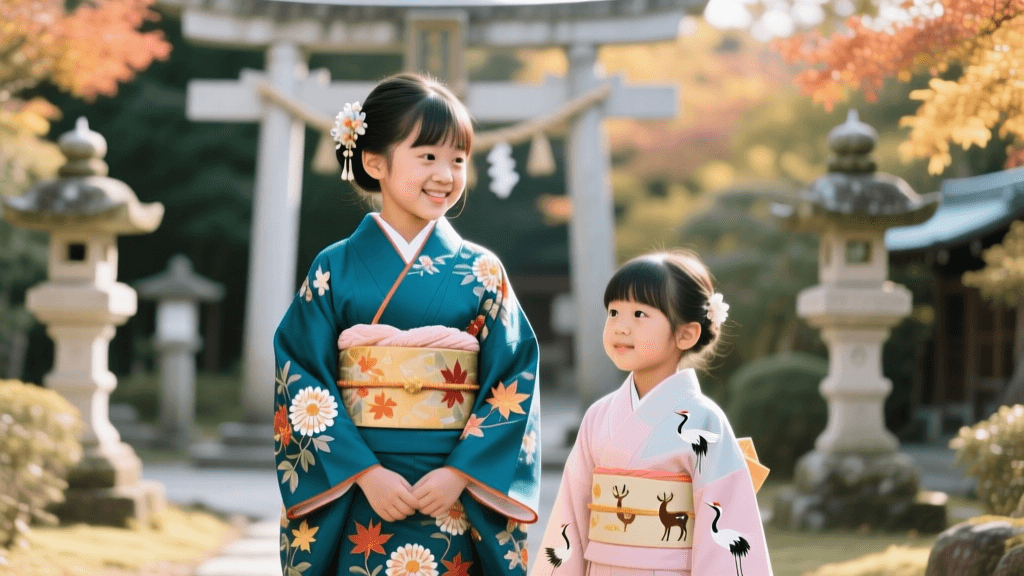
Held annually on November 15th, Shichi-Go-San (literally 'Seven-Five-Three') is a rite of passage celebrating the growth and well-being of young children. Historically, child mortality rates were high, and reaching the ages of three, five, and seven was considered a significant milestone worthy of divine gratitude. Today, families visit Shinto shrines to pray for their children's health, dressing them in exquisite, age-specific traditional garments.
Age Three: The Hifu Vest
At age three, both boys and girls traditionally participate, though it is predominantly celebrated by girls in modern times. Three-year-old girls wear a standard silk kimono paired with a hifu—a padded, sleeveless silk vest. The hifu is designed to conceal the stiff, formal obi (sash), as young children are not yet expected to wear the restrictive adult-style sash. The garments are often adorned with auspicious motifs like cranes, cherry blossoms, and treasure ships, utilizing vibrant yuzen dyeing techniques. Footwear consists of soft-soled zori sandals, and the child's hair is typically styled with decorative kanzashi (hairpins).
Age Five: The First Hakama
At age five, the celebration is traditionally reserved for boys. This marks the first time a boy wears a hakama (pleated, skirt-like trousers) and a haori (a formal hip-length jacket). The ensemble is usually crafted from dark, high-quality silk crepe, often bearing the family crest (kamon) on the back and sleeves. The boy holds a traditional folding fan (sensu) and wears white tabi socks. This attire symbolizes his first step into the formal, public sphere of male societal roles.
Age Seven: Tying the Obi
At age seven, girls undergo a significant sartorial transition. They graduate from the simple cord ties (himo) used in early childhood and wear their first formal, adult-style obi. While the kimono sleeves remain relatively short compared to adult wear, the intricate tying of the sash—often in a decorative fukura-suzume (sparrow) knot—symbolizes her gradual transition toward womanhood. According to The Metropolitan Museum of Art, the evolution of the obi and the layering of garments in Japanese dress reflect deep-seated cultural codes regarding age, status, and gender, making the seven-year-old's first obi a profoundly symbolic event.
Seijin no Hi: The Coming-of-Age Ceremony
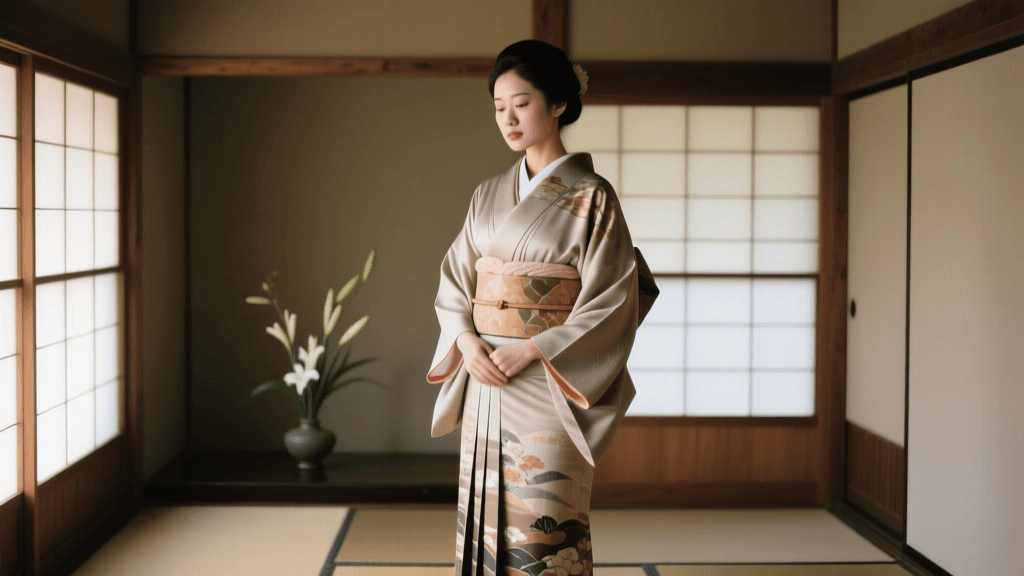
Held on the second Monday of January, Seijin no Hi (Coming-of-Age Day) celebrates young adults who have reached the traditional age of maturity. The centerpiece of this event for young women is the furisode, the most formal kimono worn by unmarried women.
The Furisode: A Young Woman's Canvas
The defining feature of the furisode is its long, swinging sleeves, which historically served to ward off evil spirits and express romantic interest through subtle movements. Furisode are categorized by sleeve length:
- Kofurisode (Short): Sleeves measure approximately 85 cm. Often worn for graduation ceremonies.
- Chufurisode (Medium): Sleeves measure around 100 cm. The most common and versatile choice for Coming-of-Age Day.
- Ofurisode (Long): Sleeves measure 114 cm or longer. Highly formal, often worn by brides or their attendants, but occasionally chosen for Seijin no Hi by those seeking maximum dramatic impact.
The Victoria and Albert Museum notes that the furisode's expansive surface area allows for breathtaking, continuous patterns that drape seamlessly across the seams, showcasing the pinnacle of Japanese textile arts, including gold leaf application and intricate embroidery.
The 2022 Legal Shift and Cultural Continuity
In April 2022, Japan officially lowered the legal age of adulthood from 20 to 18. However, the cultural tradition of Seijin no Hi and the wearing of the furisode remain overwhelmingly anchored at age 20. Municipalities and kimono industries have largely maintained the ceremonies for 20-year-olds, as 18-year-olds are typically heavily occupied with high school graduation and university entrance examinations. Thus, the furisode remains a symbol of the 20th year, representing a period of life where young adults are granted societal independence while still enjoying the protection of their families.
Comparison Chart: Shichi-Go-San vs. Seijin no Hi
| Feature | Shichi-Go-San (Children) | Seijin no Hi (Young Adults) |
|---|---|---|
| Target Age | 3, 5, and 7 years old | 20 years old (traditionally) |
| Primary Garment | Kimono with Hifu (age 3), Hakama (age 5), short-sleeve Kimono (age 7) | Furisode (long-sleeve kimono) |
| Key Accessories | Hair ornaments, small folding fans, soft zori | Hakoseko (mirror case), shigoki (silk sash), zori |
| Timing | November 15th (celebrated on nearby weekends) | Second Monday of January |
| Average Rental Cost | ¥15,000 - ¥35,000 ($100 - $230 USD) | ¥80,000 - ¥150,000+ ($530 - $1,000+ USD) |
Actionable Advice: Booking, Fitting, and Etiquette
Whether you are a parent planning for Shichi-Go-San or a young adult preparing for Seijin no Hi, navigating the logistics of traditional Japanese formalwear requires careful planning. Below are practical guidelines to ensure a seamless experience.
1. Timing and Reservations
For Shichi-Go-San, the peak season is October and November. You must book kimono rentals, dressing services (kitsuke), and professional photography between April and June of the same year. Popular shrine-adjacent studios in Kyoto and Tokyo book out months in advance. For Seijin no Hi, young women often select and reserve their specific furisode up to a year in advance, as high-end, unique textile patterns are reserved on a first-come, first-served basis.
2. Understanding Rental Packages vs. Purchasing
For children, purchasing a silk kimono is rarely practical due to rapid growth. Rental packages (typically ¥20,000 / $130 USD) are highly recommended and usually include the kimono, all necessary undergarments, accessories, dressing service, and sometimes a commemorative photo album. For furisode, rental packages (¥100,000 / $660 USD) also include professional hair styling and makeup, which are mandatory for the formal aesthetic. If purchasing a new, custom furisode, expect to spend between ¥500,000 and ¥1,500,000 ($3,300 - $10,000 USD), and factor in the cost of the obi and accessories, which are often sold separately.
3. The Importance of Undergarments
A kimono's silhouette relies entirely on what lies beneath. For children, a simple cotton hadajuban (undershirt) and susoyoke (half-slip) are sufficient. For young women wearing a furisode, padding is often required to create the traditional cylindrical silhouette (naishin). Renters should confirm if the studio provides these specialized padding towels and the koshihimo (tying cords), as purchasing them separately can add ¥5,000 to your budget.
4. Footwear Sizing and Comfort
Traditional zori sandals are sized differently than Western shoes. When renting, the studio will measure the foot and adjust the hanao (thongs). However, for young children, the rigid thong can cause blisters. Pro tip: Bring bandages and have the child wear their zori around the house with tabi socks for a few days prior to the event to soften the material and build tolerance.
'The true beauty of the kimono is not just in the silk, but in the posture and grace it demands of the wearer. Teaching a child to walk mindfully in a kimono is their first lesson in traditional etiquette.'
Preserving the Legacy
The traditions of Shichi-Go-San and Seijin no Hi are vital threads in the fabric of Japanese culture. They transform abstract concepts of growth, responsibility, and familial love into tangible, wearable art. By understanding the specific garments, the historical context, and the practical logistics of acquiring them, families and young adults can fully immerse themselves in these profound milestones. Whether it is a five-year-old boy proudly adjusting his hakama or a twenty-year-old woman elegantly swinging her furisode sleeves, these garments ensure that the legacy of Japanese textile artistry continues to thrive in the modern era.