The Ultimate Guide to Traditional Tai Chi Practice Wear
The Intersection of Movement and Attire in Taijiquan
Tai Chi, formally known as Taijiquan, is a centuries-old Chinese martial art celebrated for its slow, deliberate movements, deep breathing, and profound mind-body connection. According to Encyclopædia Britannica, Tai Chi originated as a highly effective form of self-defense and combat, evolving over centuries into a globally recognized practice for health, meditation, and spiritual cultivation. As practitioners flow through forms like the Yang or Chen styles, the clothing they wear plays a critical, albeit often overlooked, role in their performance and comfort.
Unlike modern athletic wear, which relies on synthetic compression and high-stretch elastane, traditional Tai Chi practice wear—often referred to as a Taiji Fu (Tai Chi suit)—is rooted in the philosophy of Yin and Yang. The garments are designed to drape naturally, allowing the body to move without restriction while maintaining a connection to traditional Chinese aesthetics. The Harvard Medical School notes that the gentle, flowing nature of Tai Chi provides immense cardiovascular and balance benefits, particularly for older adults. To fully reap these benefits, practitioners must wear clothing that facilitates deep stances, expansive arm movements, and unobstructed diaphragmatic breathing.
The Anatomy of a Traditional Tai Chi Uniform
A complete traditional Tai Chi uniform consists of several distinct elements, each engineered for the specific biomechanical demands of the martial art.
The Top: Tangzhuang and Mandarin Collars
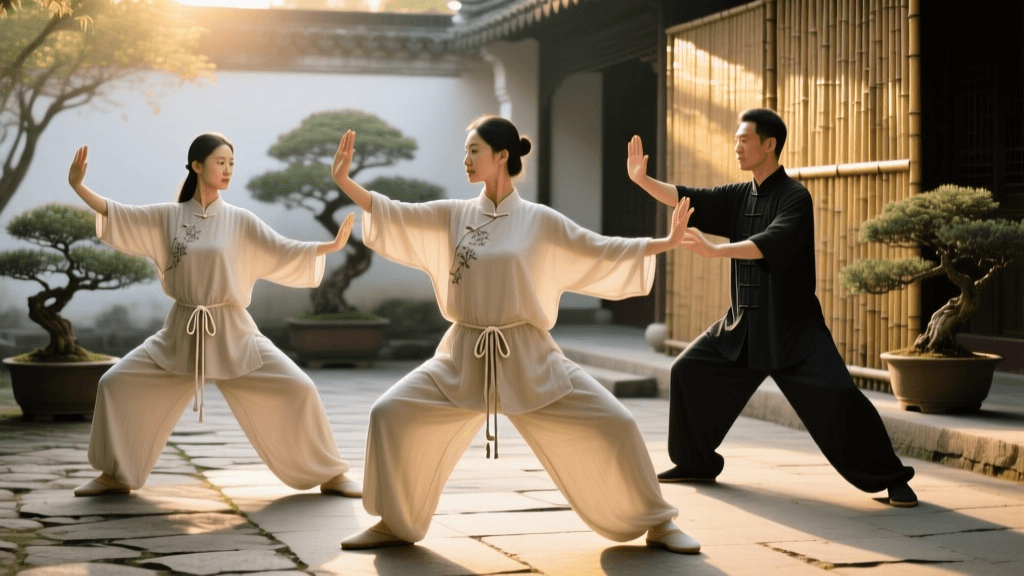
The most iconic top worn in Tai Chi is a variation of the Tangzhuang (Tang suit) or a simple mandarin-collar pullover. The jacket typically features a Duijin (center-open front) or a diagonal Dajin (wrap-over) closure. The defining characteristic of these tops is the use of Pan Kou (traditional frog buttons). These knotted fabric fasteners are not merely decorative; they lie flat against the chest and abdomen, ensuring that no hard plastic or metal zippers dig into the practitioner's body during deep breathing exercises or when performing ground-level movements.
The Pants: Denglongku (Lantern Pants)
Traditional Tai Chi pants, often called Denglongku or lantern pants, are cut with a very specific silhouette. They feature a high, elasticized, or drawstring waistband that sits above the navel, protecting the lower Dantian (the body's energetic center) from cold drafts. The thighs and seat are exceptionally loose, resembling the shape of a traditional paper lantern, which allows for deep, unimpeded Ma Bu (horse stances) and wide lateral lunges. Crucially, the pants taper sharply at the calf and feature an elastic or drawstring cuff at the ankle. This tapered cuff prevents the fabric from dragging on the floor or catching under the heel during complex footwork like Xu Bu (empty stance).
Fabric Comparison: Choosing the Right Material
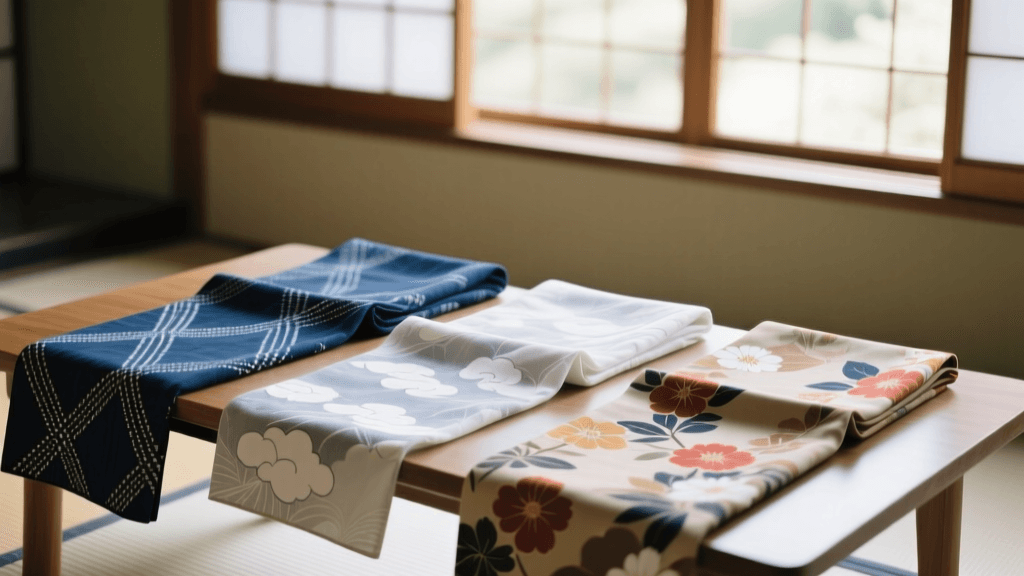
The choice of fabric dictates how the uniform responds to the body's kinetic energy. In Tai Chi, the concept of Sui Shen (following the body) is paramount; the fabric should trail slightly behind the movement, visually accentuating the flow of Qi (energy). Below is a comprehensive comparison of the most common fabrics used in Tai Chi practice wear.
| Fabric Type | Breathability | Drape & Flow | Durability | Estimated Cost (USD) |
|---|---|---|---|---|
| Mulberry Silk | High | Exceptional | Low (Delicate) | $120 - $250+ |
| Raw Silk (Shantung) | Medium | Structured, Crisp | Medium | $80 - $150 |
| Organic Cotton | Very High | Soft, Moderate | High | $40 - $90 |
| Linen-Cotton Blend | High | Textured, Earthy | High | $50 - $110 |
| Ice Silk (Synthetic) | Medium | Fluid, Slippery | Very High | $25 - $60 |
Mulberry Silk: The gold standard for competitions and demonstrations. Silk catches the air beautifully, making the practitioner's movements look larger and more fluid. However, it requires meticulous care and is prone to snagging.
Organic Cotton: The best choice for daily, rigorous practice. Cotton absorbs sweat effectively, is easy to machine wash, and provides a grounded, matte aesthetic that many traditionalists prefer for morning park practice.
Ice Silk (Viscose/Spandex Blends): A modern innovation popular in humid climates. It offers a silk-like drape with the durability and stretch of modern activewear, though purists often avoid it for its synthetic origins.
Sizing and Fit: Allowing for the Flow of Qi
Wearing a properly sized Tai Chi uniform is vastly different from fitting modern Western clothing. The guiding principle is Song (relaxation and release of tension). If the clothing binds at the joints, the practitioner cannot achieve Song.
- Chest and Shoulders: The jacket should have at least 4 to 6 inches of positive ease around the chest. When you raise your arms to shoulder height (as in the 'White Crane Spreads Its Wings' posture), the shoulder seams should not pull taut, and the hem of the jacket should not ride up significantly.
- Sleeve Length: Sleeves should extend to the base of the thumb or the first knuckle when the arms are relaxed at the sides. This extra length allows the fabric to drape elegantly over the hands during wrist rotations.
- Inseam and Rise: The crotch of the pants is often dropped (gusseted) by 2 to 4 inches compared to standard trousers. This dropped crotch is non-negotiable for deep stances. The inseam should be measured so that the ankle cuff rests exactly 1 inch above the ankle bone, ensuring the fabric never interferes with your Tai Chi shoes.
Footwear: Grounding Your Practice
No traditional Tai Chi ensemble is complete without the proper footwear. The Centers for Disease Control and Prevention (CDC) highlights Tai Chi as a premier exercise for improving balance and preventing falls in older adults. To achieve the proprioceptive feedback necessary for balance, practitioners must wear flat, thin-soled shoes.
The most iconic and widely used shoe is the Feiyue (Flying Leap) canvas shoe. Originally designed in the 1920s for Shaolin monks and Wushu athletes, the Feiyue features a thin rubber sole that allows the practitioner to feel the ground, gripping the earth with the toes while maintaining a flexible arch. They typically cost between $15 and $25. Another excellent option is the traditional cloth slipper with a quilted cotton sole, ideal for indoor practice on wooden floors, providing just enough slip to facilitate pivoting movements without causing joint strain.
Regional Variations: Northern vs. Southern Cuts
While Tai Chi is practiced globally, the cut of the uniform often reflects regional Chinese martial arts traditions. Northern Wushu and Tai Chi uniforms tend to be slightly more tailored, with tighter cuffs and higher collars, reflecting the acrobatic, leaping nature of Northern martial arts. Conversely, Southern styles—including many traditional Tai Chi lineages—favor wider, heavier fabrics with broader sleeves and lower, relaxed collars, emphasizing rootedness, stability, and close-quarters hand techniques. When purchasing a suit, consider the specific style you practice; a Chen style practitioner (known for explosive stomping and low stances) will benefit from a heavier cotton or raw silk with a gusseted crotch, whereas a Yang style practitioner might prefer the sweeping elegance of lightweight mulberry silk.
Caring for Your Traditional Garments
To preserve the structural integrity and aesthetic beauty of your Tai Chi wear, proper maintenance is essential.
'The clothing should not lead the movement; it should follow the Qi. Treat your garments with the same mindfulness you bring to your forms.'
- Washing: Silk garments must be hand-washed in cold water using a pH-neutral detergent or baby shampoo. Never wring or twist silk; instead, roll it in a clean towel to absorb excess moisture. Cotton and linen blends can usually be machine-washed on a gentle cycle.
- Drying: Always air-dry Tai Chi uniforms away from direct sunlight to prevent the natural dyes from fading. Never use a tumble dryer, as the heat can shrink the cotton and destroy the delicate fibers of the silk.
- Ironing: Use a low-heat setting or steam. For silk, always iron on the reverse side or place a cotton cloth between the iron and the garment to prevent scorching and shine marks.
- Storage: Store your uniforms on wide, padded hangers to maintain the shape of the shoulders. If folding for travel, roll the garments rather than folding them sharply to avoid deep creases that disrupt the fabric's natural drape.
Conclusion: Dressing the Part
Investing in high-quality, traditional Tai Chi practice wear is an investment in your martial arts journey. The right uniform does more than just provide comfort; it serves as a physical boundary between the chaotic outside world and the meditative sanctuary of your practice. Whether you are performing a sword form in a misty park or practicing basic Qigong in your living room, the drape of raw silk or the soft embrace of organic cotton will remind you of the centuries of lineage, philosophy, and kinetic wisdom that flow through every movement of Taijiquan.