Japan's Regional Kimono: Oshima, Yuki, and Kaga Textiles
The Geography of Japanese Thread and Dye
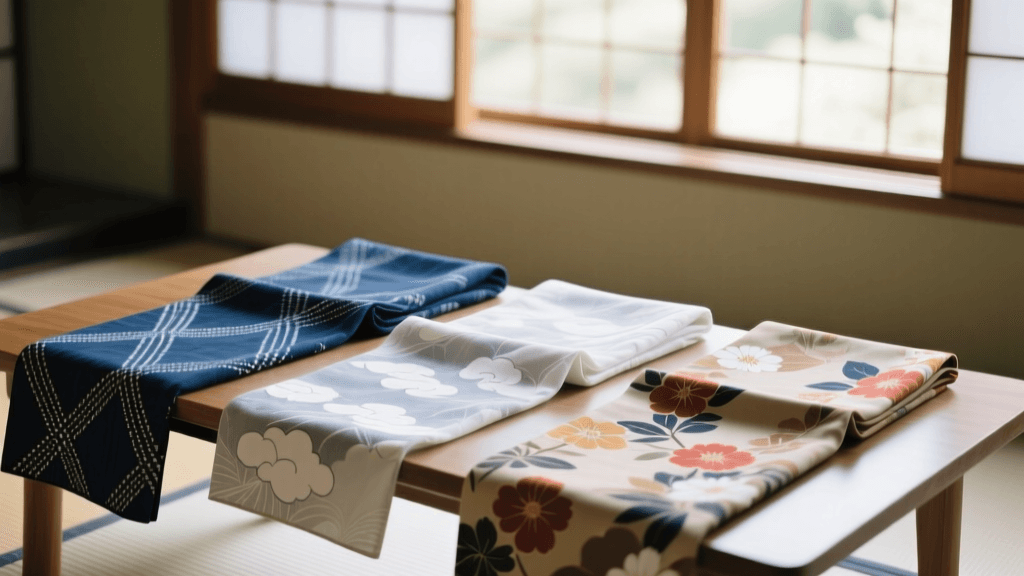
Japan's traditional garment culture is not a monolith; it is a deeply regional tapestry woven from local climates, indigenous flora, and historical domain economies. While the silhouette of the kimono remains universally recognized across the archipelago, the textiles themselves tell hyper-local stories. From the iron-rich mud pits of the southern Ryukyu islands to the frost-kissed silk valleys of the eastern Kanto plain, regional variations in weaving and dyeing dictate not only the aesthetic of a garment but its weight, thermal properties, and cultural formality. For collectors, practitioners, and enthusiasts of Asian traditions, understanding these prefecture-specific masterpieces is essential for building a versatile and historically grounded wardrobe.
In this comprehensive guide, we explore three of Japan's most prestigious regional textile traditions: the mud-dyed resilience of Kagoshima's Oshima Tsumugi, the ethereal warmth of Ibaraki's Yuki Tsumugi, and the botanical artistry of Ishikawa's Kaga Yuzen. We will provide actionable buying advice, precise measurements, and styling tips to help you navigate the intricate world of regional Japanese garments.
Oshima Tsumugi: The Mud-Dyed Marvel of Kagoshima
Originating in Amami Oshima, a subtropical island in Kagoshima Prefecture, Oshima Tsumugi is a masterpiece of complex kasuri (ikat) weaving and organic dyeing. Historically, the Satsuma domain restricted the islanders from wearing luxurious silk, prompting them to develop a fabric that looked subdued to the ruling class but revealed astonishing geometric complexity upon close inspection.
The Technique: Sharinbai and Kasuri
The hallmark of authentic Oshima Tsumugi is its dyeing process. Threads are bound and dyed using sharinbai (a local rose family plant) and later immersed in iron-rich mud. The tannins from the plant react with the iron in the mud, creating a deep, lustrous charcoal-black color that is entirely unique to the island's geology. The kasuri patterns, often resembling tiny crosses or abstract geometric motifs, are woven using a specialized binding loom called a shimebata. A single kimono roll (tanmono) can take up to a year to complete by a team of specialized artisans.
Actionable Advice for Collectors
- Authentication: Always look for the official inspection seal (shirushi) affixed to the bolt. The Association for the Promotion of Traditional Craft Industries certifies authentic Honba Oshima Tsumugi, ensuring it was hand-woven on Amami Oshima.
- Cost Expectations: A standard Honba Oshima Tsumugi kimono bolt ranges from 400,000 to 1,500,000 JPY. Vintage pieces from the Showa era can be found for 50,000 to 150,000 JPY, though the mud-dye may have softened.
- Styling: Oshima is considered an everyday or semi-formal elegant wear (omeshi). Pair it with a subdued Nagoya obi featuring a woven metallic thread or a dyed Yuzen obi. Avoid pairing it with highly formal gold-leaf Fukuro obi, as the aesthetic philosophy of Oshima leans toward iki (subdued, understated elegance).
Yuki Tsumugi: Ibaraki’s Lightweight Winter Shield
In stark contrast to the tropical origins of Oshima, Yuki Tsumugi hails from the cold, flat plains of the Kinugawa River basin, spanning Ibaraki and Tochigi Prefectures. Recognized by UNESCO as an Intangible Cultural Heritage, Yuki Tsumugi is celebrated for its paradoxical nature: it is woven from silk, yet possesses the matte texture and insulating warmth of cotton or wool.
The Technique: Hand-Spun Mawata
Unlike standard silk weaving which uses tightly twisted filaments, Yuki Tsumugi utilizes mawata (silk floss). Artisans hand-spin the floss by pulling fibers from a cocoon and twisting them with saliva and natural oils, creating a thread that traps air. This results in a fabric that is incredibly lightweight yet highly insulating. The kasuri patterns are often minute, requiring the weaver to adjust the tension of the hand-spun threads by fractions of a millimeter to ensure the pattern aligns perfectly.
Actionable Advice for Collectors
- Measurements & Weight: A standard Yuki Tsumugi tanmono measures approximately 12.5 meters in length and 38 centimeters in width. Despite being silk, a fully tailored, lined (awase) Yuki kimono weighs significantly less than a standard crepe silk (chirimen) kimono, making it ideal for elderly wearers or those who travel frequently.
- Cost Expectations: Entry-level Yuki Tsumugi starts around 250,000 JPY. However, pieces featuring tate-yoko gasuri (warp and weft kasuri) with micro-patterns can easily exceed 3,000,000 JPY due to the hundreds of hours required for thread binding.
- Seasonality: Because of its thermal properties, Yuki Tsumugi is strictly a cold-weather textile. Wear it from November through early April. It is considered inappropriate for the humid Japanese summer or the transitional month of May.
Kaga Yuzen: Ishikawa’s Botanical Canvas
Moving from woven kasuri to resist-dyeing, we arrive at Kanazawa in Ishikawa Prefecture, the birthplace of Kaga Yuzen. While its Kyoto counterpart (Kyo Yuzen) often incorporates embroidery, gold leaf, and stylized, graphic motifs, Kaga Yuzen is defined by its hyper-realistic botanical illustrations and strict adherence to a five-color palette.
The Technique: Kaga Gosai and Bokashi
Kaga Yuzen artists utilize Kaga Gosai (the five Kaga colors): indigo, rust, ochre, green, and purple. The defining technique is bokashi (color gradation). Rather than flat blocks of color, artisans paint gradients that mimic the natural shading of leaves and petals. A unique hallmark of Kaga Yuzen is mushikui (insect bites)—artists intentionally paint small, decaying holes into the edges of leaves to reflect the transient, imperfect beauty of nature, a core tenet of Japanese aesthetics. Furthermore, Kaga Yuzen strictly forbids the use of embroidery or metallic foils, relying entirely on the brush.
Actionable Advice for Collectors
- Authentication: Inspect the motifs closely. If you see metallic threads or raised embroidery, it is not pure Kaga Yuzen. Look for the subtle, painted gradations and the deliberate mushikui details. The Cultural Heritage Online database of Japan provides excellent visual archives for comparing authentic historical Kaga motifs with modern reproductions.
- Cost Expectations: Hand-painted Kaga Yuzen is a luxury investment. A high-quality tomesode or homongi will cost between 800,000 and 5,000,000 JPY. Stencil-dyed (kata-yuzen) alternatives are available for 150,000 to 300,000 JPY but lack the brushstroke gradations.
- Formality: Kaga Yuzen is highly formal. A Kaga Yuzen homongi (visiting kimono) is perfect for weddings, tea ceremonies, and formal parties. Pair it with a luxurious silk brocade Fukuro obi to elevate the ensemble.
Comparative Guide: Regional Textiles at a Glance
| Feature | Oshima Tsumugi | Yuki Tsumugi | Kaga Yuzen |
|---|---|---|---|
| Prefecture | Kagoshima (Amami) | Ibaraki / Tochigi | Ishikawa (Kanazawa) |
| Primary Technique | Mud-dye & Kasuri Weave | Hand-spun Floss & Kasuri | Resist-dye & Brush Painting |
| Formality Level | Casual to Semi-Formal | Casual to Semi-Formal | Semi-Formal to Highly Formal |
| Average Cost (JPY) | 400k - 1.5M | 250k - 3M+ | 800k - 5M+ |
| Best Season | Autumn, Winter, Spring | Winter (Nov - Apr) | Year-round (depends on lining) |
| Texture / Weight | Crisp, smooth, medium | Matte, fluffy, lightweight | Soft crepe silk, medium-heavy |
Practical Buying Guide: Measurements, Timing, and Care
Purchasing regional Japanese textiles requires an understanding of traditional measurements and retail timing. Unlike Western clothing, kimono are sold in bolts (tanmono) or pre-tailored. If buying a bolt, the standard width is isshaku (approx. 38 cm), which limits the maximum hip circumference the kimono can accommodate. For wider fits, you must seek out hirohaba (wide-width) bolts, which are rare in traditional kasuri weaves like Oshima and Yuki.
Essential Measurements
When commissioning a tailor (shitateya) to sew your regional textile, you must provide three critical measurements:
- Yuki: The length from the center of the back of the neck, over the shoulder, to the wrist bone. Standard women's yuki is around 64-66 cm.
- Mitsuhaba: The standard three-panel width. If your hip measurement exceeds 100 cm, the side seams will pull, and a tailor must employ creative folding techniques or add hidden fabric panels.
- Kurikoshi: The depth of the neck fold at the back. Proper kurikoshi ensures the collar sits elegantly at the base of the neck without choking the wearer or slipping down the shoulders.
Timing Your Purchase
The Japanese kimono retail calendar is highly seasonal. To secure the best prices on regional textiles, time your purchases around Hatsu-uri (New Year sales in early January) or the end-of-season clearances in late July and August. During the Obon festival in August, many department stores in Tokyo (such as Mitsukoshi and Takashimaya) offer significant discounts on winter weaves like Yuki Tsumugi to clear floor space for autumn collections.
Care and Maintenance
Regional textiles require specialized care. Oshima Tsumugi's mud-dye is susceptible to water spotting; never attempt to wash it at home. Yuki Tsumugi, due to its hand-spun nature, can lose its fluffy texture if subjected to harsh chemical dry cleaning. Always seek out a araimono (traditional kimono laundry) specialist who understands how to unsew the garment, wash the individual panels, and stretch them on bamboo frames (shinshi) before re-sewing. Kaga Yuzen requires protection from direct sunlight, as the natural botanical dyes used in bokashi can fade over decades of UV exposure.
'To wear a regional kimono is to wear the soil, the water, and the history of a specific Japanese landscape. It is not merely clothing; it is an act of geographical storytelling.' — Traditional Textile Preservation Society of Japan
By understanding the distinct characteristics, costs, and cultural contexts of Oshima, Yuki, and Kaga textiles, collectors and wearers can make informed decisions that honor the legacy of Japan's regional artisans. Whether you are drawn to the understated geometry of Amami's mud-dye or the vibrant botanical realism of Kanazawa's brushwork, these prefecture-specific garments remain vital, living expressions of Asian heritage.