Everyday Yukata and Jinbei: Casual Japanese Summer Wear Guide
The Evolution of Casual Japanese Summer Wear
Summer in Japan is synonymous with vibrant festivals, humid evenings, and the elegant rustle of lightweight cotton. While the formal silk kimono often dominates international perceptions of Japanese traditional dress, the true heartbeat of everyday casual traditional wear lies in the yukata and the jinbei. These garments offer a breathable, stylish, and deeply cultural way to experience Japanese summers. Whether you are attending a local matsuri (festival), enjoying fireworks (hanabi), or simply lounging at a traditional ryokan (inn), understanding how to select, wear, and care for these garments is essential for the modern wardrobe.
Historically, the yukata originated in the Heian period (794–1185) as a simple hemp bathrobe worn by nobility to and from steam baths. According to the Japan Guide, as cotton cultivation became widespread during the Edo period (1603–1867), the yukata evolved into everyday casual streetwear for the common classes. Today, it remains the most accessible form of traditional Japanese clothing, bridging the gap between historical heritage and modern summer fashion.
Yukata vs. Jinbei: A Practical Comparison
When building a casual traditional summer wardrobe, it is important to understand the functional differences between the two mainstays of Japanese summer wear. While both are made from lightweight materials, their silhouettes and appropriate occasions differ significantly.
| Feature | Yukata | Jinbei |
|---|---|---|
| Silhouette | Full-length T-shaped robe | Two-piece set (short-sleeve top and shorts) |
| Primary Use | Festivals, fireworks, casual streetwear, ryokan | Loungewear, neighborhood errands, sleeping |
| Ease of Wearing | Moderate (requires obi tying and folding) | Very Easy (ties at the side and waist) |
| Average Cost (Cotton) | 10,000 – 25,000 JPY ($65 – $165 USD) | 4,000 – 10,000 JPY ($25 – $65 USD) |
| Ventilation | Good (open hem, but layered) | Excellent (shorts and loose top) |
Mastering Measurements and Sizing
Unlike Western clothing, which relies on standardized S/M/L sizing based on chest and waist measurements, traditional Japanese garments are sized primarily by height and arm span. Getting the right fit is crucial for both comfort and aesthetic elegance.
Key Measurements to Know
- Mitake (身丈) - Garment Length: This is the length of the garment from the shoulder to the hem. For women, the ideal yukata mitake is roughly equal to your height, allowing for the ohashori (the waist fold). A standard women's length is 130–140 cm. For men, the mitake should be slightly shorter than their height (around 140–150 cm), as men do not use the waist fold.
- Yuki (裄) - Sleeve Span: Measured from the center back of the neck, across the shoulder, and down to the wrist. A standard women's yuki is 64–68 cm, while men's is typically 70–75 cm. If the yuki is too short, the garment will look restrictive and uncomfortable.
- Haba (幅) - Width: Traditional garments are made from standard-width bolts of fabric (around 36 cm per panel). Most standard sizes will fit waists up to 100 cm comfortably. Plus-size or custom widths are required for larger frames.
The Golden Rule of Wrapping
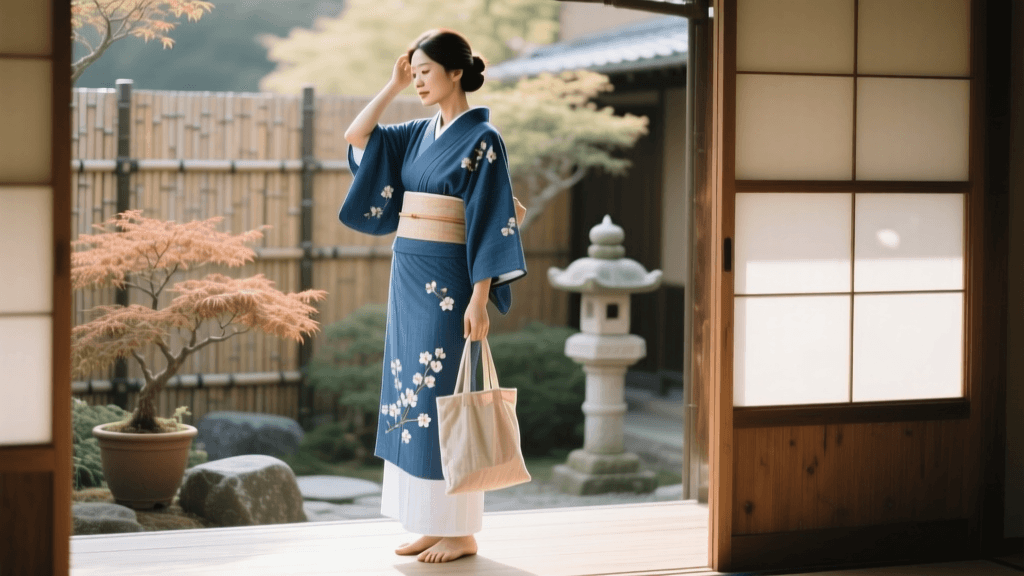
When wearing any traditional Japanese garment, the most critical rule of etiquette is the direction of the wrap. Always wrap the left side of the garment over the right side. The Victoria and Albert Museum notes that this left-over-right convention has been standard in Japanese dress for centuries. Wrapping right-over-left is strictly reserved for dressing the deceased for burial. Memorize the phrase "left over right" or think of it as forming a lowercase "y" at the collarbone to ensure you never make this cultural faux pas in everyday wear.
Where, When, and How to Buy
If you are looking to purchase authentic yukata or jinbei for your everyday wardrobe, timing and material selection are everything.
Timing Your Purchase
Retailers in Japan begin stocking summer collections in late April, with peak inventory available throughout May and June. By late July, many stores begin discounting their stock to make way for autumn collections. If you are buying online or outside of Japan, look for end-of-season sales in August for significant discounts.
Material Matters: Polyester vs. Cotton
While traditionalists swear by cotton, modern textile innovations have made polyester a viable option for everyday wear. Cotton (men) is highly breathable, absorbent, and softens with age, but it wrinkles easily and requires careful washing. Polyester (poliesteru) is wrinkle-resistant, machine washable, and retains vibrant dyes, making it ideal for humid festival days or frequent travel.
Recommended Brands and Retailers
- Yamato: A heritage brand offering high-quality cotton yukata and modern, easy-to-tie tsuke-obi (pre-tied belts).
- Tansu-ya: Famous for recycled and vintage kimono and yukata. You can find stunning, unique antique cotton patterns here for as little as 3,000 JPY.
- Uniqlo & MUJI: Excellent for modern, minimalist jinbei sets made from innovative cooling fabrics like Airism or textured cotton-linen blends.
- Wacoal: Known for lingerie, they produce incredibly supportive and comfortable undergarments specifically designed to smooth the silhouette when wearing traditional wrap garments.
Essential Accessories for Everyday Styling
A yukata or jinbei is incomplete without its accompanying accessories. For everyday casual wear, you can prioritize comfort and ease over strict formality.
- The Obi (Belt): For women, a shigoki (a soft, scarf-like silk or cotton belt) or a pre-tied tsuke-obi is perfect for casual outings, eliminating the need to learn complex knots. For men, a hekobi (a soft, woven cotton belt) or a simple leather belt adapted for yukata provides a rugged, relaxed look.
- Footwear: Traditional wooden geta clogs are iconic and elevate the hem away from the damp ground, but they can cause blisters during long festival walks. For everyday casual wear, consider setta (leather-soled sandals) or modern zori with cushioned EVA foam soles. Many young Japanese people now pair jinbei with clean, minimalist sneakers for a contemporary streetwear vibe.
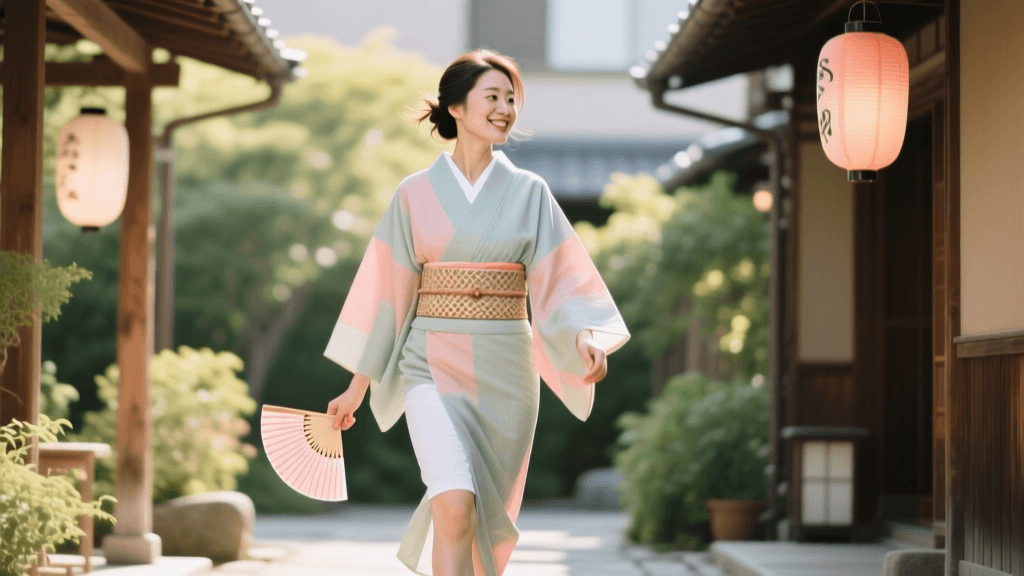
- Kinchaku (Drawstring Bag): Since traditional garments lack deep pockets, a woven rattan or cotton kinchaku is essential for carrying a smartphone, wallet, and hand fan (uchiwa).
Modern Styling: Blending Tradition with Contemporary Fashion
The beauty of the yukata and jinbei lies in their adaptability. The Japan National Tourism Organization frequently highlights how younger generations are reimagining traditional wear. You can easily integrate these pieces into a modern wardrobe by layering. For cooler summer evenings, drape a lightweight, unlined cotton haori (traditional jacket) over your yukata. Alternatively, wear a plain white t-shirt underneath a dark, geometric-patterned jinbei top, leaving it unbuttoned over a pair of tailored linen trousers. This fusion of traditional Japanese textiles with contemporary Western silhouettes creates a unique, globally-minded aesthetic that honors the craftsmanship of the garment while fitting seamlessly into daily life.
Care, Washing, and Storage
Proper maintenance ensures your casual summer wear lasts for decades. Always check the care label, but as a general rule:
- Washing: Polyester yukata can be machine washed on a gentle cycle inside a mesh laundry net. Cotton yukata should ideally be hand-washed in cold water with a mild, neutral detergent to prevent the indigo or natural dyes from bleeding.
- Drying: Never use a tumble dryer. Hang the garment on a wide, specialized kimono hanger in the shade. Direct sunlight will fade natural dyes rapidly.
- Storage: Once completely dry, fold the garment using the traditional flat-folding method to avoid permanent creases. Wrap it in tatoushi (acid-free tissue paper) or a breathable cotton cloth, and store it in a cool, dry place with a silica gel desiccant to prevent mold during humid months.
"The yukata is not merely a relic of the past; it is a living, breathing canvas of Japanese summer culture, designed to be lived in, washed, and worn with joyful abandon."
Conclusion
Embracing the yukata and jinbei as everyday casual wear is a rewarding way to connect with Asian traditions. By understanding the nuances of sizing, respecting the etiquette of the wrap, and thoughtfully selecting modern accessories, you can transform these historical garments into a functional, stylish, and deeply comfortable part of your daily summer rotation. Whether you are navigating the bustling streets of Tokyo or enjoying a quiet evening on your own balcony, the lightweight elegance of Japanese summer wear offers an unparalleled blend of heritage and everyday practicality.