The Everyday Yukata: Styling Casual Japanese Traditional Wear
Introduction to Casual Japanese Traditional Wear
When most people think of Japanese traditional clothing, the elaborate, multi-layered silk kimono often comes to mind. However, the true heartbeat of Japan’s sartorial heritage lies in its everyday, casual garments. As modern lifestyles have evolved, so too has the integration of traditional wear into daily routines. Today, garments like the yukata, samue, and jinbei offer a perfect blend of historical elegance, breathability, and practical utility. Whether you are attending a summer matsuri (festival), lounging at a ryokan (traditional inn), or simply seeking comfortable loungewear at home, understanding how to select, size, and style these garments is essential for any enthusiast of Asian traditions.
According to extensive research on the evolution of Japanese dress by the Victoria and Albert Museum, the kimono and its casual derivatives have always been deeply responsive to the social and environmental needs of the wearer. The transition from formal court attire to practical, everyday cotton garments reflects a fascinating shift toward accessibility and comfort without sacrificing cultural identity.
The Yukata: Summer’s Breathable Elegance
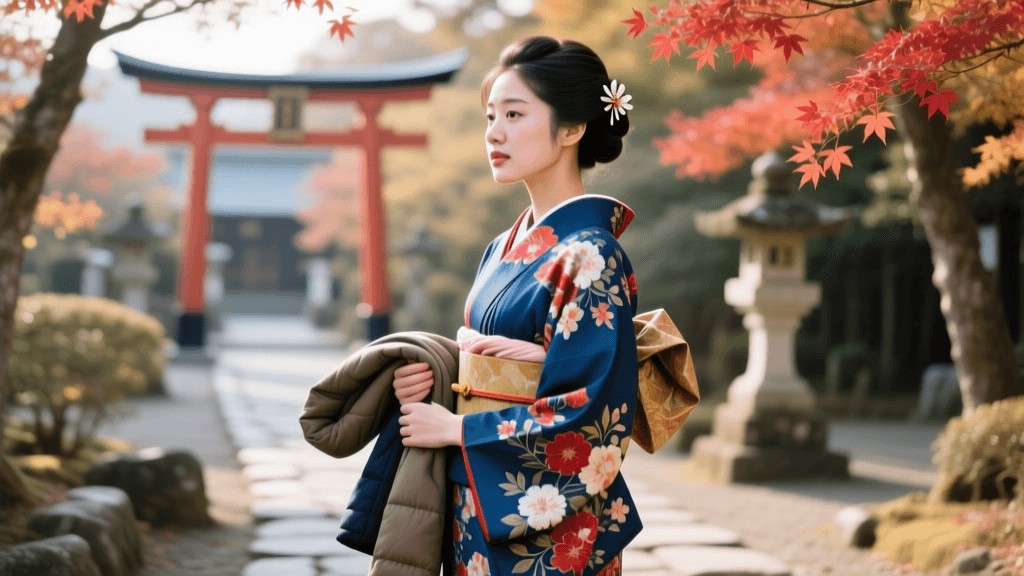
The yukata is arguably the most recognized piece of casual Japanese traditional wear. Originally worn as a bathrobe by the nobility during the Heian period (794–1185), it eventually transitioned into the everyday summer wear of the working class during the Edo period. Today, it is the go-to garment for fireworks festivals, bon odori dances, and casual summer outings.
Sizing and Measurements: Finding Your Perfect Fit
Unlike Western clothing, which relies on standardized S/M/L sizing, a yukata is tailored to the individual’s height and wingspan. When purchasing a yukata for everyday wear, you must pay attention to two critical measurements:
- Mitake (Body Length): This is the length of the garment from the shoulder to the hem. The ideal formula for a modern, casual fit is Height × 0.6. For example, if you are 165 cm tall, your ideal mitake is roughly 99 cm. This allows for the traditional ohashori (the waist fold that adjusts the length and creates a bloused effect).
- Yuki (Sleeve Length): Measured from the center of the back of the neck, across the shoulder, and down to the wrist. A standard casual yukata usually features a yuki of 64 cm to 68 cm, ensuring the sleeves do not interfere with daily activities like eating or carrying bags.
Fabric Choices, Costs, and Timing
While formal kimonos are crafted from silk, the yukata is strictly made from plant-based or synthetic fibers, prioritizing breathability and easy maintenance.
- Cotton (Momen): The traditional and most popular choice. It is highly absorbent, making it perfect for humid Japanese summers. Cost: 5,000 to 15,000 JPY ($35–$100 USD).
- Cotton-Linen Blends: Offer a crisper drape and dry faster than pure cotton, ideal for extremely hot climates. Cost: 8,000 to 20,000 JPY ($55–$135 USD).
- Polyester: Modern, wrinkle-resistant, and machine-washable, though less breathable. Best for budget-conscious buyers or frequent travelers. Cost: 3,000 to 8,000 JPY ($20–$55 USD).
Timing: The yukata is strictly seasonal. In Japan, it is worn from early June through September. Wearing a yukata outside of these summer months is generally considered a fashion faux pas in traditional circles.
Samue and Jinbei: Loungewear and Everyday Utility
Beyond the yukata, Japan boasts an array of casual traditional garments designed for work, relaxation, and home life. The samue and jinbei are staples of Japanese domestic life, offering unmatched comfort.
The samue (work clothes) consists of a loose-fitting top and matching trousers, traditionally worn by Zen Buddhist monks for temple maintenance and later adopted by artisans, potters, and chefs. The jinbei is a two-piece summer set comprising a short-sleeved top and shorts, often featuring woven ventilation gaps in the fabric.
| Garment | Primary Fabric | Best Season | Primary Occasion | Average Cost (JPY) |
|---|---|---|---|---|
| Yukata | Cotton / Linen | Summer (Jun-Sep) | Festivals, casual outings, ryokan | 5,000 - 15,000 |
| Samue | Cotton / Hemp / Denim | Year-round (varies by weight) | Loungewear, artisan work, home | 6,000 - 25,000 |
| Jinbei | Cotton / Seersucker | Peak Summer (Jul-Aug) | Sleepwear, quick errands, relaxing | 3,000 - 10,000 |
Practical Styling: Bridging Tradition and Modernity
Integrating traditional Japanese garments into a modern wardrobe requires a balance of respecting heritage while embracing contemporary convenience. The Japan National Tourism Organization frequently highlights how locals blend traditional summer wear with modern accessories during local matsuri, creating a vibrant, living fashion culture.
Footwear: Geta, Zori, and Sneakers
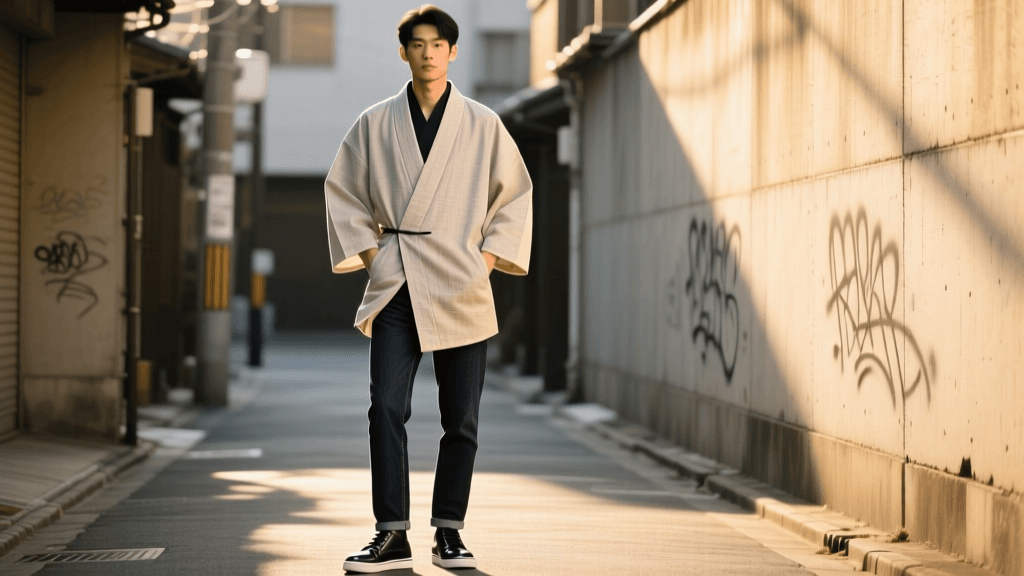
Traditionally, a yukata is paired with geta (wooden clogs) or zori (flat sandals). For everyday casual wear, especially if you plan on walking long distances, opt for modern EVA-foam geta or cushioned zori to prevent foot fatigue. In recent years, fashion-forward youth in Tokyo and Kyoto have begun pairing yukata and samue with clean, minimalist white sneakers or leather loafers, creating a striking 'wa-yo secchu' (Japanese-Western fusion) aesthetic.
The Obi and Knots
For casual yukata styling, avoid the stiff, formal fukuro obi. Instead, use a hanhaba obi (half-width obi), which is softer, easier to tie, and perfect for everyday wear. The most practical and common knot for casual outings is the Bunko musubi (butterfly knot), which sits flat against the back, allowing you to sit comfortably in chairs or on trains without the bulk of formal taiko knots.
Accessories
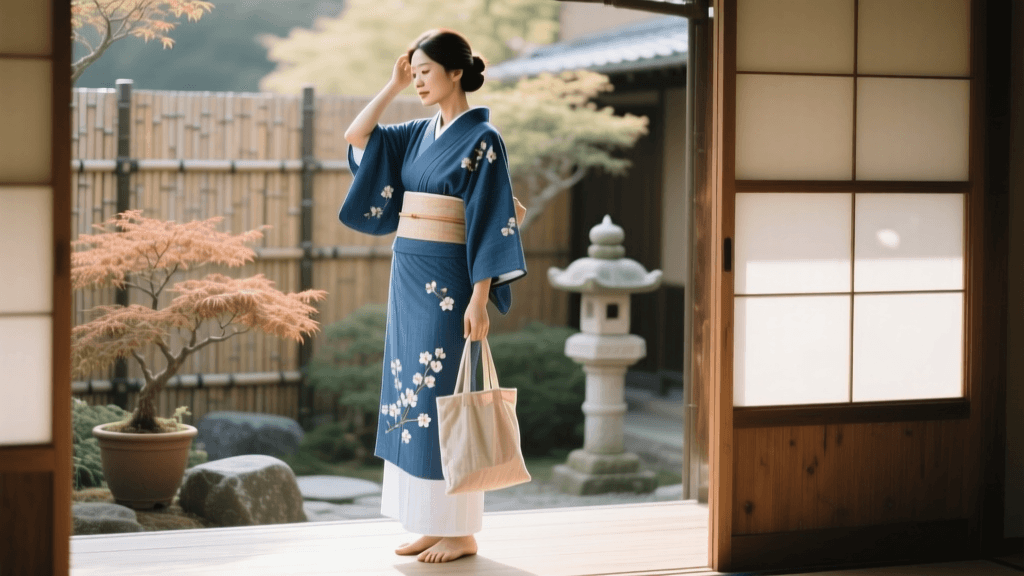
While a traditional kinchaku (drawstring pouch) completes the festival look, it lacks the security and capacity needed for modern daily life. For everyday outings, pair your yukata or samue with a structured leather crossbody bag or a woven rattan tote. As noted in cultural guides by Japan Experience, the key to modern traditional styling is ensuring the garment serves your lifestyle, not the other way around.
Care, Maintenance, and Storage
One of the greatest advantages of casual Japanese traditional wear is its ease of maintenance compared to formal silk kimonos.
- Washing: Most modern cotton yukata and samue can be machine washed. Always fold the garment neatly and place it inside a fine-mesh laundry bag to protect the seams and prevent the fabric from twisting. Use cold water and a mild, neutral detergent to preserve the vibrant dyes.
- Drying: Never use a tumble dryer, as the intense heat will shrink the cotton and distort the mitake. Instead, reshape the garment while damp and hang it in the shade. Direct sunlight will cause the indigo and natural dyes to fade rapidly.
- Storage: Traditional Japanese garments are folded, not hung. Hanging a yukata on a wire hanger will stretch the shoulder seams irreparably. Learn the hon-datami (standard folding) method, which folds the garment into a neat, flat rectangle that can be easily stacked in a drawer or stored in a breathable cotton tatou (garment cover).
Conclusion
Everyday Japanese traditional wear is far from a relic of the past. The yukata, samue, and jinbei represent a living, breathing aspect of Asian cultural heritage that prioritizes comfort, climate-responsiveness, and understated elegance. By understanding the precise measurements, selecting the right fabrics, and styling these garments with modern practicality in mind, you can seamlessly integrate the beauty of Japanese tradition into your daily life. Whether you are navigating a bustling summer festival or enjoying a quiet morning at home, these garments offer a timeless connection to the artistry and philosophy of Japanese craftsmanship.