Peking Opera Costumes: Symbolism, Types, and Sourcing Guide
The Art of Jingju Fushi: More Than Just a Wardrobe
Peking Opera, known in Mandarin as Jingju, is a magnificent synthesis of music, vocal performance, mime, dance, and acrobatics. However, before a single note is sung or a martial arts sequence is performed, the visual narrative is established through the wardrobe, or Jingju Fushi. Recognized by UNESCO as an Intangible Cultural Heritage of Humanity, Peking Opera relies heavily on its visual spectacle to communicate character, status, and morality to the audience. For modern cultural festivals, Lunar New Year parades, and theatrical revivals, understanding and sourcing these garments requires a deep appreciation of their historical roots and practical construction.
Unlike historical Hanfu or accurate Qing dynasty court dress, Peking Opera costumes operate on a system of heightened theatrical symbolism. As noted in historical analyses of Peking Opera's theatrical traditions, the costumes deliberately ignore strict historical accuracy in favor of symbolic representation, drawing heavily from Ming and Qing dynasty aesthetics but exaggerated for the stage. Today, these garments are highly sought after for Asian cultural festivals, university theater productions, and heritage exhibitions.
Decoding the Core Wardrobe: The Five Main Categories
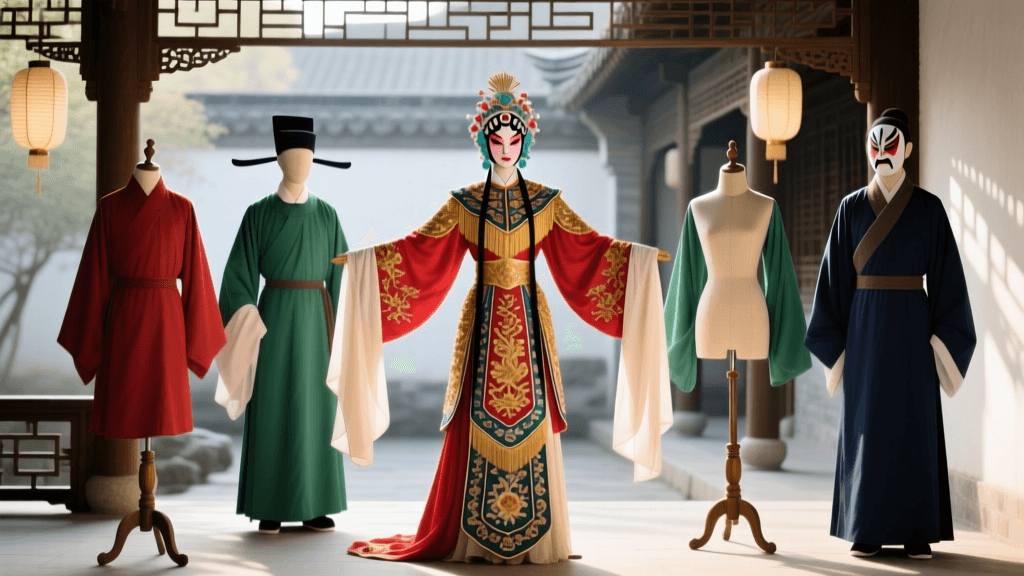
The traditional opera wardrobe is categorized into several main types, each strictly designated for specific character archetypes (hangdang). When sourcing costumes for a festival or performance, selecting the correct garment type is crucial for cultural authenticity.
| Garment Name | Pinyin | Character Role | Description & Festival Application |
|---|---|---|---|
| Python Robe | Mang | Emperors, High Officials | Round collar, python motifs, water sleeves. Used for grand parade floats and opening ceremonies. |
| Armor | Kao | Generals, Warriors | Elaborate scaled embroidery with four back flags. Ideal for martial performances and dynamic stage combat. |
| Informal Robe | Pei | Nobles, Scholars, Ladies | Cross-collar, floral or crane motifs. Perfect for intimate cultural showcases and academic lectures. |
| Casual Robe | Xuezi | Commoners, Servants | Simple cross-collar, often dark or patchwork. Used for comedic relief roles and street-level festival interactions. |
| Jacket and Skirt | Aoqun | Young Women, Maids | Pleated skirt with an embroidered hip-length jacket. Highly mobile, excellent for lantern festival dances. |
The Language of Color and Embroidery
In the world of Jingju, color is a direct window into a character's soul. The audience instantly reads the moral alignment of a performer based on their palette. Yellow is strictly reserved for the imperial family, signifying supreme power and the center of the universe. Red denotes loyalty, courage, and uprightness (famously worn by the general Guan Yu). Black represents impartiality, integrity, and a fierce temper (associated with Judge Bao Zheng). Conversely, white often signifies treachery, cunning, and suspicion, typically worn by villains like Cao Cao.
The embroidery techniques used on high-end opera costumes are a testament to China's textile heritage. Authentic pieces utilize Suzhou silk embroidery, featuring techniques like panjin (couching gold and silver threads) and dazi (seed stitch) to create three-dimensional, light-catching scales on the Kao armor or the undulating waves at the hem of the Mang robe. According to textile historians at the Metropolitan Museum of Art, the heavy use of gold-wrapped thread and vibrant silk floss in Qing-era textiles directly influenced the opulent, light-reflecting qualities required for opera costumes under traditional stage lighting.
The Magic of Water Sleeves (Shuixiu)
Attached to the cuffs of the Mang, Pei, and Xuezi are the iconic white silk extensions known as water sleeves. These are not merely decorative; they are extensions of the actor's emotional state. A flick of the wrist can convey disdain, while a trembling fold can express profound grief. For festival performers, mastering basic water sleeve techniques is essential, as the fabric can easily tangle or trip the wearer if handled improperly during crowded parades.
Practical Guide: Sourcing, Commissioning, and Costs
Whether you are outfitting a university troupe, organizing a Lunar New Year parade, or curating a museum exhibition, sourcing Peking Opera costumes requires careful planning. The market is divided into three distinct tiers of quality and price.
1. Polyester Performance Grade (Mass-Produced)
- Cost: $80 – $250 USD per garment.
- Material: Synthetic brocade, machine embroidery, nylon water sleeves.
- Best For: School plays, large festival crowds, background performers, and children's troupes.
- Lead Time: 1 to 3 weeks (often available off-the-rack from theatrical suppliers).
2. Silk-Blend Theatrical Grade (Semi-Custom)
- Cost: $400 – $1,200 USD per garment.
- Material: Silk-polyester blends, dense machine embroidery with metallic threads, real silk water sleeves.
- Best For: Lead performers in cultural festivals, regional opera troupes, and photography shoots.
- Lead Time: 4 to 8 weeks for tailoring and embroidery.
3. Authentic Suzhou Silk (Bespoke Masterpiece)
- Cost: $3,000 – $15,000+ USD per garment.
- Material: 100% heavy silk satin, pure gold and silver thread couching, hand-embroidered by master artisans.
- Best For: Professional principal actors, museum acquisitions, and high-end cultural heritage exhibitions.
- Lead Time: 4 to 9 months. Commissioning a bespoke, hand-embroidered Mang robe from a master tailor in Suzhou is a slow, meticulous process.
"When commissioning a professional Kao (armor), remember that the four back flags alone can weigh between 10 to 15 pounds. Performers must undergo specific core-strength training to wear them during a two-hour festival parade without suffering fatigue or injury."
Essential Measurements for Tailoring
Opera costumes are designed to alter the human silhouette, creating a larger-than-life presence. If you are ordering custom garments from ateliers in Beijing or Suzhou, you must provide specific measurements that differ from standard Western tailoring:
- Total Height and Inseam: Robes must hover exactly 2 inches above the floor to prevent tripping, especially when wearing thick-soled boots.
- Shoulder Width: Crucial for the structured, imposing look of the Mang and Kao. Tailors often add internal padding to widen the shoulders artificially.
- Arm Length + Water Sleeve Extension: Measure from the shoulder to the wrist, then add the desired sleeve length. Standard amateur length is 18 inches; professional principal actors use 24 to 36 inches.
- Head Circumference: Essential for the elaborate headdresses (Toushi), such as the phoenix crown (Fengguan) or the general's helmet with pheasant feathers (Lingzi). These are secured with tight silk bands and must not induce migraines during long performances.
Footwear and Movement: The Hidden Challenge
A costume is incomplete without its proper footwear, which fundamentally changes how a performer moves. Male officials and warriors wear Houdi, thick-soled boots that can add 2 to 4 inches of height. The soles are made of compressed cotton and paper, layered and nailed together, then covered in white cotton cloth. Walking in Houdi requires a specific gliding gait to maintain balance and project authority. Female roles often wear specialized embroidered shoes, sometimes with a slight platform, requiring the performer to adopt the Yunbu (cloud step) to create the illusion of floating. Festival organizers must ensure parade routes are paved and even, as uneven cobblestones pose a severe ankle-sprain risk for performers in traditional opera footwear.
Preservation and Care for Festival Silks
Authentic opera costumes are investments that require meticulous care. The heavy metallic threads used in panjin embroidery can tarnish or snap if folded improperly. Never hang a heavy Mang or Kao on a standard wire hanger; the weight of the garment will tear the shoulder seams. Instead, store them flat in acid-free tissue paper, or use wide, padded wooden hangers. After a humid outdoor festival, garments must be aired out in a shaded, climate-controlled room to prevent mildew from forming on the silk backing. Water sleeves should be detached (if designed with snap buttons) and hand-washed separately in cold water with a mild silk detergent to maintain their crisp, white flow.
Conclusion
Peking Opera costumes are a masterclass in wearable storytelling. They bridge the gap between ancient Chinese textile traditions and the vibrant, living art of theatrical performance. Whether you are a festival director looking to source eye-catching parade attire, or a cultural historian studying the evolution of Qing dynasty aesthetics, understanding the nuances of Jingju Fushi enriches the experience. By respecting the symbolism, investing in proper tailoring, and maintaining the garments with care, we ensure that this dazzling visual language continues to captivate audiences around the world.