Hanfu Tourism Guide: Top Destinations and Social Media Styling
The Rise of Hanfu Destination Tourism
The intersection of traditional Chinese clothing and modern travel has birthed a massive cultural phenomenon known as 'Hanfu Tourism.' Over the past five years, historical sites across China have transformed into sprawling, open-air photography studios. Driven by the visual power of platforms like Douyin, Xiaohongshu, Instagram, and TikTok, millions of travelers are now planning entire itineraries around capturing the perfect image or video in traditional Hanfu. According to initiatives highlighted by the Ministry of Culture and Tourism of the PRC, immersive cultural tourism experiences are a primary driver of domestic travel growth, with ancient cities actively subsidizing Hanfu rentals and hosting dedicated street festivals to attract younger demographics.
For content creators, cultural enthusiasts, and fashion historians, traveling in Hanfu is no longer just about wearing a costume; it is about embodying a historical narrative. However, creating viral, high-quality social media content requires strategic planning, an understanding of regional aesthetics, and a mastery of fabric dynamics. This comprehensive guide will walk you through the top destinations, styling techniques, and practical logistics for your next Hanfu tourism journey.
Top 4 Destinations for Hanfu Photography
Different Chinese cities are renowned for specific historical eras, architectural styles, and local Hanfu subcultures. Choosing the right destination is critical for matching your garment to the environment.
| City | Recommended Era & Style | Best Photo Spots | Avg. Rental Cost (USD) | Peak Season |
|---|---|---|---|---|
| Xi'an | Tang Dynasty (Qixiong Ruqun, Banbi) | Datang Everbright City, City Wall | $25 - $45 | Spring / Autumn |
| Hangzhou | Song Dynasty (Beizi, Pleated Skirts) | West Lake, Lingyin Temple, Xixi Wetland | $30 - $50 | Spring / Summer |
| Luoyang | Wei-Jin & Tang (Wide Sleeves, Ruqun) | Luoyi Ancient City, Longmen Grottoes | $20 - $40 | Spring / Autumn |
| Suzhou | Ming Dynasty (Mamianqun, Aoqun) | Humble Administrator's Garden, Pingjiang Road | $35 - $60 | Autumn / Winter |
Xi'an: The Tang Dynasty Spectacle
Xi'an, the ancient capital of Chang'an, is the undisputed mecca for Tang Dynasty Hanfu. The Tang aesthetic is characterized by bold colors, high-waisted Qixiong Ruqun (chest-high skirts), and sweeping, voluminous sleeves. The Datang Everbright City pedestrian area is specifically designed for nighttime photography, illuminated by thousands of lanterns that perfectly complement the rich golds, crimsons, and emeralds of Tang-style garments. For Douyin creators, the bustling night markets provide a cinematic, cyberpunk-meets-antiquity backdrop that consistently trends on the platform.
Hangzhou: The Elegance of the Song Dynasty
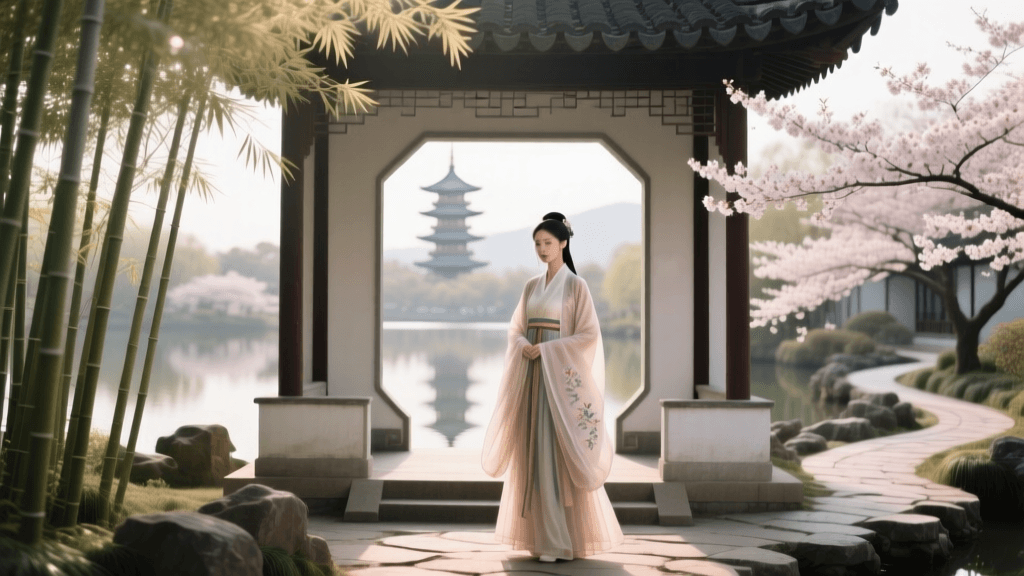
Hangzhou offers a softer, more restrained aesthetic aligned with the Song Dynasty. The quintessential garment here is the Beizi (a long, open-front coat) paired with a narrow-sleeved top and a pleated skirt. The muted, pastel color palettes of Song-style Hanfu harmonize beautifully with the misty waters of West Lake and the bamboo forests of Lingyin Temple. This destination is ideal for Xiaohongshu influencers focusing on 'tea ceremony' aesthetics, scholarly elegance, and serene, nature-bound storytelling.
Suzhou: Ming Dynasty Structure and Gardens
Suzhou's classical gardens, with their intricate lattice windows and moon gates, are the perfect stage for Ming Dynasty Hanfu. The Mamianqun (horse-face skirt) and Aoqun (long jacket and skirt combo) offer structured, regal silhouettes. The heavy brocades and intricate woven patterns of Ming garments catch the dappled sunlight filtering through garden pavilions, creating stunning high-contrast stills for Instagram portfolios.
Social Media Styling: Going Viral on Douyin and Instagram
Capturing the movement and essence of Hanfu requires an understanding of how different fabrics interact with the camera and the environment. Historical accuracy is important, but social media impact often dictates specific material choices.
Fabric and Silhouette Selection for the Camera
When selecting a Hanfu for video content, the weight and drape of the fabric are paramount. According to historical textile archives documented by The Metropolitan Museum of Art's Heilbrunn Timeline of Art History, traditional Chinese garments relied heavily on the natural drape of silk and hemp. However, for modern social media 'slow-motion' transitions, creators often opt for modern adaptations.
- For Wind and Movement (Douyin/TikTok): Choose outer layers made of 30D or 40D chiffon, organza, or lightweight georgette. These materials catch the slightest breeze, allowing for dramatic 'sleeve flick' and 'skirt spin' transitions. A 3-meter or 4.5-meter hem circumference on a Mamianqun is essential for the viral 'blooming flower' spin shot.
- For Texture and Detail (Instagram/Xiaohongshu): Opt for heavy silks, jacquard weaves, and brocades (often 16mm to 19mm silk weight). The China Silk Museum highlights the revival of traditional weaving techniques like Kesi (silk tapestry) and Zhuanghua, which provide a luxurious, light-absorbing texture that looks incredibly rich in high-resolution still photography.
Mastering the 'Golden Hour' and Posing
The best Hanfu photography happens during the 'golden hour'—the first hour after sunrise and the last hour before sunset. In popular locations like the Humble Administrator's Garden, arriving at 6:30 AM is the only way to avoid massive tourist crowds and capture the morning mist. For posing, utilize traditional props to frame the face and add narrative depth:
- The Round Fan (Tuan Shan): Use a silk-embroidered fan to partially obscure the face, creating a sense of mystery and drawing the viewer's eye to the eye makeup.
- The Oil-Paper Parasol (Youzhisan): Essential for rainy day shoots in Hangzhou or Suzhou. The translucency of the paper diffuses harsh light, acting as a natural softbox for your face.
- Dynamic Movement: Instead of static poses, walk toward or away from the camera while looking back over the shoulder. Have your photographer shoot at 60fps or 120fps to capture the delayed settling of the wide sleeves.
Hair, Makeup, and Accessory Essentials (Zaoxing)
In the Hanfu community, the complete styling of hair, makeup, and accessories is known as Zaoxing. A beautiful garment will fall flat on camera if the styling is anachronistic or poorly executed.
Makeup by Era
Your makeup must reflect the dynasty you are portraying. For Tang Dynasty looks, the makeup is bold and experimental. Incorporate Huadian (intricate forehead decals made of gold leaf or pearl) and Xiehong (a dramatic, slanting red blush that extends from the eyes to the temples). For Song and Ming Dynasty looks, the makeup should be subdued, focusing on a pale base, softly defined eyebrows (often straight or gently arched), and subtle rose-toned lips.
Hair and Headpieces
Most rental shops in Xi'an and Luoyang offer comprehensive Zaoxing packages that include hair styling. However, for premium social media content, avoid the cheap, shiny plastic hairpins included in basic packages. Invest in or rent high-quality resin, velvet, or metal-filigree hairpins. For Tang styles, large peony flowers and gold Buyao (dangling hairpins that sway with movement) are crucial for adding kinetic energy to video content.
Practical Logistics: Renting vs. Buying and Travel Care
For a dedicated tourism trip, renting is often the most practical choice, allowing you to wear multiple high-end outfits without the burden of luggage. A premium rental package (including the garment, accessories, and professional Zaoxing) typically costs between $35 and $70 USD for a 12-to-24-hour period.
Pro-Tip for Content Creators: Always book your Zaoxing appointment the night before your shoot. Popular studios near Datang Everbright City or West Lake book out days in advance during peak seasons. Ask the makeup artist to use waterproof cosmetics and heavy setting spray, as the physical exertion of posing and navigating crowded historical sites will cause standard makeup to melt under the hot studio lights or summer sun.
Garment Care on the Road
If you choose to travel with your own Hanfu, wrinkle management is your biggest enemy. Heavy brocades and pleated Mamianqun skirts require meticulous care. Pack a portable, foldable travel steamer—this is non-negotiable for serious Hanfu tourists. Never fold a pleated skirt; instead, roll it around a cylindrical tube or hang it in a garment bag. When navigating muddy or uneven ancient stone paths, use traditional wooden clogs or bring a pair of discreet, modern platform shoes that match the hem of your skirt, allowing you to glide over obstacles without dragging delicate silk hems through the dirt.
Conclusion
Hanfu tourism is more than a fleeting social media trend; it is a vibrant, community-driven revival of Asian material culture. By carefully selecting your destination, understanding the historical context of your garments, and mastering the technical aspects of digital photography, you can create breathtaking content that honors the past while captivating the modern digital world. Whether you are spinning in a Tang Dynasty chest-high skirt under the lanterns of Xi'an or sipping tea in a Ming Dynasty jacket in Suzhou, the world of Hanfu offers an endless canvas for sartorial storytelling.