Vintage Kimono Collecting: Identifying Meiji and Taisho Eras
The Allure of Antique Japanese Garments
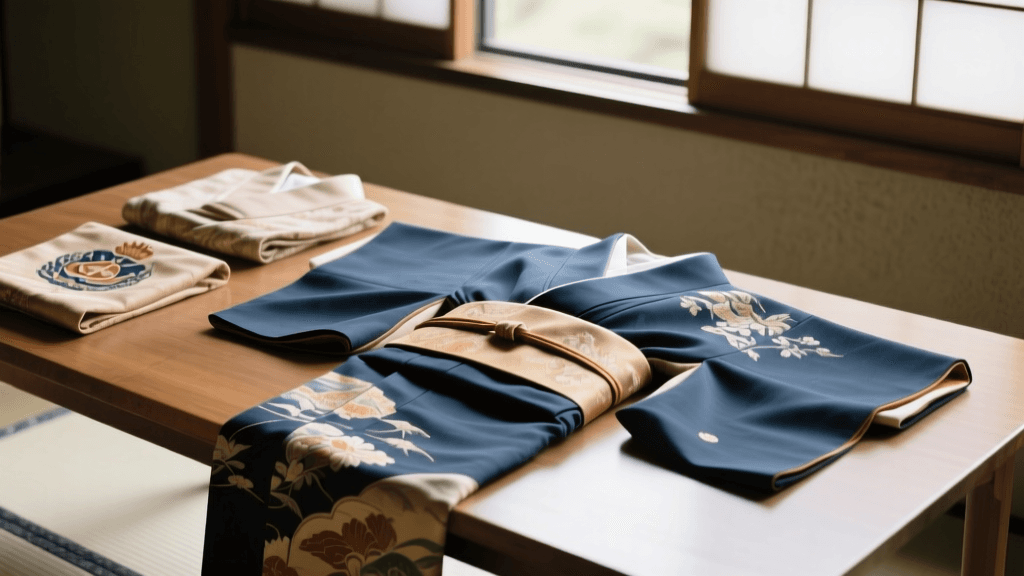
Collecting vintage and antique kimonos is far more than a simple pursuit of fashion; it is an act of historical preservation. When you hold a century-old silk garment, you are touching the tangible legacy of Japanese artisanship, cultural shifts, and evolving aesthetic philosophies. Unlike modern, mass-produced textiles, antique kimonos from the late 19th and early 20th centuries showcase a level of hand-dyeing, weaving, and embroidery that is virtually impossible to replicate today. The global appreciation for these garments has surged in recent years, a phenomenon highlighted by the Victoria and Albert Museum in their landmark exhibition exploring the kimono's evolution from isolated Edo-period traditions to global fashion statements. For the serious collector, understanding the nuances of different historical eras, evaluating textile condition, and mastering archival preservation are essential skills. This guide will walk you through the critical aspects of building a museum-quality collection of Meiji, Taisho, and early Showa era kimonos.
Decoding the Eras: Meiji, Taisho, and Early Showa
To accurately value and categorize antique kimonos, collectors must be able to identify the distinct aesthetic and technical markers of Japan's most transformative centuries. The transition from the feudal Edo period into the modern era radically altered textile production, dye chemistry, and motif selection.
Meiji Era (1868–1912): The Bridge Between Worlds
The Meiji Restoration opened Japan's borders to international trade, fundamentally changing the textile industry. The introduction of imported aniline dyes from Europe allowed artisans to achieve unprecedented vibrancy, particularly in deep reds and purples that were previously difficult to stabilize with natural plant dyes. Meiji-era kimonos often feature a fascinating juxtaposition of traditional Japanese motifs—such as cranes, pines, and chrysanthemums—alongside newly introduced Western floral patterns and geometric borders. The yuzen dyeing technique became highly refined during this period, allowing for pictorial, almost painterly landscapes to be rendered across the back panels of formal garments. Collectors highly prize Meiji pieces for their historical significance and the incredible density of their hand-embroidered crests (mon).
Taisho Era (1912–1926): Taisho Roman and Art Deco
The Taisho period is arguably the most sought-after era for vintage kimono collectors. Characterized by the cultural movement known as "Taisho Roman," this era embraced Western romanticism, Art Deco geometry, and a sense of urban modernity. The rise of the "Moga" (Modern Girl) meant that fashion became bolder and more expressive. Taisho kimonos are instantly recognizable by their striking, high-contrast color palettes—frequently utilizing deep eggplant purples, mustard yellows, and striking crimsons. Motifs shifted away from purely natural scenes to include abstract geometric shapes, cityscapes, and stylized arabesques. The linings of Taisho garments also became an avenue for artistic expression, often featuring hidden patterns or contrasting colors that would only flash briefly as the wearer walked.
Early Showa (1926–1945): Pre-War Elegance and Militarism
As Japan moved into the early Showa period, the political climate began to darken, and this tension was subtly woven into the nation's textiles. While the technical mastery of yuzen dyeing and shibori (tie-dye) reached its zenith, the motifs began to reflect the rising militarism. Collectors often find "war motif" kimonos from the 1930s, which feature seemingly innocent designs of falling cherry blossoms or soaring birds that subtly evoke military aircraft and parachutes. The linings of early Showa garments sometimes contain hidden patriotic symbols, such as the rising sun or maps of the empire. These pieces are highly valued by historical collectors for their poignant, if somber, narrative of a nation on the brink of global conflict.
Era Identification Chart for Collectors
Use the following structured comparison to quickly identify the era of a potential acquisition based on visual and tactile clues.
| Era | Years | Dominant Dyes | Key Motifs | Lining Characteristics |
|---|---|---|---|---|
| Meiji | 1868–1912 | Early Aniline, Natural Indigo | Chrysanthemums, Bamboo, Western Florals | Plain red or white silk, occasional stenciling |
| Taisho | 1912–1926 | Vibrant Chemical Dyes, Deep Purples | Art Deco Geometry, Taisho Roman, Cityscapes | Patterned silk, bold contrasting colors |
| Early Showa | 1926–1945 | Complex Yuzen, Metallic Threads | Ominous clouds, War motifs, Traditional pines | Hidden patriotic motifs, heavy crepe silk |
Evaluating Condition: The Four Pillars of Value
Unlike Western vintage clothing, which is often judged by structural tailoring, the value of an antique kimono is dictated by the condition of its silk canvas and the integrity of its dyes. When inspecting a potential purchase, collectors must meticulously examine the garment for the following flaws:
1. Shimi (Protein Stains) and Oxidation
"Shimi" refers to the brown or yellow spots that appear on vintage silk due to the oxidation of residual proteins from sweat, oils, or improper storage. While small shimi on the lower hem or inside the folds can be acceptable for display pieces, stains on the upper back panel or near the collar significantly diminish the garment's value. Severe oxidation can eventually cause the silk fibers to become brittle and shatter.
2. Lining Degradation
Many antique kimonos feature linings made of lower-quality silk or cotton that degrades faster than the outer shell. A common issue in Meiji and Taisho garments is "lining bleed," where unstable red dyes from the inner fabric migrate through the outer silk, leaving a pinkish halo around the edges of the garment. Always inspect the interior seams for signs of fabric shattering or dye migration.
3. Collar and Hem Wear
The collar (eri) and the bottom hem (suso) are the most vulnerable areas of a kimono. Vintage pieces often show heavy soiling or fraying at the hem from dragging on tatami mats or outdoor pathways. Collectors should look for garments where the hem has been professionally folded inward or replaced, a common historical practice to extend the life of a beloved garment.
Sizing and Wearability for Modern Collectors
It is crucial for collectors to understand that antique kimonos were tailored to the physical stature of Japanese citizens a century ago, which was notably shorter and narrower than modern averages. A typical Meiji or Taisho era kimono might have a back width (yuki) of 60 to 62 centimeters and a back length (mitake) of 150 centimeters. In contrast, modern kimonos often feature a yuki of 64 to 68 centimeters. If your goal is to wear the vintage pieces rather than simply display them, you must take precise measurements. Fortunately, the straight-seam construction of the kimono allows for some adjustment; the side seams can be let out by a skilled artisan to increase the hip width, and the waist fold (ohashori) can be adjusted to accommodate different heights, provided there is enough excess fabric hidden within the folds.
Sourcing Authentic Antique Kimonos
Building a reputable collection requires knowing where to look and how to verify provenance. In Japan, the most legendary sourcing location is the Toji Temple flea market in Kyoto, held on the 21st of every month. Here, specialized dealers lay out hundreds of vintage textiles, allowing collectors to inspect the silk weight, dye quality, and stitching in person. For international collectors, specialized online dealers and Japanese proxy auction services provide access to estate sales and vintage warehouses. When purchasing online, always request high-resolution photographs of the lining, the family crests (which can indicate the garment's original social class), and the inside seams to check for hidden stains or repairs.
Archival Preservation and Storage
Proper storage is the difference between a garment that lasts another century and one that disintegrates in a decade. The Textile Society of America emphasizes strict environmental controls for protein-based fibers like silk. Antique kimonos must be stored in a cool, dark environment with a relative humidity maintained between 45% and 55%.
Traditionally, kimonos are folded and wrapped in "tatou" paper, which is specially treated to repel insects. Modern collectors should use acid-free, unbuffered archival tissue paper to prevent chemical reactions with the silk. Never store antique silk directly in cedar wood chests; the natural oils and off-gassing from cedar can cause severe yellowing and permanent staining. Instead, invest in traditional Paulownia wood (kiri) chests, known as "tansu." Paulownia is naturally fire-resistant, regulates humidity beautifully, and does not emit harmful acids.
Furthermore, collectors should practice "Mushiboshi" (airing out) at least twice a year, preferably in late autumn or winter when the air is dry and crisp. Unfold the garments and let them breathe in a shaded, well-ventilated room for a few hours to prevent moisture buildup and mold spores. For those looking to deepen their knowledge of historical textile structures and authentication, the Metropolitan Museum of Art offers an extensive archive of open-access publications detailing Edo and Meiji period weaving techniques, serving as an invaluable reference library for serious collectors.
Conclusion
Collecting vintage and antique kimonos is a deeply rewarding journey that connects you to the master dyers, weavers, and wearers of Japan's past. By learning to decode the visual language of the Meiji, Taisho, and early Showa eras, and by committing to rigorous archival preservation standards, you ensure that these magnificent silk canvases survive to inspire future generations. Whether you are hunting for a rare Taisho Roman geometric masterpiece at a Kyoto flea market or carefully airing out your collection on a crisp winter morning, the stewardship of these garments is a profound tribute to Asian textile traditions.