Kimono Dress Codes: A Guide to Formality and Occasions
Introduction to Japanese Kimono Etiquette and TPO
In Japanese culture, the concept of TPO—Time, Place, and Occasion—is the foundational pillar of sartorial etiquette. Nowhere is this more rigorously observed than in the wearing of the kimono. Unlike Western fashion, where personal expression often supersedes strict dress codes, traditional Japanese garment rules are deeply tied to social harmony, respect for the host, and seasonal awareness. Wearing the correct kimono to a specific event is not merely a fashion choice; it is a profound demonstration of cultural literacy and respect. According to the Metropolitan Museum of Art, the kimono evolved from a simple undergarment into a highly structured canvas of social signaling, where every fold, pattern, and accessory communicates the wearer's age, marital status, and the formality of the event they are attending.
For both locals and international enthusiasts, navigating the intricate web of kimono formality can seem daunting. However, by understanding the hierarchy of garments, the rules of family crests (kamon), and the strict seasonal transitions, you can confidently select the appropriate attire for any Japanese occasion. This guide breaks down the essential dress codes, offering actionable advice for weddings, tea ceremonies, and seasonal festivals.
The Hierarchy of Kimono Formality
The formality of a kimono is determined by several factors: the fabric type, the placement and style of the dyeing or weaving, the presence of family crests, and the color palette. Here is the standard hierarchy from casual to highly formal.
1. Casual and Everyday Wear
- Yukata: Made of lightweight cotton or hemp, the yukata is strictly casual summer wear. It is appropriate for fireworks festivals (hanabi), hot spring resorts (onsen), and casual summer strolls. It is never worn to formal indoor events.
- Komon: Translating to "fine pattern," komon feature small, repeating motifs dyed across the entire garment. They are the standard everyday silk kimono, suitable for casual dining, shopping, or informal classes.
2. Semi-Formal Wear
- Tsukesage: A step up in formality, tsukesage feature patterns that are dyed or embroidered primarily below the waist and on the sleeves, with the motifs pointing upward. They are versatile and often worn to semi-formal parties or upscale dinners.
- Edo Komon: Originating from samurai formal wear, these feature incredibly tiny, intricate repeating patterns that look solid from a distance. When adorned with a family crest, they elevate to semi-formal status.
3. Formal and Ceremonial Wear
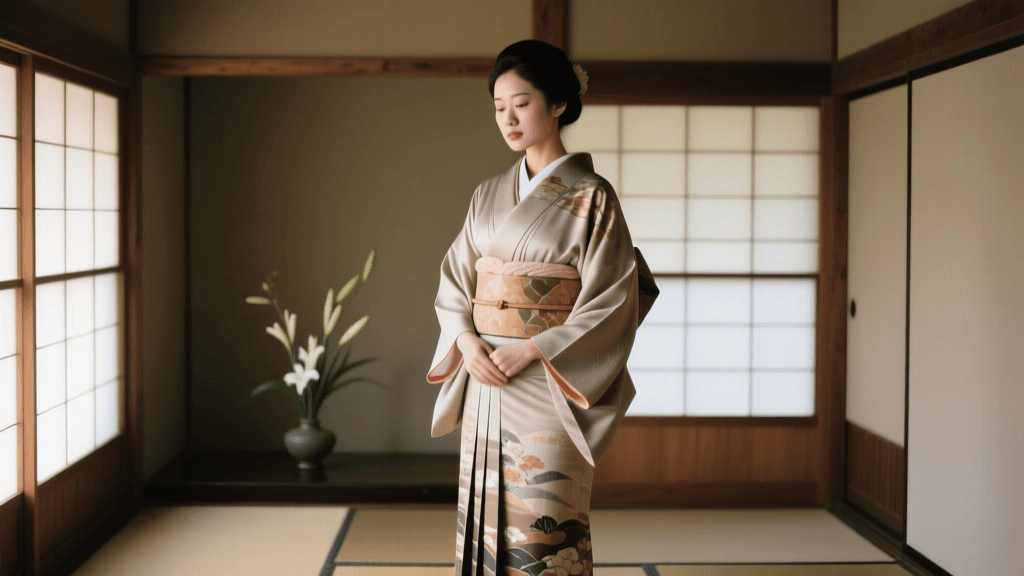
- Homongi: Meaning "visiting wear," homongi are characterized by elegant, flowing patterns that cross over the seams of the fabric, creating a continuous picture. They are the standard formal attire for unmarried women and married women attending weddings (as guests), tea ceremonies, and official gatherings.
- Irotomesode: These feature a solid colored background (anything other than black) with elaborate patterns dyed only below the waist. They typically bear one to five family crests and are worn by married women or close relatives at weddings.
- Kurotomesode: The absolute pinnacle of formality for married women. These are solid black silk kimono with five family crests and lavish gold and silver embroidery below the waist. They are strictly reserved for the mother of the bride or groom at a wedding.
The Power of Kamon (Family Crests)
The number of kamon (family crests) on a kimono acts as a strict formality multiplier. A kimono with no crests is inherently casual or semi-formal. Adding crests elevates the garment's status:
- Five Crests (Itsutsu-mon): Highest formality. Found on kurotomesode and mofuku (mourning wear).
- Three Crests (Mitsu-mon): Formal. Common on homongi and irotomesode.
- One Crest (Hitotsu-mon): Semi-formal. Often placed on the back of the neck on tsukesage or iromuji (solid color kimono).
Kimono Formality and Occasion Matching Chart
| Kimono Type | Formality Level | Ideal Occasions | Obi Pairing | Footwear |
|---|---|---|---|---|
| Yukata | Casual | Summer festivals, ryokan stays | Hanhaba (half-width) | Geta (barefoot or tabi) |
| Komon | Everyday | Casual outings, theater, shopping | Nagoya | Zori or Geta |
| Tsukesage | Semi-Formal | Upscale dining, gallery openings | Nagoya or Fukuro | Zori with white tabi |
| Homongi | Formal | Weddings (guest), formal tea ceremony | Fukuro | Brocade Zori, white tabi |
| Irotomesode | Highly Formal | Weddings (close relative) | Fukuro (gold/silver) | Brocade Zori, white tabi |
| Kurotomesode | Peak Formal | Weddings (mother of bride/groom) | Fukuro (heavy gold) | Brocade Zori, white tabi |
Navigating Specific Occasions
Weddings
As a wedding guest, the golden rule is to avoid white (reserved for the bride) and solid black (associated with mourning, unless you are the mother of the bride wearing a kurotomesode). A homongi with a cheerful, auspicious pattern (like cranes, pine, or plum blossoms) and a fukuro obi tied in a complex, celebratory knot like the otaiko or fukura-suzume is the safest and most respectful choice. Renting a high-quality homongi and obi set for a day typically costs between ¥8,000 and ¥15,000 ($55–$100 USD) at specialized shops in Kyoto or Tokyo, which is highly recommended for international visitors to ensure perfect condition and appropriate styling.
Tea Ceremonies (Chakai)
Tea ceremony etiquette prioritizes humility, tranquility, and harmony. Flashy gold threads or overly vibrant colors are considered disruptive to the serene atmosphere of the tea room. An edomon or a subdued tsukesage in muted, seasonal colors is ideal. Furthermore, avoid wearing rings, bracelets, or watches, as metal can scratch the precious tea bowls. As noted by cultural experts at the Victoria and Albert Museum, the subtlety of the kimono's weave and the quiet elegance of the obi knot reflect the wabi-sabi aesthetic central to the tea ceremony.
Funerals and Mourning
Mourning attire, known as mofuku, consists of a plain, matte black silk kimono with five family crests, paired with a solid black obi, black obijime, and black zori. It is strictly reserved for close family members of the deceased. Distant friends and acquaintances should wear subdued, dark-colored western clothing or a dark, uncrested kimono with a black obi to show respect without overstepping the family's mourning boundaries.
Essential Accessories and Formality Modifiers
The kimono itself is only half the equation; the accessories dictate the final formality level.
- The Obi: A hanhaba obi (half-width, approx. 15cm) is for yukata. A Nagoya obi (approx. 30cm wide, pre-folded at one end) is for semi-formal wear. A Fukuro obi (approx. 31-33cm wide, 420-450cm long) is required for formal homongi and tomesode. Fukuro obi are heavily brocaded with gold and silver threads and can cost upwards of ¥300,000 ($2,000 USD) new.
- Obijime and Obiage: The obijime is the decorative cord that secures the obi knot. For formal events, choose a thick, tightly braided cord with metallic threads. The obiage (the silk scarf tucked above the obi) should be brightly colored and patterned for unmarried women, and more subdued for married women.
- Footwear: Geta (wooden clogs) are strictly casual and paired with yukata. Zori (flat, padded sandals) are formal. The formality of zori increases with the height of the sole and the richness of the brocade covering. Always wear pristine white tabi (split-toe socks) with formal zori.
Seasonal Rules: The Calendar of Fabrics
Japanese kimono etiquette mandates strict adherence to seasonal fabrics, reflecting a deep cultural reverence for nature. Wearing a winter kimono in July is considered a major faux pas.
- October to May (Awase): Lined kimono made of opaque silk, providing warmth and structure.
- June and September (Hitoe): Unlined kimono. The transition to hitoe occurs strictly on June 1st, and the return to awase occurs on October 1st, regardless of the actual weather.
- July and August (Ro and Sha): Sheer, breathable, woven silk garments that allow air to pass through. These are worn during the peak of the humid Japanese summer, usually paired with a sheer ro obi and lightweight undergarments.
Conclusion
Mastering kimono dress codes is a lifelong journey of cultural appreciation. By respecting the TPO principles and understanding the visual language of patterns, crests, and fabrics, you participate in a living tradition that has spanned centuries. For those planning to attend formal events in Japan, consulting with local kimono stylists or utilizing reputable rental services is highly advised. As highlighted by travel and cultural authorities at Japan Guide, engaging with traditional dress not only enriches your personal experience but also shows profound respect for the artisans and historians who keep these magnificent textile traditions alive today. Whether you are tying a simple yukata obi for a summer festival or donning a formal homongi for a wedding, the kimono remains a powerful, wearable expression of Japanese heritage.