The Evolution of Hanfu Retail: From Silk Markets to E-Commerce
The Historical Roots: Silk Markets and Bespoke Tailoring
Long before the advent of digital storefronts and global shipping networks, acquiring traditional Chinese clothing was an inherently local, tactile, and time-consuming endeavor. For centuries, the procurement of Hanfu (the traditional dress of the Han Chinese) was deeply intertwined with China's historic silk production hubs, most notably in the provinces of Zhejiang and Jiangsu. Cities like Hangzhou and Suzhou were not merely manufacturing centers; they were the epicenters of textile commerce. According to the China Silk Museum, these regions cultivated a sophisticated ecosystem of sericulture, weaving, and bespoke tailoring that dictated the fashion of dynasties.
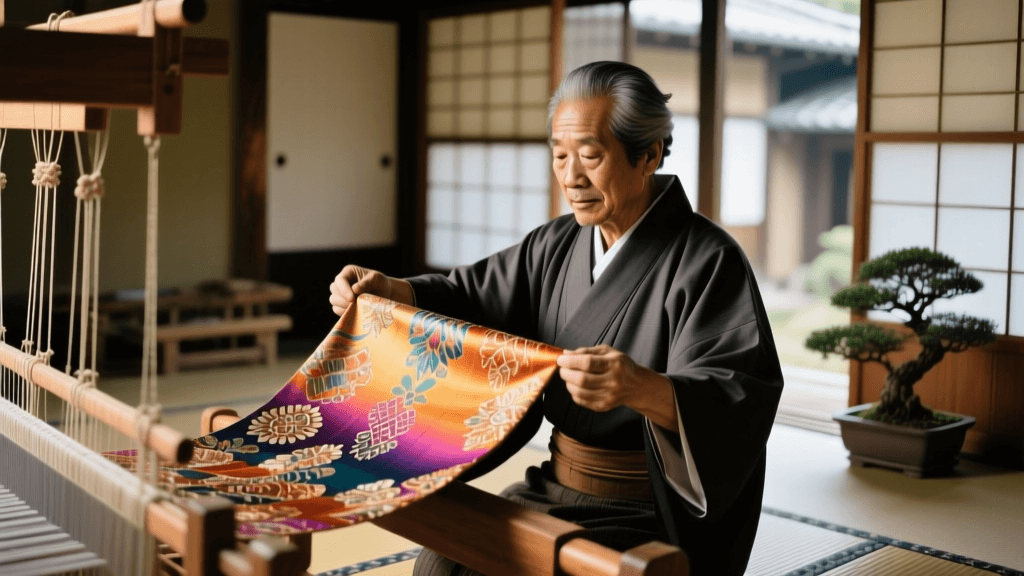
In the traditional market model, a consumer did not buy a finished garment off a rack. Instead, the process began at sprawling silk markets where buyers selected raw fabrics. Shoppers would evaluate the drape, weight, and weave of materials such as Songjin (Song brocade), Shujuan (silk tabby), and Zhuanghua (silk tapestry). After purchasing the required yardage—typically three to five meters for a standard upper and lower garment set—the fabric was taken to a local tailor. The tailor would take precise physical measurements and cut the fabric according to historical patterns, which often utilized flat, geometric cutting methods rather than the complex, curved darts of Western tailoring. This bespoke process required multiple fittings and could take weeks to complete, making authentic traditional garments a significant investment of both time and capital.
The Digital Shift: Forums, Taobao, and the Hanfu Movement
The transition from physical silk markets to digital e-commerce was catalyzed by the modern Hanfu Movement in the early 2000s. Initially, enthusiasts relied on niche internet forums and bulletin board systems (BBS) to share historical research, debate garment structures, and organize small-scale group buys. As detailed in the historical overview of the Hanfu movement, these early digital communities laid the groundwork for a commercial revival by proving there was a passionate, untapped consumer base.
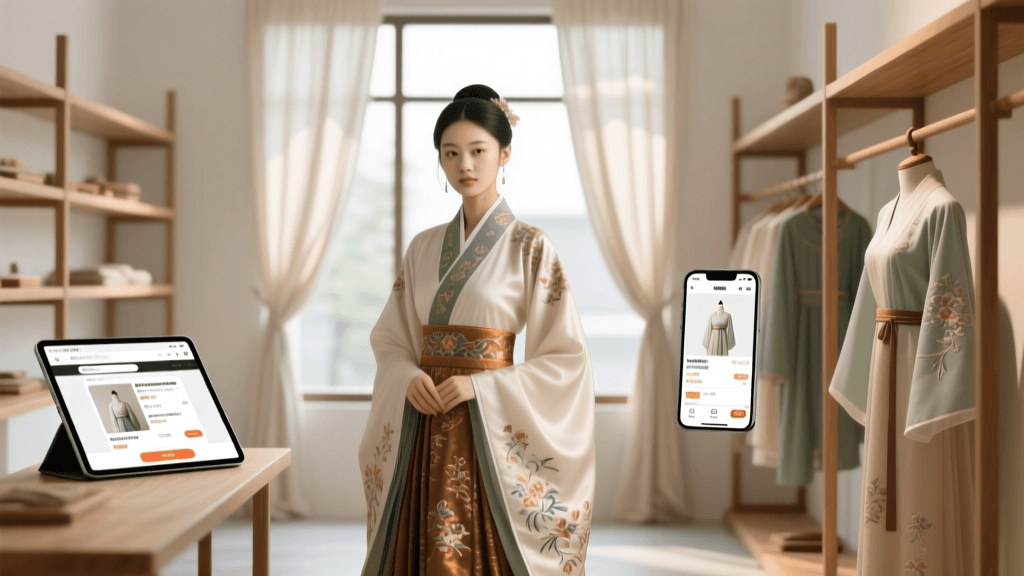
The true commercial explosion occurred with the rise of Taobao, China's massive e-commerce platform. Taobao lowered the barrier to entry for independent designers and small workshops, allowing them to bypass the overhead of physical storefronts. Brands like Shisan Yu, Zhongling, and Minghuatang emerged from these digital incubators, transforming Hanfu from a niche hobbyist pursuit into a multi-billion-yuan industry. E-commerce allowed for the standardization of sizing, the introduction of seasonal collections, and the rapid dissemination of new styles inspired by unearthed historical textiles and museum archives.
Decoding the Modern E-Commerce Hanfu Market
Today, the online Hanfu market is highly stratified, catering to everyone from casual tourists to strict historical reenactors. Understanding these tiers is crucial for navigating the e-commerce landscape:
- Mass Market (Entry-Level): Priced between $30 and $60 USD. These garments are typically made from polyester blends or cotton. They are durable, machine-washable, and feature machine embroidery. Ideal for festivals, photography, and beginners.
- Mid-Range (Enthusiast): Priced between $80 and $180 USD. This tier features better historical accuracy, natural fabric blends (like linen-cotton or rayon), and intricate multi-thread embroidery. Brands in this tier often release themed seasonal collections.
- High-End and Bespoke (Connoisseur): Priced from $250 to over $1,000 USD. These pieces utilize genuine mulberry silk, silk velvet, and real gold or silver thread weaving. They are often produced in limited batches and require meticulous hand-finishing.
Comparison Chart: Where to Buy Hanfu Today
| Buying Channel | Pros | Cons | Price Range (USD) | Lead Time |
|---|---|---|---|---|
| Physical Silk Markets (e.g., Suzhou, Hangzhou) | Custom bespoke fit; tactile fabric selection; supports local artisans. | Requires travel; language barrier; lengthy tailoring process. | $150 - $800+ | 2 - 6 Weeks |
| Domestic E-Commerce (Taobao / Tmall) | Massive variety; direct from original designers; competitive pricing. | Requires Chinese bank account/agent; complex return policies. | $30 - $500+ | 3 - 90 Days (varies by pre-sale) |
| Global Platforms (AliExpress / Independent Sites) | Easy checkout; buyer protection; direct international shipping. | High markup; risk of 'Shanzhai' (stolen designs/knockoffs); limited sizing. | $50 - $200 | 1 - 4 Weeks |
Actionable Guide for International Buyers
Purchasing Hanfu from Chinese e-commerce platforms can be daunting for international buyers due to language barriers, sizing discrepancies, and payment gateways. Here is a practical, step-by-step guide to securing authentic, high-quality garments online.
1. Mastering the 'Pingpu' Measurement System
Western sizing (S, M, L) is largely irrelevant in the Hanfu market. Traditional garments are cut with generous, flowing silhouettes, meaning the critical metric is the Pingpu (flat-lay) measurement. Sellers will provide a size chart detailing the garment laid flat on a table. You must measure your own body and compare it to the Xiongwei (chest/bust width), Yaowei (waist width), and Yichang (garment length). Always add 5 to 10 centimeters to your actual body measurements to ensure the garment overlaps correctly and allows for comfortable movement, especially for wrap-style tops like the Jiaoling Youren (cross-collared right-lapel shirt).
2. Navigating the 'Yushou' (Pre-Sale) Model
Unlike Western fast fashion, mid-to-high-tier Hanfu brands heavily utilize the Yushou (pre-sale) model to manage inventory and cash flow. When a new collection drops, buyers pay a non-refundable deposit (Dingjin), usually 10% to 30% of the total cost. The manufacturing period can last anywhere from 30 to 90 days. Once the garments are finished, the seller will announce a final payment window (Weikuan). If you miss this window, you forfeit your deposit and the garment. International buyers using shopping agents must ensure their agent is set up to automatically pay the balance, or they must manually monitor the Taobao store for shipping announcements.
3. Utilizing Shopping Agents
To buy directly from Taobao or Tmall without a Chinese ID or Alipay account, international buyers rely on shopping agents (such as Superbuy or CSSBuy). These platforms allow you to paste the Taobao product URL into their English interface. They purchase the item, receive it at their domestic warehouse, and provide Quality Control (QC) photos. Pro Tip: Always request detailed QC photos of the embroidery and the fabric texture. If the embroidery is misaligned or the fabric is sheer when it should be opaque, you can request a return or exchange before the agent ships it internationally.
4. Timing Your Purchases and Shipping
International shipping via EMS, DHL, or specialized air freight lines is calculated by volumetric weight. Because winter Hanfu (such as wool-lined Beizi cloaks or velvet Mamianqun skirts) is heavy and bulky, shipping costs can sometimes exceed the cost of the garment itself. To mitigate this, time your purchases around major Chinese shopping festivals like Singles' Day (November 11th) or the Taobao New Year Festival (January), where brands offer steep discounts and free domestic shipping to your agent's warehouse. Furthermore, avoid shipping during the Chinese New Year holiday (late January to mid-February), as domestic logistics and tailoring workshops shut down completely for up to a month.
Preserving Heritage in a Digital Age
The evolution of Hanfu retail from the bustling, fragrant silk markets of ancient Suzhou to the algorithmic storefronts of modern e-commerce represents a fascinating intersection of tradition and technology. While the medium of exchange has changed, the core appreciation for the artistry of Chinese textiles remains. As noted by textile historians at The Metropolitan Museum of Art, the legacy of Chinese silk and garment construction is one of the most enduring contributions to global material culture. Today, e-commerce has not erased this history; rather, it has democratized access to it, allowing a new generation across the globe to drape themselves in centuries of woven heritage.