Modern Masculine and Gender-Neutral Hanfu Styling Guide
The Evolution of Hanfu: Beyond the Binary
The global Hanfu movement has experienced an explosive renaissance over the last decade, yet mainstream media and social media algorithms often reduce this rich sartorial tradition to a single aesthetic: the ethereal, hyper-feminine 'fairycore' (xianqi) look characterized by pastel chiffon and trailing sleeves. However, traditional Chinese dress has never been confined to such narrow, modern interpretations of gender. As noted by the Victoria and Albert Museum, historical Chinese garments were deeply tied to social status, philosophy, and cosmology rather than strict modern gender binaries. Many foundational silhouettes were inherently unisex or specifically designed to project masculine authority, scholarly elegance, and martial prowess.
Today, a growing cohort of men, non-binary individuals, and gender-nonconforming fashion enthusiasts are reclaiming Hanfu. By focusing on structural tailoring, historical accuracy, and modern streetwear fusion, they are proving that traditional Chinese garments are profoundly versatile. This guide explores how to curate, style, and tailor a masculine or gender-neutral Hanfu wardrobe, complete with practical advice on measurements, fabrics, and layering techniques.
Core Silhouettes for Masculine and Androgynous Fits
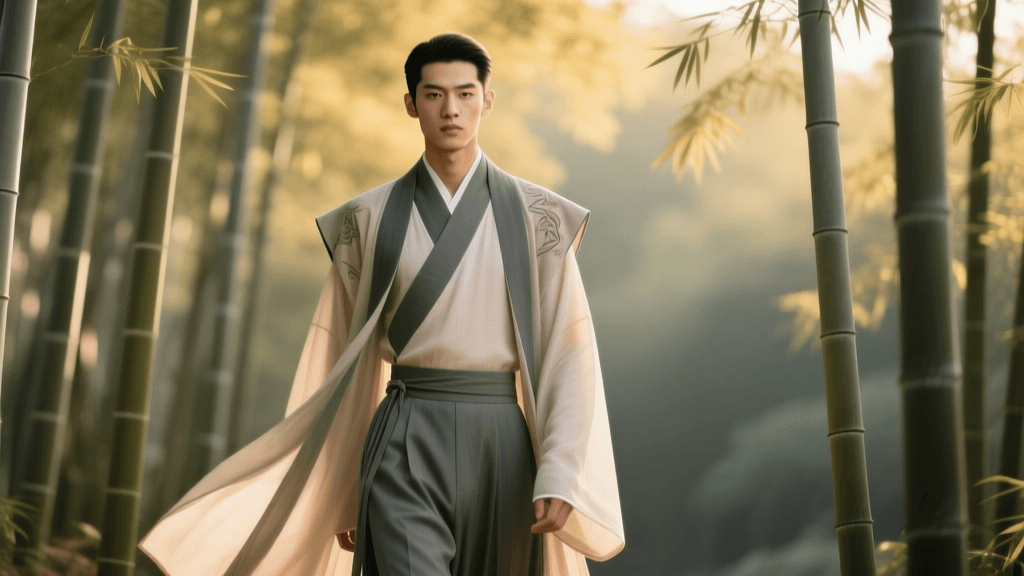
When building a gender-neutral or masculine Hanfu wardrobe, the silhouette dictates the entire attitude of the outfit. Moving away from the high-waisted, flowing Qixiong Ruqun (chest-high skirt), we look toward garments that offer structure, sharp lines, and historical grounding.
1. Yuanlingpao (Round Collar Robe)
The Yuanlingpao is a staple of traditional Chinese menswear, heavily utilized during the Tang and Ming dynasties. It features a round collar that fastens on the right side, often with a structured, A-line skirt. It is exceptionally flattering for broader shoulders and can be belted at the natural waist or hips for a more androgynous, relaxed drape. Modern interpretations often include hidden inner ties and snap buttons for ease of wear.
2. Shenyi (Deep Robe)
The Shenyi translates to 'deep clothing' and represents the philosophical unity of heaven and earth, as the top and bottom are cut separately but sewn together into a single, continuous robe. It is inherently gender-neutral. The Zhiduo (a Ming dynasty variation of the Shenyi) features side slits and structured pleats, offering a scholarly, dignified aesthetic that works beautifully for formal occasions or academic settings.
3. Mamianqun (Horse-Face Skirt)
While often marketed to women today, the Mamianqun is a masterclass in structural, gender-neutral fashion. Its flat front and back panels (the 'horse faces') flanked by deep, sharp pleats create a striking, architectural silhouette. When paired with a tailored, masculine-cut jacket or a simple linen button-down, it bridges the gap between traditional heritage and avant-garde contemporary fashion.
| Garment Type | Historical Root | Modern Gender-Neutral Vibe | Estimated Cost (USD) |
|---|---|---|---|
| Yuanlingpao | Tang / Ming Dynasties | Structured, authoritative, versatile | $80 - $250 |
| Zhiduo (Shenyi) | Ming Dynasty | Scholarly, elegant, formal | $120 - $300 |
| Mamianqun | Song / Ming Dynasties | Architectural, avant-garde, sharp | $60 - $180 |
| Bijia (Vest) | Various Dynasties | Layered, utilitarian, streetwear | $40 - $120 |
Fabric, Drape, and Color Palettes
The 'fairycore' trend relies heavily on lightweight, translucent fabrics like chiffon, organza, and thin polyester. To achieve a masculine or grounded, gender-neutral aesthetic, you must prioritize weight, texture, and opacity.
- Heavyweight Linen (200+ GSM): Linen provides a natural, breathable structure that softens with wear but maintains sharp pleats. It is historically accurate for summer wear and offers a rugged, earthy texture.
- Raw Tussah Silk: Unlike the glossy, slippery charmeuse often used in modern feminine Hanfu, raw silk has a matte finish, a slightly slubby texture, and a heavier drape that reads as luxurious but understated.
- Wool Blends and Brocade: For winter or formal wear, woven wool blends and dark, subtle brocades (featuring tone-on-tone weaving rather than flashy gold threads) provide warmth and a commanding presence.
Color Strategy: Step away from pastels. Embrace the traditional Chinese color lexicon by utilizing deep, saturated hues. Ink black, moss green, terracotta, indigo, and oxblood are historically significant and inherently gender-neutral. A dark indigo Zhiduo with subtle silver embroidery, for instance, projects a sophisticated, modern masculinity.
Mastering Proportions and Layering
Layering is the secret weapon of gender-neutral styling. Historical Chinese dress was rarely worn as a single layer; the interplay of collars, cuffs, and hems creates visual depth.
The Power of the Bijia (Vest)
The Bijia is a sleeveless vest worn over an inner robe or shirt. For those seeking a more masculine or androgynous silhouette, a structured Bijia is invaluable. It adds visual bulk to the shoulders and chest, creating a V-shaped torso illusion. Look for vests with reinforced shoulder seams and stiff cotton or wool exteriors. Pairing a linen Bijia over a simple white cotton inner shirt (Zhongyi) and wide-leg trousers creates an effortlessly cool, streetwear-adjacent look.
Belt and Waist Placement
Traditional feminine Hanfu often emphasizes a high waist to elongate the legs. For a masculine or androgynous approach, drop the waistline. Secure your Yuanlingpao or robe at the natural waist or slightly lower on the hips using a wide leather belt, a woven fabric sash, or a traditional jade-buckle belt (Yudai). This lowers the visual center of gravity, creating a grounded, powerful stance.
Accessories: Grounding the Look
Accessories can make or break the gender presentation of a historical garment. The goal is to merge traditional motifs with contemporary utility.
'The beauty of Hanfu lies in its modularity. You are not just putting on a costume; you are assembling a system of garments that reflects your personal rhythm and identity.' — Sixth Tone Cultural Analysis
- Footwear: While traditional cloud-head shoes (Yuntouxie) are beautiful, they often read as delicate. For a masculine edge, pair your Hanfu with modern leather combat boots, chunky loafers, or minimalist leather sneakers. The heavy sole contrasts beautifully with the flowing hem of a Shenyi.
- Headwear: Avoid elaborate floral hairpins. Opt for a simple, structured topknot secured with a leather cord, a minimalist wooden hair stick, or a traditional Guan (cap) made of dark wood or matte metal. A simple leather headband can also evoke a martial arts (wuxia) aesthetic.
- Hardware: Swap out delicate silk tassels for practical, masculine accessories. A leather fan holster, a simple jade pendant on a thick braided cord, or a metal waist hook (Goudai) adds functional, rugged detail to the outfit.
A Practical Guide to Measurements and Sizing
The most significant hurdle for men and gender-nonconforming individuals buying Hanfu online (particularly from mainstream platforms like Taobao) is the sizing. Many commercial Hanfu brands cut their garments exclusively for cisgender female bodies, resulting in narrow shoulders, tight armholes, and short sleeve lengths.
The 'Hanfu Shoulder Problem'
Shoulder width is the most critical metric for a masculine or androgynous fit. A standard women's Hanfu top might have a shoulder width of 38cm to 42cm. If you have broader shoulders, this will cause the fabric to pull, the collar to gap, and the sleeves to ride up.
Actionable Sizing Steps:
- Measure Your Acromion: Have a friend measure the distance across your back from the bony tips of your shoulders (the acromion bones). If your measurement is 46cm, you must find a garment with a stated shoulder width of at least 46cm, or ideally 48cm+ for a relaxed, dropped-shoulder drape.
- Seek 'Unisex' or 'Mens' Lines: Look for specialized indie brands or specific store categories labeled '男女同款' (Unisex/Same style for men and women) or '男装' (Menswear). Brands like Minghua Tang and Shisanyu often offer broader sizing or custom tailoring options.
- Check the Bicep and Chest: Historical Hanfu is meant to be loose, but modern commercial patterns sometimes skimp on the chest and bicep width. Ensure the garment's chest measurement is at least 15-20cm larger than your actual chest measurement to allow for the traditional cross-collar overlap and comfortable layering.
- Sleeve Length: Traditional Hanfu sleeves often extend past the fingertips. If you prefer a practical, modern length, check the sleeve measurement from the center back neck to the cuff. A measurement of 75cm-80cm usually hits the wrist on an average-height adult.
Conclusion
Styling Hanfu through a masculine or gender-neutral lens is an exercise in intentionality. It requires looking past the algorithmic trends and engaging with the deep, structural history of Chinese tailoring. By prioritizing architectural silhouettes like the Yuanlingpao and Mamianqun, selecting heavyweight, textured fabrics, and mastering the art of layered proportions, you can build a wardrobe that is deeply respectful of tradition while fiercely authentic to your modern identity. As institutions like the Metropolitan Museum of Art have highlighted in their extensive archives of Chinese dress, the true legacy of these garments is their enduring adaptability and their power to signify the wearer's inner philosophy.