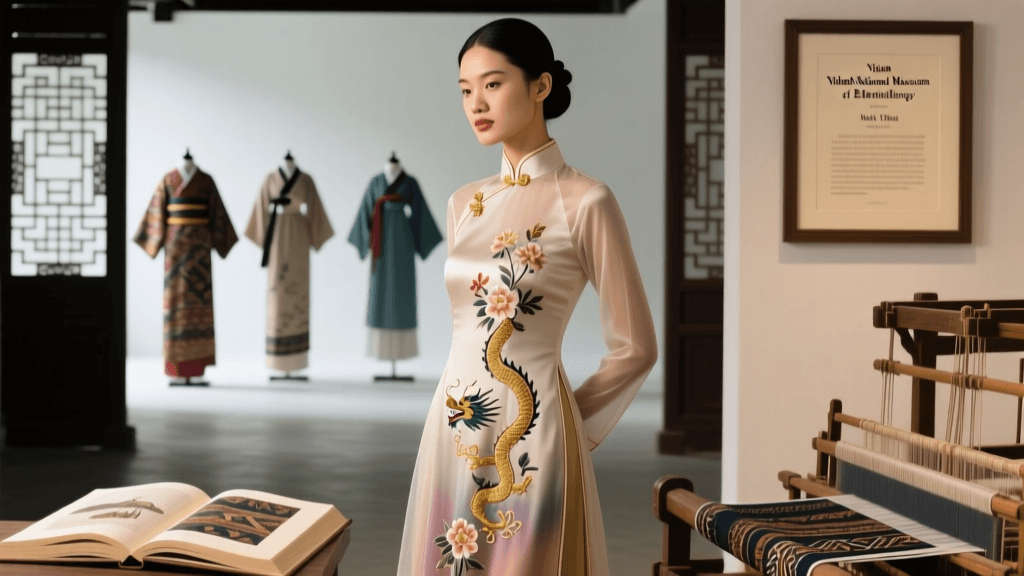
Kimono Storage Preservation & Archival Care Guide for 2026
The Delicate Science of Silk Preservation
Preserving vintage Japanese kimonos—particularly those from the Meiji, Taisho, and early Showa eras—requires a meticulous understanding of textile chemistry and environmental science. As of 2026, the standards for museum-quality garment archiving have evolved, blending traditional Japanese wisdom with cutting-edge conservation technology. Silk fibroin, the protein that makes up silk thread, is highly susceptible to hydrolysis, photodegradation, and mechanical stress. Furthermore, many early 20th-century kimonos feature 'weighted silk,' where metallic salts were added to increase the fabric's drape and luster. Over time, these salts cause the silk to shatter and disintegrate if not stored under strictly controlled conditions.
For serious collectors and archivists, a proactive approach to kimono storage preservation and collection management is not just recommended; it is essential to halt the irreversible degradation of these cultural artifacts. This comprehensive guide outlines the definitive 2026 protocols for climate control, archival wrapping, storage vessels, and digital cataloging.
2026 Climate Control Standards for Kimono Archives
The foundation of any textile preservation strategy is environmental stability. Fluctuations in temperature and relative humidity (RH) cause silk fibers to expand and contract, leading to micro-tears and structural fatigue. According to the Smithsonian Museum Conservation Institute, the ideal environment for protein-based textiles like silk is a stable 65°F (18°C) with a relative humidity of 50%.
Monitoring and Automation
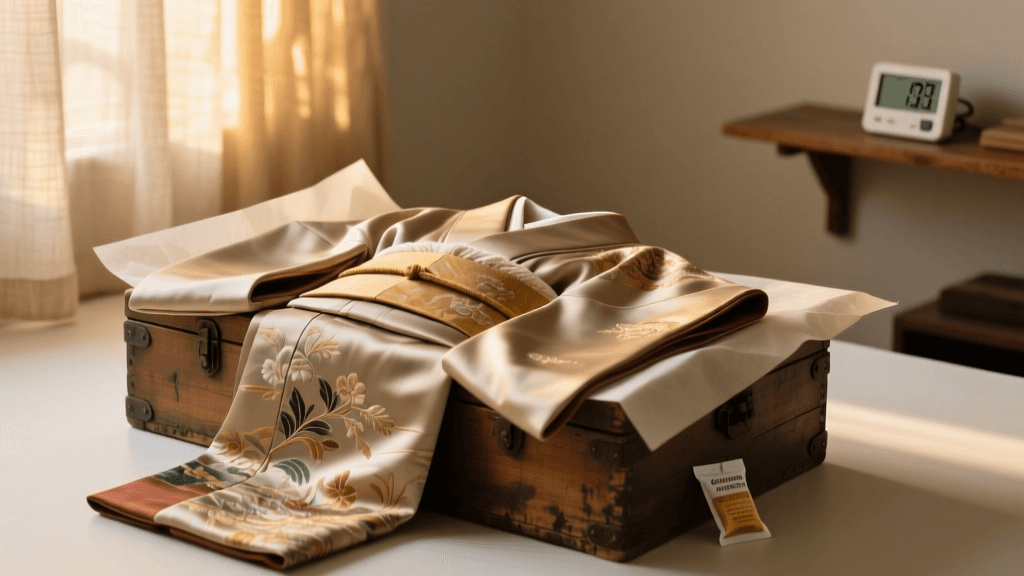
In 2026, relying on analog hygrometers is considered obsolete for serious collections. Archivists now utilize Bluetooth-enabled data loggers, such as the SensorPush H52 or the newer TempScribe Pro, which provide continuous, cloud-synced environmental tracking. These devices alert collection managers via smartphone the moment RH deviates by more than 3%, allowing for immediate intervention.
- Temperature: Maintain a strict range of 64°F to 68°F (17°C - 20°C).
- Relative Humidity: Keep between 45% and 55%. Below 40%, silk becomes brittle; above 60%, mold spores germinate.
- Light Exposure: Store in total darkness. UV and visible light cause irreversible photo-oxidation of silk dyes.
- Air Quality: Use HEPA and activated carbon filtration to remove airborne particulates and sulfur dioxide, which can tarnish metallic threads (surihaku).
Archival Wrapping: Tatou vs. Acid-Free Tissue
How a kimono is folded and wrapped dictates its long-term structural integrity. Traditionally, kimonos are wrapped in tatou (specialized paper covers) and folded into a precise rectangle. While traditional washi paper is breathable, it is rarely pH-neutral and can off-gas acidic compounds that yellow adjacent silk.
The Modern Archival Folding Method
Modern conservation guidelines, including those detailed by the American Institute for Conservation (AIC) Textile Wiki, recommend using unbuffered, acid-free tissue paper (pH 7.0 to 7.5) for protein fibers. Buffered tissue (which contains calcium carbonate) is reserved for plant-based fibers like cotton and linen, as the alkaline buffer can damage silk.
- Pad the Folds: Never fold a vintage kimono sharply. Roll unbuffered acid-free tissue into loose 'sausages' and place them inside every fold to prevent hard creases and reduce stress on the warp and weft threads.
- The Wrap: Encase the padded kimono in a large sheet of unbuffered tissue, followed by a secondary layer of washed, unbleached cotton muslin. This allows the textile to breathe while protecting it from dust and light.
- Rotation: Refold the kimono every six months along different lines to prevent permanent crease weakening.
Choosing the Right Storage Vessel: Kiri Tansu vs. Archival Boxes
The debate between traditional Japanese storage and Western museum-grade enclosures is a central topic in 2026 collection management. Both have distinct advantages depending on the collector's environment and resources.
Traditional Paulownia Wood (Kiri Tansu)
For centuries, kiri tansu (paulownia wood chests) have been the gold standard in Japan. Paulownia is lightweight, naturally resistant to insects, and uniquely hygroscopic. When humidity rises, the wood swells, sealing the drawers and creating a microclimate that buffers the interior against rapid environmental shifts. However, in 2026, sourcing high-quality, properly cured, and untreated paulownia outside of Japan is difficult. Poorly sealed or chemically treated modern replicas can off-gas harmful volatile organic compounds (VOCs).
Museum-Grade Archival Boxes
For collectors unable to source authentic kiri tansu, custom-made archival boxes from suppliers like Hollinger Metal Edge are the preferred alternative. Constructed from acid-free, lignin-free corrugated board or inert polypropylene plastic, these boxes provide a chemically stable environment. They are easily labeled, stackable, and fit perfectly into standard museum shelving units.
Handling and Inspection Protocols
A significant shift in textile conservation over the last decade has been the approach to handling. While white cotton gloves were once mandatory, the Victoria and Albert Museum (V&A) Textile Conservation department and other leading institutions now recommend clean, dry, bare hands for handling delicate silk. Cotton gloves reduce tactile sensitivity, increasing the risk of catching a fingernail on fragile embroidery or tearing brittle silk. Always wash hands with unscented, lotion-free soap and dry them thoroughly before handling a vintage kimono.
Inspection Routine: Every time you refold your collection, inspect the silk with a cool LED inspection light. Look for 'shattering' (micro-tears along fold lines), dye migration, or the presence of frass (insect droppings), which resembles fine sand.
Integrated Pest Management (IPM) for Textile Collections
The webbing clothes moth (Tineola bisselliella) and the carpet beetle are the most voracious enemies of silk and wool garments. In 2026, the use of chemical mothballs (naphthalene or paradichlorobenzene) is strictly forbidden in archival settings due to their toxicity and the chemical damage they inflict on textile dyes.
Anoxia and Freezing Treatments
If an infestation is suspected, modern IPM relies on thermal shock or oxygen deprivation. To safely eradicate pests without chemicals, seal the affected kimono in a specialized polyethylene bag and place it in a deep freezer at -20°C (-4°F) for a minimum of 72 hours. Thaw the garment slowly at room temperature while still sealed to prevent condensation from forming on the silk. Alternatively, professional anoxia treatment uses argon gas to suffocate pests at all life stages without altering the textile's moisture content.
Digital Collection Management in 2026
Physical preservation must be paired with rigorous digital cataloging. Managing a collection of hundreds of kimonos requires tracking provenance, condition reports, folding schedules, and high-resolution imagery. In 2026, cloud-based collection management systems (CMS) tailored for private archives, such as PastPerfect or specialized textile databases, allow collectors to log the exact pH of the storage tissue, the date of the last inspection, and the specific location of the garment within the climate-controlled vault.
Storage Material Comparison Chart
Selecting the right materials is critical. Below is a comparison of common storage materials used for kimono preservation in 2026.
| Material | Pros | Cons | Best Use Case |
|---|---|---|---|
| Paulownia Wood (Kiri) | Excellent humidity buffering; traditional aesthetic; naturally insect-resistant. | Expensive; heavy; risk of VOCs if poorly cured or treated with modern varnishes. | Long-term storage of high-value, stable silk kimonos in variable climates. |
| Acid-Free Corrugated Board | Chemically inert; customizable sizes; affordable; lightweight. | Provides no humidity buffering; vulnerable to water damage and crushing. | Standardized shelving in strictly climate-controlled archival rooms. |
| Unbuffered Acid-Free Tissue | pH neutral; prevents dye transfer; pads folds to prevent silk shattering. | Must be replaced every 3-5 years as it absorbs ambient pollutants. | Direct contact wrapping and fold-padding for all protein-based textiles. |
| Polypropylene Plastic Bins | Waterproof; pest-proof; highly durable; inert. | Traps moisture if sealed improperly; no breathability; off-gassing risk if not archival grade. | Transportation of garments or storage in areas prone to flooding/high humidity. |
Conclusion
The preservation of vintage kimonos is a discipline that honors the past while utilizing the best scientific advancements of the present. By adhering to the 2026 standards of climate monitoring, utilizing unbuffered archival tissues, selecting appropriate storage vessels, and maintaining a meticulous digital catalog, collectors can ensure that these masterpieces of Asian textile art survive for generations to come. Whether you are safeguarding a single family heirloom or managing a museum-grade archive, the principles of preventive conservation remain your most powerful tool against the ravages of time.