Xin Zhongshi at Paris Fashion Week 2026: Exhibition Guide
The Global Ascendancy of Xin Zhongshi in 2026
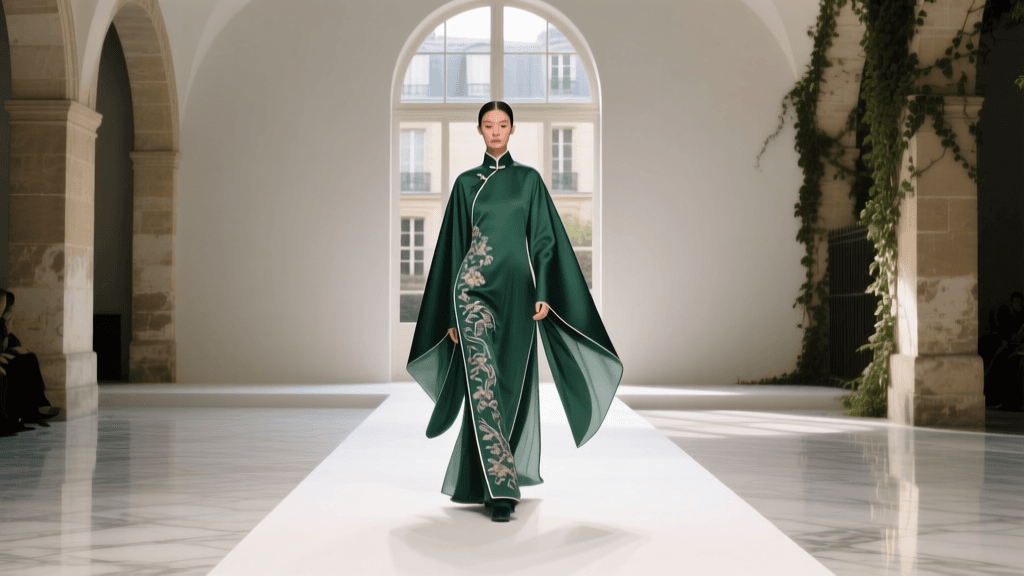
The year 2026 marks a definitive turning point for Asian traditional garments on the global stage. No longer confined to niche cultural exhibitions or historical retrospectives, the Xin Zhongshi (New Chinese Style) movement has firmly established itself as a dominant structural and aesthetic force at Paris, Milan, and London Fashion Weeks. This evolution represents a profound shift from superficial Orientalism to a deep, technical appreciation of traditional Chinese pattern-cutting, textile weaving, and philosophical drape. For collectors, fashion historians, and international buyers, navigating the 2026 exhibition and runway calendar requires an understanding of both ancient craftsmanship and contemporary haute couture.
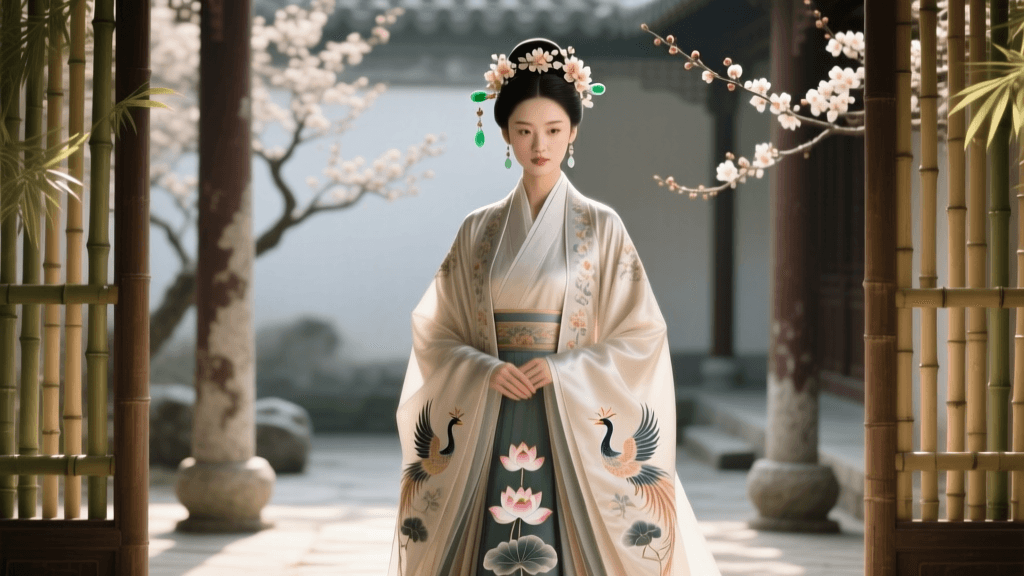
At the heart of this movement is the integration of heritage garments—such as the Mamianqun (horse-face skirt), the Shenyi (deep robe), and the Ruqun—into modern, avant-garde silhouettes. Designers are no longer merely printing traditional motifs onto Western cuts; they are engineering garments using the flat-cutting techniques of the Ming and Song dynasties, prioritizing the natural flow of the fabric over rigid, Western-style darting and seaming.
Key Runway Highlights and Structural Innovations
The Spring/Summer and Autumn/Winter 2026 runway seasons have showcased an unprecedented level of technical mastery. Leading the charge are heritage-infused labels like Shang Xia and Samuel Guì Yang, who have presented collections that challenge the very architecture of modern clothing.
The Mamianqun Renaissance
The Mamianqun has been a standout on the 2026 runways. Originally popularized during the Ming and Qing dynasties, this wrap-around skirt features flat front and back panels with heavily pleated sides. In Paris, designers have reimagined the Mamianqun using ultra-lightweight, hand-loomed mulberry silk and metallic Lurex blends. The structural integrity of the pleats, achieved through traditional steam-setting and bamboo-pressing techniques rather than synthetic heat-fusing, allows the skirt to maintain its architectural volume while moving fluidly with the wearer. A couture-grade Mamianqun from a 2026 Paris showcase currently retails between €2,800 and €4,500, reflecting the hundreds of hours required for the pleating and embroidery.
Xiangyunsha and Sustainable Weaving
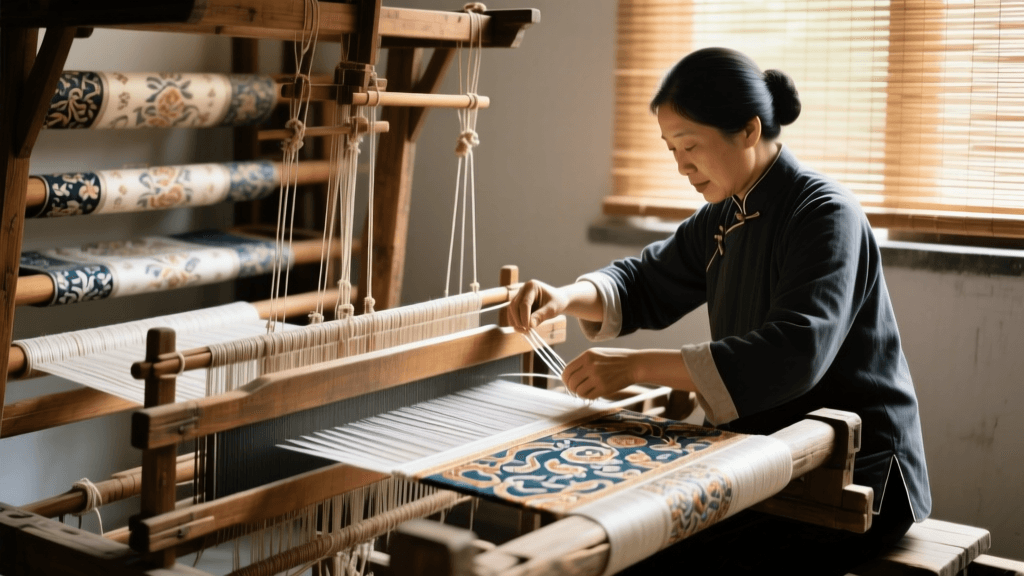
Another major focal point for 2026 is Xiangyunsha (gambiered Canton gauze). Revered for its wellness properties, this silk is dyed using the juice of the薯莨 (Shuliang) yam and coated with river mud, resulting in a rich, dark, leather-like texture that is naturally antibacterial and cooling. International design houses have partnered with master weavers in Guangdong to produce limited-run Xiangyunsha trench coats and structured blazers. The fabric's unique drape—stiff yet yielding, with a distinctive rustling sound known as xiangyun (ringing clouds)—has made it a favorite for acoustic and sensory-focused fashion installations.
2026 International Exhibition and Runway Schedule
For industry professionals and serious collectors, attending the right exhibitions is crucial for sourcing authentic pieces and understanding the historical context of the Xin Zhongshi movement. Below is a curated schedule of the most significant Asian textile and fashion exhibitions occurring globally in 2026.
| Exhibition / Event | Location | Primary Focus | Access / Ticket Info |
|---|---|---|---|
| Threads of the East: Xin Zhongshi | Palais Galliera, Paris | Contemporary reinterpretations of Song Dynasty weaving and flat-cutting. | Public access; €15 advance booking required. |
| The Architecture of Silk | V&A Museum, London | Historical Mamianqun and modern structural pleating techniques. | Members free; Public £22. |
| Shanghai Fashion Week (Trade Show) | West Bund Art Center, Shanghai | Emerging Xin Zhongshi designers and B2B textile sourcing. | Industry badge required (Apply via official SHFW portal). |
| Silk Road Textiles: Past & Future | The Met Museum, New York | Ancient Kesi tapestry techniques meeting 2026 sustainable fashion. | General admission $30; Special exhibition ticket $45. |
Authenticating Runway Pieces: Drape and Weave Analysis
As the Xin Zhongshi trend surges, the market has seen an influx of fast-fashion knockoffs that mimic the aesthetic but fail in textile integrity. When sourcing or investing in 2026 runway pieces, buyers must conduct rigorous fabric drape and weave analysis.
Identifying Authentic Song Brocade
Song Brocade (Songjin) is renowned for its soft luster, intricate geometric patterns, and durability. Authentic 2026 runway pieces utilize traditional wooden jacquard looms. To authenticate, examine the reverse side of the fabric. True Song Brocade features a clean, reversible weave where the weft threads are meticulously tied down, preventing long, snag-prone floats. Synthetic imitations often use digital printing or simplified satin weaves that lack the structural depth and three-dimensional texture of the original. Furthermore, authentic Song Brocade possesses a unique 'memory' in its drape; when crushed, it recovers its shape slowly and elegantly, unlike polyester blends which either snap back instantly or hold permanent creases.
The Drape of Kesi Tapestry
Kesi (cut silk) is a tapestry weaving technique where the weft threads are cut and turned back at the edge of a color block, creating tiny slits that give the fabric a carved, sculptural quality. In 2026, designers are using Kesi not just for decorative panels, but as the primary structural element of outerwear. According to historical archives maintained by institutions like the Metropolitan Museum of Art's Asian Art department, traditional Kesi is incredibly dense and lacks the fluid drape of standard silk. Modern designers have innovated by blending Kesi panels with fluid crepe de chine, creating garments that hold their shape at the shoulders while flowing naturally at the hem.
Curatorial Insights and Historical Context
To truly appreciate the garments showcased in 2026, one must understand their lineage. Curators at the Victoria and Albert Museum have emphasized that the Xin Zhongshi movement is not merely a revival, but a dialogue between ancient philosophies of dressing and modern sustainability. Traditional Chinese garments were designed to minimize fabric waste. The flat-cutting method utilizes the entire width of the silk bolt, avoiding the aggressive off-cuts characteristic of Western tailoring. This zero-waste philosophy aligns perfectly with the 2026 global fashion industry's stringent sustainability mandates, making Xin Zhongshi not just culturally significant, but environmentally vital.
Industry analysts at the Business of Fashion note that the luxury sector's pivot toward Chinese heritage craftsmanship is driven by a highly educated, younger demographic of consumers who demand cultural authenticity and artisanal transparency over mass-produced logos.
Storage, Maintenance, and Travel Packing
Investing in haute couture Xin Zhongshi pieces requires specialized care to preserve the delicate natural dyes and structural pleats.
- Climate Control: Xiangyunsha and Song Brocade are highly sensitive to humidity. Store garments in a climate-controlled environment with a relative humidity of 45-55%. Excess moisture can cause the natural yam dyes in Xiangyunsha to bloom or mildew.
- Pleat Preservation: Never hang a Mamianqun by the waistband for long-term storage, as the weight of the silk will stretch the pleats. Instead, fold the skirt along its original pleat lines, interleaving each fold with acid-free, unbuffered tissue paper, and store it flat in an archival cedarwood box.
- Travel Packing: When packing for international exhibitions or travel, roll heavy brocade garments around acid-free cardboard tubes to prevent hard creases. For Xiangyunsha, which can develop a patina from folding, use a breathable cotton garment bag and pack it on top of your luggage. Upon arrival, hang the garment in a steamy bathroom for 15 minutes to allow the natural fibers to relax and regain their drape.
- Cleaning: Avoid dry cleaning authentic Xiangyunsha, as harsh chemical solvents strip the river mud and yam juice coating. Instead, spot clean with a damp, soft cloth and air dry in the shade. Direct sunlight will rapidly degrade the natural tannins in the fabric.
Conclusion
The 2026 international design weeks and exhibitions have unequivocally proven that Asian traditional garments are not relics of the past, but the blueprint for the future of global fashion. The Xin Zhongshi movement, with its reverence for structural integrity, zero-waste pattern cutting, and masterful textile weaving, offers a profound alternative to the disposable nature of modern apparel. Whether you are a buyer navigating the showrooms of Paris, a student studying the drape analysis of the Mamianqun, or a collector preserving a piece of wearable history, understanding the depth of these traditions is essential. As we move further into 2026, the fusion of ancient Chinese craftsmanship and contemporary design will continue to redefine the boundaries of luxury, sustainability, and cultural expression on the world stage.