Ainu Attus and Ryukyuan Bingata: Minority Dress Guide
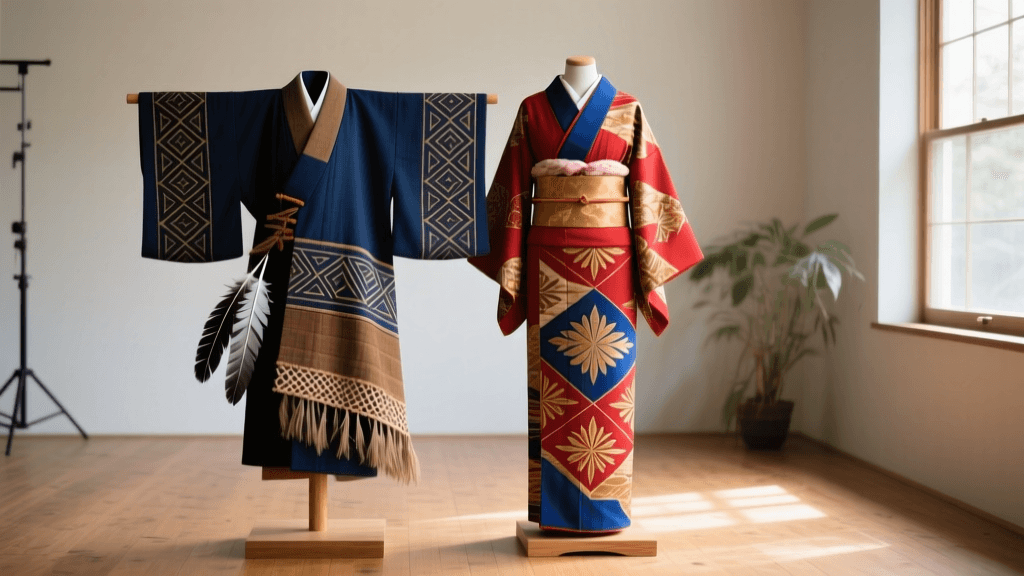
Beyond the Yamato: Japan's Indigenous and Minority Textiles
When the world thinks of traditional Japanese clothing, the image of the Yamato kimono almost exclusively dominates the cultural consciousness. However, the Japanese archipelago is home to a rich tapestry of indigenous and ethnic minority groups, each with deeply distinct sartorial traditions shaped by their unique climates, spiritual beliefs, and historical trade networks. In the northernmost island of Hokkaido, the indigenous Ainu people developed resilient, spiritually charged garments from the bark of native trees. Conversely, in the subtropical southern islands of Okinawa, the Ryukyuan people cultivated vibrant, silk-based resist-dyeing techniques influenced by maritime trade with China and Southeast Asia.
Understanding these minority dress traditions requires looking beyond the mainstream kimono. This guide explores the intricate craftsmanship of Ainu Attus and Ryukyuan Bingata, providing collectors, cultural enthusiasts, and travelers with actionable advice on sourcing, authenticating, and caring for these extraordinary textiles.
Ainu Attus: The Sacred Bark Cloth of Hokkaido
The Ainu, the indigenous hunter-gatherer people of Hokkaido, Sakhalin, and the Kuril Islands, historically relied on the natural resources of their harsh, snowy environment to create their clothing. The most iconic and enduring of these textiles is Attus, a durable cloth woven from the inner bark of the Siberian elm (Ulmus pumila), known in the Ainu language as Ohyo.
Harvesting and Weaving the Ohyo Tree
The creation of Attus is a labor-intensive process deeply tied to the seasonal rhythms of Hokkaido. In early summer, when the sap flows most freely, strips of bark are carefully peeled from the Ohyo tree without killing it, ensuring sustainable harvesting. The bark is then boiled in a lye solution made from wood ash to break down the tough outer layers and soften the inner fibers. Once dried, the fibers are painstakingly split into fine threads by hand.
Weaving is traditionally done on a backstrap loom, known as an emush. The weaver sits on the ground, using the tension of their own body to keep the warp threads taut. The resulting fabric is remarkably strong, water-resistant, and breathable, making it ideal for the damp, cold climate of northern Japan. According to the National Ainu Museum and Park (Upopoy), Attus was not merely utilitarian; it was a canvas for spiritual protection and cultural identity.
Spiritual Motifs: Morew and Aiushi
Because the Ainu traditionally did not possess a written language, their cosmology and protective symbols were recorded in the embroidery that adorned their garments. Overgarments, such as the cotton Kaparamip or the heavily embroidered Chikarkarpe, feature distinct geometric patterns applied over the base Attus or traded cotton.
- Morew (Thorns): Swirling, thorn-like patterns that act as a spiritual barrier, preventing malevolent spirits (oyasi) from entering the garment and harming the wearer.
- Aiushi (Eyes): Diamond or eye-shaped motifs placed on the back of the neck, chest, and hem. These 'eyes' watch the wearer's back and ward off evil approaching from blind spots.
Ainu embroidery is never purely decorative; every stitch serves as a spiritual safeguard, connecting the wearer to the kamuy (spirits/gods) of the natural world.
Ryukyuan Ryusou and Bingata: Subtropical Elegance
Over 1,500 kilometers south of Hokkaido lies the Okinawa archipelago, the former heart of the Ryukyu Kingdom (1429–1879). As an independent maritime trading hub, the Ryukyu Kingdom absorbed cultural and technological influences from China, Korea, and Southeast Asia, resulting in a textile tradition that is radically different from mainland Japan.
The Chemistry and Craft of Bingata Resist Dyeing
Bingata is Okinawa's traditional resist-dyeing technique, famous for its explosive, vibrant colors and dynamic motifs featuring tropical flora, fauna, and ocean waves. The process begins with the creation of intricate stencils cut from shibugami, a tough paper treated with persimmon tannin and smoked for durability.
Artisans place the stencil over the fabric (traditionally silk or hemp) and apply a resist paste made from rice flour and rice bran. Once the paste dries, vibrant pigments are painted directly into the stenciled areas. Historically, these pigments were derived from local and imported minerals and plants: vermilion from cinnabar, yellow from orpiment or turmeric, and blue from indigo. After dyeing, the fabric is steamed, washed in the clean rivers of Okinawa to remove the resist paste, and dried in the subtropical sun. The Okinawa Convention & Visitors Bureau notes that the intense sunlight of Okinawa is actually a crucial element in setting and brightening the Bingata pigments, making the local climate an active participant in the crafting process.
Ryusou vs. Kimono: Structural Differences
The traditional Ryukyuan garment, the Ryusou, shares a superficial resemblance to the Japanese kimono but is structurally adapted for a hot, humid, subtropical climate.
- Silhouette and Sleeves: Ryusou features much wider, open sleeves and a looser overall fit to promote airflow and ventilation.
- Fastening: Unlike the kimono, which requires a thick, restrictive obi sash, the Ryusou is secured with a simple, thin cloth belt or sash tied at the waist or hips, allowing for greater mobility and comfort in the heat.
- Collars: The collars are generally softer and less rigidly structured than the mainland kimono, often worn open at the neck.
Comparative Analysis: Ainu vs. Ryukyuan Garments
To understand the stark contrast between these two minority dress traditions, it is helpful to compare their core characteristics side-by-side.
| Feature | Ainu Attus & Embroidery | Ryukyuan Bingata & Ryusou |
|---|---|---|
| Primary Material | Siberian Elm (Ohyo) bark, nettle fibers, traded cotton | Silk, hemp, banana fiber (Bashofu), modern cotton |
| Climate Adaptation | Subarctic; heavy, insulating, water-resistant | Subtropical; lightweight, breathable, loose-fitting |
| Key Technique | Backstrap weaving, chain-stitch and couching embroidery | Stencil resist-dyeing, pigment painting, steaming |
| Motif Inspiration | Abstract geometric thorns, eyes, spiritual barriers | Realistic peonies, cranes, ocean waves, clouds |
| Average Cost (USD) | $500 - $3,000+ (Vintage/Ceremonial) | $80 - $150 (Kariyushi shirts), $400+ (Obi/Formal) |
Actionable Buyer's Guide: Sourcing, Sizing, and Costs
For collectors and cultural enthusiasts looking to acquire authentic minority garments, navigating the market requires specific knowledge of regional hubs, pricing benchmarks, and modern adaptations.
Authenticating and Purchasing Ainu Attus
Authentic, hand-woven vintage Attus is rare and highly prized by ethnographic textile collectors. When evaluating a piece, examine the warp and weft; true Attus will show slight irregularities characteristic of hand-spun bark threads, unlike the uniform perfection of machine-woven cotton.
- Where to Buy: The official gift shops at Upopoy (National Ainu Museum and Park) in Shiraoi, Hokkaido, offer authentic, modern-crafted Attus accessories and small garments directly from indigenous artisans. For vintage ceremonial coats (chikarkarpe), specialized antique textile dealers in Sapporo or Tokyo's Koenji district are your best resources.
- Cost Expectations: Modern, small Attus bags or table runners range from $50 to $150. A fully embroidered, vintage cotton kaparamip overgarment typically commands between $800 and $2,500, depending on the density of the embroidery and the garment's provenance.
- Sizing: Traditional Ainu garments are generally 'one-size-fits-all,' designed to be wrapped and tied loosely over layers. They do not conform to modern Western sizing charts, so always request flat-lay measurements (shoulder width and hem length) from antique dealers.
Investing in Ryukyuan Bingata and Kariyushi Wear
While a full, vintage silk Bingata Ryusou can cost thousands of dollars and is difficult to wear outside of Okinawan cultural festivals, modern adaptations make this textile tradition highly accessible.
- Kariyushi Wear: This is the modern, Okinawan equivalent of the Aloha shirt, designed for business and formal summer wear. A high-quality Kariyushi shirt features a subtle, tone-on-tone Bingata pattern woven or dyed into the fabric. Expect to pay between $80 and $150 for an authentic, Okinawa-manufactured Kariyushi shirt from brands like Habu or Chuko.
- Bingata Obi and Accessories: For those who wear mainland kimono, purchasing a Bingata-dyed obi (sash) is a popular way to incorporate Ryukyuan art into their wardrobe. A hand-dyed silk Nagoya obi crafted by a certified Okinawan artisan will cost between $400 and $1,200.
- Where to Buy: The Yomitan Village in Okinawa is the historical and modern epicenter of Bingata. Visiting studios like the Yomitanzan Hanaori or local Bingata cooperatives allows you to purchase directly from the dye houses. The Association for the Promotion of Traditional Craft Industries also lists certified metropolitan galleries in Tokyo and Kyoto where authenticated Ryukyuan crafts are sold.
Garment Care and Maintenance
Caring for these minority textiles requires specialized attention due to their unique organic materials.
- Attus Care: Never dry-clean traditional bark cloth, as the harsh chemicals will strip the natural oils and cause the fibers to become brittle and snap. Spot clean only with a damp cloth and store in a cool, dark place with moderate humidity to prevent the fibers from drying out.
- Bingata Care: The natural pigments used in traditional Bingata can be sensitive to prolonged UV exposure and high alkalinity. Dry cleaning is generally recommended for silk Ryusou and obi, but you must inform the cleaner that the dyes are traditional resist-pigments, not modern synthetic chemical dyes, to ensure they use a gentle, neutral solvent.
Preserving the Threads of Minority Heritage
Both Ainu and Ryukyuan textile traditions faced severe threats of assimilation and erasure during the 20th century. However, thanks to the tireless efforts of indigenous activists, local artisans, and modern cultural protection laws, these garments are experiencing a profound renaissance. Today, young Ainu weavers are reclaiming the backstrap loom, and Okinawan dyers are experimenting with new, sustainable pigments. By understanding the profound differences between the spiritual bark cloths of the north and the vibrant silks of the south, collectors and enthusiasts can support these communities, ensuring that the diverse sartorial heritage of the Japanese archipelago continues to thrive for generations to come.