DIY Hanfu Sewing: Patterns and Fabrics for Song Dynasty Beizi
Introduction to the DIY Hanfu Movement
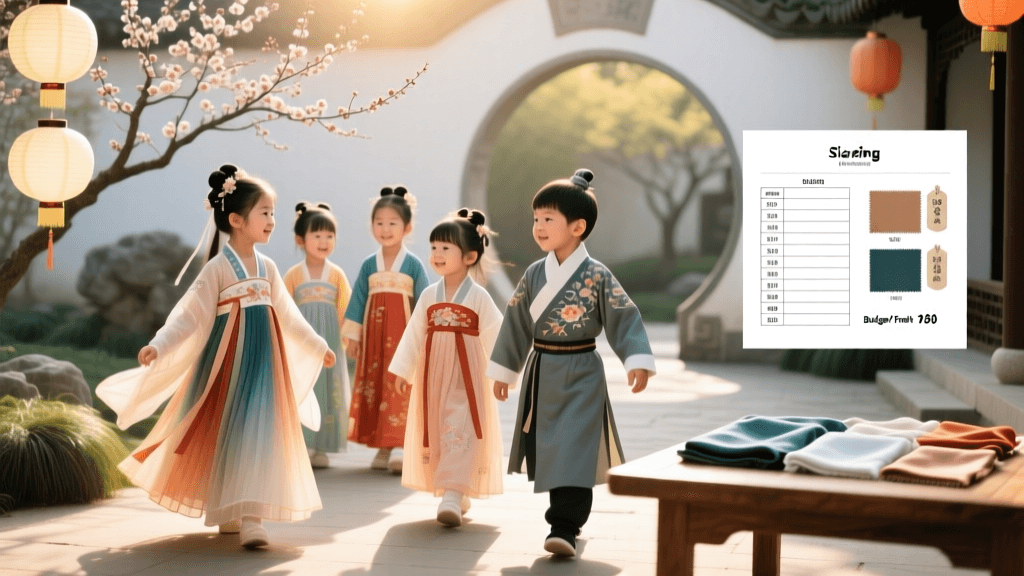
The modern Hanfu movement has transcended mere fashion, evolving into a profound cultural renaissance that connects millions with traditional Chinese heritage. While purchasing ready-made garments from established brands is a popular route, an increasing number of enthusiasts are turning to DIY Hanfu sewing. Crafting your own traditional garments offers a deeply rewarding connection to the history, textiles, and tailoring techniques of ancient China. According to cultural guides at China Highlights, the Hanfu encompasses a vast array of regional and dynastic styles, each with unique structural philosophies. By sewing your own pieces, you gain control over the fit, fabric quality, and historical accuracy of your wardrobe.
For beginners stepping into the world of traditional Chinese tailoring, the sheer volume of layers, complex collars, and intricate pleating found in Ming or Tang dynasty garments can be overwhelming. This is why starting with a Song Dynasty staple is the most strategic choice for a first DIY project.
Why Start with the Song Dynasty Beizi?
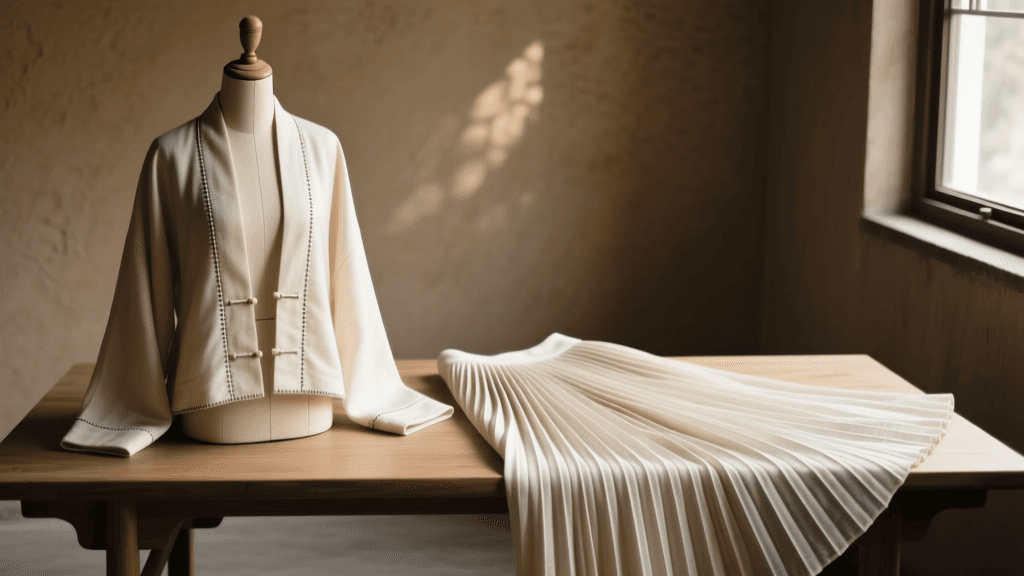
The Song Dynasty (960–1279 AD) is celebrated in Chinese art history for its intellectual refinement, minimalism, and understated elegance. The Beizi (褙子) is a quintessential garment of this era. It is essentially an open-front, long-sleeved jacket that typically falls to the knee or mid-calf, featuring side slits that begin at the waist or hip.
Unlike the heavily structured Mamianqun (horse-face skirt) or the complex curved collars of later dynasties, the Beizi relies on a straight, parallel collar (Duijin) and a flat-cutting construction method. This makes it incredibly forgiving for novice sewists. The lack of darts, shoulder seams, and complex armhole curves means that the pattern drafting process is reduced to measuring and cutting geometric rectangles, allowing you to focus on mastering fabric handling and clean seam finishes.
Fabric Selection: The Foundation of Drape
In traditional Chinese tailoring, the fabric does the heavy lifting. Because the patterns are largely rectangular and lack Western-style tailoring darts, the drape, weight, and movement of the textile dictate how the garment conforms to the body. Historical textiles analyzed by institutions like the Victoria and Albert Museum reveal a deep historical reliance on natural fibers like silk, ramie, and hemp, chosen specifically for their breathability and fluid movement.
When selecting fabric for a Song Beizi, you must balance historical authenticity with modern sewing practicality. Below is a comparison chart of the most common fabrics used in DIY Hanfu projects today.
| Fabric Type | Drape & Weight | Sewing Difficulty | Estimated Cost (per yard) | Best For |
|---|---|---|---|---|
| Silk Charmeuse | Heavy, fluid, luxurious drape | High (slippery, frays easily) | $25 - $60 | Formal wear, winter layering |
| Linen / Ramie | Medium, structured, breathable | Low (stable, easy to press) | $12 - $25 | Everyday wear, summer Beizi |
| Cotton Lawn | Light, crisp, slight stiffness | Very Low (beginner friendly) | $8 - $15 | Mock-ups, casual inner layers |
| Poly Chiffon | Ultra-light, sheer, floaty | Medium (shifts while cutting) | $5 - $12 | Summer outer layers, stage wear |
Pro Tip: If you are sewing your very first Hanfu, avoid silk and chiffon. Opt for a medium-weight linen or a high-quality cotton-linen blend. These fabrics hold a crease beautifully when ironed, making it much easier to achieve crisp hems and perfectly straight collar bands.
Drafting the Pattern: The Flat-Cutting Method
Traditional Chinese clothing utilizes a "flat-cutting" system. The garment is constructed from flat planes of fabric that fold over the body, rather than being sculpted to the body's three-dimensional curves. To draft your Beizi pattern, you will need a large sheet of pattern paper, a ruler, and a fabric tape measure.
Essential Measurements
- Bust/Chest: Measure around the fullest part. Add 4 to 6 inches (10-15 cm) for ease, as the Beizi is meant to be loose and flowing.
- Length: Measure from the base of the back neck down to your desired hemline (usually mid-knee).
- Sleeve Length: Measure from the center back neck, over the shoulder, and down to the wrist. Traditional Hanfu sleeves often extend past the fingertips, so add 2-4 inches if you prefer a historical silhouette.
- Sleeve Width: Decide on your sleeve style. Song dynasty sleeves can be narrow (Shouxiao) or wide. A standard width is 12 to 16 inches around the bicep, tapering slightly at the wrist.
Drafting the Panels
Because the Beizi has an open front, the front panels are cut as separate rectangles, while the back is cut on the fold. 1. Back Panel: Width = (Bust + ease) / 2. Length = Desired garment length. 2. Front Panels (Cut 2): Width = (Bust + ease) / 4 + 1 inch for overlap and seam allowance. Length = Desired garment length. 3. Sleeves: In traditional construction, sleeves are often cut as one continuous piece with the bodice. However, for modern fabric width constraints (usually 45 or 60 inches), you can cut the sleeves as separate rectangles and attach them with a straight, perpendicular seam at the shoulder line.
Step-by-Step Sewing Instructions
Once your fabric is pre-washed, ironed, and cut, you can begin assembly. For those looking to study historical weave structures and seam finishes, resources from the Textile Museum at George Washington University provide excellent context on how historical garments were finished by hand to prevent fraying.
1. Assembling the Body and Sleeves
If you cut your sleeves separately, pin them to the shoulder edges of the front and back panels. Sew using a straight stitch with a 3/8 inch (1 cm) seam allowance. To mimic historical durability and achieve a clean interior, use a flat-felled seam or bind the raw edges with silk bias tape. This ensures that when the wide sleeves move, the interior seams do not fray or irritate the skin.
2. Sewing the Side Seams and Slits
Fold the garment in half, right sides together, matching the underarm seams. Sew from the wrist, down the underarm, and along the side seam, stopping at your marked slit point (usually at the natural waist or high hip). Backstitch securely at the slit point. Hem the side slits by folding the fabric inward twice and topstitching for a clean, structured edge.
3. Attaching the Collar Band (Bianling)
The parallel collar of the Beizi is created using a long, continuous band of fabric. Cut a strip of fabric 2.5 inches wide and long enough to run from the front hem, up to the back neck, and down to the opposite front hem. Apply a lightweight fusible interfacing to the inside of the band to give it structure. Pin the band to the front and back necklines, right sides together. Sew, clip the curves at the neckline, fold the band over to the inside of the garment, and slip-stitch or edge-stitch it down.
4. Hemming
Finish the bottom hem and sleeve cuffs with a narrow rolled hem or a blind hem stitch. The weight of the hem will help anchor the lightweight fabric, giving the Beizi its characteristic elegant swing when walking.
Cost and Time Breakdown
Understanding the investment required for DIY Hanfu helps set realistic expectations. Below is an estimated breakdown for a single, unlined Song Dynasty Beizi made with mid-tier materials.
| Project Phase | Estimated Time | Estimated Cost (USD) |
|---|---|---|
| Pattern Drafting & Cutting | 2 - 3 Hours | $10 (Pattern paper, chalk) |
| Fabric Sourcing (3-4 yards) | 1 - 2 Hours | $40 - $80 (Linen/Cotton blend) |
| Sewing & Seam Finishing | 5 - 8 Hours | $5 (Thread, interfacing) |
| Hemming & Final Pressing | 1 - 2 Hours | $0 |
| Total Estimated | 9 - 15 Hours | $55 - $95 |
Final Thoughts and Sourcing Materials
Sewing your first Hanfu is an exercise in patience and cultural appreciation. The Song Dynasty Beizi teaches the foundational principles of traditional Chinese tailoring: respect for the fabric's natural drape, the importance of geometric harmony, and the beauty of understated elegance. As you advance in your DIY journey, you can experiment with adding subtle embroidery to the collar bands, layering your Beizi over a pleated Baidiequn (hundred-pleat skirt), or trying your hand with luxurious silks and brocades. By mastering the basics of fabric selection and flat-pattern drafting, you are not just making clothes; you are actively participating in the living, breathing revival of Asian sartorial traditions.