The Ultimate Guide to Kimono Care, Cleaning, and Storage
Introduction to Kimono Preservation
A kimono is far more than a simple garment; it is a wearable canvas of Japanese history, artistry, and cultural heritage. Whether you own a vintage silk houmongi (visiting kimono), a casual cotton yukata, or an intricately embroidered bridal uchikake, proper maintenance is essential to ensure its longevity. Unlike Western clothing, which is routinely machine-washed and hung on hangers, traditional Japanese garments require specialized care, precise folding techniques, and climate-controlled storage. According to textile conservation experts at The Metropolitan Museum of Art, the complex dyeing and weaving techniques used in Japanese textiles make them particularly susceptible to environmental damage, light exposure, and improper handling.
This comprehensive guide will walk you through the meticulous world of kimono care, cleaning, and storage, providing actionable advice, cost estimates, and traditional methodologies to protect your investment for generations to come.
Understanding Kimono Fabrics and Their Vulnerabilities
Before applying any cleaning or storage method, it is crucial to identify your kimono's fabric. The three primary materials used in kimono production are silk (kinu), cotton (momen), and synthetic blends.
- Silk: The most prestigious and delicate fabric. Silk is highly sensitive to water, which can cause irreversible water spots (mizu-shimi) and shrinkage. It is also a protein fiber, making it an attractive target for moths and carpet beetles.
- Cotton and Linen: Commonly used for yukata and everyday wear. These plant-based fibers are more resilient, can often be hand-washed, and are less prone to insect damage, though they are susceptible to mildew in high humidity.
- Synthetics (Polyester):strong> Modern, budget-friendly, and highly resistant to stains and moisture. However, they can trap odors and are prone to heat damage if ironed incorrectly.
'The philosophy of kimono care is rooted in prevention. Protecting the garment from moisture, direct sunlight, and body oils is always preferable to attempting to reverse damage after it has occurred.'
Spot Cleaning and Stain Management
When a spill occurs, time is of the essence, but panic is your enemy. Never use standard Western stain removers, bleach, or tap water on a silk kimono. Tap water contains minerals and chlorine that can permanently alter natural dyes like yuzen or shibori.
For minor surface dust or dry debris, gently use a soft, clean makeup brush or a specialized silk brush to sweep the particles away. If you encounter an oil-based stain (such as makeup or sebum from the collar), you can gently dab the area with a clean, white cotton cloth slightly dampened with benzene or a specialized volatile dry-cleaning solvent. Always test the solvent on an inconspicuous area, such as the inside of the hem, to ensure colorfastness. For water-soluble stains like sweat, sake, or soy sauce, do not attempt DIY removal. Moisture will spread the stain and set it deeper into the silk fibers. Instead, mark the stain with a small piece of masking tape on the outside of the garment and take it to a professional kimono cleaner.
Professional Cleaning: Maru-arai vs. Arai-hari
The All Japan Kimono Association recognizes specific professional cleaning methods tailored to the unique construction of the kimono. Because kimonos are constructed from straight panels of fabric sewn together, they can be entirely disassembled, washed, and re-sewn—a practice that dates back centuries.
Comparison of Professional Kimono Cleaning Methods
| Cleaning Method | Process Description | Best Used For | Estimated Cost (USD / JPY) | Recommended Frequency |
|---|---|---|---|---|
| Maru-arai (Whole Wash) | A modern dry-cleaning process using petroleum-based solvents. The kimono is cleaned fully assembled. | General dust, body oils, and oil-based stains. Routine seasonal maintenance. | $80 - $150 / ¥10,000 - ¥20,000 | Once a year or after 3-4 wears. |
| Shimi-nuki (Spot Cleaning) | Targeted chemical treatment for specific stains (sweat, ink, wine) performed by a master artisan. | Water-soluble stains, localized discoloration, and yellowing. | $30 - $80+ / ¥4,000 - ¥10,000+ | As needed immediately after staining. |
| Arai-hari (Wash & Stretch) | The kimono is completely unstitched into flat panels, washed in water, stretched on a bamboo frame (shinshi), dried, and re-sewn. | Heavy soiling, restoring vintage garments, removing deep wrinkles, and resizing. | $300 - $600+ / ¥40,000 - ¥80,000+ | Every 10-20 years or for antique restoration. |
While Maru-arai is convenient, it will not remove sweat or water-based stains. If you live in a humid climate or perspire heavily while wearing your kimono, you must request ase-nuki (sweat removal) alongside your dry cleaning, as trapped salt and moisture will eventually cause the silk to rot and yellow.
The Art of Folding: Tatou-shi and Measurements
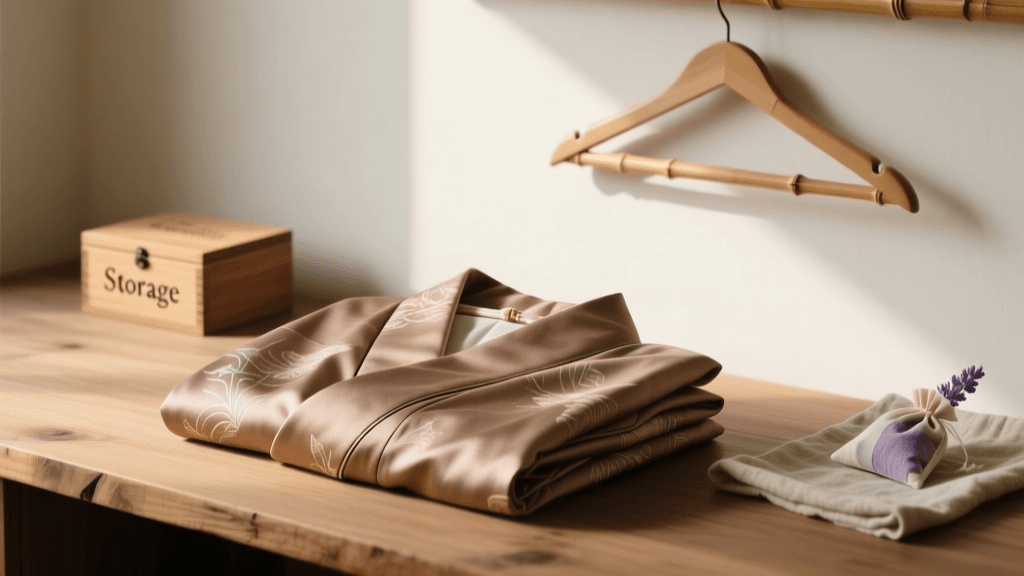
Never hang a kimono on a standard clothes hanger. The weight of the fabric, particularly heavy brocades and lined silk, will distort the shoulders and stretch the delicate fibers. Kimonos are designed to be folded flat using a specific method called hon-datami.
To protect the garment from creases and acid transfer, it must be wrapped in tatou-shi (kimono wrapping paper). Standard tatou-shi measures approximately 85 cm by 65 cm (33.5 x 25.5 inches). When folding, ensure that the embroidered or heavily dyed sections (such as the hem or the left front panel) are folded inward to protect them from friction. Use acid-free, unbleached tissue paper to stuff the sleeves and the collar to prevent hard, permanent creases from forming along the fold lines. According to conservation guidelines provided by the Victoria and Albert Museum (V&A), folding textiles along the same lines repeatedly can cause the fibers to snap over time; therefore, slightly altering the fold lines by a few millimeters each time you repack the kimono is a highly recommended preservation technique.
Long-Term Storage Solutions
The ideal environment for storing silk kimonos is cool, dark, and strictly climate-controlled. In Japan, the gold standard for storage is the kiri tansu, a traditional chest of drawers crafted from Paulownia wood.
- The Magic of Paulownia Wood: Paulownia is naturally fire-retardant, lightweight, and highly hygroscopic. It acts as a natural humidifier and dehumidifier, expanding to seal out moisture during humid summers and contracting to allow airflow during dry winters. It maintains an internal relative humidity of around 50-55%, which is perfect for silk.
- Western Closet Alternatives: If you do not have a tansu, store your wrapped kimonos in a breathable, acid-free cardboard archive box or a cedar chest. Never store silk in plastic bins or vacuum-sealed bags. Plastic traps moisture, leading to rapid mold growth, and emits off-gassing chemicals that will yellow the silk.
- Pest Control: Avoid traditional mothballs containing naphthalene or paradichlorobenzene, as these chemicals can react with metallic threads (gold and silver leaf) and cause them to tarnish or turn black. Instead, use natural camphor or specialized kimono insect repellents placed in the corners of the drawer, never touching the fabric directly.
Storage Do's and Don'ts
- DO store kimonos flat and stack them no more than three high to prevent crushing the bottom garments.
- DO keep the storage room temperature stable, ideally between 18°C and 22°C (64°F - 72°F).
- DON'T store kimonos in attics, basements, or exterior-facing closets where temperature fluctuations and dampness are common.
- DON'T use wire hangers or velvet-padded hangers for long-term storage, as they invite shoulder distortion and pest infestations.
Airing Out Your Kimono (Mushiboshi)
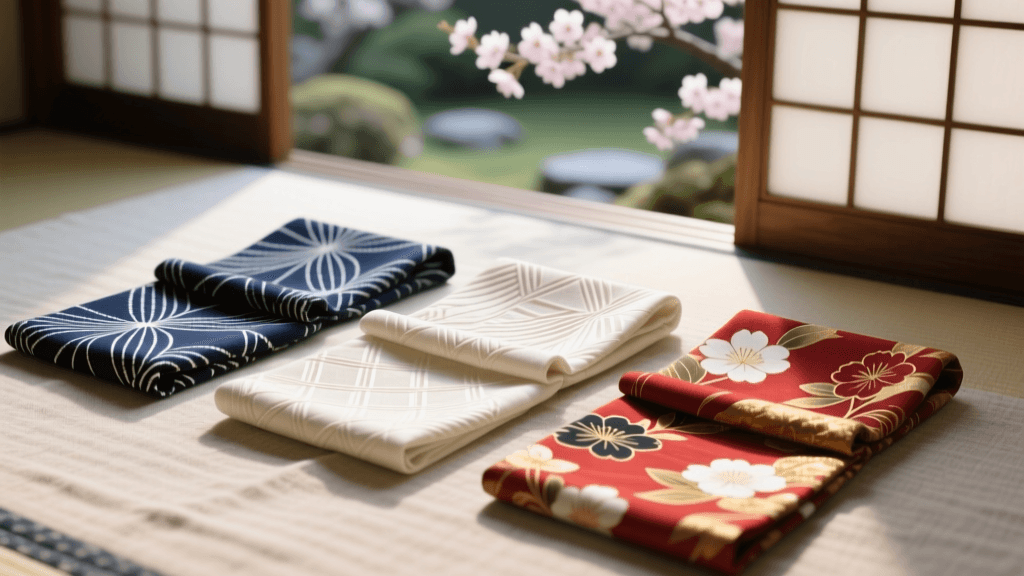
Even in perfect storage, kimonos need to breathe. The traditional practice of mushiboshi (literally 'insect airing') involves taking your kimonos out of storage to air them out, check for hidden stains, and refold them. This should be done twice a year, ideally during late autumn (October/November) and early spring (February/March).
Choose a dry, overcast day with low humidity (below 50%) and a gentle breeze. Lay the kimonos flat on clean, dry tatami mats or over specialized wooden kimono racks indoors. Avoid hanging them outside in direct sunlight, as UV rays will rapidly fade natural dyes and weaken the silk proteins. Allow the garments to air out for 3 to 4 hours. This is also the perfect time to inspect the collars and hems for unnoticed stains, as treating a stain within the first few months is exponentially easier than trying to remove one that has oxidized and set for a year.
Conclusion
Caring for a kimono is a ritual that connects you to centuries of Japanese artisanal tradition. By understanding the specific vulnerabilities of silk, utilizing professional cleaning methods like maru-arai and arai-hari, and committing to the meticulous practices of hon-datami folding and mushiboshi airing, you ensure that your garment remains a vibrant, living piece of history. Whether you are preserving a family heirloom or a newly acquired vintage piece, respecting the fabric through proper care is the ultimate expression of appreciation for this magnificent Asian tradition.