Hanfu Milestone Rites 2026: Weddings & Coming-of-Age Guide
The Renaissance of Traditional Life Milestones in 2026
The year 2026 marks a sophisticated maturation in the global Hanfu movement. What began as a niche historical interest has evolved into a deeply integrated cultural practice, particularly surrounding major life milestones. Today, families and young adults are increasingly turning to traditional Chinese rites of passage to mark transitions into adulthood and marriage. These ceremonies—rooted in centuries of Confucian philosophy and aesthetic refinement—offer a profound connection to heritage. For modern practitioners, understanding the precise garment requirements, textile drapes, and ceremonial protocols is essential for an authentic and meaningful experience.
Whether you are planning a Jili (women's hairpin ceremony), a Guanli (men's capping ceremony), or a traditional Huli (wedding), navigating the 2026 Hanfu market requires specific knowledge. This comprehensive guide breaks down the historical protocols, modern adaptations, and current pricing for milestone attire, ensuring your ceremony is both historically grounded and practically executable.
The Philosophical Roots of Milestone Rites
To understand the garments, one must first understand the philosophy. Traditional Chinese milestone ceremonies are deeply rooted in the Liji (Book of Rites), an ancient text that codified social behaviors, familial duties, and spiritual practices. According to the Chinese Text Project's translation of the Book of Rites, the transition from childhood to adulthood was not merely a biological inevitability but a profound social contract. The capping and hairpin ceremonies formally introduced the youth to society as responsible adults, capable of participating in ancestral worship and civic duties.
Similarly, the wedding rite (Huli) was viewed as the foundation of all social relationships, uniting two surnames to serve the ancestors and continue the family line. The garments worn during these rites were not mere decorations; they were visual manifestations of moral rectitude, social status, and cosmic harmony. In 2026, as cultural heritage preservation becomes a priority for many diaspora and mainland families alike, reviving these rites provides a powerful sense of identity and continuity.
The Coming-of-Age Rites: Jili and Guanli
Historically, the Guanli was performed for men at age 20, and the Jili for women at age 15. In 2026, these ceremonies are frequently adapted to coincide with modern milestones, such as high school graduation (age 18) or university entrance. The core structure of the ceremony revolves around the 'Three Additions' (San Jia), where the initiate changes garments three times, each representing a deeper level of adult responsibility.
The Three Additions Protocol
- First Addition (Shenyi): The initiate dons the Shenyi (deep robe), a one-piece garment that wraps the body completely, symbolizing the containment of childhood impulses and the embrace of basic moral virtues. For 2026 ceremonies, lightweight linen-cotton blends in muted earth tones are highly popular for this stage, offering comfort during the lengthy kneeling protocols.
- Second Addition (Bianfu/Pi): The second change involves a more structured outfit, such as a formal Duanxiu (short-sleeved robe) or a refined Aoqun (jacket and skirt) for women, accompanied by a formal cap or hairpin. This represents readiness to engage with society and take on civic or familial duties.
- Third Addition (Formal Court/Ancestral Dress): The final garment is the most formal, often a Ming-style round-collar robe or a heavily embroidered formal Shenyi. This signifies the initiate's full acceptance of adult responsibilities, including the right to participate in ancestral rites.
In 2026, a significant trend in Jili ceremonies is the use of modern, lightweight titanium-alloy hairpins. Traditional brass and copper pins can be exceedingly heavy, causing neck strain during the hour-long ceremony. Contemporary artisans now craft historically accurate Ming-style Diji and hairpins using 3D-printed titanium, reducing the weight by up to 60% without sacrificing the intricate filigree aesthetics.
The Wedding Milestone: Huli and Ming-Style Nuptials
While Tang and Song dynasty wedding styles remain popular for photography, the Ming dynasty Huli protocol is the undisputed gold standard for formal traditional weddings in 2026. The visual grandeur of Ming nuptial attire is unparalleled, characterized by rich crimson, navy, and gold color palettes, alongside highly structured silhouettes.
The Bride: Fengguan Xiapei
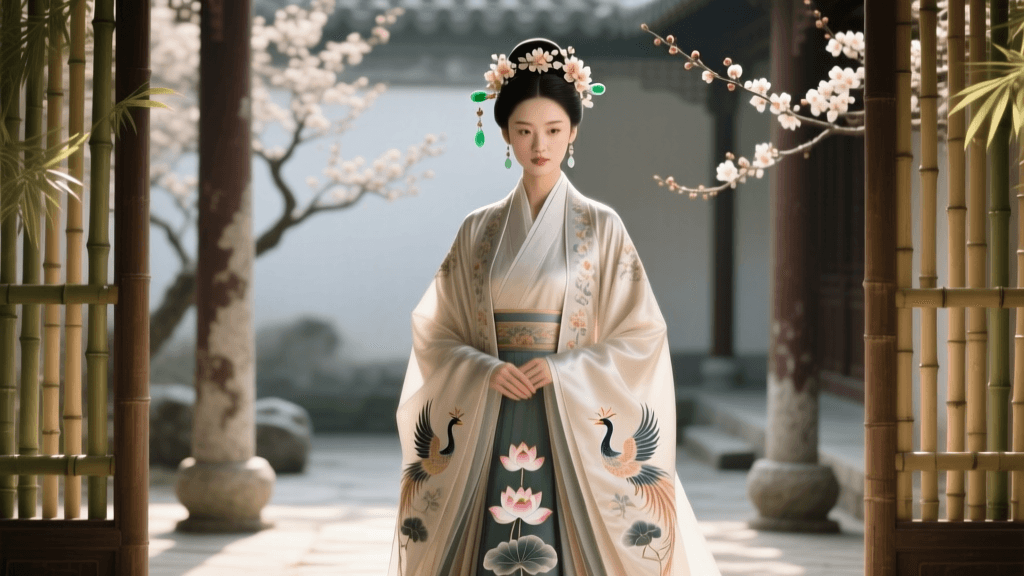
The quintessential Ming bride wears the Fengguan Xiapei (Phoenix Crown and Cloud Shoulder). The Fengguan is an elaborate headdress adorned with kingfisher feather motifs (now ethically replicated using dyed silk and enamel in 2026), pearls, and gold dragons and phoenixes. The Xiapei is a heavy, embroidered stole draped over the shoulders, ending in jade or gold pendants that regulate the bride's walking pace, ensuring a dignified, gliding movement. Beneath this, the bride wears a formal Yuanlingpao (round-collar robe) or a heavily pleated Mamianqun (horse-face skirt) in auspicious red.
The Groom: Liang Guan and Yuanlingpao
The groom's attire is equally structured, typically featuring a dark blue or black Yuanlingpao with a rank badge (Buzi) appropriate for a 'scholar-official' aesthetic, even if the groom holds no actual government rank—a traditional privilege granted to commoners on their wedding day. The headwear is a Liang Guan (a structured, winged cap) or a formal Wusha cap. The drape of the groom's silk robe must be substantial enough to hold the rigid collar structure while allowing fluid movement during the 'Qin Ying' (bride-fetching) procession.
2026 Hanfu Milestone Attire & Cost Comparison
The 2026 bespoke and rental markets have stabilized, offering clear pricing tiers for families planning these milestones. Below is a comparative breakdown of current market rates for authentic, high-quality milestone attire.
| Ceremony Type | Primary Garment Ensemble | 2026 Bespoke Cost (USD) | 2026 Rental Cost (USD) | Key Accessories Required |
|---|---|---|---|---|
| Jili (Women's Coming-of-Age) | Shenyi & Ming-style Aoqun | $850 - $1,400 | $150 - $250 | Titanium hairpins, jade Jili hair sticks |
| Guanli (Men's Coming-of-Age) | Shenyi & Formal Bianfu | $700 - $1,200 | $120 - $200 | Formal scholar's cap, jade belt |
| Huli (Ming-Style Wedding Bride) | Fengguan Xiapei & Yuanlingpao | $3,500 - $8,000+ | $400 - $800 | Enamel Phoenix Crown, cloud shoulder |
| Huli (Ming-Style Wedding Groom) | Yuanlingpao & Liang Guan | $1,500 - $3,000 | $250 - $450 | Winged cap, leather boots, rank badge |
Note: Bespoke costs reflect the use of authentic mulberry silk and Song brocade. Rental costs are based on premium 2026 studio rates in major cultural hubs.
Fabric Drape, Textiles, and Sourcing in 2026
The success of any Hanfu milestone ceremony relies heavily on the fabric's drape and structural memory. As detailed in the Metropolitan Museum of Art's historical archives on Ming clothing, the silhouette of traditional Chinese dress is created not by tailoring the fabric to the body, but by the way the uncut, flat-woven fabric folds and drapes over the wearer.
Mastering the Mamianqun Pleats
For brides and women undergoing the Jili, the Mamianqun (horse-face skirt) is a staple. In 2026, textile engineers specializing in historical garments have perfected the 'knife pleat' memory in heavy silks. A high-quality 2026 Mamianqun requires a fabric weight of at least 120g/m² to ensure the pleats remain razor-sharp and do not flare out awkwardly during walking. Lightweight fabrics like chiffon are strictly avoided for formal rites, as they lack the gravitational pull required to maintain the skirt's architectural integrity.
Xiangyunsha and Song Brocade
For outer robes and the Xiapei, Xiangyunsha (Gambiered Canton Gauze) remains the most coveted textile. This unique silk, dyed with river mud and potato juice, offers a rich, dark sheen and a crisp, paper-like rustle that is highly prized for its acoustic presence during silent ceremonial moments. According to the Victoria and Albert Museum's textile conservation records, the complex interplay of natural dyes and silk proteins creates a fabric that is naturally water-resistant and exceptionally durable, making it an ideal heirloom piece for milestone ceremonies.
When sourcing these garments in 2026, buyers are advised to work directly with established ateliers in Hangzhou and Nanjing that specialize in intangible cultural heritage weaving techniques. Requesting fabric swatches to test the 'drape coefficient'—how the fabric falls under its own weight—is a standard and highly recommended practice before commissioning bespoke milestone attire.
Final Thoughts on Ceremonial Authenticity
Executing a traditional Hanfu milestone rite in 2026 is a beautiful synthesis of historical reverence and modern practicality. By understanding the deep philosophical roots of the Liji, selecting garments with the correct structural drape, and utilizing modern material innovations like lightweight alloys for heavy crowns, participants can experience these rites exactly as they were intended: as profound, dignified, and life-altering transitions. Whether you are pinning the hair of a graduating daughter or donning the Phoenix Crown for your wedding, the garments you choose will serve as a lasting bridge between your ancestors and your future.