Kimono Seasonal Wear: Layering Techniques and Fabric Guide
The Philosophy of Kisetsukan in Japanese Dress
In the realm of traditional Japanese clothing, the concept of kisetsukan (seasonal awareness) is not merely an aesthetic choice; it is a fundamental rule of sartorial etiquette and practical survival. Unlike Western fashion, which often prioritizes visual trends over environmental harmony, the kimono wardrobe is strictly dictated by the shifting microclimates of Japan's four distinct seasons. Mastering seasonal wear requires a deep understanding of textile engineering, precise layering techniques, and the intricate mechanics of kitsuke (the art of dressing). According to the Metropolitan Museum of Art, the evolution of the kimono is deeply intertwined with Japan's climatic rhythms, dictating everything from the weave of the silk to the motifs embroidered upon the obi.
The Three Pillars of Seasonal Kimono
The traditional Japanese wardrobe is divided into three primary structural categories based on the presence or absence of a lining, and the opacity of the weave. Transitioning between these garments at the correct time of year is a hallmark of a refined wearer.
1. Awase (Lined Kimono): October to May
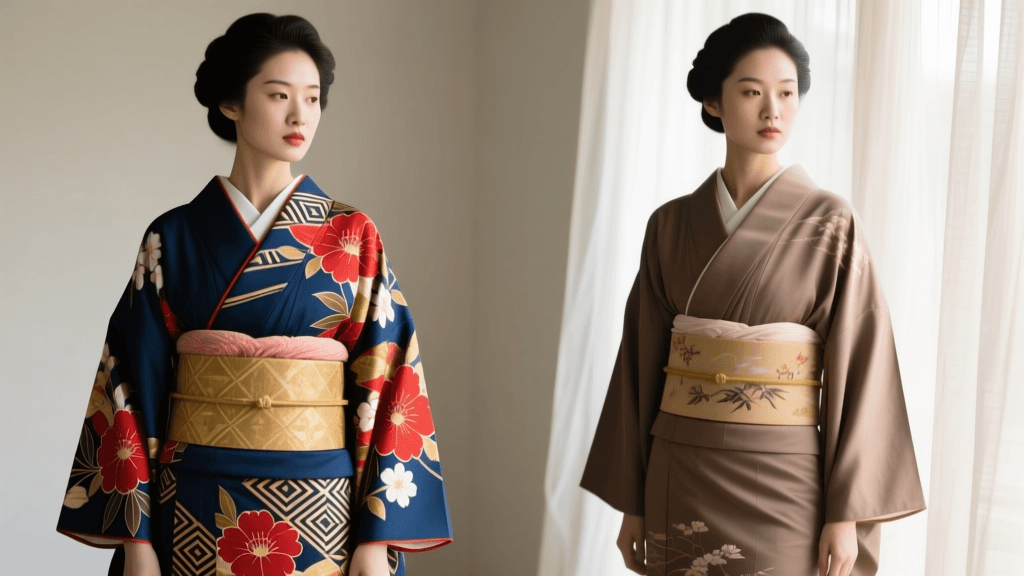
The awase is a fully lined kimono, designed to provide warmth and structural weight during the cooler autumn, winter, and spring months. The outer layer is typically crafted from heavy silk crepe (chirimen) or spun silk (tsumugi), while the lining (hakkake and dougura) is usually made of smooth, lightweight habutai silk. The lining not only insulates the wearer but also provides the necessary friction to keep the heavy outer layers in place during the dressing process. Because of its dual-layer construction, an awase kimono requires precise alignment of the inner and outer collars to ensure a crisp, unified neckline.
2. Hitoe (Unlined Kimono): June and September
The transitional months of early summer and early autumn call for the hitoe, an unlined kimono. Without the insulating silk lining, the hitoe offers breathability while maintaining the opaque, formal appearance required for daytime events. Fabrics like ro-tsumugi (a slubbed, breathable silk) or tightly woven komon are favored. Dressing a hitoe requires a lighter touch; without the inner lining to absorb tension, the waist ties (koshihimo) must be secured carefully to avoid wrinkling the single layer of delicate silk.
3. Natsugoromo (Summer Sheer): July and August
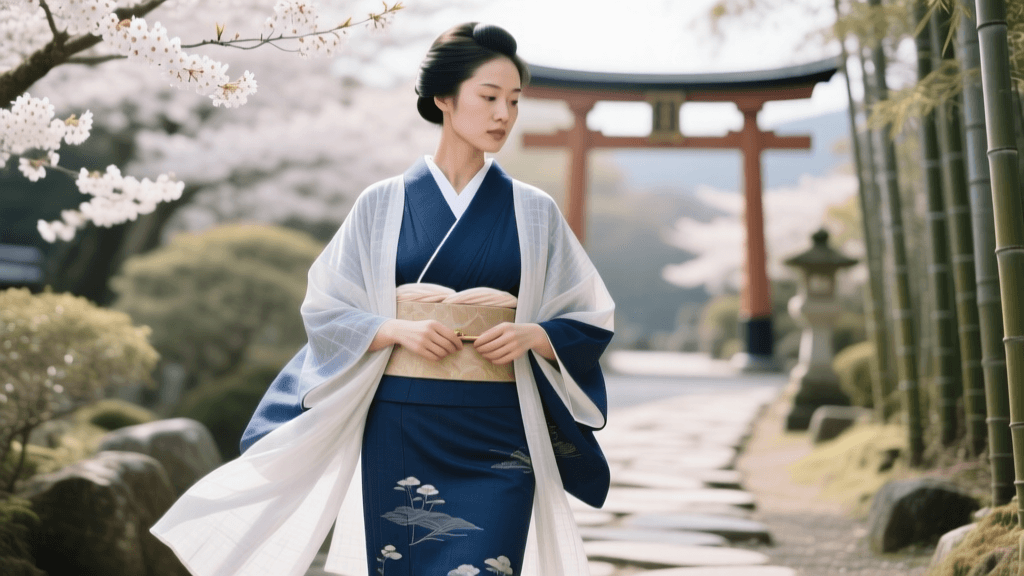
During the peak of Japan's humid summer, wearers transition to natsugoromo or usuginu—sheer, unlined garments woven using specialized leno-weave techniques known as ro (with visible horizontal stripes) or sha (a lighter, more porous weave). These fabrics are designed to catch the slightest breeze and allow body heat to escape. Because they are semi-transparent, the choice of undergarments becomes a critical aesthetic and functional component of the outfit.
Seasonal Kimono Guide: Fabrics and Layering
| Season / Months | Kimono Type | Primary Fabrics | Essential Undergarments | Dressing Focus |
|---|---|---|---|---|
| Oct - May (Cold) | Awase (Lined) | Chirimen, Tsumugi, Rinzu | Nagajuban (full slip), Hadajuban, Koshimaki | Collar alignment, heat retention, securing heavy layers. |
| June & Sept (Mild) | Hitoe (Unlined) | Komon, Ro-Tsumugi, Shioze | Lightweight Nagajuban or Hanajuban (half-slip) | Tension management to prevent single-layer wrinkling. |
| July - Aug (Hot) | Natsugoromo (Sheer) | Ro, Sha, Koma, Bashofu | Hadajuban, Koshimaki, Ro-Nagajuban (sheer slip) | Managing transparency, sweat prevention, cooling innerwear. |
Advanced Kitsuke: Dressing Techniques for Climate Control
The mechanics of kitsuke shift dramatically depending on the season. What works to secure a heavy winter kimono will cause unbearable discomfort and garment damage in the height of summer.
Winter and Spring Layering Mechanics
When dressing in an awase kimono during winter, the primary goal is insulation and structural integrity. The foundation begins with a cotton hadajuban (undershirt) and a wrap skirt called a koshimaki or susoyoke. Over this, a full-length nagajuban (under-robe) is worn. To achieve the perfect collar V-shape, a rigid erishin (collar stay) measuring approximately 90 to 100 centimeters is inserted into the nagajuban collar. For winter, practitioners often use wool-blend koshihimo (waist ties) because the natural fibers grip the heavy silk lining securely without slipping, reducing the need to tie them painfully tight. A thick, padded datejime (under-belt) is then used to smooth the hip area and provide a cushioned base for the heavy winter obi.
Summer Dressing: Managing Heat and Transparency
Summer kitsuke is an exercise in thermodynamics and modesty. Wearing a standard opaque nagajuban beneath a sheer ro kimono destroys the ethereal, cooling aesthetic of the garment. Instead, modern dressers utilize a specialized ro-nagajuban (a sheer under-robe) or opt for a hanajuban (a half-slip consisting only of a skirt and a detachable collar).
To combat Japan's oppressive summer humidity, the traditional cotton koshihimo are swapped for breathable mesh belts or lightweight linen ties. These prevent sweat accumulation at the waist, which can cause the silk to stain and the ties to slip. Furthermore, the modern kimono industry has introduced 'Biocool' innerwear—garments treated with xylitol or contact-cooling fibers that actively wick moisture and lower skin temperature. When securing the collar, a flexible, breathable bamboo erishin is preferred over rigid plastic to allow for better airflow against the neck.
Ryukyuan Ryusou: Tropical Seasonal Adaptations
While mainland Japanese seasonal rules are rigid, the indigenous Ryukyuan (Okinawan) garment, the Ryusou, evolved to handle a subtropical climate year-round. The ultimate summer textile in this tradition is bashofu, a highly labor-intensive fabric woven from the fibers of the Japanese fiber banana plant. Unlike the heavy silk awase of the mainland, bashofu is exceptionally lightweight, porous, and stiff, allowing it to stand away from the skin and promote continuous air circulation. Dressing in Ryusou requires far fewer layers; a simple, unlined bashofu or ramie (jofu) robe is tied with a lightweight woven sash, prioritizing maximum ventilation over the structured, padded silhouettes of mainland kitsuke.
Seasonal Obi Selection and Motifs
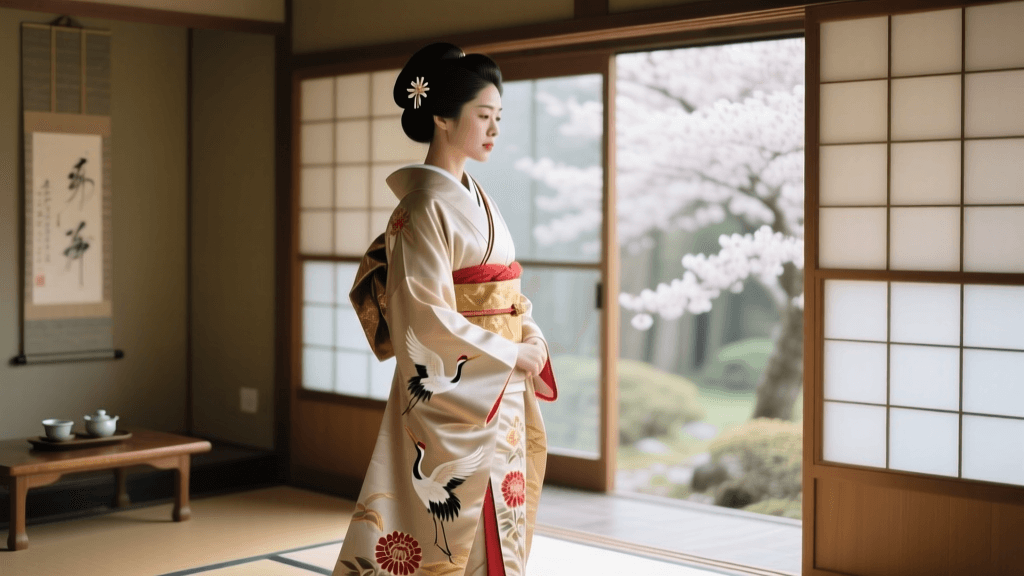
The obi is the anchor of the kimono, and its seasonal rotation is just as strict as the garment itself. In winter, heavy, ornate fukuro obi woven with gold and silver threads are paired with awase kimono. Motifs often anticipate the upcoming season by roughly one month—a practice known as sakidori. For example, plum blossom motifs are worn in late winter before the flowers actually bloom.
In summer, the heavy fukuro is replaced by a nagoya obi or hanhaba obi made of sheer ro or sha weave, or lightweight linen. The motifs shift to cooling imagery: flowing water, swaying bamboo, fans, or fireflies. The tying technique also changes; bulky, complex knots like the nijudaiko are often replaced by simpler, open knots like the bunko or karuta to reduce fabric bulk and heat retention on the lower back.
Practical Advice: Costs, Sourcing, and Garment Care
Building a seasonal kimono wardrobe is a significant investment. A high-quality, new silk awase kimono, complete with custom lining and hand-painted motifs, can easily cost between $1,500 and $3,500. Summer ro and sha garments are slightly less expensive, typically ranging from $400 to $1,200, though antique summer pieces can be sourced from specialized dealers or online auctions for $100 to $300.
Storage is highly seasonal. As noted by the Victoria and Albert Museum, the preservation of silk requires meticulous environmental control. When transitioning from awase to hitoe in late May, winter garments must be professionally cleaned (arimawashi) to remove invisible skin oils and sweat before being stored in traditional tansu (paulownia wood chests) with natural camphor to deter insects. Summer sheer garments, being highly susceptible to water spots from sudden summer rain, require immediate spot-cleaning and should be aired out in the shade before being folded with specialized acid-free tatoushi paper.
'To wear a kimono is to wear the season itself. The rustle of autumn silk, the cool transparency of summer ro—these are not just fabrics, but a dialogue between the human body and the natural world.' — Traditional Kitsuke Proverb
Ultimately, mastering seasonal wear and dressing techniques transforms the kimono from a static costume into a living, breathing extension of the environment. Whether you are navigating the crisp air of a Kyoto autumn in a lined tsumugi, or seeking refuge from the Okinawan sun in a breathable bashofu, understanding the mechanics of seasonal kitsuke ensures both comfort and profound cultural respect.