Kimono Sizing Guide: Fits for All Bodies and Genders
The Evolution of Kimono Sizing and Inclusivity
The traditional Japanese kimono is globally recognized for its striking silhouettes, intricate textiles, and profound cultural significance. However, beneath its seemingly simple T-shaped structure lies a complex system of dressing that must accommodate a vast spectrum of human diversity. According to The Metropolitan Museum of Art, the kimono's flat, linear construction was historically designed to be disassembled, washed, and re-tailored to fit the exact dimensions of its wearer. Because it was cut from standard-width bolts of fabric known as tanmono, the garment itself was inherently adjustable, relying on the art of folding and tying rather than complex tailoring to achieve a custom fit.
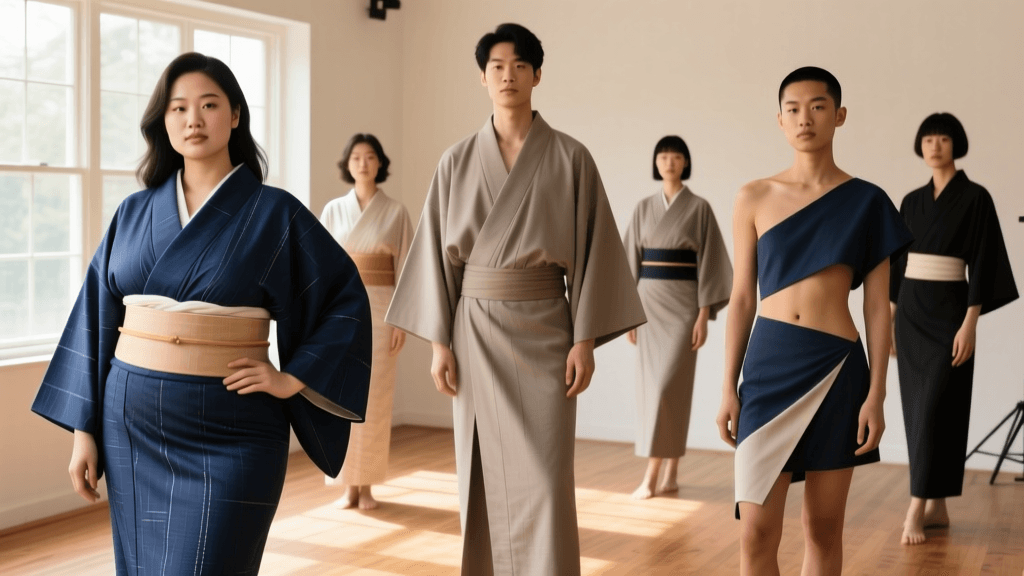
Today, as the kimono transitions from everyday wear to a celebrated garment for special occasions, festivals, and tourism, the modern wearer faces a new challenge. The rise of ready-to-wear garments and the booming kimono rental industry in cities like Kyoto and Tokyo means that wearers must navigate off-the-rack sizing. Furthermore, historical styling rules were built around a strict gender binary and a specific, narrow ideal of the Japanese physique. Fortunately, modern kimono stylists and progressive brands are dismantling these barriers, proving that the kimono is a profoundly inclusive garment capable of flattering every body type and gender expression.
Decoding Kimono Measurements
To select the right kimono, you must understand three critical measurements that dictate how the garment will drape on your unique frame:
- Mitake (Back Length): This is measured from the base of the neck to the hem. For women, the ideal mitake is typically the wearer's height plus 25 to 30 centimeters. This extra length is essential for creating the ohashori (the waist fold), which allows for height adjustment and signifies feminine elegance. For men, the mitake should exactly match the wearer's height, as masculine styling does not utilize a waist fold.
- Yuki (Sleeve Length): Measured from the center back of the neck, across the shoulder, and down to the wrist bone. A standard women's yuki is around 64 cm, while men's ranges from 70 cm to 75 cm. If the yuki is too short, the garment will look visibly ill-fitted; if too long, it can impede movement.
- Maehaba and Ushirohaba (Front and Back Widths): These measurements determine how the kimono wraps around the torso. Plus-size wearers must pay special attention to the maehaba to ensure the front panels overlap sufficiently at the chest and hips without pulling the side seams forward.
Styling for Diverse Body Types
Petite and Short Statures
For petite wearers (under 150 cm), finding a kimono with a short enough mitake to prevent the hem from dragging can be difficult in rental shops. Stylists recommend utilizing a deeper ohashori to take up the excess length. Visually, petite frames benefit from vertical motifs, such as cascading wisteria or bamboo, which elongate the silhouette. Avoid overly bulky obi (sash) knots like the large fukura-suzume; instead, opt for sleek, compact knots like the bunko (bow) or tsunodashi to maintain proportional harmony.
Tall and Plus-Size Figures
Tall wearers (over 165 cm for women) often struggle with the ohashori becoming too thin or disappearing entirely if the mitake is insufficient. When renting or buying, seek out modern brands that offer extended lengths. Plus-size figures should prioritize kimonos with a wider maehaba to ensure a comfortable wrap. Darker base colors with strategic, asymmetrical patterns placed lower on the hem (e-gasane) draw the eye downward and create a balanced, elegant line. A wider, darker obi can also provide excellent structural support and visual anchoring for curvier figures.
Broad Shoulders and Athletic Builds
The kimono's drop-shoulder construction naturally accommodates broad shoulders, but it can sometimes create a boxy look if not styled correctly. To soften an athletic build, stylists use strategic padding around the waist and hips to create the traditional cylindrical silhouette, which minimizes the contrast between the shoulders and the waist. Layering a contrasting haori (jacket) left open can also create strong vertical lines that break up the width of the shoulders.
Gender-Inclusive Kimono Fashion
Historically, the kimono industry has enforced a rigid gender binary. Men's garments (montsuki) are typically subdued, feature family crests, and are worn tightly wrapped without a waist fold. Women's garments are vibrant, highly patterned, and heavily structured with folds and padding. However, as noted by the Victoria and Albert Museum, the kimono has always been a reflection of societal shifts, and today's fashion landscape is increasingly gender-fluid.
Breaking the Binary
For non-binary, transgender, and gender-nonconforming individuals, the kimono offers a unique canvas for self-expression. Modern inclusive styling often involves mixing traditional masculine and feminine elements. For example, a wearer might pair a vibrant, feminine silk kimono with a structured, masculine hakama (pleated trousers) and a dark haori. This blending of codes allows individuals to curate a silhouette that aligns with their personal gender identity rather than societal expectations.
Masculine and Androgynous Styling
Transgender men or individuals seeking a more masculine presentation can opt for the montsuki hakama ensemble. Because men's kimonos do not require the ohashori fold, they are generally easier to fit across a wider variety of heights. The use of a stiff kaku-obi (narrow, rigid sash) tied in a simple, flat knot at the hips provides a clean, tubular, and traditionally masculine silhouette. Conversely, Nippon.com highlights a growing trend of "genderless" kimono styling in Tokyo's Harajuku and Shimokitazawa districts, where vintage kimonos are worn like modern streetwear, often belted with leather or denim accessories, entirely bypassing traditional gender rules.
The Art of Padding: Silhouette Correction
The traditional kimono silhouette is cylindrical, designed to hide the body's natural curves. To achieve this, kimono dressers (kitsuke-shi) use a variety of padding tools. Below is a guide to how different body types utilize padding to achieve the ideal drape.
| Body Concern | Traditional Padding Tool | Modern Alternative | Silhouette Goal |
|---|---|---|---|
| Pronounced Hips / Curvy Figure | Hippon (Cotton hip pads) | Wrapped bath towels secured with clips | Fill the dip at the waist to create a straight line from underarm to hem, preventing the obi from slipping. |
| Small Bust / Narrow Chest | Taoru (Folded hand towels) | Lightly padded sports bras or silicone inserts | Provide structural support for the front collar (eri) to lay flat and prevent gaping at the neckline. |
| Prominent Stomach | Extra Datejime (tying belts) | High-compression shaping shorts | Smooth the midsection to ensure the obi sits flush against the body without digging in or rolling down. |
| Broad / Muscular Shoulders | None (Avoid shoulder pads) | Strategic waist padding to balance proportions | Draw visual weight downward to the hips, softening the upper body's V-taper. |
Practical Guide to Renting and Buying
If you are visiting Japan and wish to experience wearing a kimono, rental shops in hubs like Asakusa (Tokyo) and Higashiyama (Kyoto) are highly accessible. Standard rental packages typically cost between ¥4,000 and ¥8,000 ($25–$55 USD), which includes the garment, obi, undergarments (nagajuban), footwear (zori), and professional dressing.
Actionable Advice for Diverse Sizes:
- Plus-Size Rentals: Many mainstream rental shops stock up to 2L or 3L (roughly US Women's 14-18). If you require a 4L or larger, or if you are exceptionally tall (over 175 cm), you must seek out specialized shops like Wargo or Okamoto Kimono, which offer extended size inventories. Expect to pay a surcharge of ¥1,000 to ¥2,000 for premium plus-size sizing.
- Gender-Inclusive Rentals: Most shops offer "couples" or "gender" packages, allowing anyone to choose between masculine or feminine styling regardless of their legal gender or presentation. Communicate your preferred silhouette (e.g., "I prefer a masculine hakama style" or "I want a feminine floral kimono with an ohashori") when booking online.
- Buying Vintage: For those looking to purchase, the second-hand market is a goldmine. Vintage kimono from the mid-20th century were often tailored for shorter, narrower frames. However, modern "recycle" kimono shops frequently stock larger, post-war garments. Always measure your yuki and mitake before purchasing online, as returns are rarely accepted on vintage textiles.
Conclusion
The kimono is not a rigid uniform of the past, but a dynamic, living garment that adapts to the wearer. By understanding the mechanics of mitake and yuki, utilizing the art of strategic padding, and embracing modern, gender-inclusive styling, anyone can wear the kimono with confidence and grace. Whether you are a petite tourist exploring Kyoto, a plus-size fashion enthusiast, or a non-binary individual redefining traditional aesthetics, the kimono offers a deeply personal and universally flattering canvas for self-expression.