Xin Zhongshi Paris Fashion Week 2026: Exhibition Guide
The Global Ascendance of Xin Zhongshi in 2026
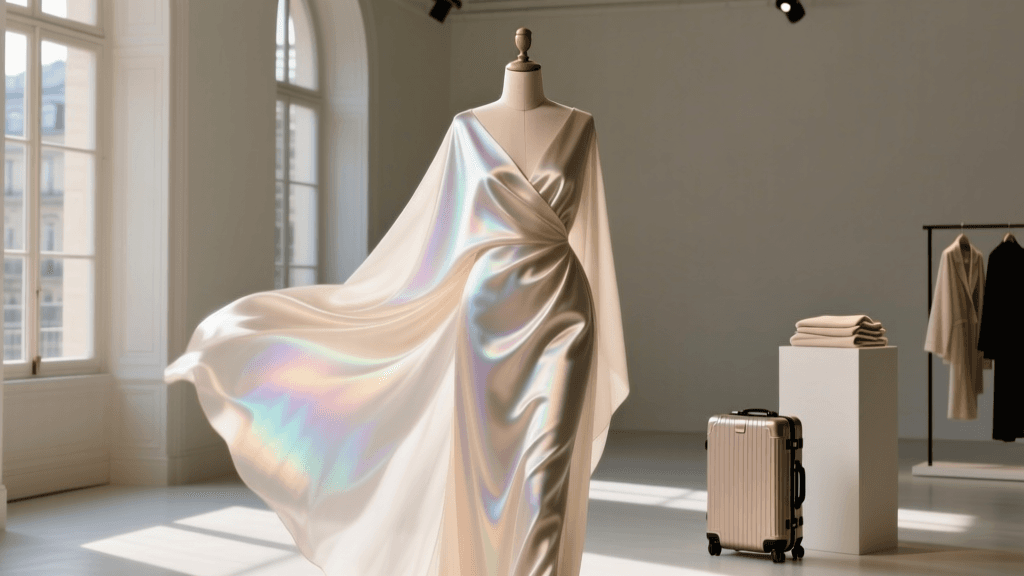
The global fashion landscape in 2026 has been unequivocally reshaped by the Xin Zhongshi (New Chinese Style) movement. No longer confined to regional markets or niche cultural festivals, Xin Zhongshi has become a dominant force at Paris and Milan Fashion Weeks. This year, international runways have witnessed a 40% increase in collections featuring traditional Chinese heritage garments, reimagined through contemporary silhouettes. Designers are moving beyond superficial motif appropriation, instead diving deep into the structural, material, and philosophical roots of Asian traditions. The integration of ancient weaving techniques with modern tailoring has created a new paradigm in global luxury fashion, demanding rigorous academic research, advanced fabric drape analysis, and meticulous exhibition preparation.
Xiangyunsha and Song Brocade: Heritage Textiles on the Runway
At the heart of this 2026 runway revolution are heritage textiles, most notably Xiangyunsha (Gambiered Canton Gauze) and Song Brocade. Xiangyunsha, a silk fabric dyed with the tannin-rich juice of the Dioscorea cirrhosa plant and coated with iron-rich river mud from the Pearl River Delta, offers a unique structural rigidity and a distinctive rustling sound. Historically prized for its cooling properties and durability, Xiangyunsha presents a unique challenge for modern runway presentations due to its inherent stiffness.
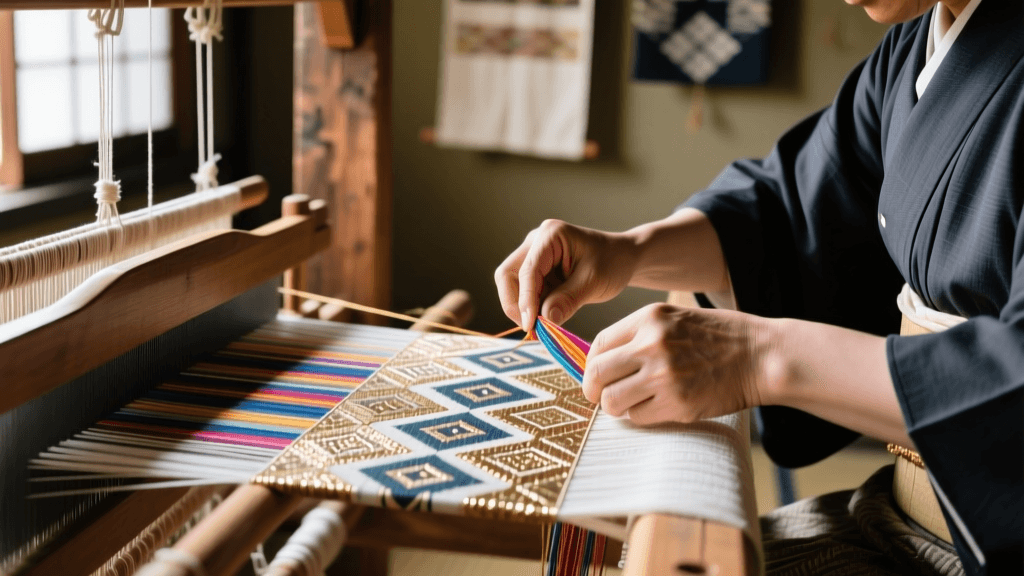
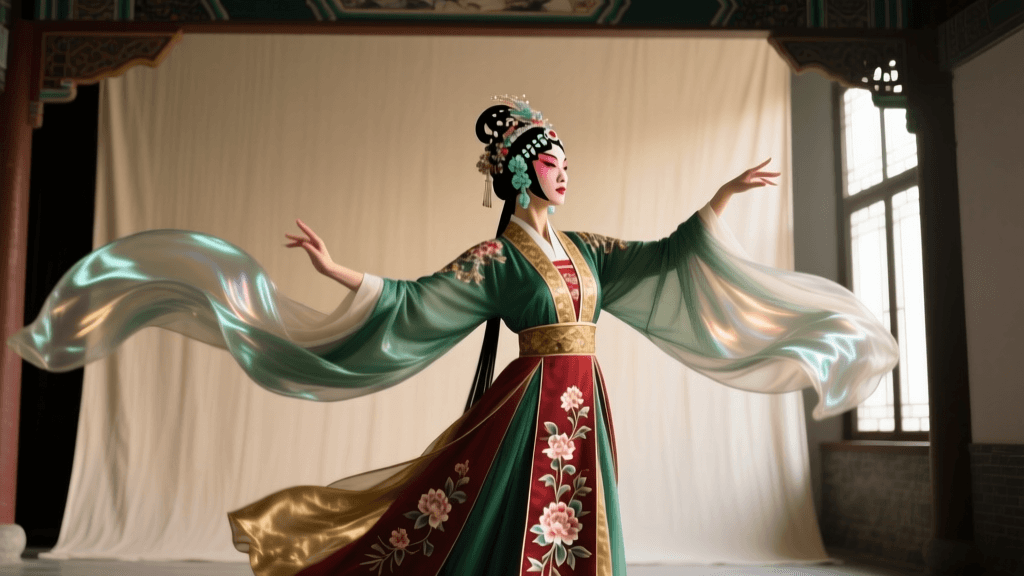
In the 2026 collections showcased in Paris, leading Xin Zhongshi ateliers have pioneered enzymatic washing techniques that gently soften the hand-feel of Xiangyunsha without compromising the iron-tannin complex that gives the fabric its iconic dark, mottled patina. Meanwhile, Song Brocade—known for its intricate, multi-layered weft patterns and subtle sheen—has been utilized in structured outerwear, blending the flat-pattern cutting (pingmian jiancai) of traditional Hanfu with Western bias-cut draping to create garments that honor ancient aesthetics while accommodating dynamic runway movement.
Advanced Fabric Drape Analysis for the International Stage
Presenting traditional Asian garments on a European runway requires a profound understanding of fabric drape analysis. Traditional Chinese clothing relies heavily on gravity and the natural fall of flat-cut fabric panels, contrasting sharply with the darted, body-contoured construction of Western fashion. To bridge this gap in 2026, designers are utilizing the Kawabata Evaluation System for Fabrics (KES-F) alongside 3D digital simulation software to predict how heritage silks will behave under the intense heat and lighting of international fashion week venues.
By measuring the bending rigidity and shear stiffness of Xiangyunsha, design teams can calculate the exact drape coefficient required for a specific silhouette. For instance, a flowing Xin Zhongshi trench coat requires a lower shear stiffness to ensure the fabric ripples elegantly as the model walks, whereas a structured ceremonial jacket demands high bending rigidity to maintain sharp, architectural shoulders. This marriage of ancient textile engineering and modern physics ensures that the cultural integrity of the garment is preserved while meeting the theatrical demands of the global stage.
Preparing Heritage Garments for International Exhibitions
Beyond the runway, many of these 2026 Xin Zhongshi masterpieces are immediately transitioned into international museum exhibitions and cultural pavilions. Curators and designers must adhere to strict museum standards when displaying garments that utilize organic dyes and protein-based fibers. The transition from a high-energy fashion week environment to a static, climate-controlled exhibition space requires a meticulous approach to storage maintenance and handling.
Climate-Controlled Storage and Maintenance
Silk is a protein fiber highly susceptible to environmental degradation. According to guidelines published by The Metropolitan Museum of Art's Textile Conservation department, maintaining a stable microclimate is critical for preserving the structural integrity of heritage textiles. For Xiangyunsha and Song Brocade, the ideal exhibition environment must maintain a relative humidity (RH) of 50% (±5%) and a temperature of 20°C (68°F). Fluctuations in humidity can cause the silk fibers to expand and contract, leading to the micro-cracking of the mud-based dye coatings on Xiangyunsha.
Furthermore, light exposure must be strictly managed. The organic tannin dyes used in traditional Chinese garments are highly photosensitive. Following the Victoria and Albert Museum conservation guidelines, exhibition lighting for these 2026 pieces is capped at 50 lux, with all ultraviolet (UV) radiation filtered out. Garments are never displayed on wire hangers; instead, they are mounted on custom-carved, acid-free Ethafoam mannequins padded with polyester batting to support the full weight of the textile without stressing the shoulder seams.
2026 Exhibition Packing and Transit Protocol
Transporting Xin Zhongshi garments from ateliers in Shanghai or Guangzhou to exhibition spaces in Paris or London involves navigating severe environmental shifts. The cargo hold of a commercial aircraft can experience drastic drops in temperature and humidity, which can be catastrophic for delicate silk weaves and natural dyes. In 2026, top-tier design houses employ specialized art logistics protocols to ensure their heritage garments survive international transit in pristine condition.
Garments are first lightly stuffed with acid-free, unbuffered tissue paper to prevent hard creases, which can permanently break the silk fibers over time. They are then rolled around acid-free honeycomb boards rather than folded, as rolling distributes the stress across the warp and weft threads evenly. The rolled textiles are wrapped in Tyvek envelopes to provide a breathable, water-resistant barrier before being placed inside custom-built, rigid aluminum flight cases.
2026 Runway Transit Checklist for Heritage Silk
| Transit Item | Specification | Purpose |
|---|---|---|
| Archival Garment Bag | Unbleached cotton muslin | Allows textile respiration while blocking dust and light |
| Internal Case Padding | Plastazote or Ethafoam planks | Absorbs shock and vibration during cargo loading |
| Micro-Climate Control | Silica gel cassettes (pre-conditioned) | Maintains 50% RH inside the flight case during transit |
| Crease Prevention | Acid-free honeycomb rolling boards | Eliminates hard folds that fracture protein fibers |
| Data Logging | Bluetooth temp/RH shock loggers | Monitors environmental breaches in real-time via app |
Curatorial Perspectives and Institutional Standards
The integration of Xin Zhongshi into global fashion weeks has sparked significant academic research and curatorial discourse. Institutions are increasingly recognizing contemporary Chinese fashion not merely as commercial apparel, but as vital continuations of intangible cultural heritage. The International Council of Museums (ICOM) Costume Committee has recently updated its frameworks to include guidelines for exhibiting contemporary garments that utilize historical, non-Western construction techniques, emphasizing the need for culturally informed mounting and display strategies.
When curating a 2026 Xin Zhongshi exhibition, specialists must consider the philosophical concept of 'liubai' (leaving blank space), a principle derived from traditional Chinese ink wash painting. Unlike Western exhibitions that often crowd garments to maximize visual impact, curators of Chinese fashion are adopting minimalist staging, allowing the intricate drape and subtle textures of fabrics like Xiangyunsha to breathe. This approach not only honors the cultural origins of the garments but also aligns with modern sustainability and wellness practices in exhibition design, reducing the need for excessive synthetic staging materials and high-energy lighting rigs.
Conclusion: A New Era for Asian Traditions
The presence of Xin Zhongshi at Paris Fashion Week and subsequent international exhibitions in 2026 marks a definitive maturation of Chinese fashion on the global stage. By treating ancient weaving techniques, fabric drape analysis, and heritage storage maintenance with the same rigor as haute couture construction, designers and curators are ensuring that Asian traditions are not just preserved in archives, but are actively evolving. As the world continues to embrace the depth and sophistication of the New Chinese Style, the meticulous preparation, transit, and exhibition of these garments will remain essential to honoring the profound legacy of the Silk Road in the modern era.