Hanfu in Peking Opera and Kunqu: 2026 Stage Guide
The Theatrical Evolution: From Historical Hanfu to Stage Xifu
When exploring the rich tapestry of Asian traditions, the intersection of historical clothing and performing arts offers a fascinating study in cultural evolution. While the modern Hanfu movement focuses heavily on historical accuracy and everyday wearability, traditional Chinese theater utilizes a specialized wardrobe known as Xifu (opera costumes). In 2026, as global interest in traditional Asian performing arts reaches new heights, understanding the distinction between authentic historical Hanfu and theatrical stage wear is essential for enthusiasts, performers, and costume designers alike.
Xifu is not a direct replica of any single historical dynasty's clothing. Instead, it is a theatrical exaggeration that blends elements from the Tang, Song, Ming, and Qing dynasties to create a visual shorthand for character archetypes. However, the foundational silhouettes, cross-collar closures, and flowing sleeves are deeply rooted in traditional Hanfu. Today's top-tier theater troupes are increasingly investing in historically informed stage wear, merging the dramatic flair of opera with the authentic textile techniques of ancient China.
Kunqu Opera: The Elegance of Ming-Era Hanfu Aesthetics
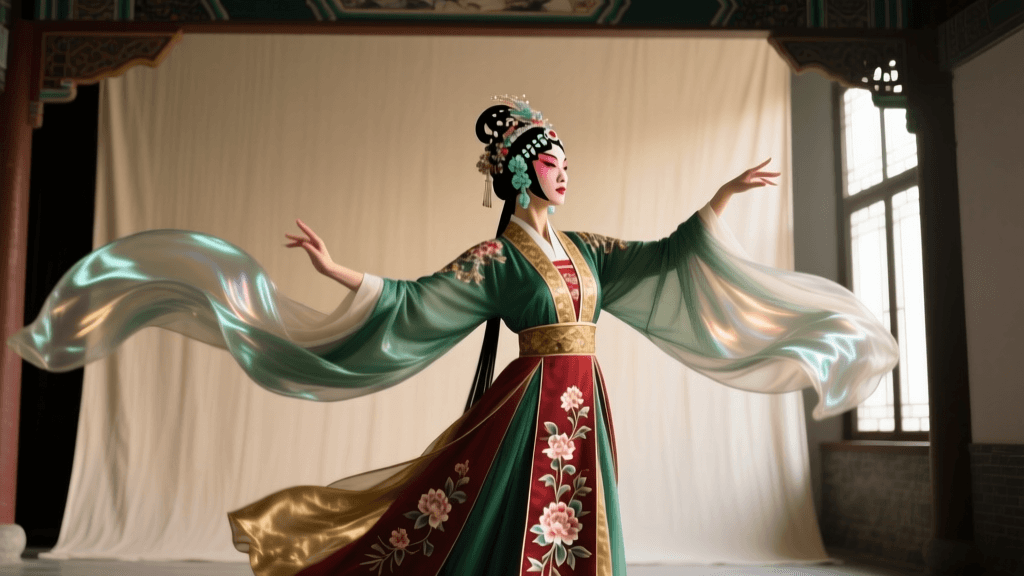
Often referred to as the 'mother of Chinese operas,' Kunqu is celebrated for its refined, scholarly, and deeply poetic aesthetic. Recognized by UNESCO as an Intangible Cultural Heritage, Kunqu's costume design is heavily anchored in the Ming Dynasty, widely considered the golden era of classical Hanfu. Unlike the bold, contrasting colors of later theatrical forms, Kunqu costumes favor muted, elegant pastels, intricate floral embroidery, and fluid silhouettes that emphasize the grace of the performer's movements.
The quintessential Kunqu garment for scholars and young maidens is the Xuezi (informal robe) and the Pei (formal outer robe). These garments feature the classic Hanfu cross-collar (jiaoling youren) and wide, flowing sleeves. In 2026, leading Kunqu troupes in Suzhou and Hangzhou are reviving traditional plant-dyeing methods, using indigo, lotus, and pomegranate to achieve the soft, historically accurate hues that synthetic dyes simply cannot replicate.
The Art of the Water Sleeve (Shuixiu)
No discussion of Kunqu or Hanfu-inspired stage wear is complete without the Shuixiu, or 'water sleeves.' These are long, white silk extensions attached to the cuffs of the costume. In Kunqu, the water sleeves are typically 60 to 90 centimeters long, crafted from lightweight, high-grade silk crepe. They act as an extension of the actor's emotions, capable of expressing sorrow, joy, hesitation, or anger through over 40 documented flicking, tossing, and folding techniques. For modern practitioners sourcing water sleeves in 2026, 19-momme silk crepe remains the industry standard, offering the perfect balance of weight for momentum and lightness for fluid snapping.
Peking Opera: Exaggerated Silhouettes and Symbolic Colors
While Kunqu whispers, Peking Opera (Jingju) shouts. Emerging later and solidifying during the Qing Dynasty, Peking Opera costumes prioritize visibility from the back rows of grand theaters and immediate character recognition over historical Hanfu accuracy. According to Encyclopedia Britannica, Peking Opera relies on a strict color-coding system and exaggerated silhouettes to convey a character's social status, personality, and moral alignment.
The most iconic Peking Opera garment is the Mang (python robe), worn by emperors and high-ranking officials. While it borrows the round-collar and wide-sleeve structure of historical Hanfu court dress, the Mang is heavily padded, stiffened, and covered in dense metallic thread embroidery. Another staple is the Kao (armor), worn by generals. The Kao features four triangular flags attached to the back, a purely theatrical invention with no basis in historical Hanfu military dress, designed to make the actor appear larger and more imposing on stage.
Comparison Chart: Historical Hanfu vs. Kunqu vs. Peking Opera
To help collectors, students, and designers navigate the nuances of these garments, here is a structured comparison of their defining characteristics as of 2026:
| Feature | Historical Hanfu (Ming Era) | Kunqu Stage Costumes | Peking Opera Costumes (Xifu) |
|---|---|---|---|
| Primary Silhouette | Natural drape, A-line or straight cut | Fluid, elongated, emphasis on vertical lines | Stiffened, padded, exaggerated width |
| Sleeve Style | Pipa sleeves or wide straight sleeves | White silk water sleeves (60-90cm) | Stiff water sleeves or tight martial cuffs |
| Color Palette | Regulated by sumptuary laws, natural dyes | Pastels, soft earth tones, elegant contrasts | High-contrast, bold primary colors, metallics |
| Embroidery | Subtle, localized, auspicious motifs | Dense but flat, floral and poetic motifs | 3D couching, dragons, tigers, heavy metallic thread |
| 2026 Custom Cost | $250 - $800 USD | $400 - $1,200 USD | $800 - $3,500+ USD |
2026 Stage Trends: Blending Authenticity with Modern Performance
The year 2026 has brought remarkable innovations to the world of traditional performing arts wardrobes. While the visual language of Peking Opera and Kunqu remains fiercely protected, the materials and construction methods have evolved to meet the demands of modern touring and high-definition broadcasting.
- Lightweight Brocades: Traditional stage armor and Mang robes were notoriously heavy, often weighing over 10 kilograms. In 2026, textile mills in Hangzhou have developed specialized performance brocades using a silk-core wrapped in micro-fine aluminum threading, reducing the weight of a full general's Kao by nearly 40% without sacrificing the metallic gleam under stage lights.
- Sustainable Dyeing: With a growing emphasis on eco-friendly practices, premier Kunqu troupes are returning to heritage botanical dyes. Not only does this align with global sustainability goals, but the subtle color variations of natural dyes also read beautifully on 4K and 8K broadcast cameras, avoiding the harsh color-banding associated with older synthetic dyes.
- Modular Water Sleeves: For touring companies, laundry and maintenance of water sleeves are a logistical nightmare. New snap-in modular silk cuffs allow performers to detach the white silk extensions for cleaning or replacement without dry-cleaning the entire heavily embroidered robe.
Practical Sourcing and Care Guide for Practitioners
For those looking to acquire authentic stage wear or high-quality Hanfu for traditional dance and performance in 2026, sourcing directly from the hubs of Suzhou and Hangzhou remains the best approach. When commissioning a Kunqu-style Xuezi, specify a 16 to 19-momme silk crepe de chine for the body to ensure the fabric catches the air during turns. For the water sleeves, insist on 100% mulberry silk with a slight stretch; synthetic blends will not 'snap' correctly and can cause wrist strain during vigorous routines.
Care for these garments requires strict discipline. Never machine wash stage Xifu or performance Hanfu. The metallic threads in Peking Opera costumes will tarnish and break. Spot clean with distilled water and a mild, pH-neutral silk detergent. For deep cleaning, seek out specialized theatrical dry cleaners who understand the structural padding of opera costumes. Store garments flat or on wide, padded hangers to prevent the heavy embroidery from warping the silk base fabric over time.
Conclusion
The relationship between historical Hanfu and traditional performing arts is a dialogue between the past and the stage. While Peking Opera and Kunqu costumes are theatrical interpretations rather than strict historical replicas, they serve as vital, living vessels for traditional Chinese aesthetics, textile arts, and movement. Whether you are a performer mastering the flick of a water sleeve, a designer studying Ming Dynasty silhouettes, or a collector appreciating the craftsmanship of a 2026 botanical-dyed stage robe, understanding these garments deepens our connection to the enduring legacy of Asian traditions.