The Ultimate Kimono Buying Guide: Types, Sizing, and Costs
Introduction to Buying Authentic Kimono
Purchasing an authentic Japanese kimono is a journey into centuries of textile artistry, cultural heritage, and meticulous craftsmanship. Whether you are a seasoned collector, a practitioner of traditional arts, or a fashion enthusiast looking to incorporate Japanese garments into your wardrobe, navigating the kimono market can be daunting. The terminology, formality rules, and sizing conventions are vastly different from Western clothing. This comprehensive buying guide will demystify the process, helping you compare essential kimono types, understand crucial measurements, and budget for both the garment and its necessary accessories.
According to the Metropolitan Museum of Art, the kimono's iconic T-shape and straight-line construction have remained fundamentally unchanged since the Edo period, yet the textiles, dyeing techniques, and motifs carry profound seasonal and social significance. Understanding these nuances is the first step to making an informed purchase.
Understanding Kimono Formality and Types
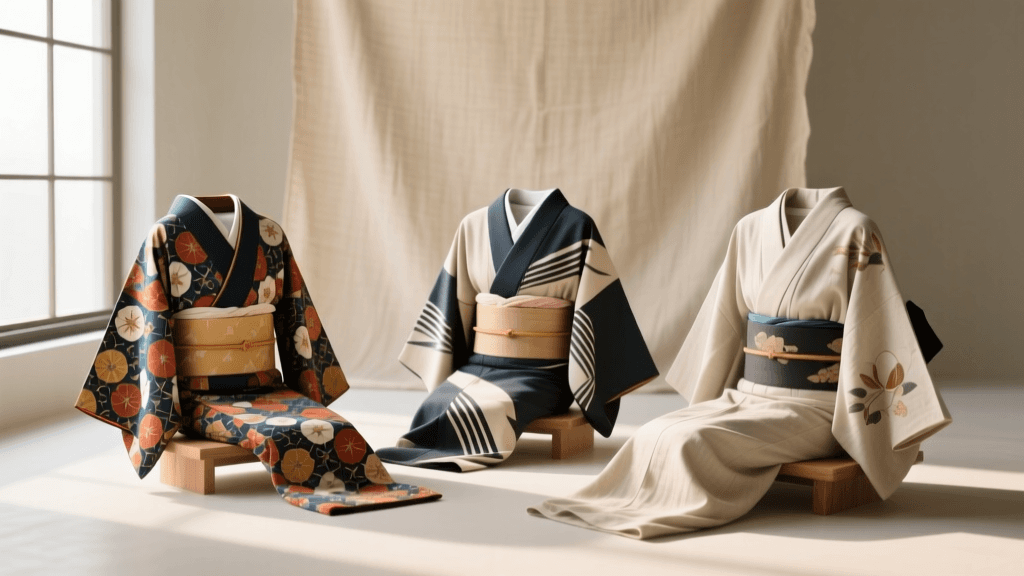
Unlike Western fashion, where formality is often dictated by color or silhouette, kimono formality is determined by the fabric type, dyeing method, and the presence or absence of family crests (kamon). Here is a breakdown of the most common types you will encounter when shopping.
Yukata (Casual Summer Wear)
The yukata is the most accessible and informal type of kimono. Traditionally made from lightweight cotton or hemp, it is worn during summer festivals, fireworks displays, or at ryokan (traditional inns). Because it requires fewer undergarments and accessories, it is an excellent starting point for beginners.
Komon (Everyday Silk)
Komon translates to 'fine pattern.' These kimono feature repeating patterns that cover the entire garment. They are considered casual to semi-formal everyday wear, perfect for strolling through the city, attending casual tea gatherings, or dining out. Vintage silk komon are abundant and highly affordable.
Houmongi and Tsukesage (Semi-Formal to Formal)
Houmongi (visiting wear) features continuous 'eba' patterns that flow across the seams when the kimono is laid flat. It is highly formal and suitable for weddings, tea ceremonies, and official parties. Tsukesage is slightly less formal, with patterns that do not cross the seams, making it a versatile choice for various semi-formal occasions.
Furisode (Formal Wear for Unmarried Women)
Recognizable by their dramatically long, swinging sleeves, furisode are the most formal kimono for young, unmarried women. They are heavily decorated with vibrant, intricate dyeing and embroidery, typically worn for Coming of Age Day (Seijin Shiki) or as a guest at weddings.
'The kimono is not merely a garment; it is a canvas that reflects the wearer's age, marital status, and the specific season or occasion, functioning as a complex visual language.' — Curatorial notes from the Victoria and Albert Museum's Kimono Exhibition.
Kimono Type Comparison Chart
| Type | Formality | Material | Best Occasions | Avg. Vintage Cost (USD) |
|---|---|---|---|---|
| Yukata | Casual | Cotton, Hemp | Summer festivals, casual lounging | $20 - $60 |
| Komon | Casual / Everyday | Silk, Polyester | City strolling, casual dining | $40 - $120 |
| Tsukesage | Semi-Formal | Silk (Crepe, Rinzu) | Parties, theater visits, tea class | $100 - $250 |
| Houmongi | Formal | Silk (Eba dyeing) | Weddings, official ceremonies | $150 - $400+ |
| Furisode | Very Formal | Silk (Heavy Crepe) | Coming of Age, wedding guest | $150 - $500+ |
Sizing Your Kimono: The Crucial Measurements
One of the most common mistakes international buyers make is assuming kimono sizing works like Western S, M, L, or XL. Kimono are traditionally made from standard-width fabric bolts (tanmono), meaning the width is relatively fixed, while the length is customized. When buying vintage or recycled kimono, you must rely on three critical measurements.
1. Mitake (Back Length)
The mitake is measured from the base of the collar down the center back to the hem. In traditional kitsuke (kimono dressing), the garment is wrapped and then folded at the waist to create a horizontal tuck called the ohashori. Therefore, the ideal mitake should be roughly equal to the distance from the nape of your neck to your ankle bone, allowing enough fabric for the tuck. A variance of +/- 5 cm is generally acceptable for vintage pieces.
2. Yuki (Sleeve Span)
The yuki is measured from the center back of the neck, across the shoulder, and down to the wrist. This determines how far the sleeves will extend past your hands. A proper yuki should reach the base of your thumb or slightly cover the wrist bone. If the yuki is too short, the kimono will look visibly ill-fitted.
3. Maehaba and Ushirohaba (Front and Back Widths)
While the tanmono bolt limits maximum width, the front and back panels can be adjusted slightly during tailoring. For most standard-sized individuals, a hip measurement of up to 100 cm (39 inches) will comfortably fit into a standard vintage kimono. Those with larger hips or busts may need to look for modern, custom-tailored kimono or garments specifically noted as wide (hirosen).
New vs. Recycled (Vintage) Kimono
The Japanese secondhand market, known as 'recycle' (risaikuru), is a booming industry. Stores like Tansu-ya and Chicago in Kyoto and Tokyo offer thousands of meticulously cleaned and graded vintage garments. According to cultural reports featured by the Victoria and Albert Museum, the appreciation for historical textiles has driven a global resurgence in vintage kimono collecting.
Pros of Buying Recycled (Vintage)
- Cost-Effective: You can acquire high-quality, hand-dyed silk for a fraction of the cost of a new garment.
- Unique Textiles: Vintage pieces often feature dyeing techniques (like intricate yuzen or shibori) that are prohibitively expensive or entirely lost in modern mass production.
- Sustainability: Purchasing secondhand extends the life of exquisite garments and supports circular fashion.
Cons of Buying Recycled
- Condition Issues: Silk is susceptible to water spots, sun fading, and crease wear. Always request detailed photos of the hem, shoulders, and collar.
- Smaller Sizing: Historically, Japanese women were shorter and slighter. Finding vintage kimono with a long enough mitake for taller Western buyers can be challenging.
Essential Accessories to Budget For
A kimono cannot be worn alone. When budgeting for your purchase, remember that the kimono itself is only about 40% of the total outfit cost. You must also acquire:
- Obi: The wide sash. A vintage silk Nagoya obi costs between $30 and $100.
- Juban: The under-kimono that protects the silk from body oils. ($20 - $50)
- Obiage and Obijime: The silk scarf and decorative cord used to secure and embellish the obi. ($15 - $40 for a set)
- Tabi and Zori: Split-toe socks and traditional sandals. ($25 - $60)
- Koshihimo: A set of 3 to 5 thin cotton ties used to bind the kimono tightly before the obi is applied. ($10)
Where to Buy: Trusted Sources
If you are traveling to Japan, the Kyoto districts of Gion and Higashiyama are lined with both high-end bespoke tailors and massive vintage warehouses. For international buyers shopping online, reputable platforms include specialized Japanese export sites like Ichiroya and Yamatoku, which provide exact measurements in centimeters and detailed condition reports. Avoid generic marketplace listings that use stock photos, as the condition of vintage silk varies drastically from piece to piece.
Conclusion
Investing in an authentic kimono is a rewarding endeavor that connects you to a profound sartorial legacy. By understanding the hierarchy of formality, mastering the essential measurements of mitake and yuki, and budgeting for the complete ensemble, you can confidently navigate the market. Whether you choose a breezy cotton yukata for summer evenings or a breathtaking silk houmongi for formal events, your garment will serve as a wearable piece of Asian cultural history.