Xin Zhongshi at Paris Fashion Week 2026: Buyer's Guide
The 2026 Shift: From Motif to Structural Authenticity
The global fashion landscape has witnessed a profound transformation in how Chinese heritage is presented on the international stage. As we navigate the 2026 exhibition circuit, the Xin Zhongshi (New Chinese Style) movement has firmly graduated from superficial aesthetic borrowing to deep, structural authenticity. At Paris Fashion Week and Milan Design Week this year, leading Chinese couturiers and emerging independent labels are no longer relying on pasted-on dragon motifs or generic mandarin collars. Instead, the focus has shifted toward the architectural brilliance of traditional garments, the complex chemistry of heritage dyeing, and the physics of flat-cut drape analysis.
For international buyers, boutique owners, and textile collectors, the 2026 season offers an unprecedented opportunity to source authentic, high-craftsmanship pieces that bridge centuries-old techniques with contemporary luxury. According to the official schedule released by the Fédération de la Haute Couture et de la Mode, the integration of Asian traditional garments into the official Parisian calendar has reached a record high this year, with over a dozen dedicated showrooms focusing exclusively on Sino-heritage textiles and structural tailoring.
Essential 2026 Showrooms and Exhibition Itineraries
Navigating the sprawling exhibitions of Paris and Milan requires a targeted approach. The most significant Xin Zhongshi showcases in 2026 are happening outside the traditional grand tents, favoring intimate, historically resonant venues that allow buyers to closely inspect textile weights and stitching techniques.
Paris: Le Marais and Palais de Tokyo
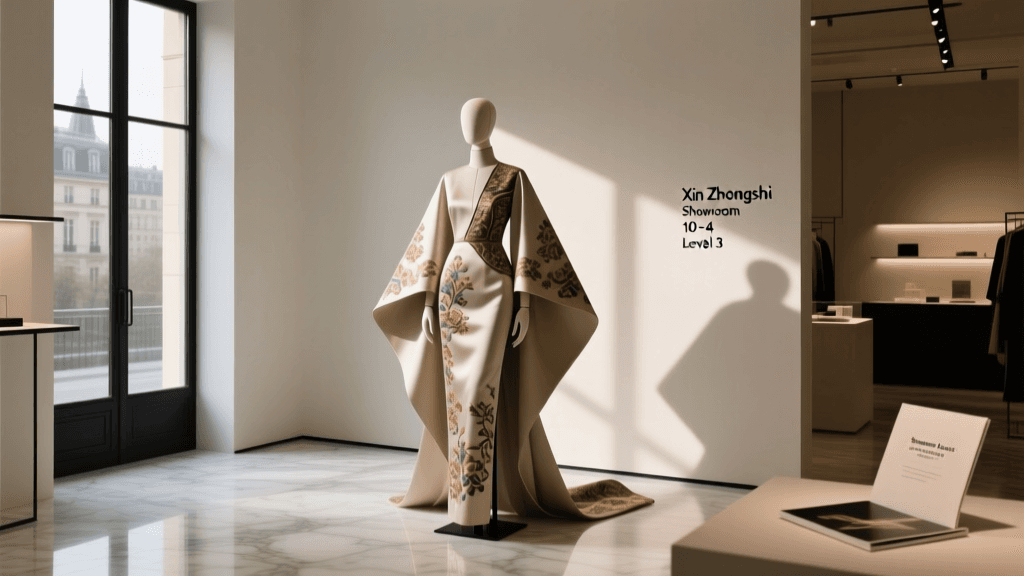
In Paris, the epicenter of the New Chinese Style movement is currently situated in the Le Marais district. Several pop-up showrooms have taken over 17th-century stone townhouses, providing a moody, atmospheric backdrop for Xiangyunsha (mud-silk) and Song Brocade collections. Buyers should allocate at least two full days to explore these spaces. The Palais de Tokyo is also hosting a major multimedia installation titled 'Threads of the Silk Road,' which deconstructs the ancient weaving techniques of the Xinjiang and Suzhou regions, offering masterclasses on loom programming and thread tension for modern designers.
Milan: Tortona Design Week Textile Labs
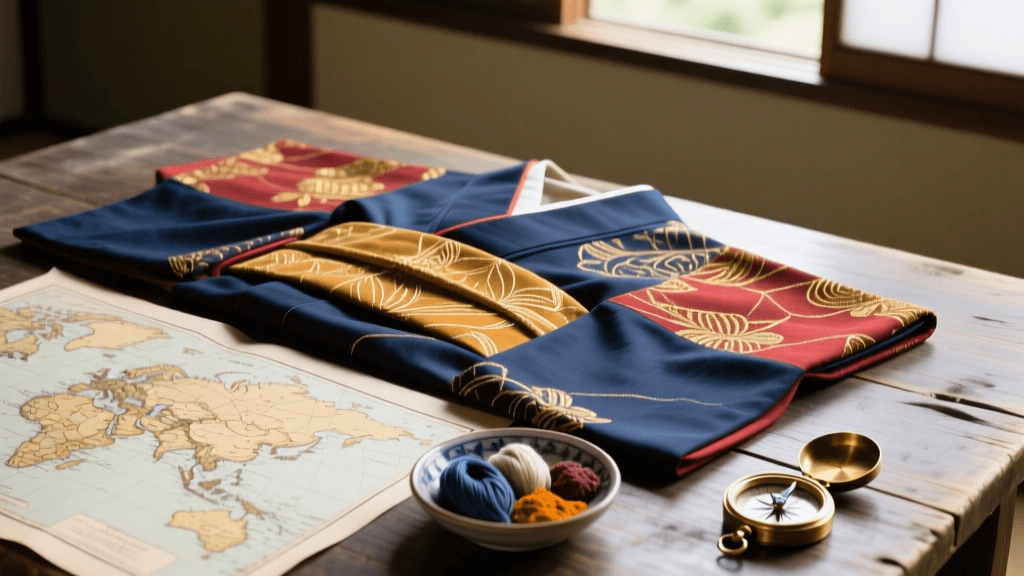
While Paris focuses on the final garment, Milan’s Tortona Design Week in 2026 is the premier destination for raw material sourcing and textile innovation. Here, Chinese heritage mills are partnering with Italian sustainability labs to showcase how traditional sericulture and natural dyeing (using indigo, pagoda tree buds, and river mud) can meet modern European environmental standards. It is highly recommended to book private viewing appointments at least three weeks in advance, as these labs operate on strict capacity limits to protect proprietary weaving patents.
Sourcing Heritage Textiles: A Buyer’s Matrix
Sourcing authentic Chinese heritage textiles requires a nuanced understanding of regional specialties, lead times, and pricing structures. The mass-market 'silk' often peddled to inexperienced buyers pales in comparison to the heritage fabrics showcased at these international exhibitions. Below is a comprehensive buyer’s matrix for the top three heritage textiles dominating the 2026 market.
| Textile Type | Primary Origin | 2026 Wholesale Cost (per meter) | Drape & Weight Profile | Best Application |
|---|---|---|---|---|
| Xiangyunsha (Mud-Silk) | Guangdong (Shunde) | €180 - €260 | Fluid, medium-heavy, crisp hand-feel | Summer Mamianqun, unlined outerwear |
| Song Brocade | Jiangsu (Suzhou) | €350 - €550 | Structured, heavy, matte finish | Winter jackets, corsetry, structural bodices |
| Kesi (Silk Tapestry) | Jiangsu (Suzhou) | €900 - €1,500+ | Rigid, tapestry-like, zero stretch | Couture accents, ceremonial panels |
| Xia (Ramie Linen) | Jiangxi (Wanzai) | €90 - €140 | Breezy, lightweight, textured | Layered inner garments, resort wear |
Sourcing Tip: When ordering Xiangyunsha, be aware that traditional hand-loomed bolts often come in narrower widths (around 70cm to 90cm) compared to modernized, machine-assisted looms that produce 140cm widths. Always confirm the bolt width and the specific dyeing season, as authentic mud-silk can only be produced during the high-humidity, high-heat months of July and August, meaning 2026 orders placed in the autumn will not be fulfilled until late spring 2027.
Navigating Logistics: Costs, Timing, and Authentication
Attending the 2026 international design weeks requires meticulous logistical planning. For the Paris Womenswear shows occurring in late February and early March, buyers should secure their FHCM accreditation or brand-specific buyer passes no later than December 2025. A standard multi-brand showroom pass typically costs around €450, while VIP access to private mill archives and heritage crafting demonstrations can range from €1,500 to €3,000.
Authenticating Heritage Textiles on the Showroom Floor
With the rising premium on authentic Xin Zhongshi garments, counterfeit heritage textiles have become a concern. Buyers must know how to authenticate pieces on the spot. For Xiangyunsha, the authentication relies on sensory analysis:
- The Sound Test: Genuine mud-silk produces a very distinct, crisp 'cracking' or 'rustling' sound when rubbed between the fingers, a byproduct of the iron-rich river mud reacting with the tannins in the sweet potato juice dye.
- The Visual Check: Authentic Xiangyunsha is dual-toned. The face is a deep, lustrous black, while the reverse side is a rich, earthy brown. If both sides are black, it is likely chemically dyed.
- The Olfactory Test: High-quality, recently dyed mud-silk retains a very faint, earthy scent reminiscent of damp soil and dried herbs, which dissipates after the first dry clean.
Integrating Drape Analysis into Modern Design
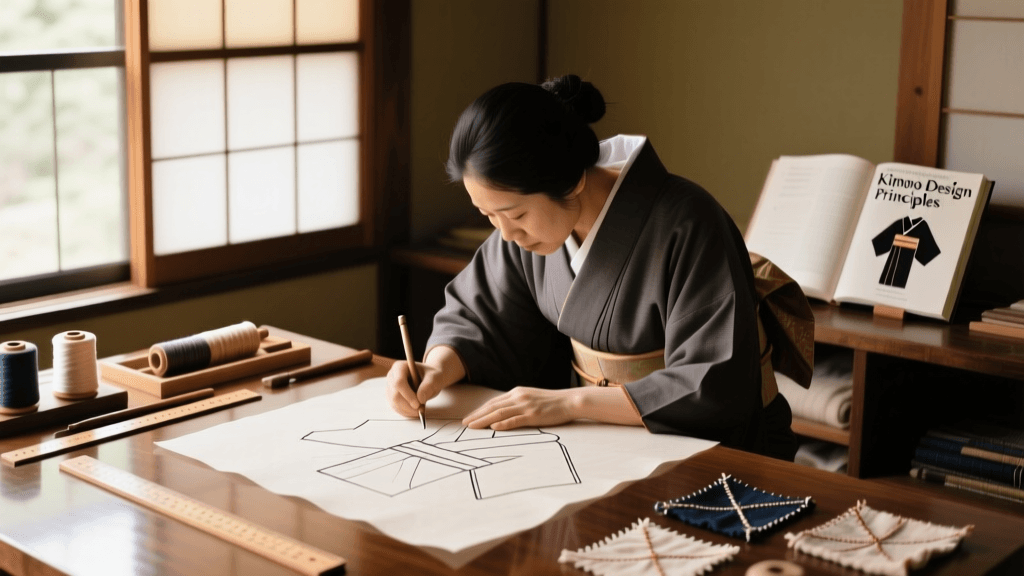
One of the most critical educational aspects of the 2026 exhibitions is the focus on drape analysis and the philosophy of flat-cutting. Western tailoring traditionally relies on darts, seams, and 3D structuring to force fabric to conform to the human body. In contrast, traditional Chinese garment construction respects the integrity of the woven cloth, utilizing flat-cutting techniques where the fabric is folded, draped, and tied. For historical context on flat-cutting and drape, the Victoria and Albert Museum's Asian collections provide excellent foundational research on how historical garments were engineered to flow with the body's movement rather than restrict it.
Designers attending the Milan textile labs are learning how to adapt the Mamianqun (horse-face skirt) pleating structure into modern separates. The secret lies in the precise calculation of the pleat depth and the placement of the heavy waistband, which anchors the garment and allows the side panels to flare dynamically during movement. Buyers looking to stock these pieces should request 'movement videos' from the showrooms, as static mannequin displays fail to capture the kinetic beauty of traditional Chinese flat-cut garments.
Sustainability and the Heritage Craft Revival
The 2026 circuit is also heavily focused on the sustainability of heritage crafts. Traditional techniques like sericulture and silk craftsmanship, recognized by UNESCO as Intangible Cultural Heritage, are being positioned as the ultimate antidote to fast fashion. The slow, seasonal nature of producing Xiangyunsha or hand-weaving Song Brocade inherently limits overproduction. Showrooms in Paris are now providing buyers with 'Craft Passports'—blockchain-verified digital tags that trace the garment from the specific mulberry farm in Zhejiang to the master weaver in Suzhou, and finally to the dyeing vats in Guangdong.
For boutique owners and luxury retailers, investing in the Xin Zhongshi movement in 2026 is not merely a trend-forecasting exercise; it is a commitment to preserving global textile heritage. By understanding the structural nuances, sourcing logistics, and authentication methods detailed in this guide, buyers can confidently navigate the international design weeks and bring the profound elegance of Asian traditional garments to a global audience.