Decoding Kimono Seasonality: Motifs, Colors, and Timing
The Philosophy of the Canvas: Beyond Mere Clothing
In the rich tapestry of Asian traditions, the Japanese kimono stands out not merely as a garment, but as a deeply symbolic canvas that reflects the natural world, social status, and the passage of time. Unlike Western fashion, which often prioritizes the silhouette and the cut of the fabric, traditional Japanese clothing places paramount importance on the surface design. The motifs, colors, and patterns woven or dyed into the silk are governed by a strict, poetic calendar. To wear a kimono is to engage in a silent dialogue with nature and the seasons.
According to the Victoria and Albert Museum, the kimono's surface design has historically served as a visual language, communicating the wearer's age, marital status, and the specific time of year. Furthermore, the Metropolitan Museum of Art highlights how Edo-period merchants and artisans elevated textile decoration to a high art form, using complex yuzen dyeing techniques to capture the ephemeral beauty of seasonal flora and fauna. Today, the Japan National Tourism Organization notes that modern wearers and kimono schools still rigorously observe these seasonal rules, preserving a centuries-old aesthetic philosophy.
The Golden Rule of Anticipation: Sakidori
The most critical concept in kimono motif selection is 'sakidori', or the rule of anticipation. In Japanese aesthetics, it is considered highly refined to wear a motif just before it reaches its peak in nature, and deeply unfashionable to wear it after it has passed. The general rule of thumb is to wear a seasonal motif approximately one month to two weeks before the actual event in nature occurs.
'To wear cherry blossoms while they are in full bloom is to be late to the party. The true elegance lies in anticipating the bloom, wearing the motif while the branches outside are still bare, thereby inviting the spring to arrive.' — Traditional Kimono Dressing Maxim
Seasonal Motifs: A Comprehensive Breakdown
Spring (Haru): February to May
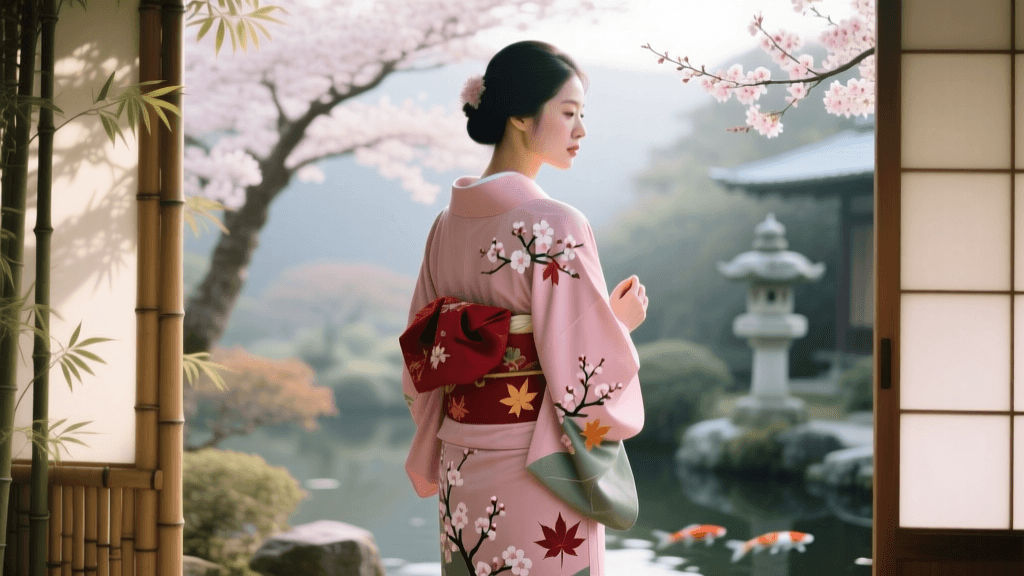
Spring is the most celebrated season in Japanese textile art. The undisputed queen of spring motifs is the 'sakura' (cherry blossom). Following the rule of anticipation, sakura motifs should be worn from late February through early April. Once the actual petals begin to fall in mid-April, wearing sakura is considered out of season. Other prominent spring motifs include 'matsu' (pine), 'take' (bamboo), 'ume' (plum blossoms, worn in late winter to early spring), and 'botan' (peony). Spring colors lean toward soft pastels: pale pinks, mint greens, and warm yellows.
Summer (Natsu): June to August
Summer motifs focus on cooling the viewer and the wearer. Because summer in Japan is intensely humid, visual coolness is paramount. Motifs include 'tsuyu' (dewdrops), 'koi' (carp fish), 'nadeshiko' (dianthus), and 'hotaru' (fireflies). Water-based motifs like 'seigaiha' (ocean waves) and 'karakusa' (arabesque vines) are also highly popular. The fabric itself changes; instead of lined silk, wearers switch to 'yukata' (unlined cotton) or 'ro' and 'sha' (sheer, woven silk gauze) to allow for airflow. Colors are typically cool and refreshing: indigo blues, crisp whites, and translucent greens.
Autumn (Aki): September to November
Autumn is a season of melancholy beauty and vibrant transformation. The 'momiji' (maple leaf) is the star of autumn, worn from September through late November. Other motifs include 'kiku' (chrysanthemum), 'suzumushi' (bell crickets), and 'tsuki' (the harvest moon). The color palette shifts dramatically to warm, earthy tones: deep crimsons, burnt oranges, mustard yellows, and rich browns. The placement of maple leaves on the garment often mimics how they fall, scattering toward the hem.
Winter (Fuyu): December to January
Winter motifs celebrate resilience and the promise of renewal. 'Yukiwa' (snow crystals), 'tsubaki' (camellia), and 'shochikubai' (the auspicious trio of pine, bamboo, and plum) are standard. The camellia is particularly notable; while it blooms in winter, its flowers drop whole rather than petal by petal, which historically associated it with samurai and sudden death, though in modern kimono fashion, it is simply appreciated for its striking winter beauty. Winter colors are deep and grounding: navy blues, deep purples, and stark whites.
The Gokishiki: Symbolism in Traditional Colors
Beyond seasonal motifs, color itself carries profound symbolic weight, heavily influenced by the Chinese philosophical concept of the Five Elements, known in Japan as 'Gokishiki'. Understanding these colors can help you coordinate your obi (sash) and obijime (decorative cord) to create a harmonious outfit.
- Blue/Green (Sei): Represents the element of wood, spring, and the east. It symbolizes growth, vitality, and youth. Often used in garments for young, unmarried women (furisode).
- Red (Shu): Represents fire, summer, and the south. It symbolizes passion, protection against evil spirits, and life force. Deep reds are frequently used in the under-kimono (juban) and hakama for graduation ceremonies.
- Yellow (O): Represents earth, the transitional period between seasons, and the center. It symbolizes stability, nobility, and the imperial family. Mustard and gold threads are often woven into formal obi.
- White (Byaku): Represents metal, autumn, and the west. It symbolizes purity, mourning, and the divine. White is the traditional color for bridal kimono (shiromuku) and funerary garments.
- Black (Koku): Represents water, winter, and the north. It symbolizes wisdom, formality, and the void. The 'kurotomesode' (black kimono with motifs only below the waist) is the most formal garment for married women.
Practical Guide: Sizing, Sourcing, and Styling
Transitioning from understanding the theory to actually wearing and purchasing a kimono requires practical knowledge of measurements and market costs. Unlike Western clothing, kimono are not sized by small, medium, or large. They are tailored from bolts of fabric with standard widths.
Measurements and Fit
The most crucial measurement is the 'mitake' (body length). To calculate your ideal kimono length, subtract 10 to 15 centimeters from your total height. For example, if you are 165 cm tall, you should look for a kimono with a mitake of roughly 150 to 155 cm. The sleeve length ('yuki') is measured from the center of the back of the neck, over the shoulder, to the wrist bone. Standard vintage kimono usually have a yuki of around 60 to 64 cm, which can be restrictive for taller individuals or those with broader shoulders. Modern custom kimono can be tailored to any measurement, but vintage pieces require careful selection.
Sourcing and Costs
Building a seasonal wardrobe does not require a massive fortune if you know where to look. Vintage markets in Tokyo (like the Oedo Antique Market) and Kyoto (such as Toji Temple's monthly flea market) are treasure troves for affordable silk.
- Vintage Silk Komon (Casual/Everyday Kimono): Expect to pay between $40 and $120 USD. These feature repeating, all-over patterns and are excellent for practicing seasonal coordination.
- Vintage Fukuro Obi (Formal Sash): Budget between $80 and $300 USD. A high-quality obi can elevate a modest kimono. Look for metallic threads (kinran) for winter and autumn, and matte, woven textures for spring and summer.
- New Custom Yuzen (Hand-Painted Silk): Prices start around $2,000 and can exceed $10,000 USD. These are investment pieces, usually commissioned for specific life events like coming-of-age ceremonies or weddings.
Seasonal Motif & Color Coordination Chart
Use the following actionable data table to plan your kimono wardrobe, coordinate your accessories, and budget for your seasonal acquisitions.
| Season | Primary Motifs | Traditional Colors | Obi & Accessory Coordination | Approx. Vintage Cost (USD) |
|---|---|---|---|---|
| Spring (Haru) | Sakura, Ume, Botan, Butterflies | Pale Pink, Mint, Soft Yellow | Pastel obi with subtle metallic threads; pink obijime | $50 - $150 |
| Summer (Natsu) | Koi, Water Waves, Fireflies, Dew | Indigo, Crisp White, Aqua | Sheer 'ro' or 'sha' obi; glass or bamboo obidome (brooch) | $60 - $200 (includes sheer silks) |
| Autumn (Aki) | Momiji, Chrysanthemum, Bell Crickets | Crimson, Burnt Orange, Mustard | Heavy brocade obi with gold threads; deep red obijime | $70 - $180 |
| Winter (Fuyu) | Snow Crystals, Camellia, Pine/Bamboo | Navy, Deep Purple, Stark White | Thick, ornate Nishijin-ori obi; white or silver accessories | $80 - $250 |
Conclusion: Wearing the Seasons
Mastering the pattern, color, and motif symbolism of the kimono transforms the act of getting dressed into a mindful, artistic practice. By respecting the rule of anticipation, understanding the elemental significance of the Gokishiki colors, and carefully selecting pieces that fit your physical measurements and budget, you can participate in a living tradition that spans centuries. Whether you are attending a formal tea ceremony in a winter camellia motif or enjoying a summer festival in a cool, indigo-dyed yukata, the garment becomes a bridge between the human experience and the eternal turning of the natural world.