Best Japanese Traditional Garment Online Workshops 2026
The Renaissance of Traditional Japanese Garment Education in 2026
As the global fashion industry continues to pivot toward sustainable, historically rooted, and artisanal practices, the demand for authentic traditional garment education has skyrocketed. In 2026, aspiring designers, textile artists, and cultural historians no longer need to relocate to Tokyo or Kyoto to study the intricate arts of kimono construction, yukata tailoring, or traditional Japanese theater costumes. Leading Japanese fashion schools have fully embraced digital pedagogy, offering comprehensive online workshops that blend centuries-old heritage techniques with modern virtual learning environments.
This educational shift is not merely about convenience; it is a vital preservation effort. According to cultural preservation initiatives supported by The Japan Foundation, the digital transmission of intangible cultural heritage has become a primary strategy for keeping traditional Asian textile arts alive among younger, global demographics. Whether you are looking to master the straight-line cutting method of the kimono, understand the complex layering of Noh theater costumes, or dive into natural indigo dyeing, the 2026 curriculum offerings from Japan's top institutions are more accessible and rigorous than ever before.
Top Japanese Fashion Schools Offering Online Traditional Workshops
Bunka Fashion College: Digital Kimono and Yukata Pattern Drafting
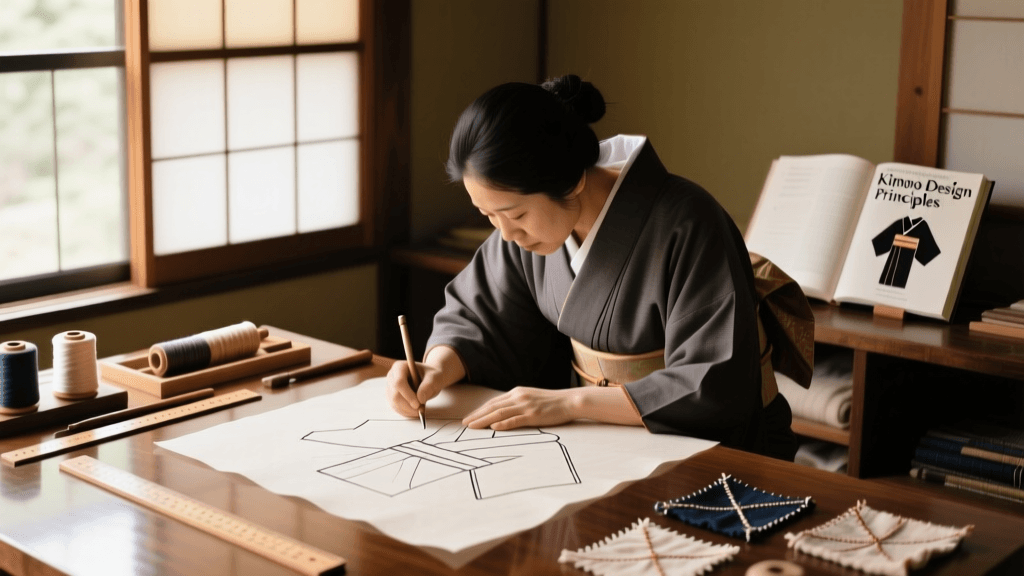
Bunka Fashion College, globally renowned for its avant-garde and technical fashion programs, has expanded its highly sought-after traditional garment modules into a fully interactive online format for 2026. Their flagship course, 'Digital Kimono and Yukata Pattern Drafting,' teaches the foundational geometry of Japanese clothing. Unlike Western pattern making, which relies on curved lines to contour the body, traditional Japanese garments are constructed using straight lines (chokusen) and rectangular panels.
Through high-definition, multi-angle camera setups, Bunka instructors guide international students through the precise measurements required for different body types, ensuring the correct alignment of the back center seam (se-cho) and the calculation of sleeve drops (sode-guchi). Students receive a physical 2026 starter kit shipped globally, which includes pre-scaled Shoji pattern paper and traditional bamboo measuring tools, allowing them to draft patterns at home while receiving real-time feedback via the school's proprietary virtual studio platform. For more information on their evolving curriculum, students can visit the Bunka Fashion College official portal.
Sugino Fashion College: Sustainable Textiles and Natural Dyeing
For those whose interests lie in the surface design and material preparation of traditional garments, Sugino Fashion College offers an unparalleled online workshop series focused on natural dyeing and sustainable textiles. The 2026 syllabus places a heavy emphasis on Kakishibu (persimmon tannin dye) and traditional Shibori resist-dyeing techniques.
What sets Sugino's online program apart is its integration of material science with historical practice. Instructors teach students how to ferment natural indigo vats at home using temperature-controlled digital kits, a massive breakthrough for remote learners. The course also covers the preparation of traditional hemp and ramie fibers, teaching students how to weave and treat these textiles to achieve the crisp, breathable texture required for high-end summer Yukata and Jinbei casual wear.
Kyoto Seika University: Traditional Theater Costumes and Noh Textiles
Theater costumes represent the pinnacle of Japanese textile artistry, featuring heavy brocades, intricate embroidery, and symbolic color palettes. Kyoto Seika University has launched a specialized 2026 online seminar series dedicated to the study and recreation of Noh and Kabuki theater garments, such as the Kariginu and the elaborate Noh Shozoku.
This program is heavily research-based, utilizing high-resolution digital archives from Kyoto's historical museums. Students learn the symbolic meaning behind specific motifs—such as pine trees for longevity or plum blossoms for resilience—and how to replicate these using modern embroidery machines and traditional hand-stitching techniques. The university frequently partners with the Japan National Tourism Organization to provide virtual reality (VR) backstage tours of active Kyoto theaters, giving online students an immersive look at how these heavy, layered garments move and function during live performances.
Comparative Guide: 2026 Online Workshop Programs
Choosing the right program depends on your specific interests within traditional Asian garments. Below is a comparison of the top three online workshop tracks available in 2026:
| Institution | Primary Focus Area | Duration | 2026 Tuition (USD) | Physical Kit Included? |
|---|---|---|---|---|
| Bunka Fashion College | Kimoto/Yukata Pattern Drafting & Construction | 8 Weeks | $450 | Yes (Drafting tools & muslin) |
| Sugino Fashion College | Natural Dyeing, Shibori & Textile Prep | 6 Weeks | $380 | Yes (Indigo vat & resist tools) |
| Kyoto Seika University | Theater Costumes (Noh/Kabuki) & Embroidery | 10 Weeks | $620 | No (Digital archives & VR access) |
Essential Tools for Online Traditional Garment Learning
To succeed in these online workshops, students must equip their home studios with specific tools that cater to the unique requirements of Japanese garment construction. While schools provide basic kits, serious learners in 2026 should invest in the following professional-grade items:
- Shinwa 150cm Bamboo Curved Ruler: Essential for drawing the subtle, sweeping curves of the kimono collar (eri) and the rounded edges of traditional sleeves. Bamboo is preferred over plastic as it prevents the marking chalk from slipping.
- Kai 7250 10-inch Professional Shears: Traditional Japanese fabrics, especially heavy silk brocades used in theater costumes or formal kimono, require exceptionally sharp, heavy-duty shears to prevent fraying and ensure a clean cut along the straight grain.
- Hosobiki Traditional Marking Chalk: Unlike Western tracing wheels, Japanese pattern drafting relies on Hosobiki, a specialized clay-based chalk that creates incredibly fine, precise lines on dark silk and indigo-dyed cotton without damaging the delicate fibers.
- Clover Hera Marker: A traditional bamboo or plastic scoring tool used to crease fabric along fold lines. This is crucial for marking the precise folding points of a yukata without leaving any permanent chemical or chalk residue on the final garment.
Setting Up Your Home Studio for Japanese Floor Drafting
One of the most significant adjustments Western students face when taking Japanese fashion school workshops is the shift from table drafting to floor drafting. Traditionally, kimono patterns are drafted directly onto large rolls of washi paper or fabric spread across the floor. This allows the artisan to view the entire garment layout at once, ensuring that large-scale motifs (like a continuous landscape scene across the back and sleeves) are perfectly aligned.
In 2026, online instructors recommend creating a dedicated 'floor drafting zone' in your home studio. If you do not have traditional tatami mats, you can replicate the surface by laying down interlocking EVA foam mats covered with a smooth, clean cotton canvas. You will need a minimum clear floor space of 2 meters by 1.5 meters to comfortably lay out a standard bolt of kimono fabric (tanmono), which is typically 36 centimeters wide and 12 meters long. Proper lighting is also critical; invest in adjustable, color-accurate LED floor lamps (CRI 95+) positioned at opposing corners to eliminate shadows while you work on the floor.
Career Applications in the 2026 Global Fashion Market
Mastering traditional Japanese garment techniques is no longer just an academic pursuit; it is a highly marketable skill in the 2026 global fashion industry. As major luxury houses and contemporary streetwear brands increasingly collaborate with traditional Asian artisans, there is a severe shortage of designers who understand both modern production timelines and historical textile integrity.
Graduates of these online workshops are finding roles as textile consultants, heritage pattern drafters, and sustainable dyeing specialists. Brands are actively seeking professionals who can adapt the zero-waste, straight-line cutting methods of the kimono to modern, sustainable ready-to-wear collections. Furthermore, the rise of digital fashion and 3D garment rendering has created a niche for experts who can accurately translate the complex draping and layering of traditional theater costumes into virtual environments for gaming and digital couture.
Conclusion: Weaving the Future of Asian Traditions
The 2026 landscape of Japanese fashion education proves that tradition and technology are not mutually exclusive. By offering rigorous, deeply cultural online workshops, institutions like Bunka, Sugino, and Kyoto Seika are ensuring that the meticulous arts of kimono drafting, natural dyeing, and theater costume construction continue to thrive on a global scale. Whether you are a seasoned fashion professional looking to expand your technical repertoire or a passionate hobbyist seeking a deeper connection to Asian cultural heritage, these online programs provide an authentic, immersive, and highly practical gateway into the world of traditional Japanese garments.