Xin Zhongshi Trends at Paris Fashion Week 2026: Runway Guide
The Global Ascent of Xin Zhongshi in 2026
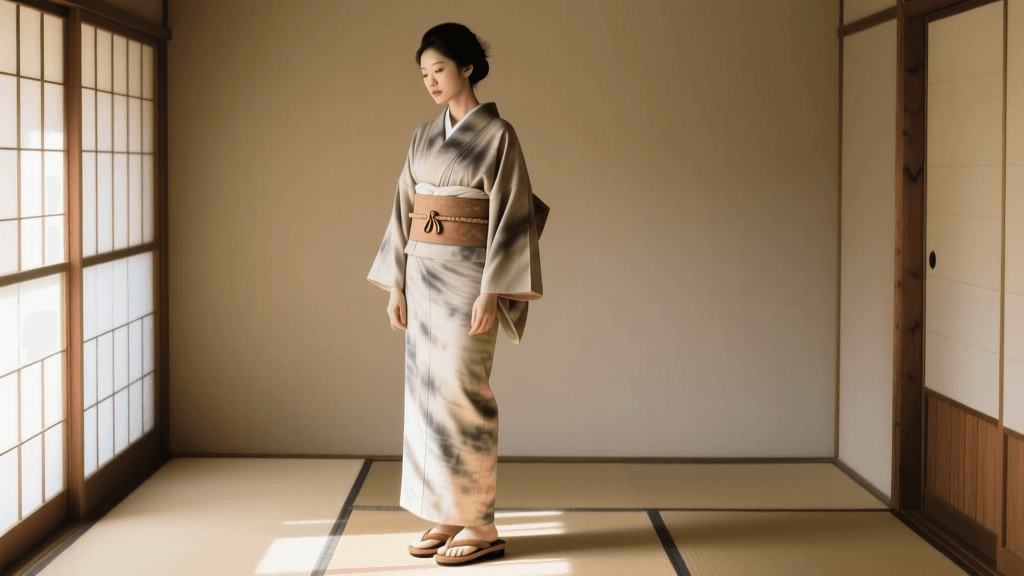
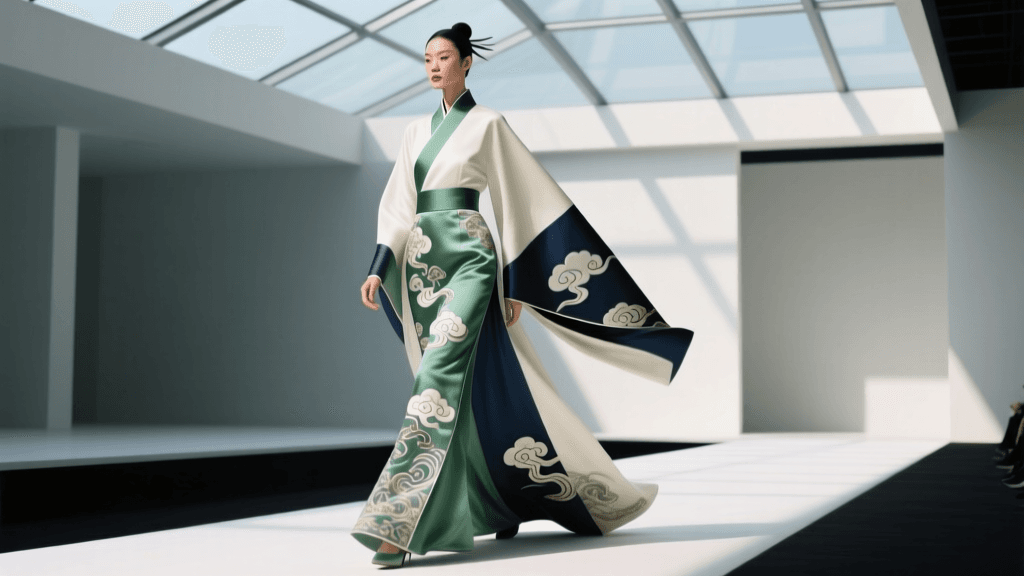
As the global fashion calendar turns to the Spring/Summer and Autumn/Winter 2026 seasons, one aesthetic has unequivocally captured the attention of international buyers, critics, and enthusiasts: Xin Zhongshi (新中式), or the New Chinese Style. No longer confined to regional markets or niche cultural exhibitions, Xin Zhongshi has evolved into a sophisticated sartorial language that bridges millennia of Asian heritage with avant-garde European tailoring. During Paris Fashion Week 2026, the integration of traditional Chinese garments and textiles into mainstream luxury runways has shifted from mere homage to structural innovation.
For attendees of international design weeks, curating a wardrobe that reflects this movement requires an understanding of both historical context and contemporary execution. The 2026 runways have demonstrated that modern Chinese fashion is not about costume replication; it is about the meticulous deconstruction of heritage silhouettes, the revival of intangible weaving techniques, and the application of sustainable, ancient dyeing methods to modern urban wear.
Defining the 2026 Runway Aesthetic
The 2026 exhibition circuit, particularly the showcases at the Grand Palais and the Palais de Tokyo, has highlighted a distinct departure from the overt, logo-heavy luxury of previous years. Instead, designers are embracing 'quiet heritage.' This translates to garments that appear minimalist from a distance but reveal astonishing complexity upon closer inspection.
Structural Mandarin Collars and Deconstructed Pankou
The traditional Mandarin collar (standing collar) has been reimagined for 2026. Designers are utilizing 3D-printed biopolymer interlinings to create collars that stand perfectly without restricting neck movement, a common issue in vintage mid-century pieces. Furthermore, the Pankou (traditional knotted buttons) have been scaled up and deconstructed. Instead of functional fasteners, oversized silk-wire Pankou knots are being used as asymmetrical structural anchors on the shoulders and waists of oversized wool-blend trench coats.
The Fluidity of the Mamianqun
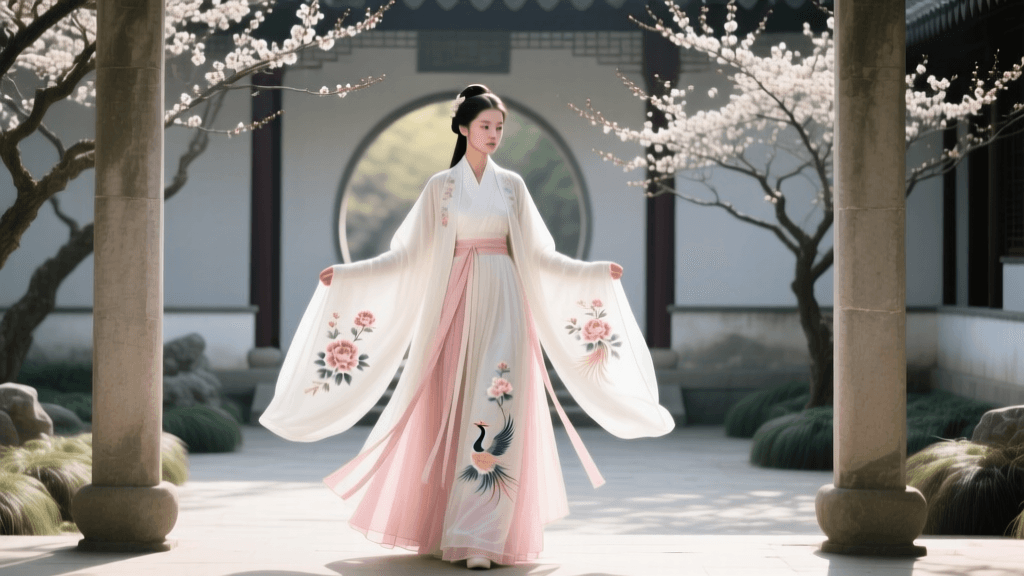
The Mamianqun (horse-face skirt) continues its runway dominance, but the 2026 iterations focus on kinetic drape. By alternating panels of heavy jacquard with ultra-lightweight 12-momme silk organza, designers are creating skirts that offer the architectural volume of a crinoline but move with the fluidity of water. For exhibition attendees, a modern, calf-length Mamianqun paired with a sharply tailored, asymmetrical blazer is the ultimate uniform for navigating the cobblestone streets of Le Marais between shows.
Heritage Textiles Taking Center Stage
The true triumph of Xin Zhongshi in 2026 lies in its textile sourcing. Global fashion houses are partnering directly with heritage workshops in Suzhou, Hangzhou, and Foshan to secure exclusive rights to ancient fabrics. Understanding these materials is crucial for any serious collector or fashion week attendee.
Xiangyunsha: The Soft Gold of the South
Xiangyunsha (Gambiered Canton Gauze) has become the most sought-after textile of the 2026 season. This silk is dyed using the juice of the Dioscorea cirrhosa plant and coated with the iron-rich mud of the Pearl River Delta, a process recognized on UNESCO's Intangible Cultural Heritage list. The result is a fabric that is naturally water-resistant, antibacterial, and possesses a distinctive dual-tone finish: a rich, earthy brown on one side and a glossy, obsidian black on the other. In 2026, authentic Xiangyunsha commands a premium, with genuine mud-dyed yardage pricing between $180 and $350 USD per meter, depending on the base silk weight.
Song Brocade and the Digital Loom
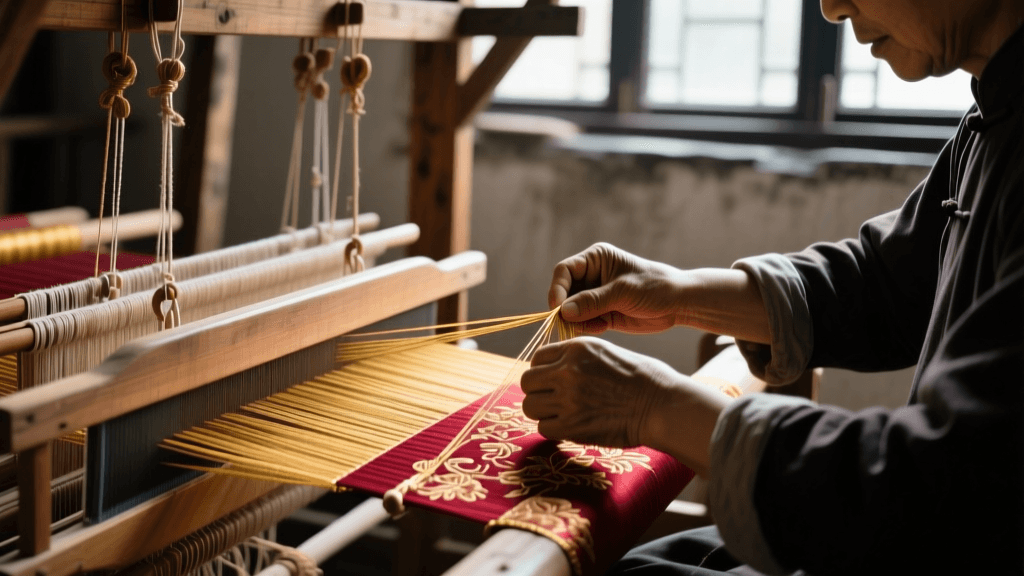
Song Brocade (Songjin), historically reserved for imperial garments and scroll mounting, is being revived through a fusion of hand-loomed techniques and digital jacquard technology. As detailed in the Victoria and Albert Museum's extensive archives on Chinese textiles, traditional Song brocade is characterized by its flat, matte finish and complex geometric patterns. In 2026, designers are weaving micro-filaments of recycled copper and silver into the silk warp, giving the ancient motifs a subtle, bioluminescent glow under the flash photography of the front row.
2026 Exhibition Textile Guide: Comparison Chart
When sourcing pieces for your international fashion week wardrobe, it is vital to understand how these heritage fabrics perform in varied European climates. Below is a comparative analysis of the top three textiles dominating the 2026 Xin Zhongshi runways.
| Textile | Weight & Drape | Best 2026 Runway Application | Climate Suitability | Approx. 2026 Market Price |
|---|---|---|---|---|
| Xiangyunsha (Mud-Dyed Silk) | Medium-Heavy, crisp but fluid | Trench coats, wide-leg trousers, structured shirts | Excellent for damp/cooled climates; naturally moisture-wicking | $180 - $350 / meter |
| Song Brocade (Songjin) | Heavy, stiff, architectural | Corsetry, structured bodices, statement outerwear lapels | Best for dry, cool indoor exhibition environments | $250 - $500 / meter |
| Zhangzhou Velvet (Swansdown) | Medium, plush, highly draped | Evening slip dresses, flowing duster coats, loungewear | Ideal for transitional autumn weather; provides light insulation | $120 - $220 / meter |
Curating Your Exhibition Wardrobe: Packing and Care
Attending Paris or Milan Fashion Week requires rigorous travel, and heritage Asian textiles require specialized care to maintain their structural integrity and luster. The environmental shift from a humid Asian climate to the dry, centrally heated hotel rooms of Europe in early 2026 can wreak havoc on natural protein fibers.
Climate Control and Storage
Never fold Xiangyunsha or Song Brocade. The mud-coating on Xiangyunsha can micro-fracture if creased sharply, leading to permanent white stress lines. When packing for the Grand Palais exhibitions in March 2026, roll your garments around acid-free, unbuffered tissue paper tubes. Upon arriving at your hotel, immediately hang the garments in the bathroom while running a hot shower; the ambient steam will naturally release any rolling creases without the need for a direct iron, which can scorch the delicate silk proteins.
Footwear Pairings for Heritage Hems
The drape of a 2026 Mamianqun or wide-leg Xiangyunsha trouser requires careful footwear selection to avoid tripping hazards on uneven European streets. The current runway consensus pairs flowing heritage hems with structured, square-toe leather boots featuring a 40mm to 50mm block heel. This specific heel height elevates the hem exactly 1.5 inches off the ground, preserving the fabric from street grime while maintaining the garment's intended kinetic flow.
Sourcing Authentic Pieces for the 2026 Season
With the surge in global demand for Xin Zhongshi, the market has seen an influx of synthetic imitations masquerading as heritage textiles. When investing in pieces for the 2026 exhibition circuit, provenance is paramount.
For collectors and buyers, referencing historical benchmarks is highly recommended. The Metropolitan Museum of Art's historical timeline of Chinese silk provides an excellent visual lexicon for authentic weave structures and historical motifs, helping you distinguish between genuine Song Brocade and modern polyester jacquards. When purchasing Xiangyunsha, always look for the地理标志 (Geographical Indication) certification tag, which in 2026 is embedded with an NFC chip that traces the fabric back to the specific mud-bathing cooperative in the Foshan region.
Ultimately, the presence of Xin Zhongshi at international design weeks in 2026 is a testament to the enduring power of Asian traditions. By understanding the history, mastering the care, and respecting the craftsmanship of these garments, attendees can participate in a global fashion dialogue that is as intellectually rich as it is visually stunning.