Xin Zhongshi: Building a New Chinese Style Wardrobe
The Rise of Xin Zhongshi: Heritage Meets Modernity
The global fashion landscape is currently witnessing a profound cultural renaissance, spearheaded by the Xin Zhongshi (New Chinese Style) movement. Unlike the strict, historically accurate Hanfu revivalism that requires elaborate layering and specialized occasion-wear, Xin Zhongshi is fundamentally pragmatic. It distills thousands of years of Chinese sartorial heritage into wearable, everyday silhouettes that seamlessly integrate into a modern 9-to-5 lifestyle. As noted by BBC Culture, this evolution reflects a broader search for cultural identity among younger generations, who seek to express their heritage without sacrificing contemporary convenience or global fashion sensibilities.
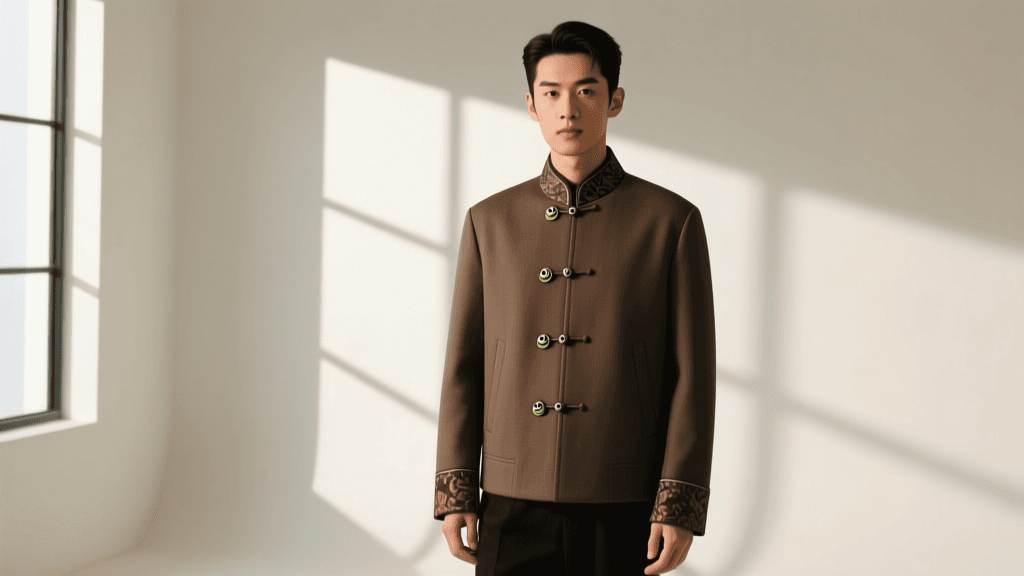
Xin Zhongshi operates on the philosophy of a 'traditional soul, modern body.' It extracts iconic motifs—such as the Mandarin collar, Pankou (frog buttons), Xiangyunsha silk, and Song brocade—and applies them to tailored blazers, slip dresses, and wide-leg trousers. The result is a sophisticated, gender-neutral, and highly versatile aesthetic that dominates platforms like Xiaohongshu, Douyin, and TikTok.
Core Elements: Traditional vs. Xin Zhongshi Adaptations
To master the New Chinese Style, one must understand how historical garments are deconstructed and reimagined for modern mobility. The table below outlines how traditional elements are adapted for the contemporary capsule wardrobe.
| Design Element | Traditional Historical Form | Xin Zhongshi Modern Adaptation |
|---|---|---|
| Collar | Strict, high-standing Mandarin (Yuanling) that restricts neck movement. | Soft band collars, open V-necks with subtle silk piping, or detachable collar pieces. |
| Fasteners | Hand-tied, intricate Pankou (frog buttons) requiring manual dexterity. | Hidden magnetic snaps or side-zippers with decorative, non-functional faux-Pankou accents. |
| Skirt Silhouette | Floor-length Mamianqun (Horse-face skirt) with heavy, dragging hems. | Midi-length pleated skirts hitting 4 cm below the calf, featuring woven jacquard motifs. |
| Outerwear | Boxy, unstructured Aoqun tops or heavy winter cloaks (Doupeng). | Tailored blazers with brocade lapels, or lightweight trench coats with cloud-shoulder seams. |
Building Your Xin Zhongshi Capsule Wardrobe
Transitioning into the New Chinese Style does not require a complete wardrobe overhaul. By investing in four foundational pieces, you can create dozens of outfits that bridge the gap between boardroom professionalism and weekend elegance. Below is a practical, actionable guide to building your capsule, including estimated costs and styling metrics.
1. The Modified Mandarin Blouse
- Cost Estimate: $45 - $85 USD
- Fabric: Acetate-silk blend (60% acetate, 40% mulberry silk) for a luxurious drape with machine-washable durability.
- Details: Look for a relaxed fit with dropped shoulders and a subtle side-slit. Avoid stiff cottons, which can make the blouse resemble a restaurant uniform.
- Styling: Tuck into high-waisted, wide-leg linen trousers. Leave the top two frog buttons undone to elongate the neckline.
2. The Everyday Mamianqun (Horse-Face Skirt)
- Cost Estimate: $60 - $120 USD
- Fabric: Polyester-viscose jacquard. This blend holds the sharp, structural pleats of the Mamianqun far better than pure silk, while resisting wrinkling during commutes.
- Details: Opt for a midi-length hem (approx. 75-80 cm from waist to hem). Choose dark, muted tones like obsidian, deep plum, or forest green with tone-on-tone woven patterns (e.g., subtle cranes or bamboo motifs) rather than loud, metallic golds.
- Styling: Pair with a sleek, fitted black turtleneck and a leather belt featuring a jade-inlaid buckle.
3. Xiangyunsha Silk Camisole or Slip Dress
- Cost Estimate: $90 - $180 USD
- Fabric: 100% Xiangyunsha (Gambiered Canton Gauze).
- Details: Xiangyunsha is a masterpiece of intangible cultural heritage, dyed using the juice of the Shuliang yam and iron-rich river mud. It possesses a unique, crackling texture similar to soft leather and is naturally antibacterial and cooling.
- Styling: Layer under a structured, oversized Western blazer for a striking contrast between masculine tailoring and delicate, heritage-rich textiles.
4. The Brocade Blazer
- Cost Estimate: $130 - $250 USD
- Fabric: Cotton-blend Song brocade or modern digital jacquard.
- Details: A single-breasted blazer with a subtle stand-collar and fabric-covered buttons. The brocade should be matte rather than shiny to maintain a premium, understated look.
- Styling: Wear over a simple white ribbed tank top and straight-leg denim jeans. This grounds the historical textile in casual Americana, creating a perfect East-meets-West fusion.
Fabric Science: The Allure of Xiangyunsha
At the heart of the premium Xin Zhongshi market is Xiangyunsha silk. As highlighted by historical textile archives, such as those featured in The Metropolitan Museum of Art's explorations of Chinese aesthetics, the value of Chinese textiles lies in their labor-intensive creation. Authentic Xiangyunsha is produced exclusively in the Pearl River Delta region of Guangdong. The silk is soaked in the tannin-rich juice of the Dioscorea cirrhosa (Shuliang) yam, then coated with iron-rich mud from local unpolluted rivers. This chemical reaction creates a distinctive dark, glossy surface on one side and a matte, rust-colored interior on the other.
When shopping for Xiangyunsha, be wary of synthetic imitations. Authentic pieces will have a slight stiffness that softens beautifully with body heat and wear, and they emit a faint, earthy, herbal scent when damp. According to textile encyclopedias, this unique dyeing process makes the fabric highly resistant to mold and insects, making it an heirloom investment piece.
Sizing, Shopping, and Timing Your Purchases
Navigating Asian boutique platforms like Taobao, Tmall, or Xiaohongshu requires an understanding of regional sizing and retail calendars.
- The Sizing Rule: Traditional Chinese garments, especially those using non-stretch brocades or stiff silks, require ease of movement. Always measure your bust, waist, and hips in centimeters. Add 4 to 6 cm to your actual bust measurement when selecting a size. If your US size is Medium (Bust 88 cm), you will likely need a Chinese L or XL (Bust 94-98 cm) for a comfortable, modern drape.
- Search Keywords: Use simplified Chinese terms for better results. Search '新中式' (Xin Zhongshi), '改良旗袍' (Modified Qipao), or '日常马面裙' (Everyday Mamianqun).
- Timing and Costs: To secure the best prices on independent designer brands (such as ZUCZUG or Ms MIN), time your purchases around China's major e-commerce festivals. The 618 Festival (June 18th) and Double 11 (November 11th) routinely offer 20% to 30% discounts, alongside cross-store满减 (spend-and-save) coupons that significantly reduce the cost of high-end silk garments.
Garment Care and Maintenance
Preserving the structural integrity of Xin Zhongshi pieces requires specific care protocols, particularly for natural fibers and heritage dyes.
- Washing Xiangyunsha: Never machine wash or dry clean authentic gambiered silk. Hand-wash in cold water (below 30°C) using a pH-neutral silk detergent. Do not wring or twist the fabric; instead, gently press the water out and hang it to dry in a shaded, well-ventilated area. Direct sunlight will degrade the yam tannins and cause the dark color to fade unevenly.
- Ironing Brocade: Woven jacquards and Song brocades are prone to heat damage. Always use a steam iron on the 'Silk/Low' setting, and iron on the reverse side of the garment using a cotton pressing cloth to prevent the metallic or silk threads from flattening and losing their luster.
- Storing Pleats: For Mamianqun skirts, do not hang them by the waistband for long periods, as the weight of the fabric will stretch the pleats. Fold them along their original pleat lines and store them flat in a breathable cotton garment bag with cedar blocks to deter moths.
Conclusion: A Living Tradition
The Xin Zhongshi movement is more than a fleeting micro-trend; it is a sartorial bridge connecting ancient craftsmanship with contemporary life. By thoughtfully selecting modified silhouettes, investing in heritage textiles like Xiangyunsha, and understanding the nuances of Asian tailoring, you can cultivate a wardrobe that is deeply rooted in history yet entirely relevant for the modern world. Whether you are navigating a corporate boardroom or attending a weekend gallery opening, the New Chinese Style offers a sophisticated, culturally rich vocabulary for personal expression.