Xin Zhongshi Guide: Mastering the New Chinese Style Trend
The Rise of Xin Zhongshi: Where Heritage Meets Modernity
Over the past few years, the global fashion landscape has witnessed a profound shift toward cultural reclamation, and nowhere is this more evident than in the explosion of Xin Zhongshi, or the New Chinese Style. Unlike the strict historical reenactment of the Hanfu movement, Xin Zhongshi is a contemporary fashion trend that seamlessly integrates traditional Chinese design elements—such as frog fasteners, standing collars, and brocade textiles—into modern, everyday silhouettes. This movement is deeply tied to the broader Guochao (national trend) phenomenon, where younger generations of Asian consumers are increasingly favoring domestic brands and cultural motifs over Western luxury staples. According to an analysis by The Business of Fashion, this surge in cultural confidence has fundamentally reshaped the retail market, pushing designers to innovate rather than merely replicate the past.
The New Chinese Style is not about wearing a costume; it is about curating a wardrobe that speaks to a dual identity. It honors the meticulous craftsmanship of Asian traditions while accommodating the dynamic, fast-paced reality of modern urban life. Whether you are walking into a corporate boardroom or attending an underground art exhibition, Xin Zhongshi offers a sophisticated, nuanced way to wear your heritage.
Core Elements of the New Chinese Wardrobe
To master this trend, one must first understand the foundational elements that define it. Xin Zhongshi relies on a specific visual vocabulary that instantly communicates its cultural roots without overwhelming the wearer.
The Pan Kou (Frog Fastener)
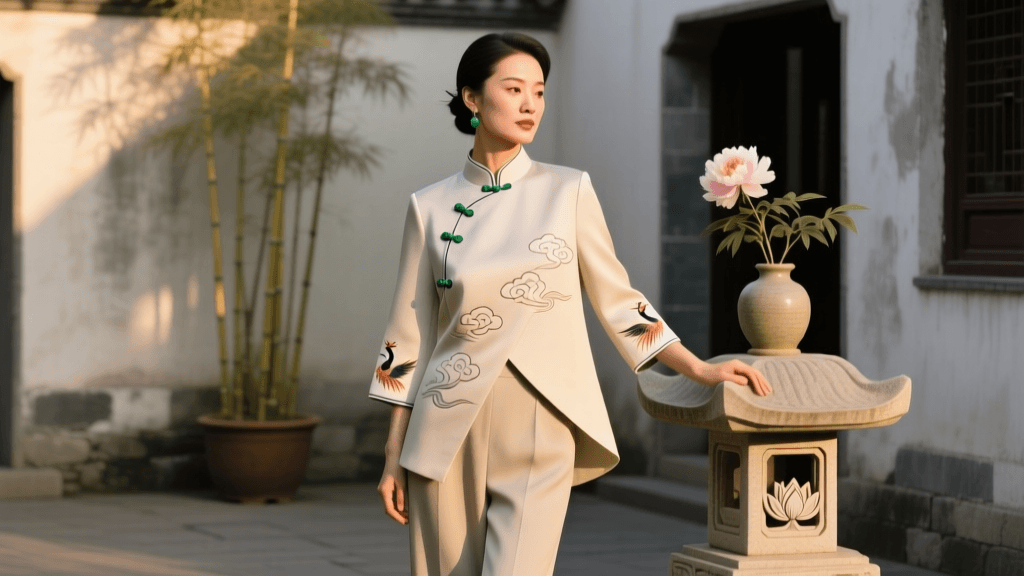
Perhaps the most recognizable hallmark of the New Chinese Style is the Pan Kou. These intricately knotted fabric buttons originated in the Ming and Qing dynasties and were historically used to secure the heavy silk lapels of robes. In modern Xin Zhongshi fashion, Pan Kou knots are often exaggerated in size, rendered in contrasting colors, or used purely as decorative embellishments on denim jackets, knit cardigans, and leather bags. Crafting a single high-quality silk Pan Kou can take an artisan over forty minutes, making it a symbol of slow fashion and mindful consumption.
The Standing Collar (Yuanling)
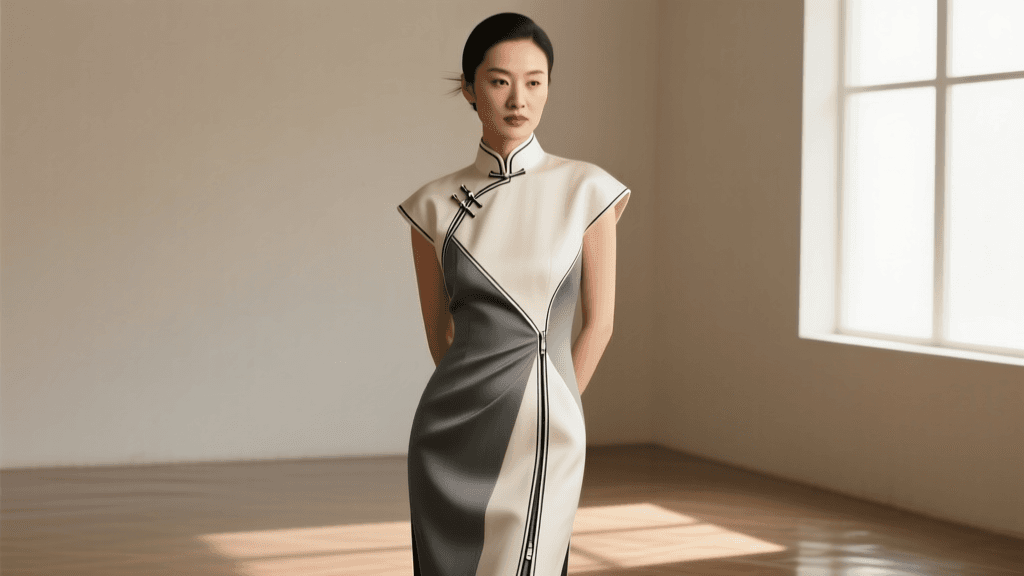
The Mandarin or standing collar is a staple of Chinese sartorial history. In traditional Qipao (Cheongsam) designs, the collar is stiff and high, restricting movement. The Xin Zhongshi adaptation softens this silhouette. Designers frequently utilize unstructured cotton-linen blends or ribbed knits to create standing collars that frame the face elegantly while allowing for all-day comfort. This subtle modification transforms a formal historical garment into an accessible piece of everyday streetwear.
Heritage Textiles: Xiangyunsha and Song Brocade
Fabric choice is paramount in Xin Zhongshi. Xiangyunsha, a centuries-old gambiered silk from Guangdong province, is highly prized for its unique crackled texture, water-resistant properties, and earthy, lacquer-like sheen. Meanwhile, modernized Song Brocade features subtle, tone-on-tone jacquard weaves depicting bamboo, plum blossoms, or stylized clouds. As highlighted in the archives of The Metropolitan Museum of Art, these textiles have long influenced global couture, and today's independent Asian designers are reclaiming them for local, everyday luxury.
Traditional vs. Xin Zhongshi: A Comparative Guide
Understanding the boundary between historical dress and modern adaptation is crucial for styling. Below is a structured comparison to help you identify authentic Xin Zhongshi pieces versus traditional garments.
| Feature | Traditional Garments (Hanfu / Vintage Qipao) | Xin Zhongshi (New Chinese Style) |
|---|---|---|
| Silhouette | Flowing, voluminous, historically accurate draping | Tailored, deconstructed, blended with Western cuts (e.g., blazers, A-line skirts) |
| Fastenings | Functional Pan Kou, sashes, hidden ties | Mix of Pan Kou, modern metal zippers, magnetic snaps, and toggle buttons |
| Fabrics | 100% Mulberry silk, raw hemp, heavy traditional brocade | Silk-cotton blends, vegan leather, denim, jacquard, breathable synthetics |
| Styling | Worn as a complete, head-to-toe historical ensemble | Mixed with contemporary basics (sneakers, denim, graphic tees) |
| Price Range | $80 - $500+ (Custom tailoring required) | $40 - $250 (Ready-to-wear, accessible pricing) |
Essential Wardrobe Pieces & Practical Specifications
Building a Xin Zhongshi wardrobe requires investing in versatile anchor pieces. Here are three essential garments, complete with practical measurements and buying advice.
1. The Modernized Mamianqun (Horse-Face Skirt)
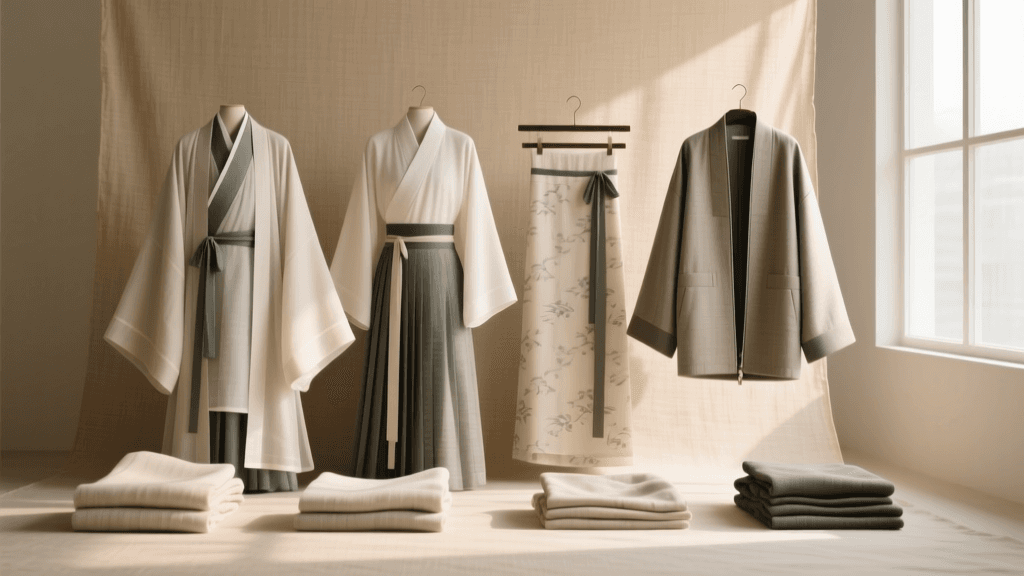
The Mamianqun is a wrap skirt featuring flat front and back panels with heavily pleated sides. While traditional versions require complex wrapping and tying, the Xin Zhongshi iteration often features a concealed side zipper and an elasticized back waistband for ease of wear. Buying Tip: Look for a skirt with a waist-to-hem measurement of 95cm for a midi length that hits mid-calf, or 105cm for a dramatic maxi length. Ensure the pleats are heat-set in a polyester-blend or heavy cotton to maintain their structure during commutes. Expect to pay between $50 and $120 for a high-quality, everyday version.
2. The Deconstructed Qipao Top
Instead of a full-length, body-constricting dress, the New Chinese Style favors the Qipao top. These garments feature the iconic asymmetrical right-side opening (Dajin) and standing collar but are cut with a relaxed, boxy fit. Buying Tip: Seek out tops made from linen-cotton blends for summer, featuring side slits that end at the hip bone (approximately 20cm from the hem). This allows the top to be worn untucked over wide-leg trousers without looking overly formal. Prices typically range from $45 to $90.
3. The Brocade Bomber or Duster Jacket
Outerwear is where Xin Zhongshi truly shines. Designers frequently apply traditional cloud-collar (Yunjian) embroidery or subtle floral jacquard to the silhouette of a modern baseball jacket or a flowing, floor-length duster cardigan. Buying Tip: For a subtle office-appropriate look, choose a duster in a matte, dark-toned jacquard (like navy or charcoal) with minimal hardware. For streetwear, opt for a cropped bomber with contrasting satin lining. High-end independent designer pieces can cost upwards of $250, while fast-fashion adaptations can be found for around $60.
Styling Formulas for the Modern Consumer
The golden rule of Xin Zhongshi is contrast. Pairing historical elegance with utilitarian modernity creates a visually striking, trend-forward aesthetic.
- The High-Low Commuter: Pair a heavy, woven jacquard Mamianqun with a crisp, oversized white poplin button-down shirt and chunky leather loafers. The skirt provides the cultural anchor, while the shirt and shoes ground the outfit in contemporary office wear.
- Weekend Streetwear: Wear a cropped, black Pan Kou knot top over a high-neck long-sleeve mesh base layer. Combine this with baggy, distressed denim jeans and retro sneakers. This look was heavily popularized by viral street-style photography in Shanghai's Xintiandi district.
- Monochromatic Elegance: For evening events or gallery openings, opt for a tone-on-tone Xiangyunsha silk slip dress layered under a matching unstructured blazer. The interplay of light on the crackled silk texture provides all the visual interest needed, eliminating the need for heavy jewelry.
Sourcing, Search Terms, and Garment Care
While luxury houses like Shiatzy Chen have long championed this aesthetic on global runways, as noted by Vogue Runway, the most exciting Xin Zhongshi pieces are currently emerging from independent Asian designers and specialized e-commerce boutiques. When shopping on platforms like Taobao, YesStyle, or global marketplaces, utilize specific search terms to filter out cheap costumes and find genuine fashion. Use keywords like 改良旗袍 (Modified Qipao), 新中式女装 (New Chinese Style Womenswear), and 日常马面裙 (Everyday Mamianqun).
Caring for these garments requires attention to detail. True Xiangyunsha silk should never be machine washed; it requires gentle hand-washing in cold water with a pH-neutral silk detergent and must be dried in the shade, as direct sunlight degrades the gambiered coating. For jacquard and brocade skirts, avoid traditional ironing, which can crush the raised woven patterns. Instead, invest in a handheld garment steamer and use a soft-bristled brush to gently lift the fibers after steaming. By treating these pieces with the respect their craftsmanship demands, your Xin Zhongshi wardrobe will remain a timeless bridge between Asia's rich past and its fashionable future.